Educational InteriorsCommercial Spaces3D Space PlanningFurniture SourcingSustainable DesignProject ManagementEducational InteriorsCommercial Spaces3D Space PlanningFurniture SourcingSustainable DesignProject Management
About Us
Who are we?
Werk Solutions is an education-focused interior design studio based in Wallasey on the Wirral, serving schools, academies, colleges and commercial clients across Merseyside, Cheshire, Liverpool, Manchester and the wider North West. We deliver office furniture, classroom fit-outs and library design from concept through to installation — with a Wallasey showroom for in-person specification and the only authorised EromesMarko dealership in the North West of England.
What do we offer?
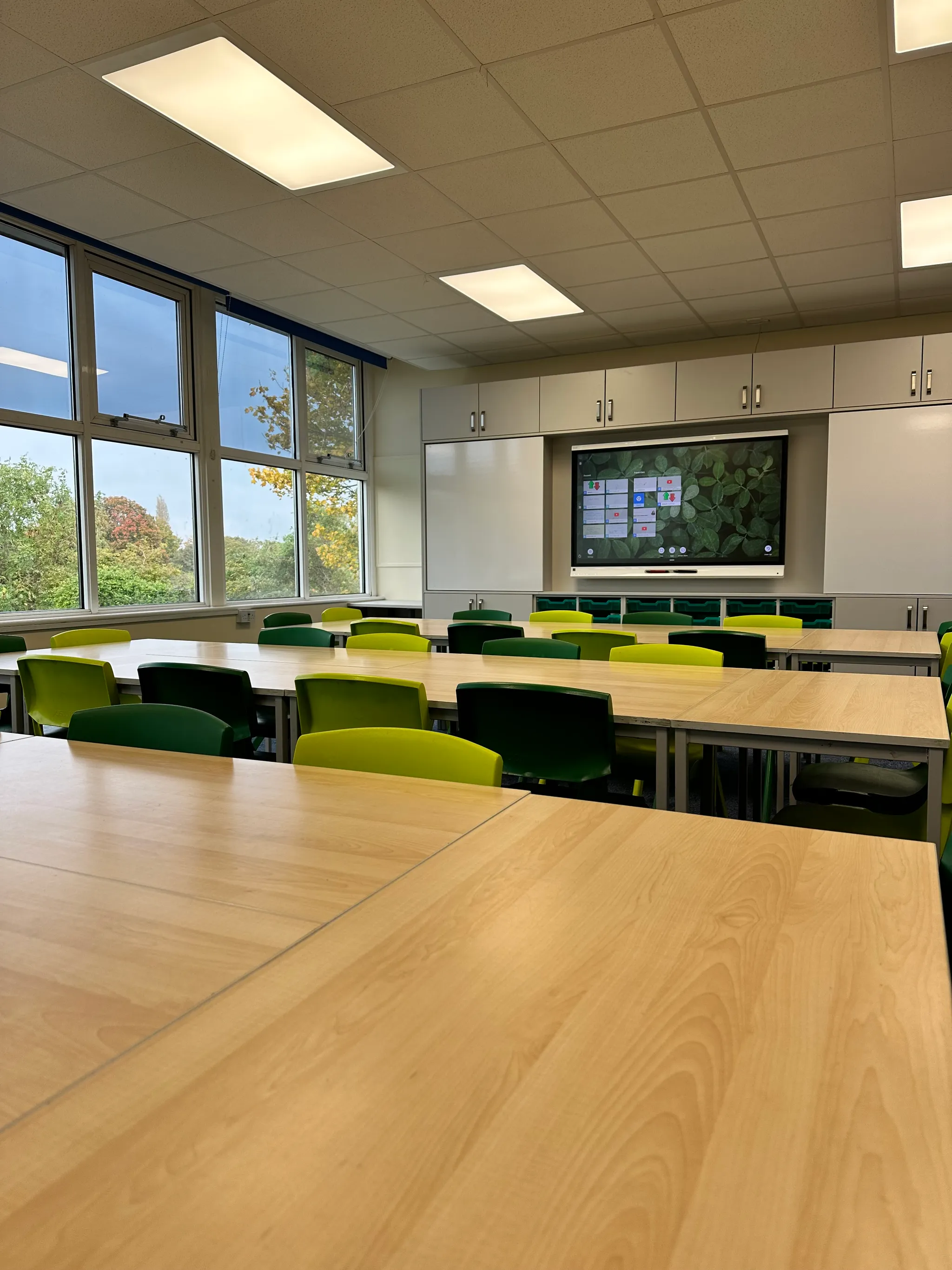
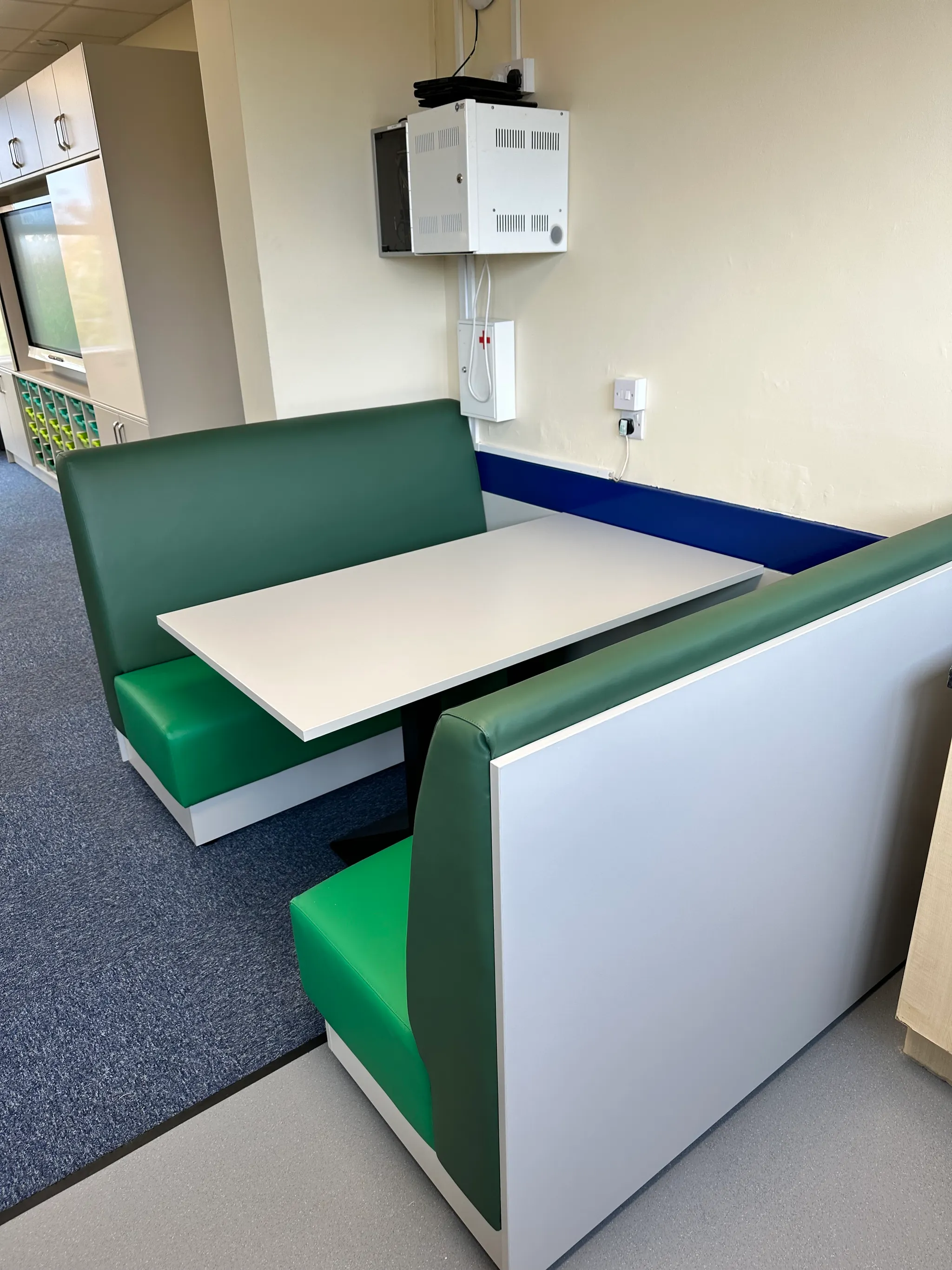
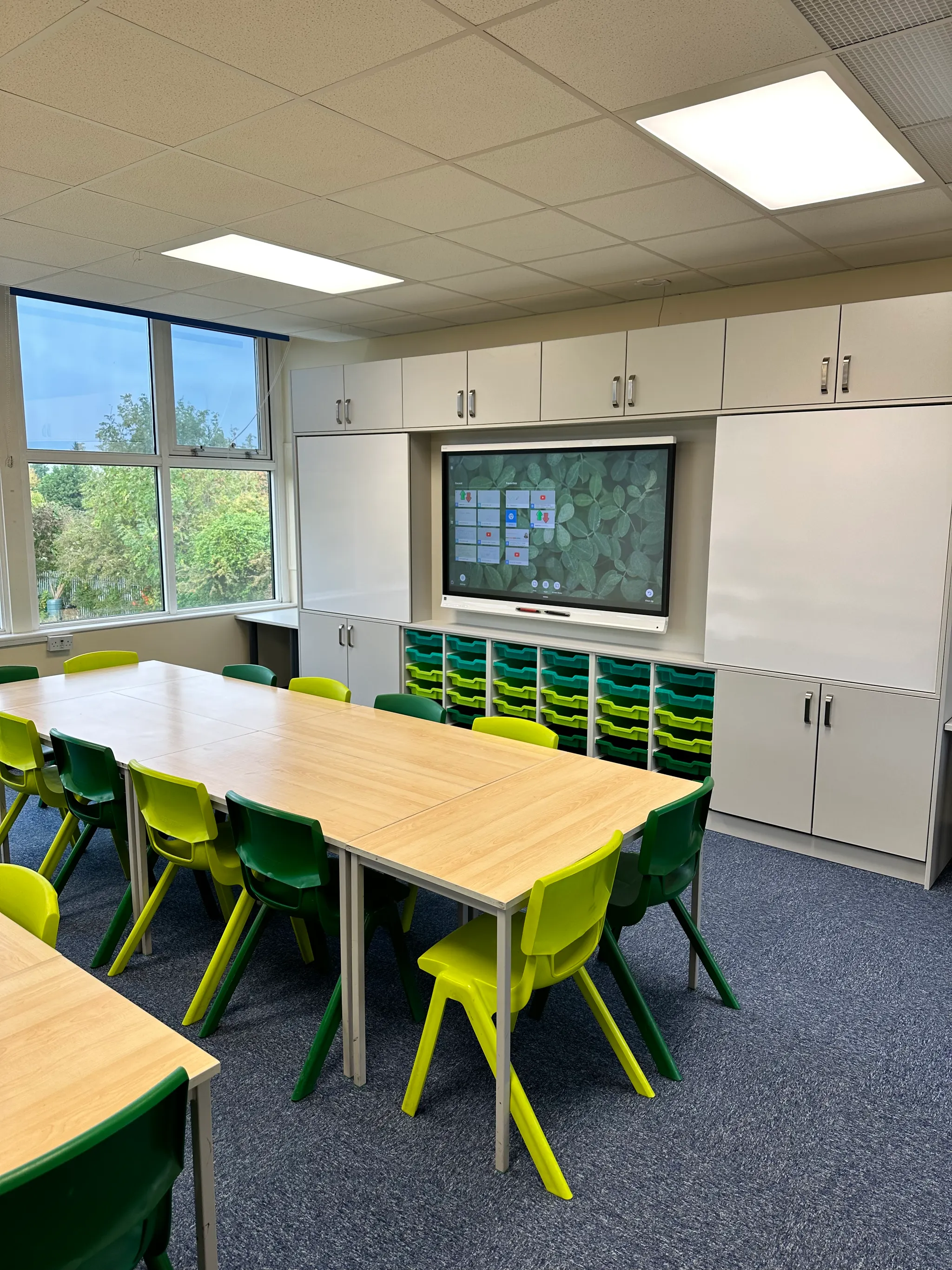
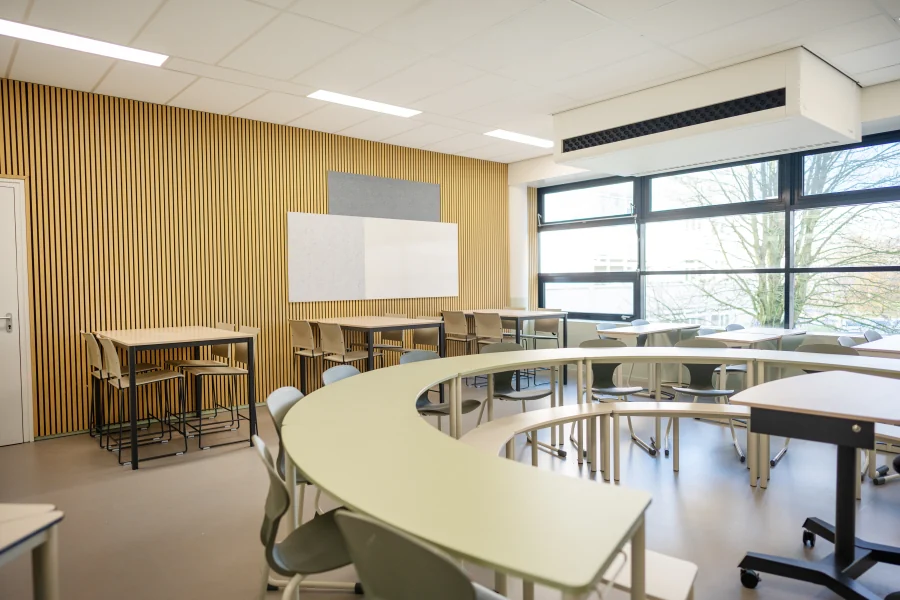
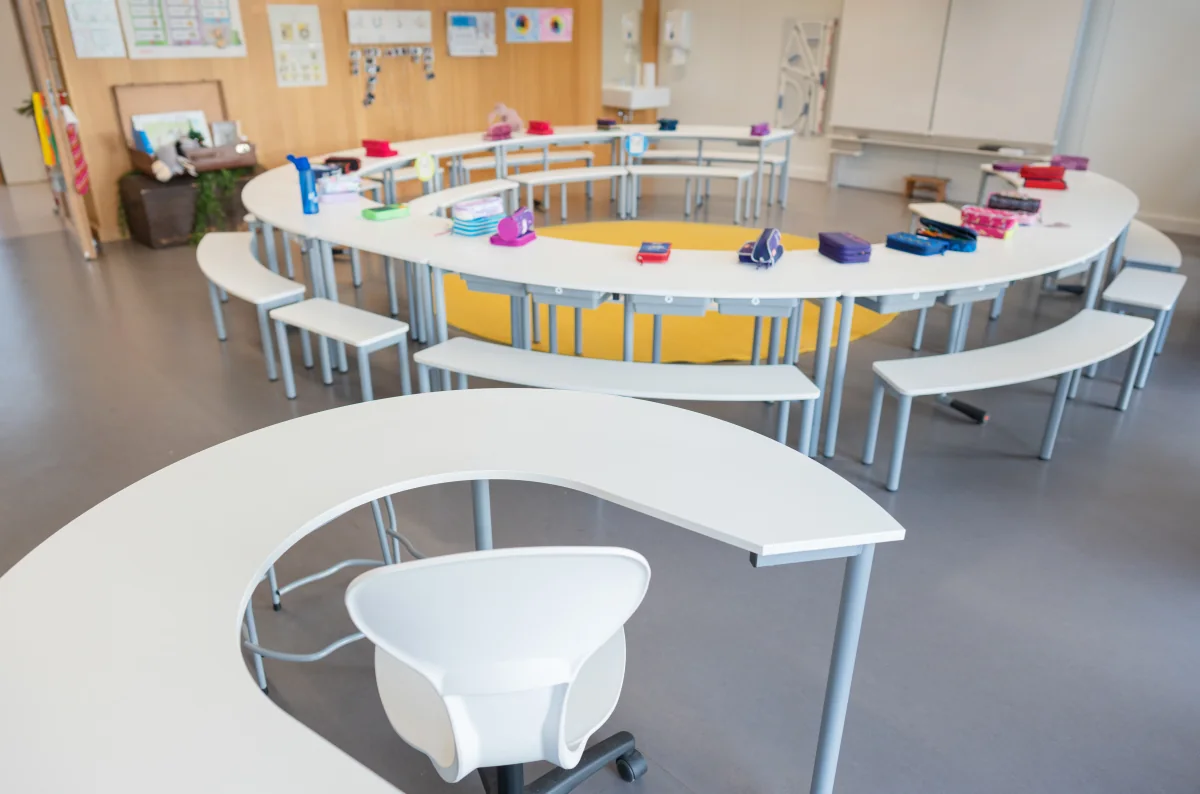
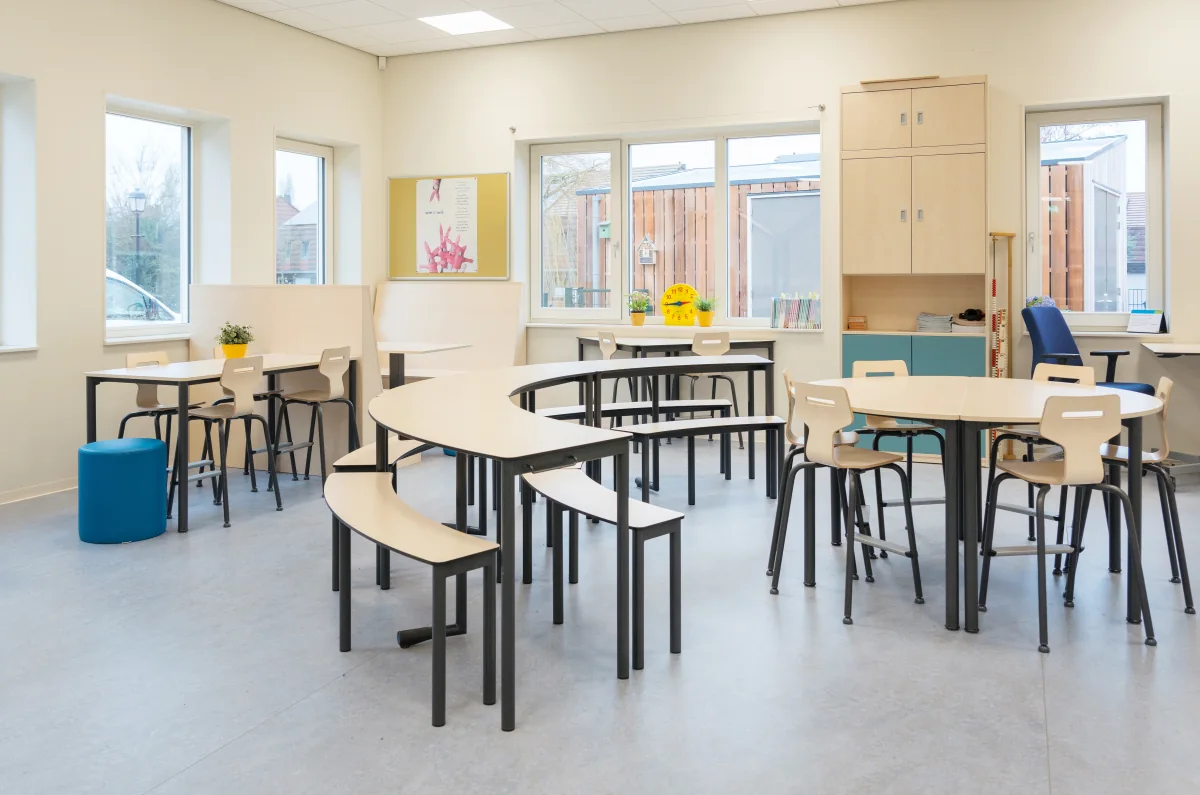
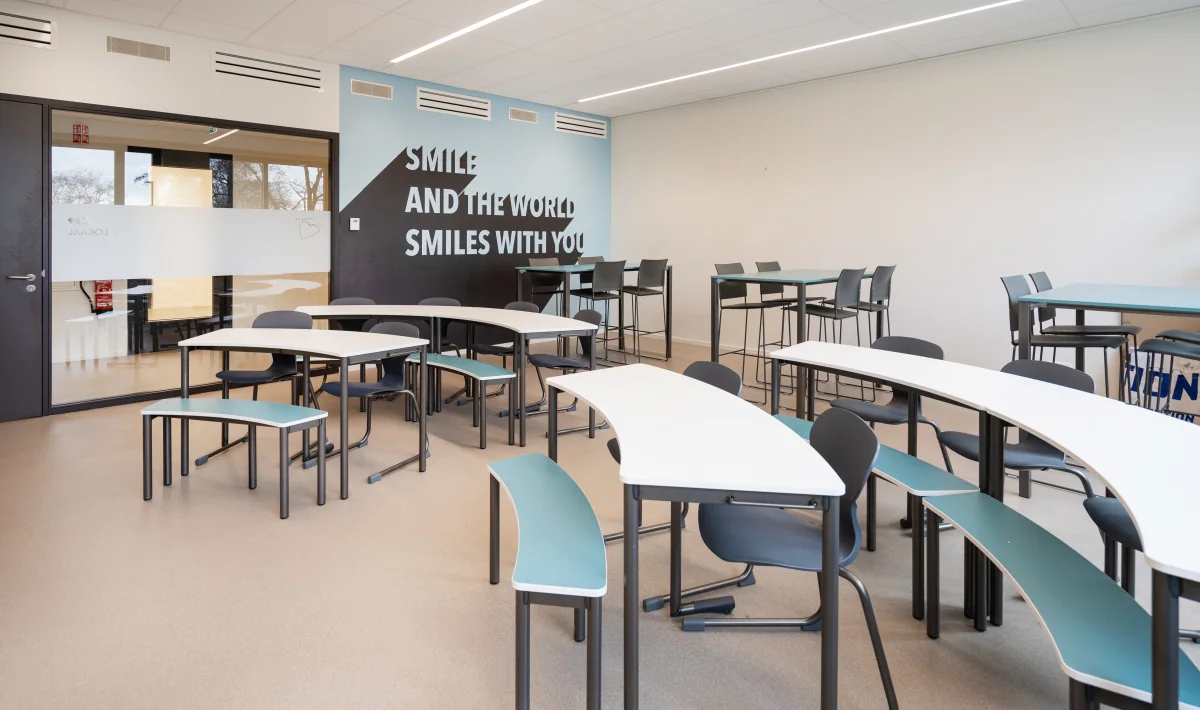
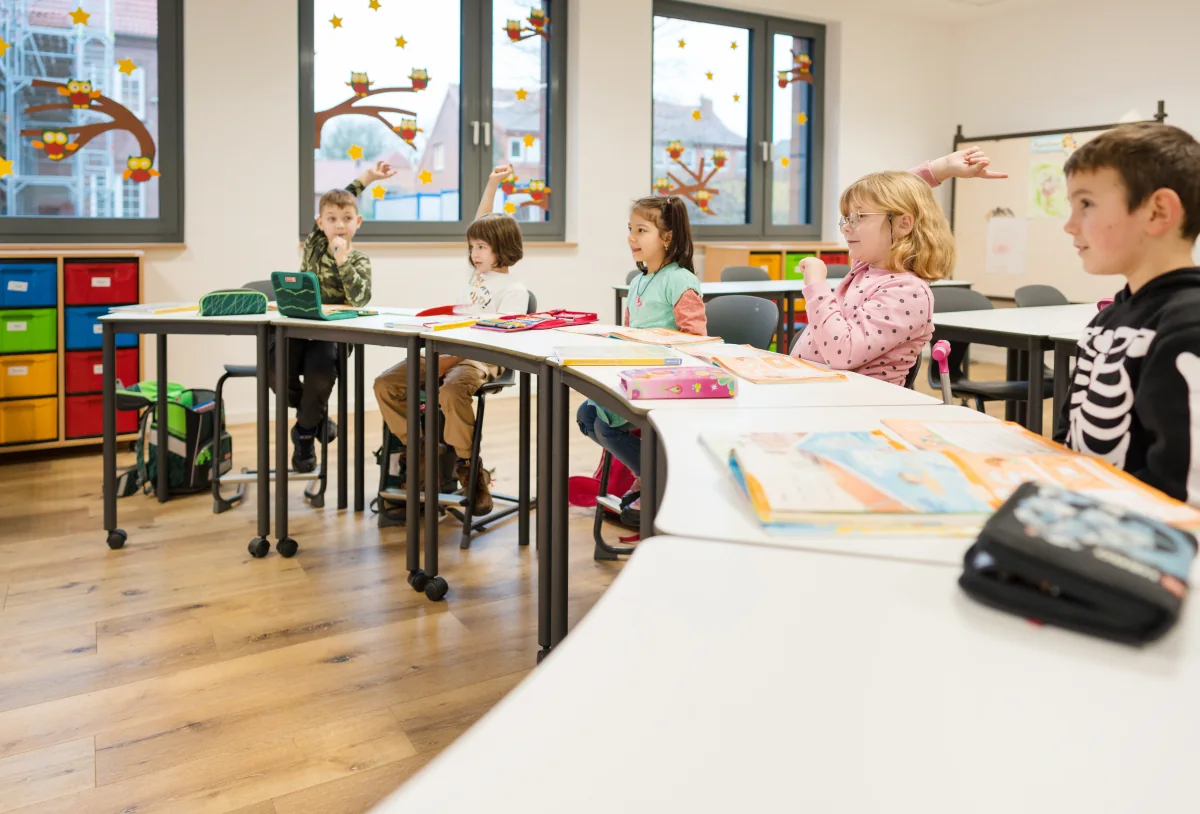
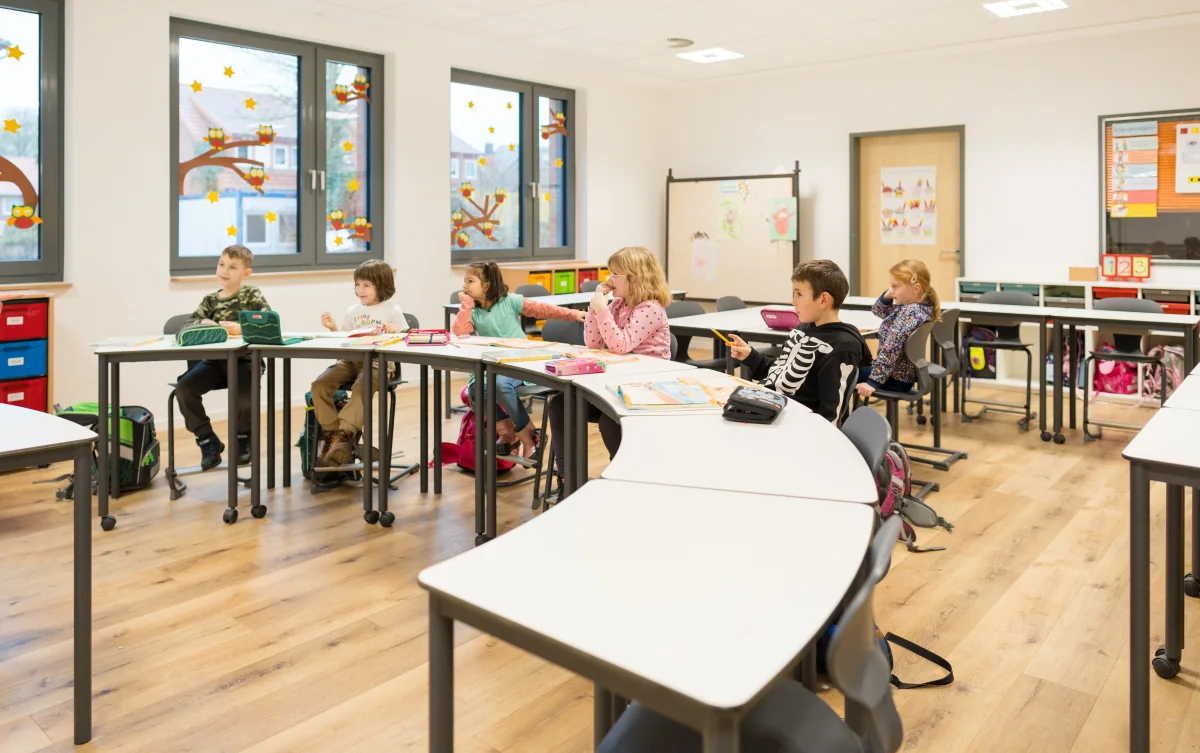
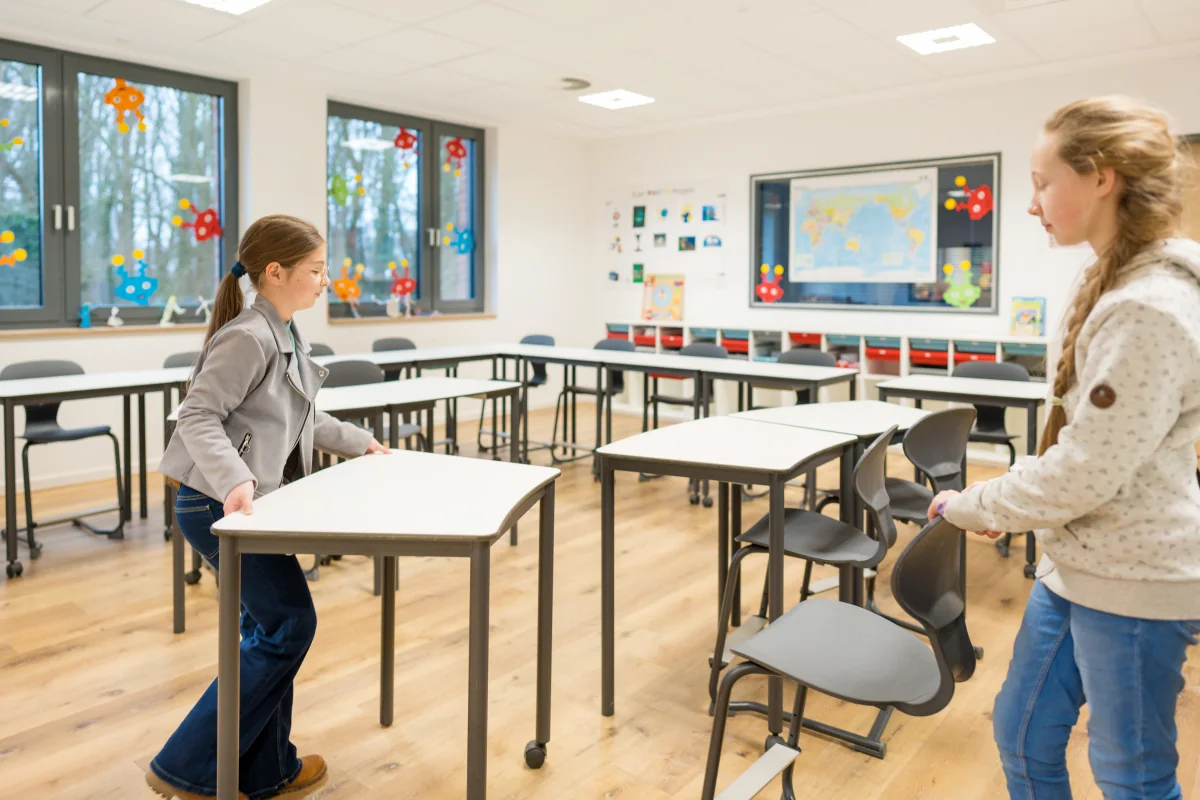
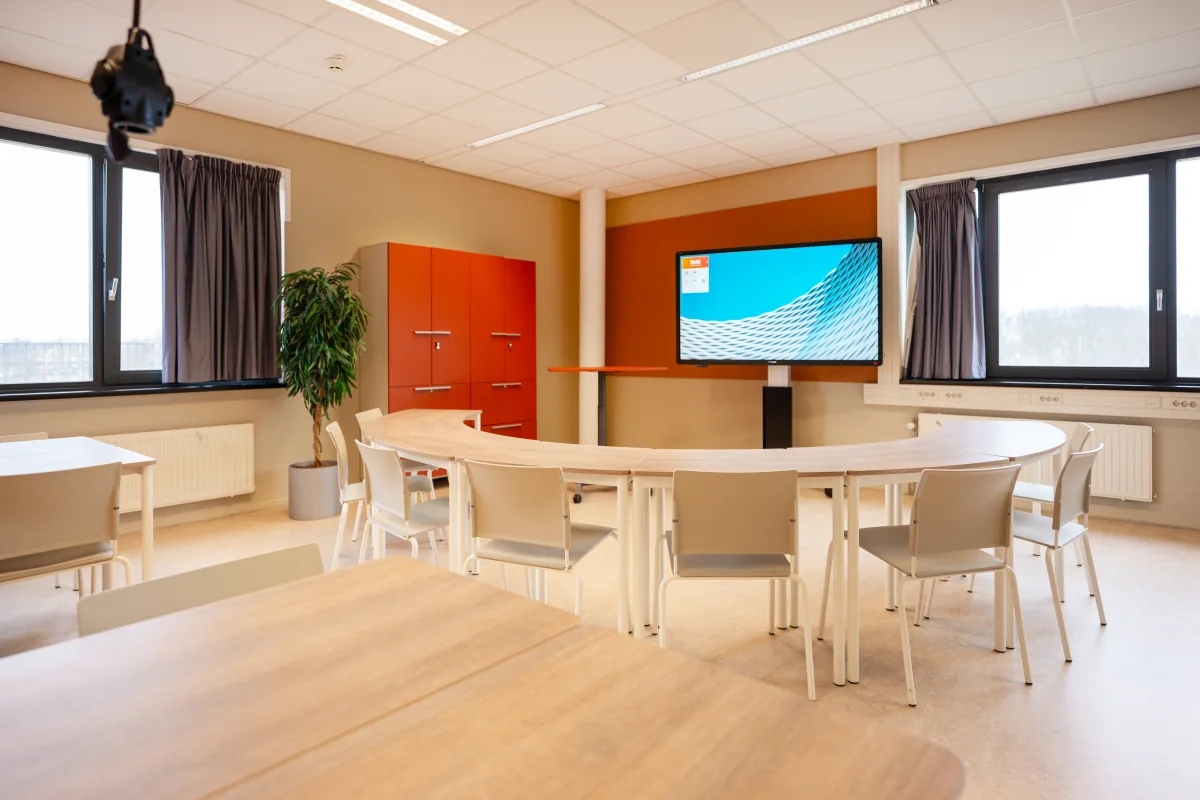
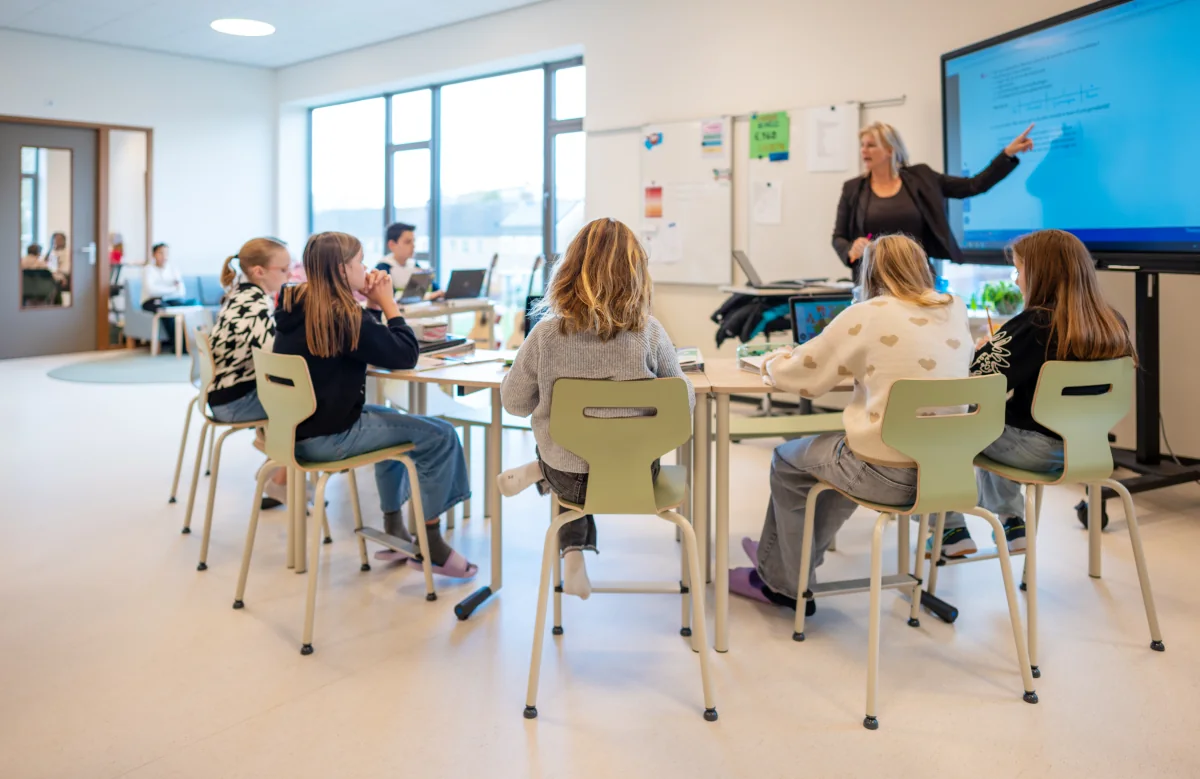
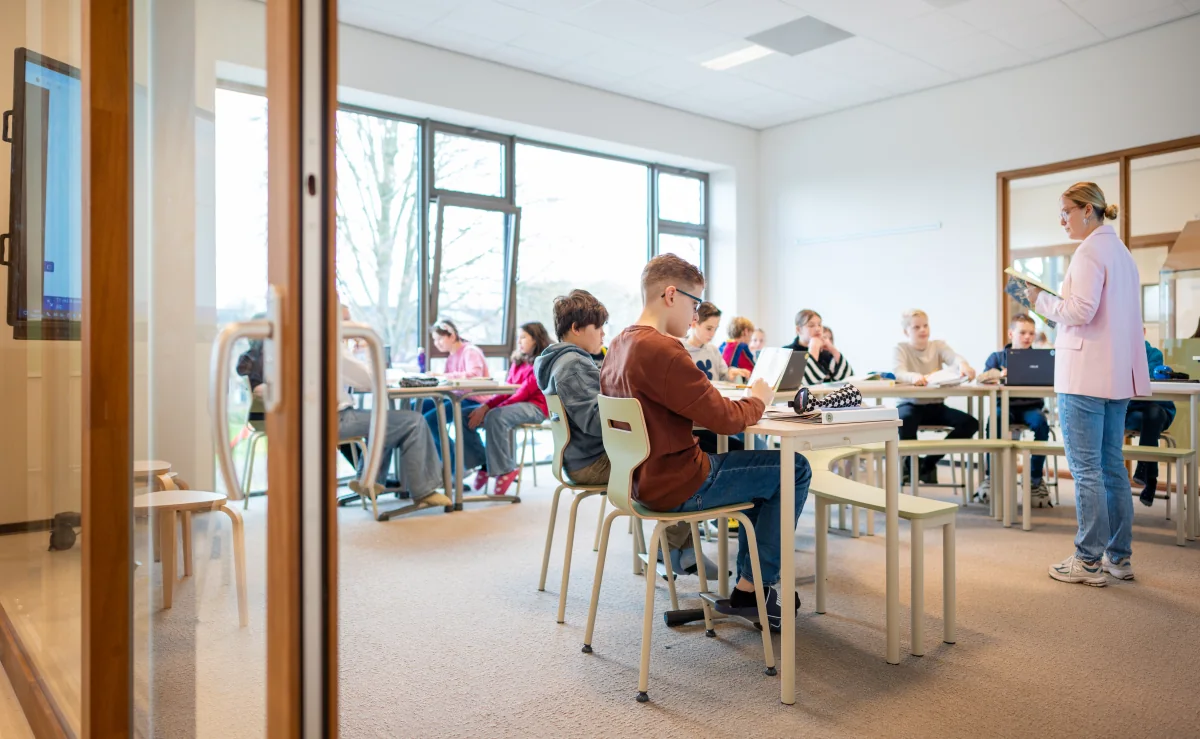
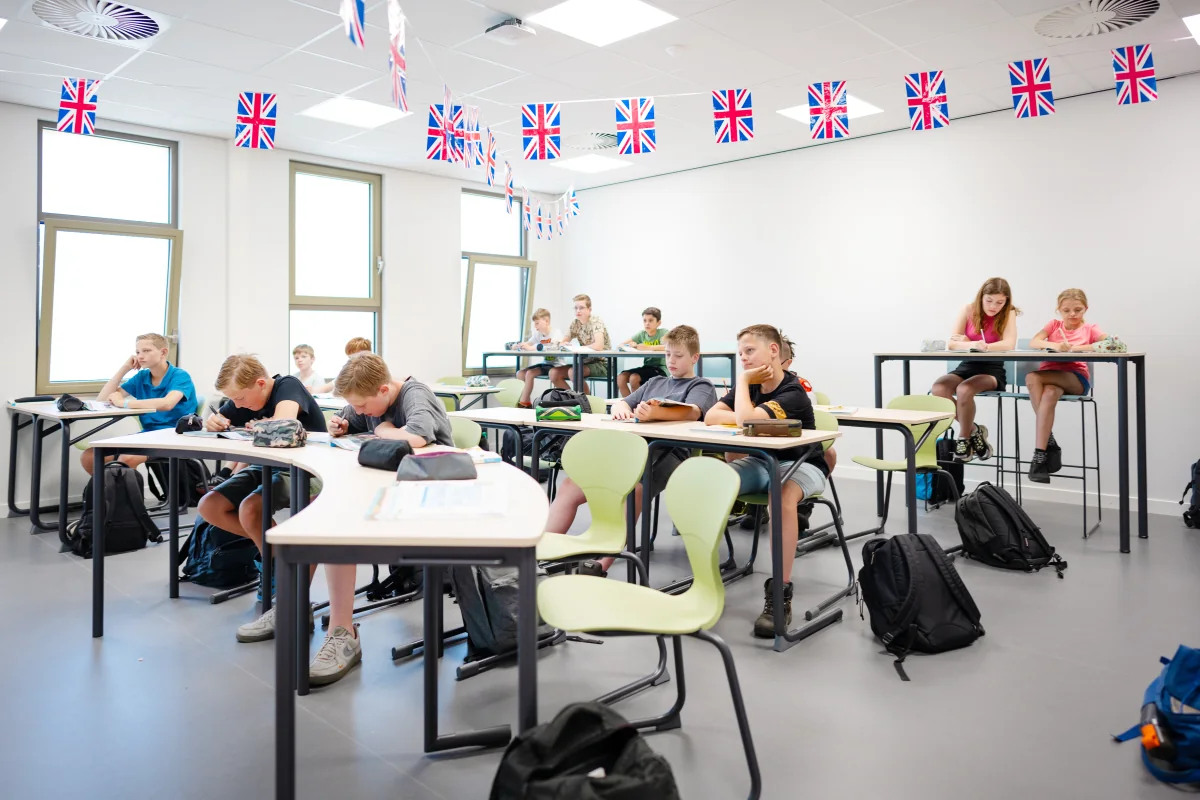
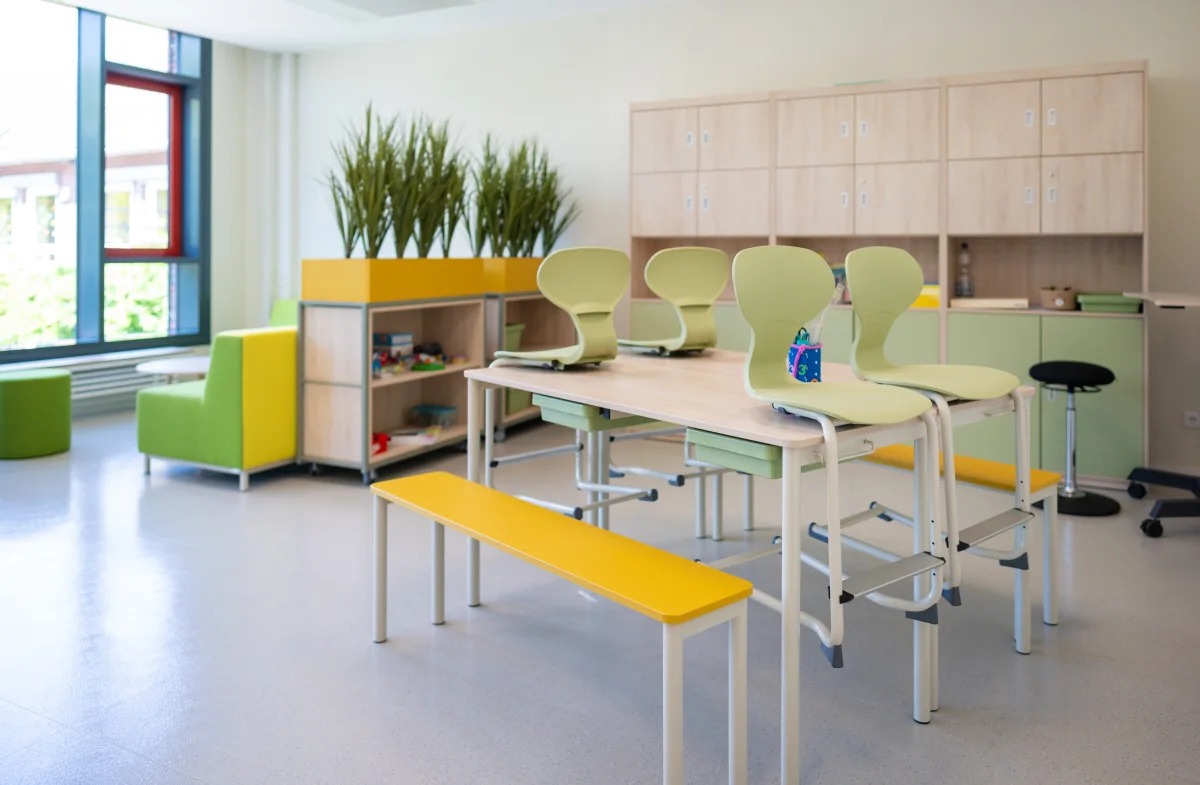
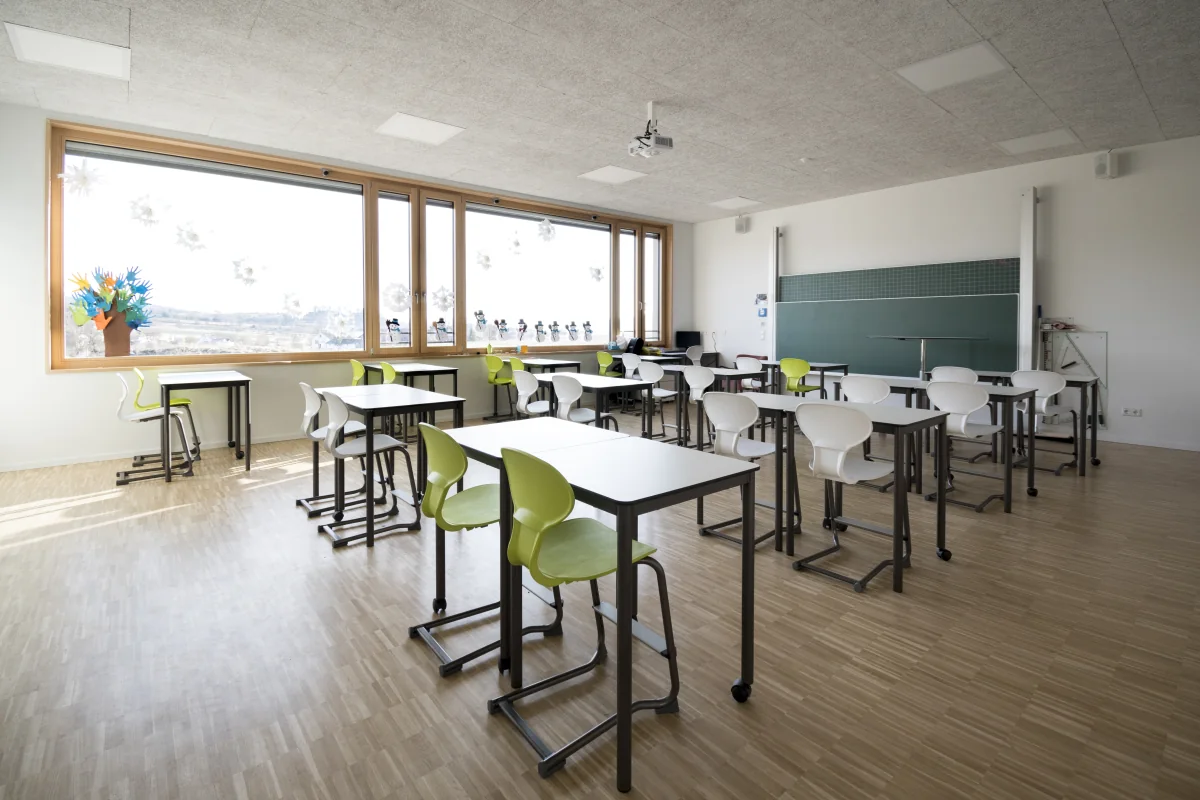
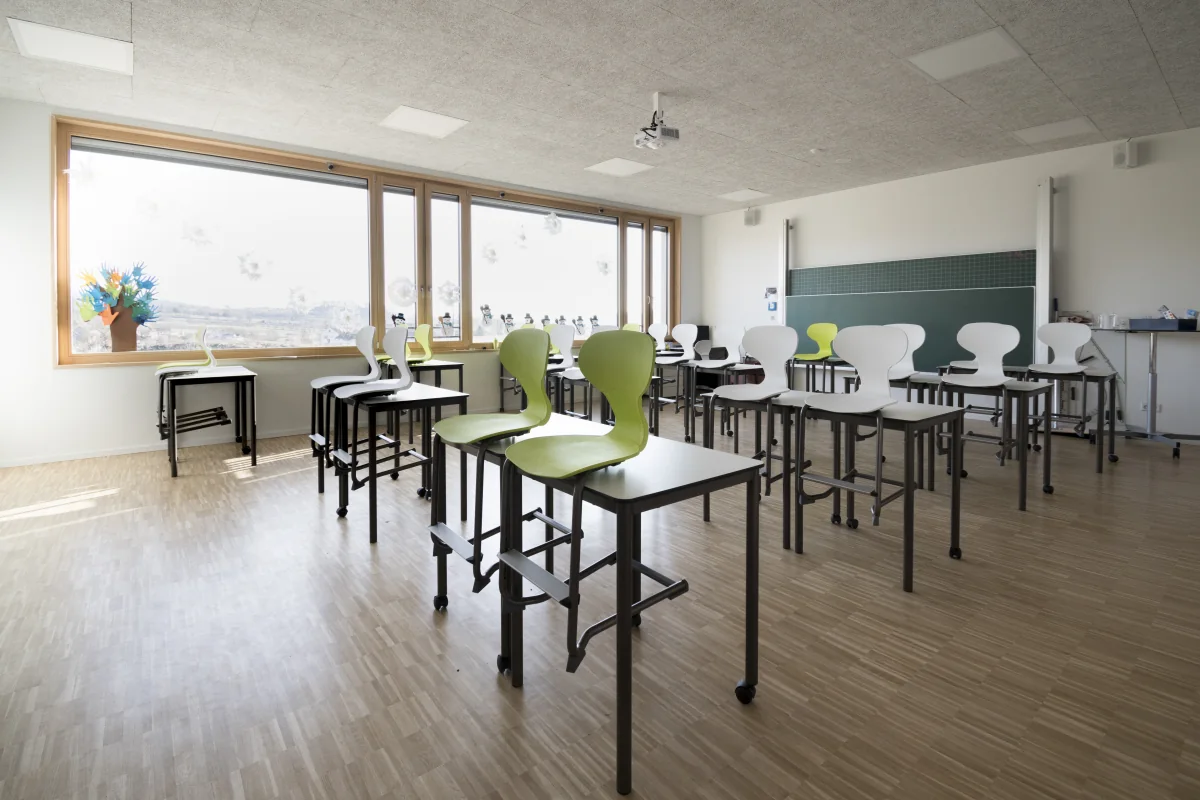
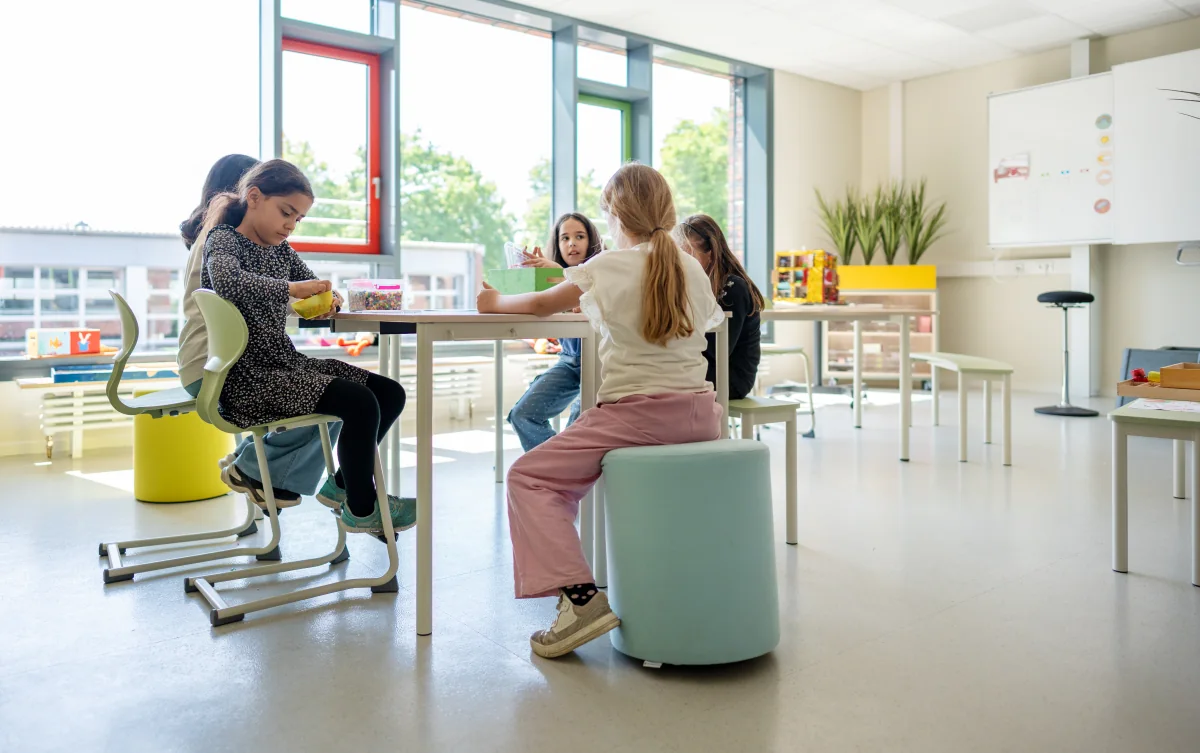
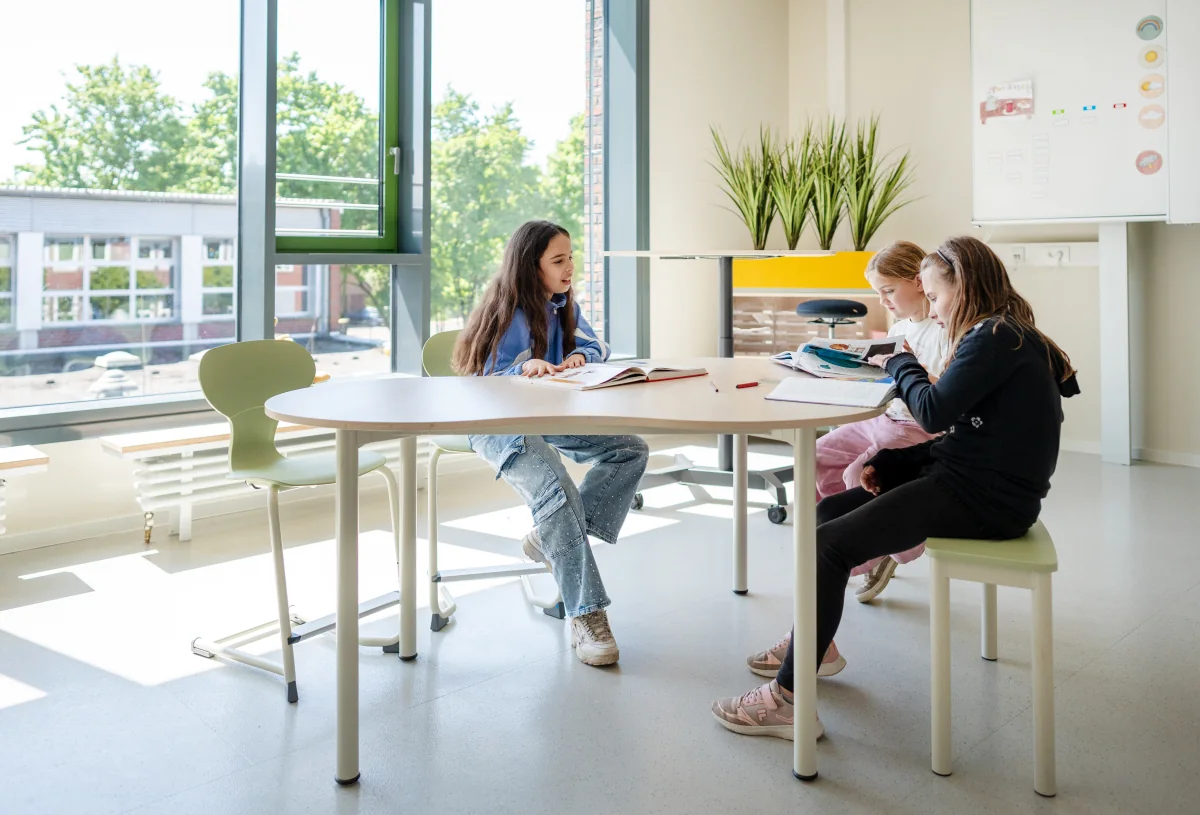
We design and deliver flexible, tech enabled learning environments that adapt to a wide range of educational needs. From modular layouts and inclusive furniture to assistive technologies and immersive 3D planning, we help schools create engaging, future ready classrooms that support every learner.
Four steps — from first conversation to finished space, each one built around you.
01
Initial Consultation
A Werk Solutions team member will meet with you to discuss your project requirements, goals, and vision for the space.
02
Assessment & Analysis
Our design team conducts a thorough assessment, taking measurements, photographs, and gathering relevant drawings and floor plans.
03
Concept Development
Based on your preferences and our assessment, we develop a design concept with 3D renderings, sketches, and material samples.
04
Delivery & Installation
We present the design for your approval, then manage every stage through to professional installation and aftercare.
What We Do
Our Services
At Werk Solutions, we design and deliver inspiring, functional interiors for both educational and commercial spaces. Our team manages every stage, from concept to completion.
Educational Interiors
Classrooms, STEM zones, libraries, sixth forms, SEND areas, and more. Designed to inspire learning and support every student.
Commercial Spaces
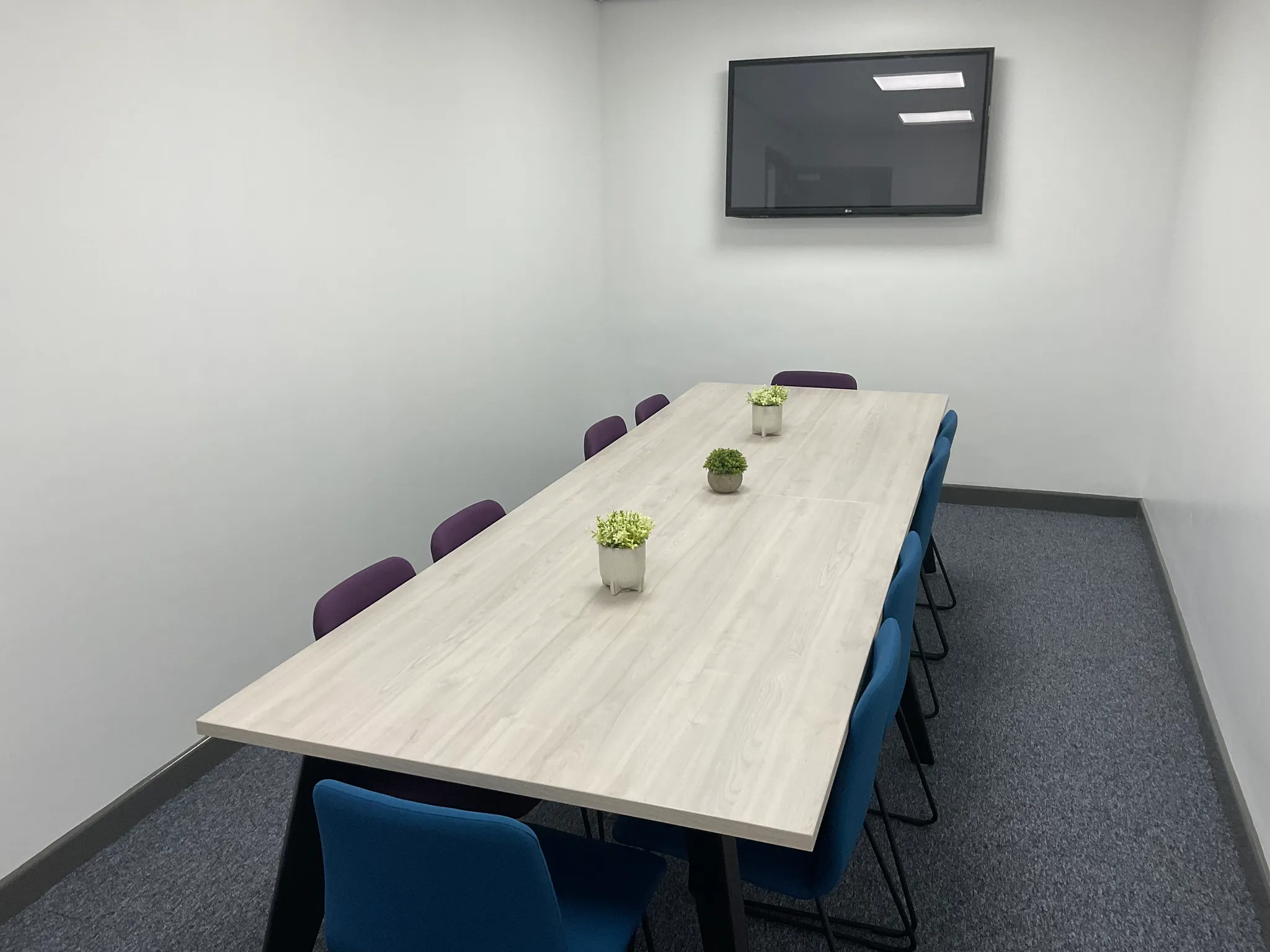
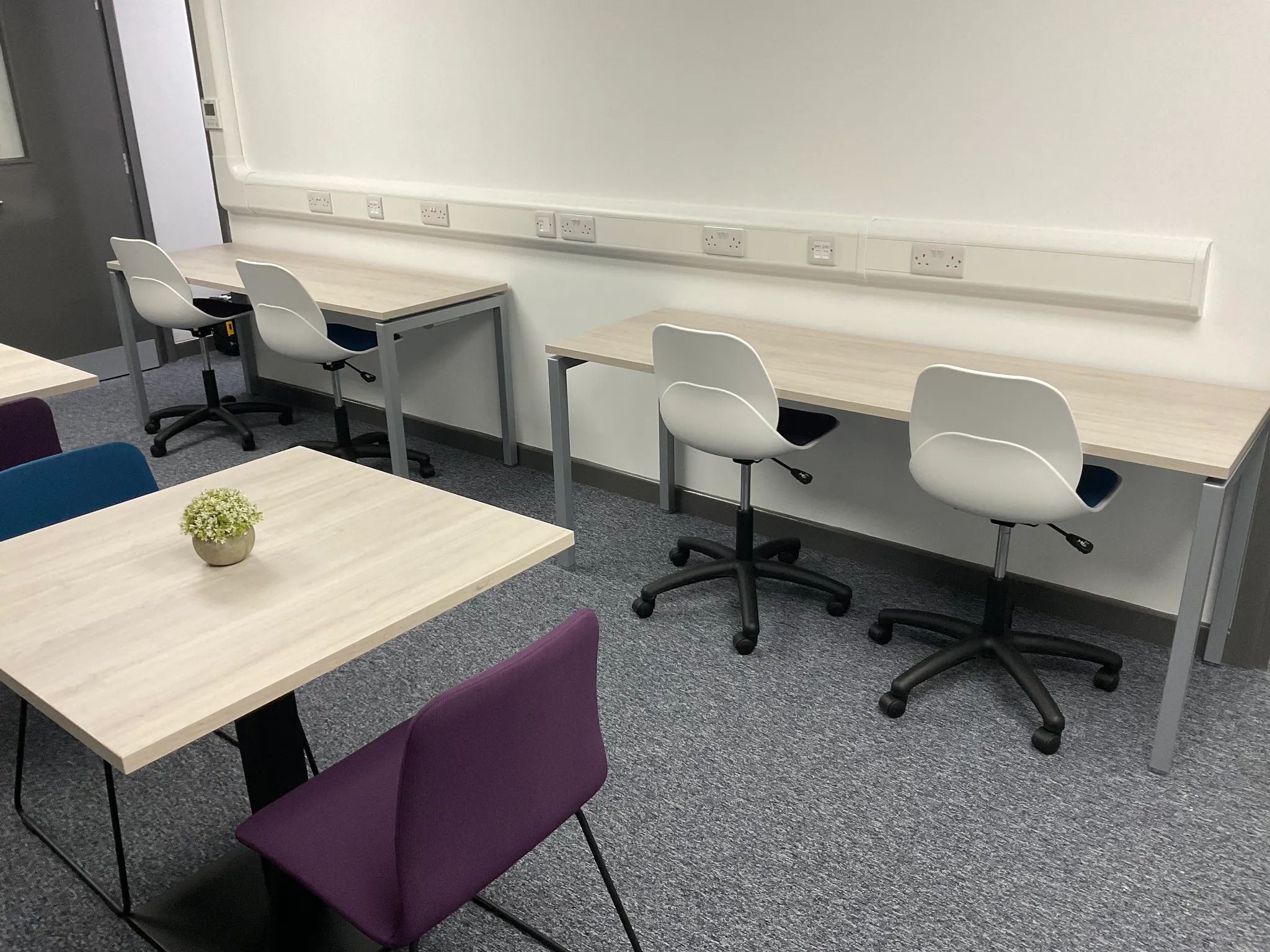
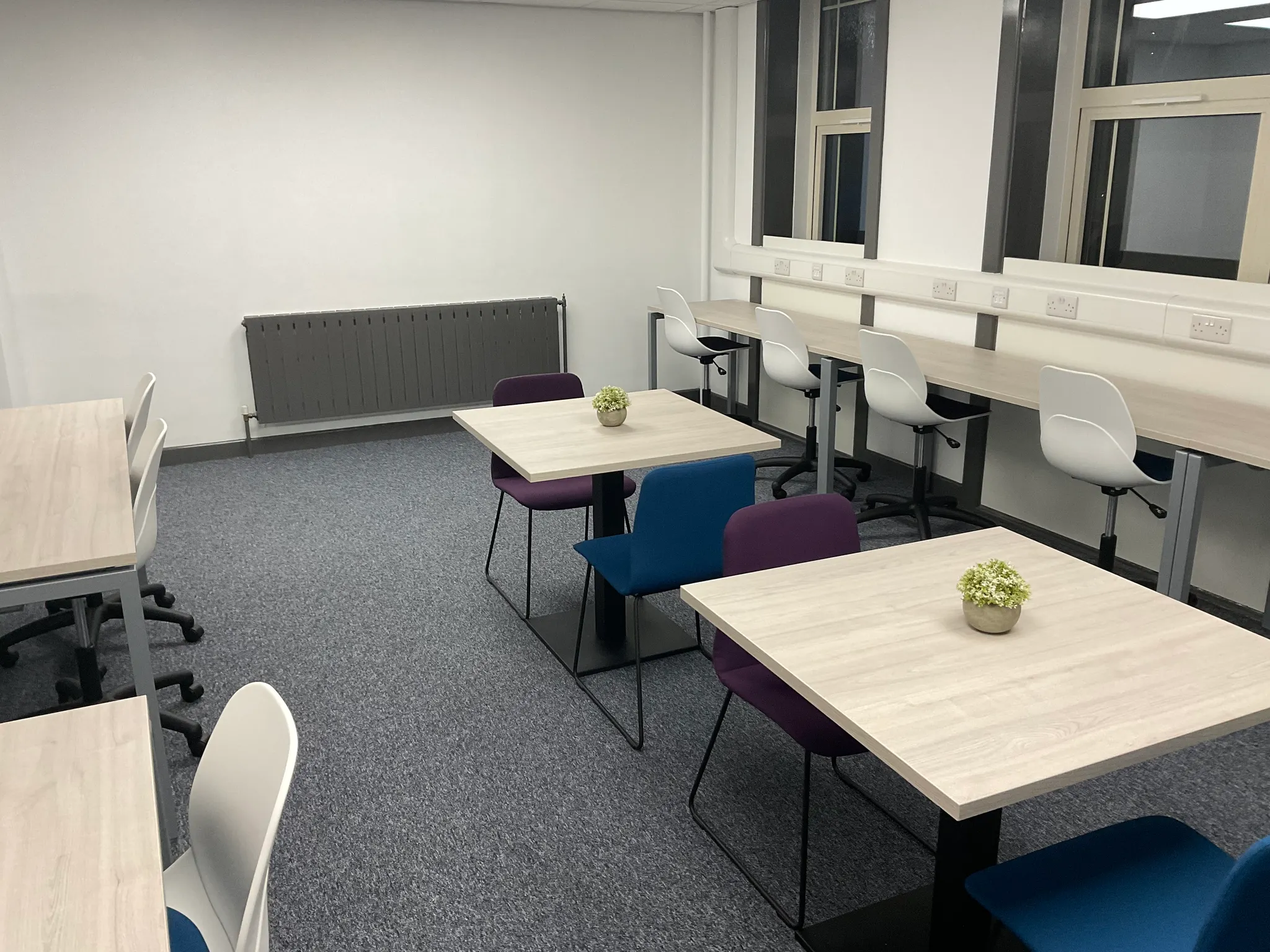
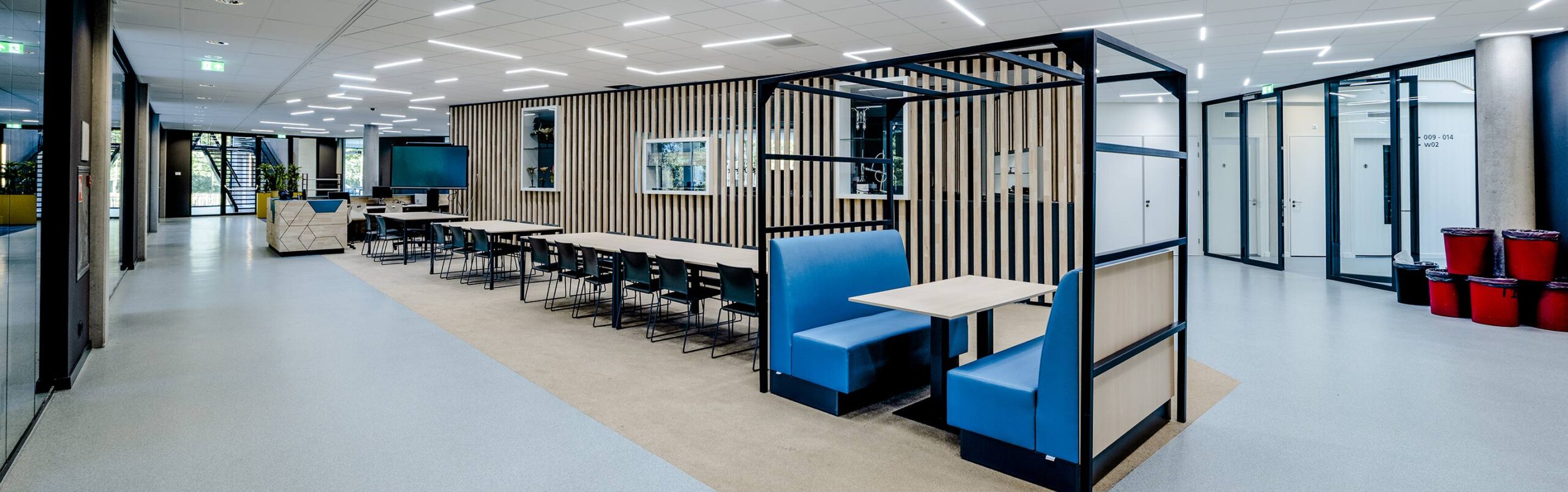
Offices, meeting rooms, reception areas, and breakout zones. Functional, attractive workspaces that boost productivity.
2D & 3D Space Planning
Visual layouts and realistic design renderings to bring your ideas to life before any physical work begins.
Furniture Sourcing
Tailored selections from our curated range, professionally delivered and installed to your specification.
Project Management
From site surveys and planning to delivery, installation, and aftercare. End to end management at every stage.
Sustainable Design
We prioritise sustainable materials and long lasting quality, creating spaces that are good for people and the planet.
Answers to common questions about our interior design services for schools and businesses.
What types of spaces does Werk Solutions design?
We specialise in educational and commercial interiors across the North West of England. This includes classrooms, libraries, staffrooms, sixth form areas, sensory rooms, nurture hubs, wellbeing spaces, offices, meeting rooms, and breakout areas. Every project is designed collaboratively to match how people actually use the space.
Do you offer a full design-to-installation service?
Yes. We manage every stage from initial consultation and site survey through 2D and 3D space planning, furniture sourcing, delivery, professional installation, and aftercare. You deal with one team from start to finish.
Is furniture finance available for schools?
We provide guidance on flexible furniture finance options that allow schools, academies, and trusts to spread the cost of interior projects over an agreed term. We are not a lender or credit broker ourselves, but we can introduce you to authorised finance providers.
Can I visit your showroom before starting a project?
Absolutely. Our on-site showroom in North West England lets you experience furniture, finishes, and layout options first-hand. It is a great way to see quality up close and explore ideas before committing to a project. Contact us to arrange a visit.
How long does a typical project take?
Timelines vary depending on scope. A single classroom refurbishment might take two to three weeks from design approval to installation, while larger multi-room projects can take six to twelve weeks. We work around school term dates and business schedules to minimise disruption.
Which areas do you cover?
We are based in Wallasey, Merseyside and primarily serve schools, academies, trusts, and businesses across Merseyside, Greater Manchester, Lancashire, Cheshire, and the wider North West region. We also take on projects further afield depending on scope.
How much does school interior design cost?
School interior design costs vary depending on room size, furniture specification, and project complexity. A single classroom refurbishment typically starts from a few thousand pounds, while larger multi-room projects involving bespoke furniture, sensory equipment, or specialist installations range higher. We provide free consultations and detailed quotes tailored to your budget and requirements.
What is a sensory room and how do you design one?
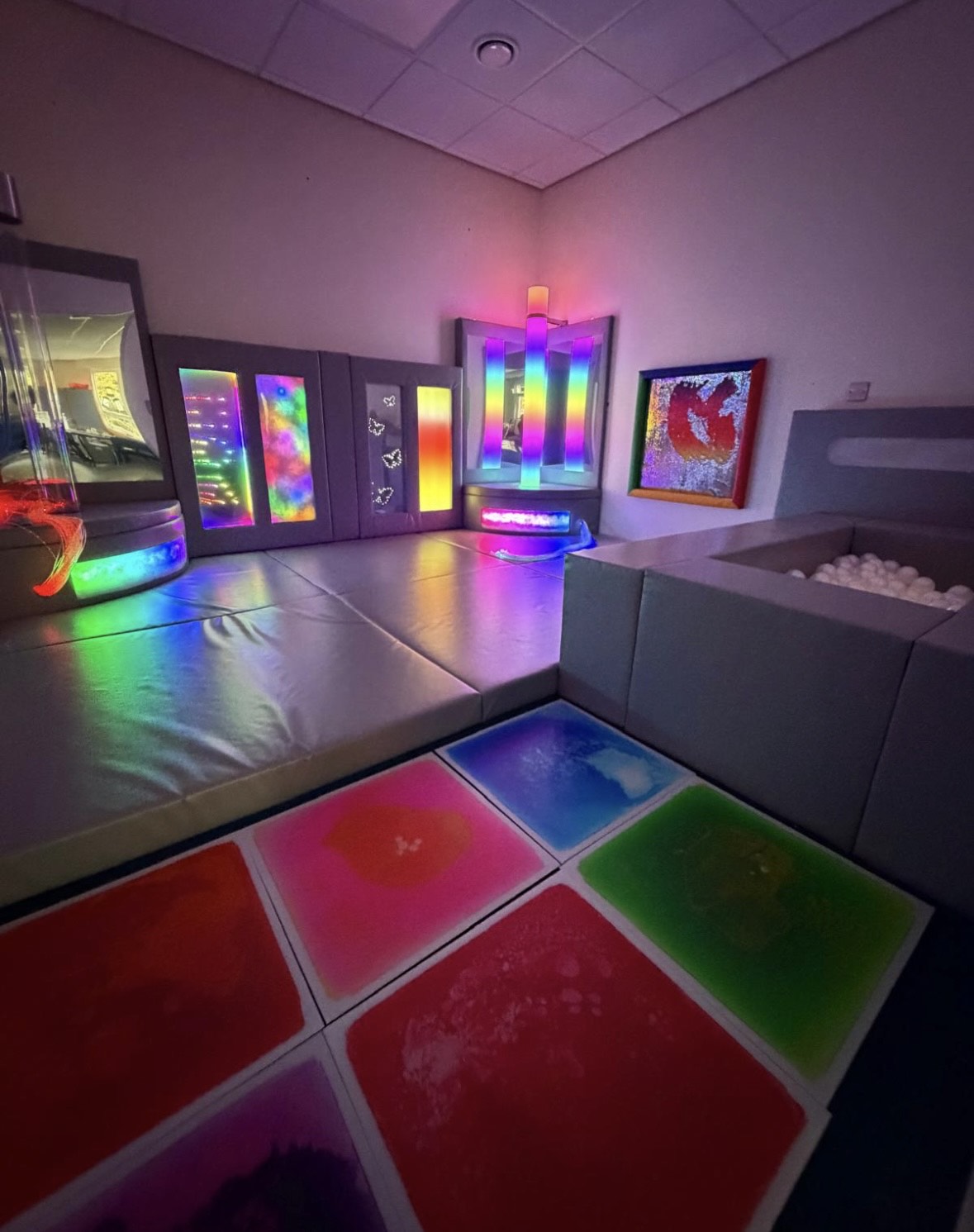
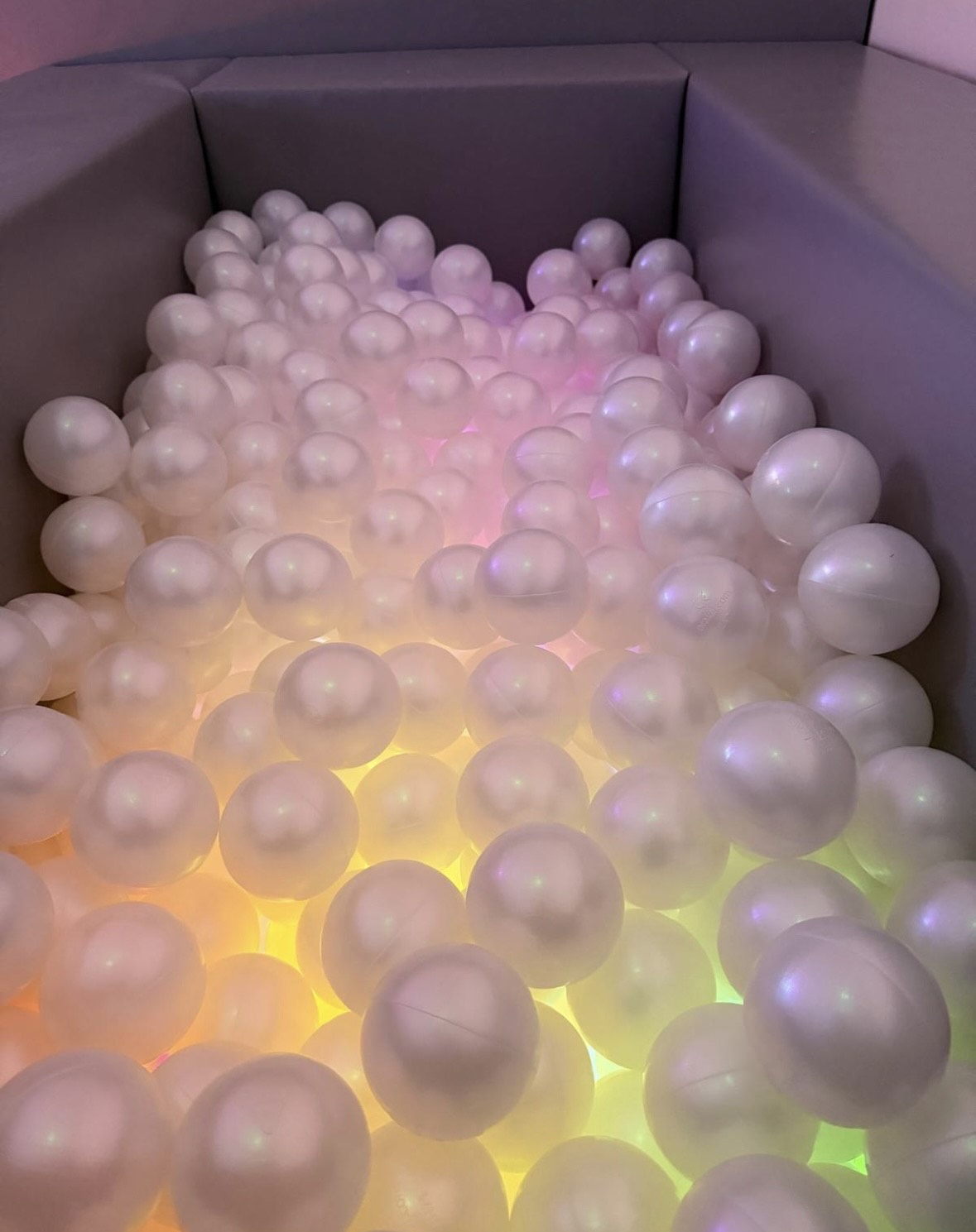
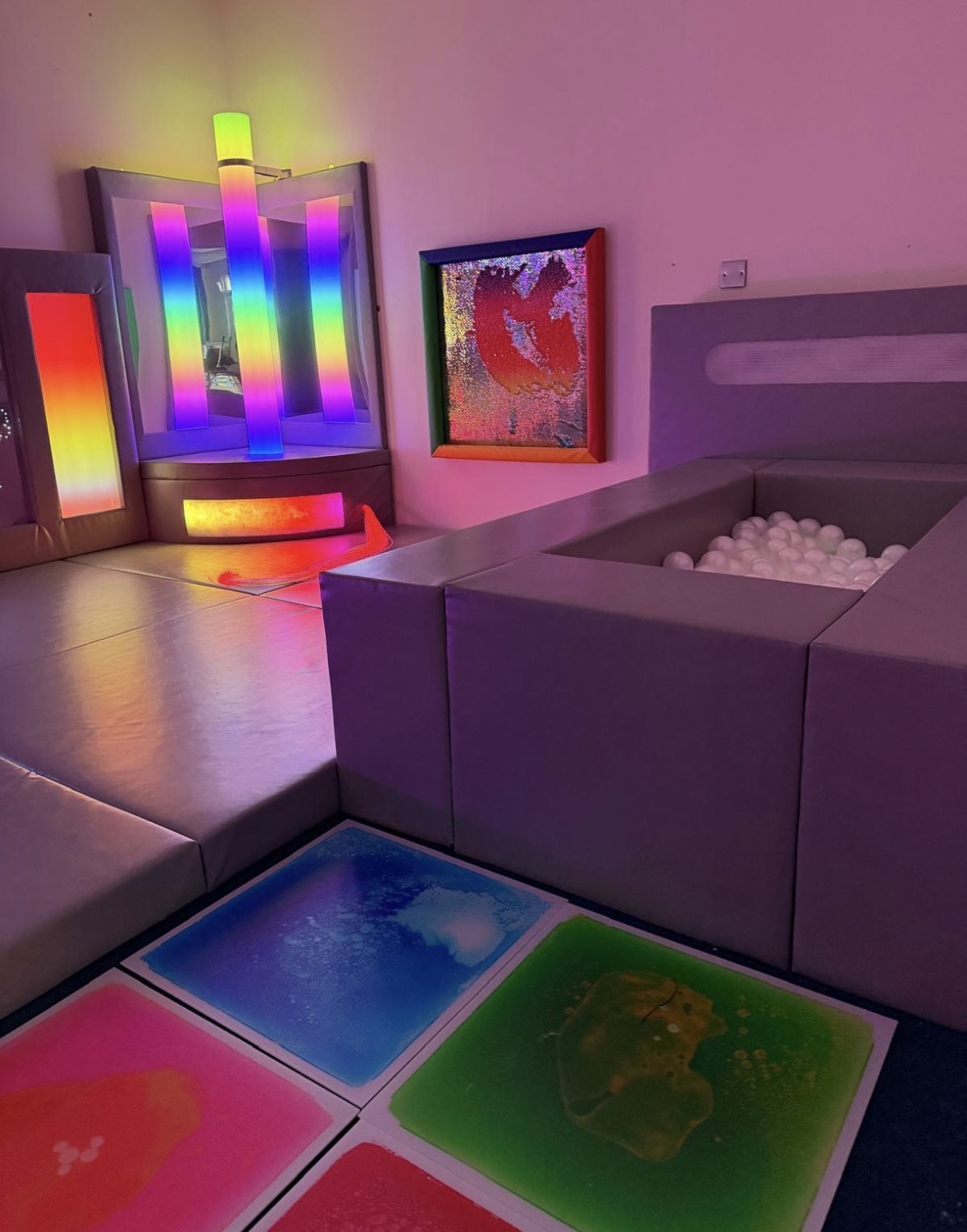
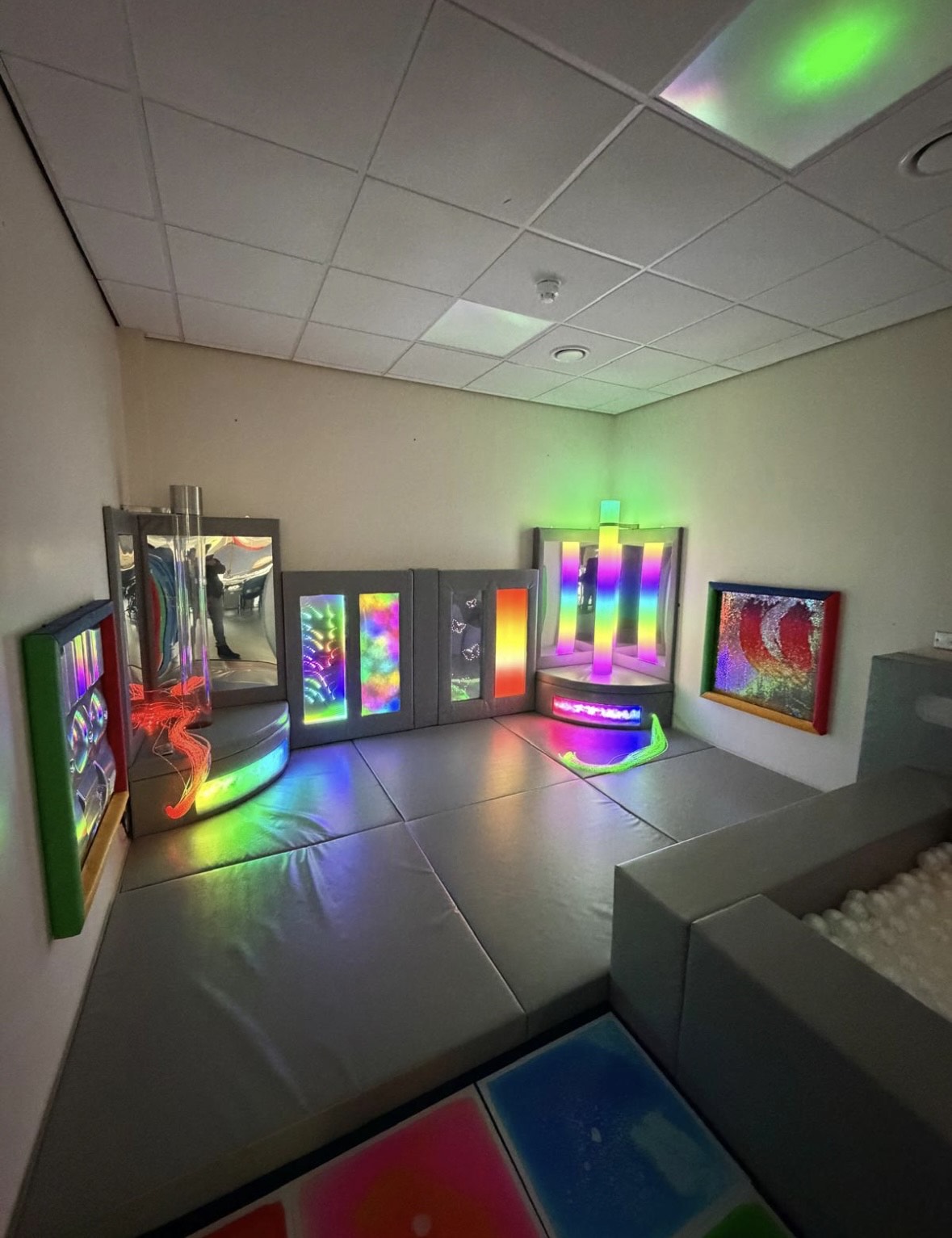
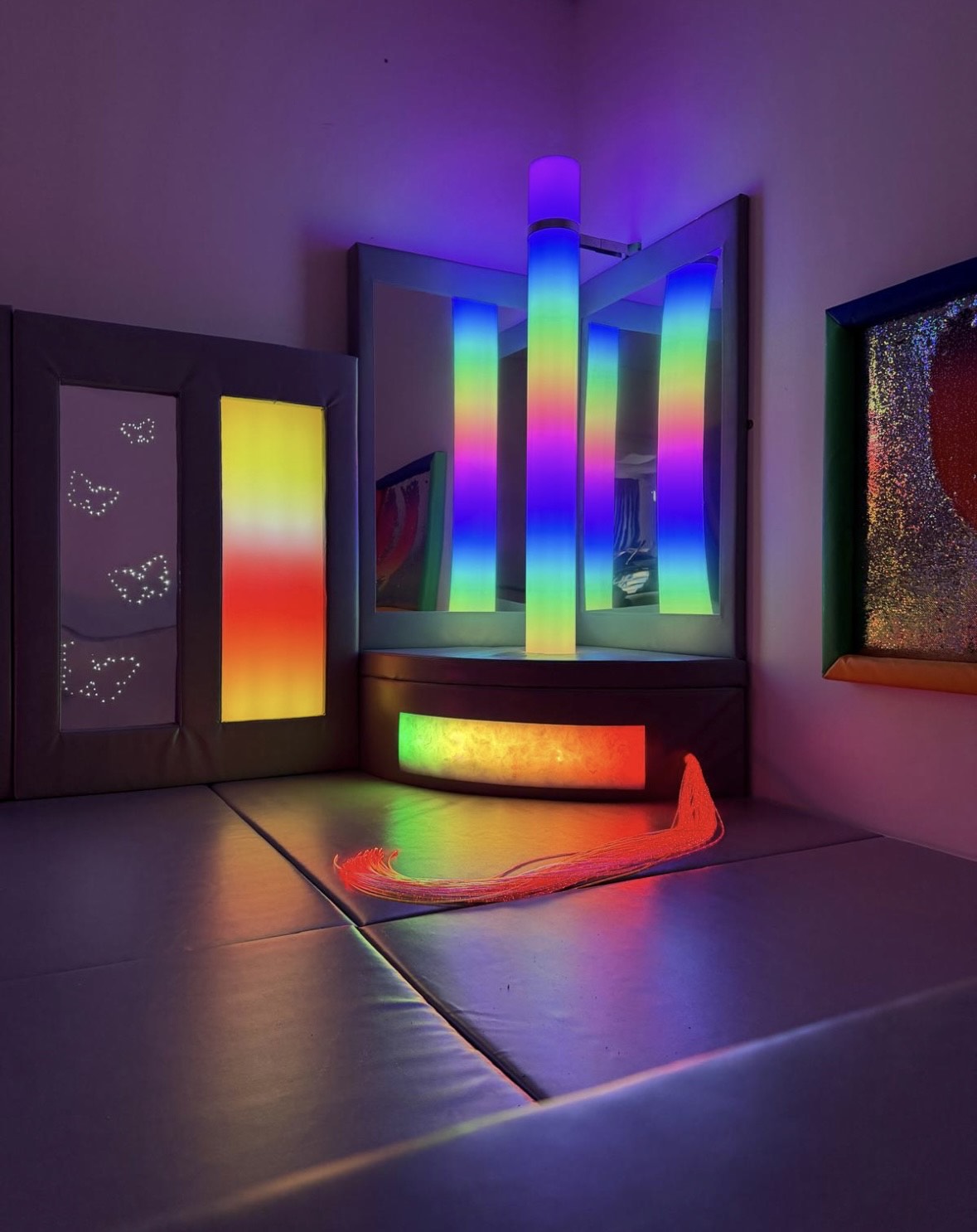
A sensory room is a specially designed space that helps students with sensory processing needs, autism, anxiety, or SEMH through controlled lighting, textures, sounds, and interactive elements. We design sensory rooms tailored to each school, selecting appropriate equipment such as bubble tubes, fibre optic lights, tactile panels, and calming furniture — all informed by SEND best practice.
Can you refurbish our school staffroom?
Yes, staffroom refurbishment is one of our core services. We design staffrooms that genuinely support teacher wellbeing — with comfortable seating, proper kitchen facilities, quiet zones, collaborative areas, and storage solutions. A well-designed staffroom improves staff morale, retention, and daily wellbeing.
What is EromesMarko furniture?
EromesMarko is a Dutch educational furniture manufacturer founded in 1898. They are pioneers in circular economy furniture — products like the Gripz chair and Lesca table are made from recycled and bio-based materials and are fully recyclable at end of life. Werk Solutions is the exclusive authorised EromesMarko dealer for North West England.
What is the best classroom layout for student engagement?
Effective classroom layouts balance flexibility with focus. We design spaces with modular furniture that can be reconfigured for different learning activities — collaborative clusters for group work, rows or horseshoes for teacher-led instruction, and quiet zones for independent study. The best layouts include clear sight lines to teaching areas, adequate storage to reduce visual clutter, and zones for movement without disrupting others. Height-adjustable furniture and flexible seating options help accommodate diverse student needs and learning preferences.
What makes a sensory room effective for SEND students?
Effective sensory rooms combine controlled environments with purposeful sensory input. Key features include adjustable and dimmable lighting to reduce visual overwhelm, soft furnishings and muted colour palettes for calming effects, and designated quiet zones separated from traffic. Interactive elements like bubble tubes, fibre optic lights, and tactile panels provide positive sensory engagement. Sound management is critical — acoustic panels and soft materials reduce noise sensitivity. We design sensory rooms working closely with school SEND staff, understanding each student's specific sensory profiles and regulation needs, ensuring the space genuinely supports their wellbeing and learning.
Do you work with multi-academy trusts across the North West?
Yes, we work extensively with multi-academy trusts across the North West. We can coordinate design and furniture supply across multiple schools within a trust, ensuring visual and functional consistency, benefiting from volume pricing, and streamlining project management. We understand trust procurement processes, can work within your existing frameworks and approval structures, and have experience managing complex, phased rollouts across several sites. Our approach ensures each school's unique needs are respected whilst maintaining economies of scale for the trust.
What is DfE Building Bulletin compliance for school furniture?
DfE Building Bulletins set space and furniture standards for schools. Key guidance includes minimum desk heights (700–760mm for secondary, lower for primary), ergonomic seating that supports posture during the school day, storage integrated into spaces to meet statutory PE kit and resource storage requirements, and accessibility compliance for students with additional needs. We ensure all furniture selections and layout designs meet current Building Bulletin standards, with particular attention to SEND accessibility where relevant. We stay current with updates to guidance and can advise you on compliance for both new builds and refurbishment projects.
How do you design a school library for modern learning?
Modern school libraries are active learning hubs, not warehouses. We design flexible resource centres with distinct zones: quiet reading areas with comfortable individual seating, collaborative study tables for group work, IT-integrated spaces for research and digital projects, and display areas showcasing student work. Shelving combines open access for younger learners with secure storage, adjustable shelving accommodates collections that change with curriculum priorities, and wayfinding signage helps students navigate independently. Natural light and varied ceiling heights create visual interest. Acoustic treatment ensures group work doesn't disrupt quiet study. We design libraries that students genuinely choose to use, supporting diverse learning styles and subjects from literacy to STEM.
What sustainable materials do you use in school furniture?
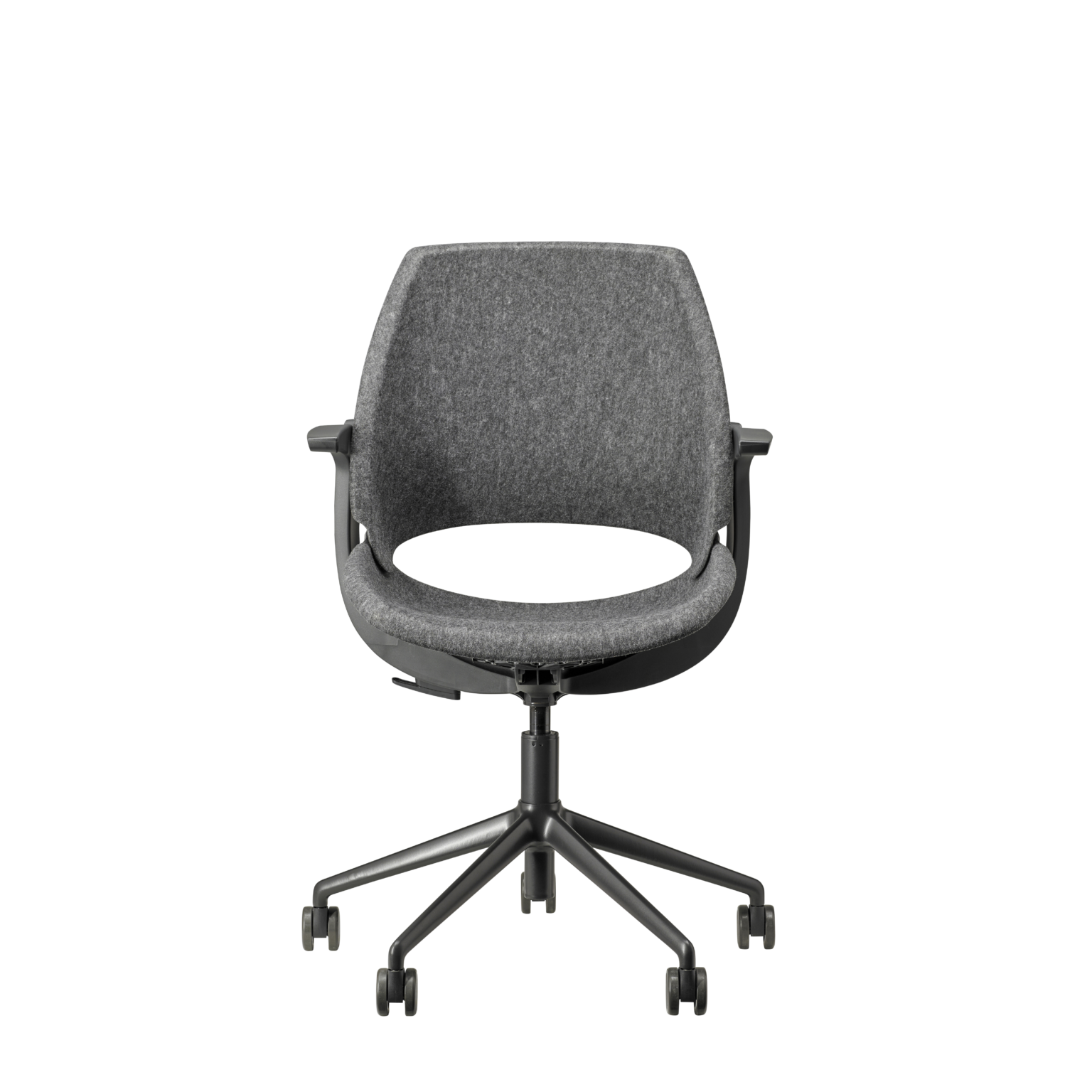
We prioritise sustainable materials that meet school durability and cost requirements. Our EromesMarko range includes furniture made from recycled plastics, FSC-certified wood, and bio-based materials, all fully recyclable at end of life. We source local suppliers where possible to reduce transport carbon. Metal components are recycled aluminium or stainless steel. Textiles are certified against harmful chemicals, protecting student health. We consider durability as sustainability — well-made furniture lasting 10+ years generates far less waste than cheaper alternatives replaced annually. We can discuss lifecycle costs, environmental certifications, and circular economy principles for every project, helping schools balance environmental responsibility with realistic budgets.
Service Areas
School Interior Design Across North West England
Based in Wallasey, Merseyside, we design and install educational interiors for schools, academies, and multi-academy trusts throughout the North West.
Merseyside
Wallasey, Birkenhead, Liverpool, St Helens, Southport, Bootle, Wirral. Our home region — including our hands-on furniture showroom in Wallasey for school visits.
Greater Manchester
Manchester, Salford, Bolton, Stockport, Oldham, Rochdale, Wigan, Bury, Tameside, Trafford. Classroom design, library fit-outs, and staffroom refurbishment for schools across Greater Manchester.
Lancashire
Preston, Blackburn, Burnley, Lancaster, Blackpool, Accrington, Chorley. Educational furniture supply and interior design for Lancashire schools and academies.
Cheshire
Chester, Warrington, Crewe, Macclesfield, Ellesmere Port, Northwich, Congleton. Full design-to-installation service for Cheshire schools and businesses.
Ready to Transform Your Space?
Whether you are planning a new build, refurbishment, or simply exploring ideas, we would love to hear from you.
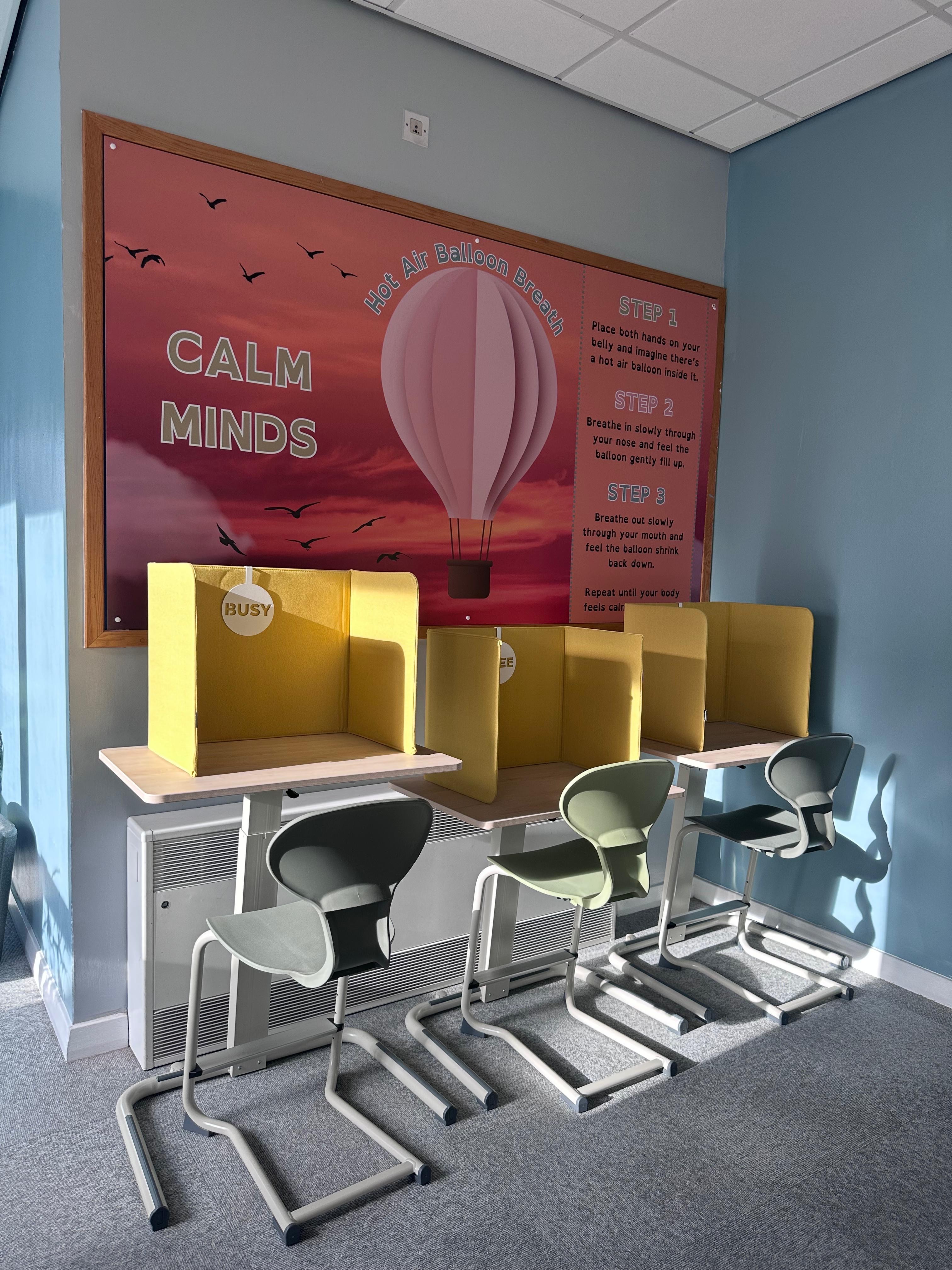
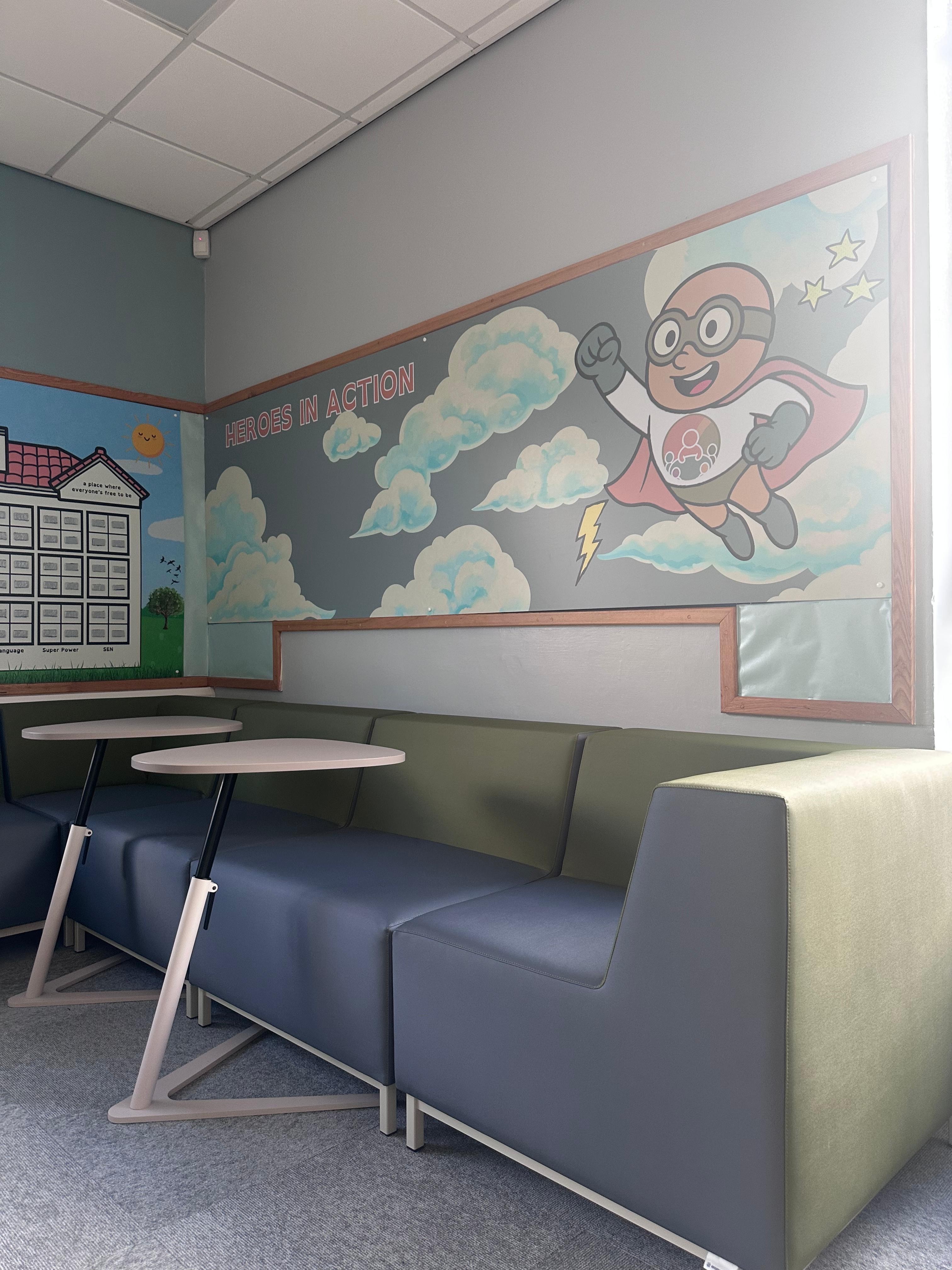
The brief was to create a trauma-informed learning environment that supports students’ emotional and sensory regulation throughout the day. This primary classroom needed to feel safe, flexible, and responsive to individual pupil needs, whilst maintaining a professional educational atmosphere. The design approach combined evidence-based trauma-informed principles with restorative practice. Key strategies included creating discrete zones for different activities—collaborative learning, focused independent work, and safe haven retreats—so pupils could self-regulate based on their emotional state. Flexible modular furniture allowed the space to adapt to different learning configurations throughout the day. Neutral, calming colour palettes were paired with natural materials to reduce sensory overwhelm, whilst accent colours highlighted key zones without creating visual chaos. Materials and furniture selections prioritised adaptability and wellbeing. EromesMarko Gripz student chairs provided comfortable, ergonomic seating that supports healthy posture during extended learning periods. Modular storage units maintained visibility—pupils always know where resources are—whilst integrated shelving reduced visual clutter. Soft furnishings in linen and natural fabrics added tactile comfort. Adjustable lighting (warm 2700K LEDs) supported different learning phases, particularly for pupils with sensory sensitivities. The outcome is a classroom where every child can feel calm, held and ready to engage. Teachers report improved focus, fewer dysregulation incidents, and more flexible teaching possibilities. Pupil feedback emphasises feeling "safe" and "comfortable"—core foundations for learning Learn about our classroom design service.
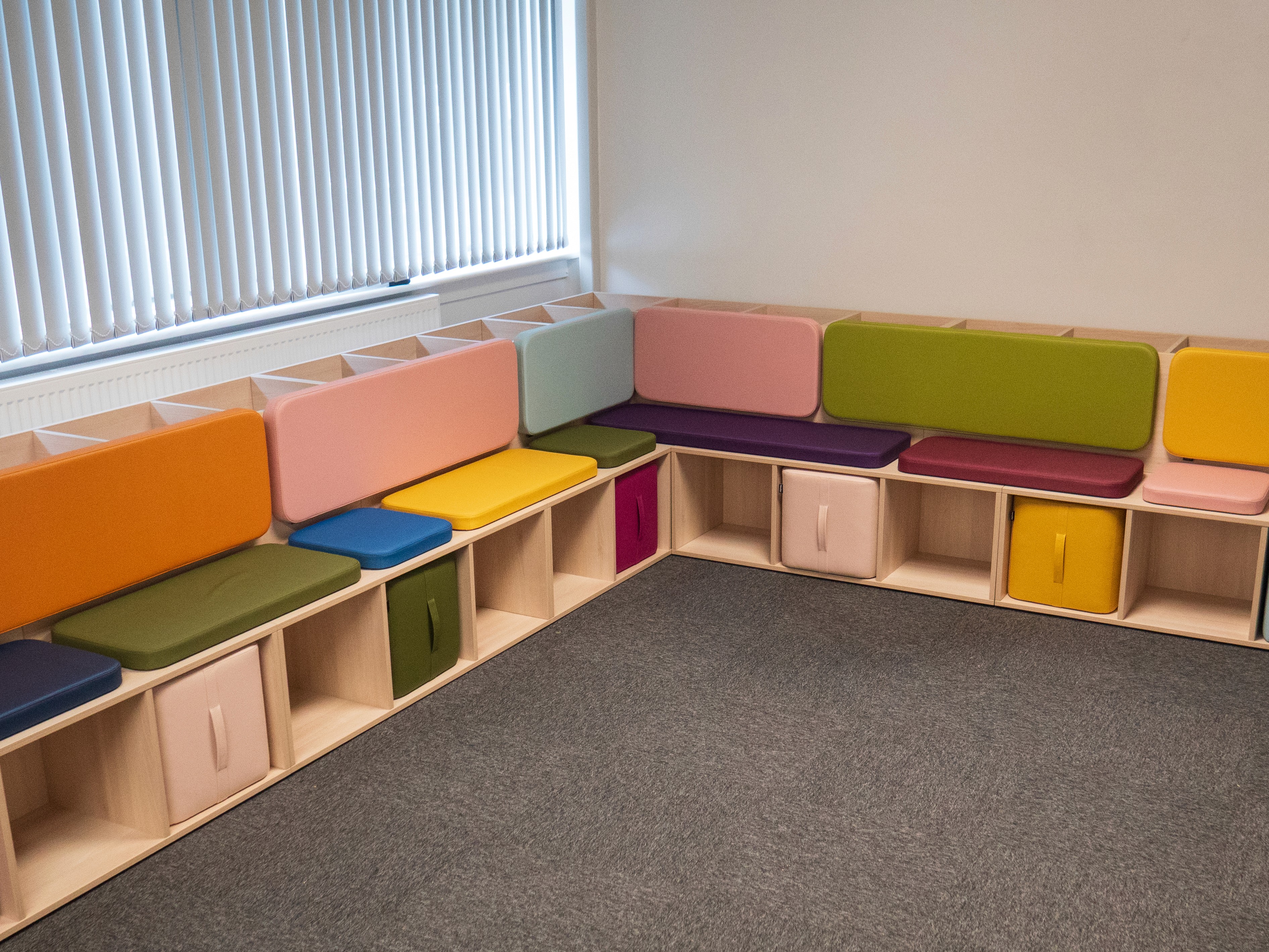
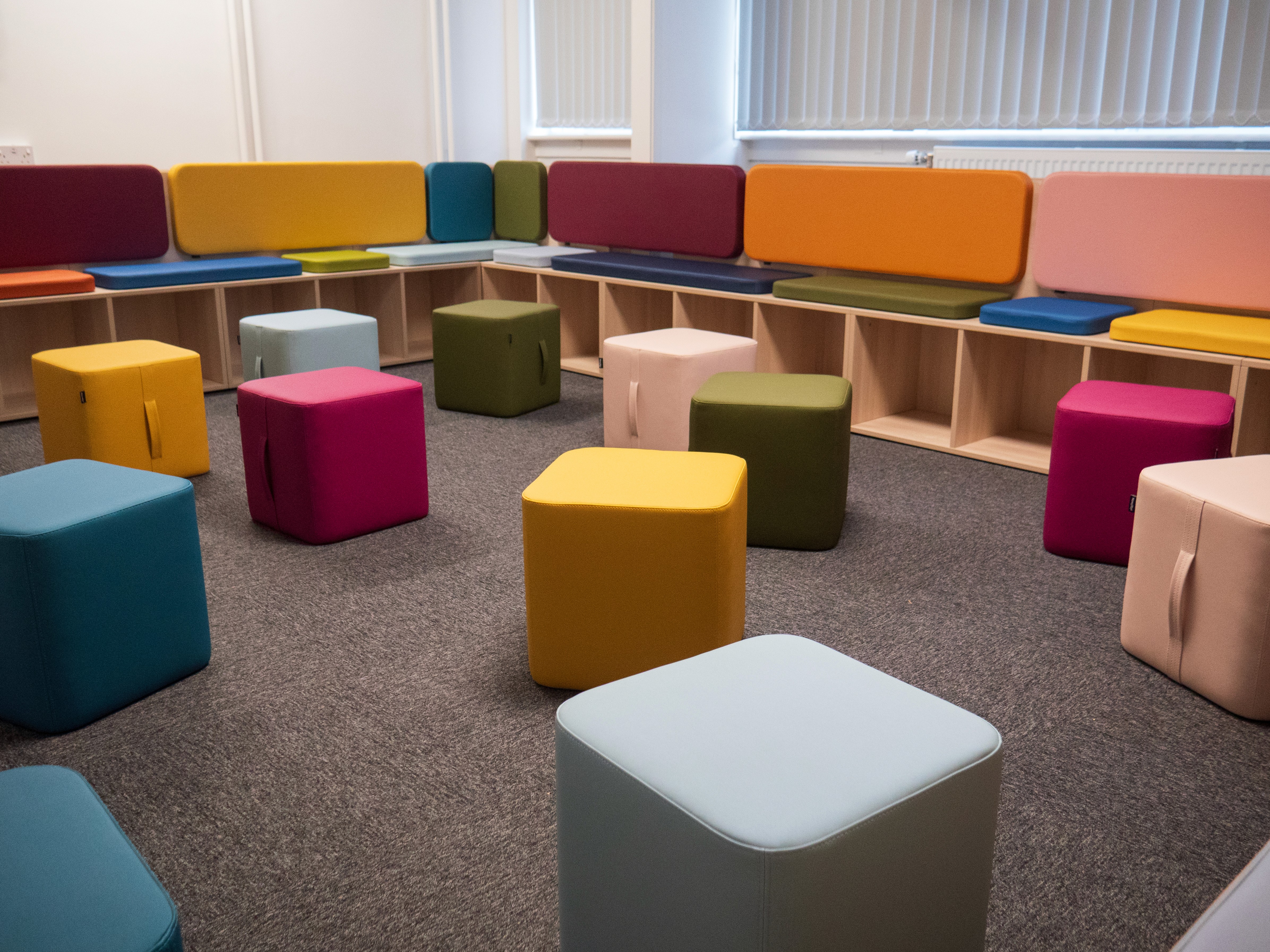
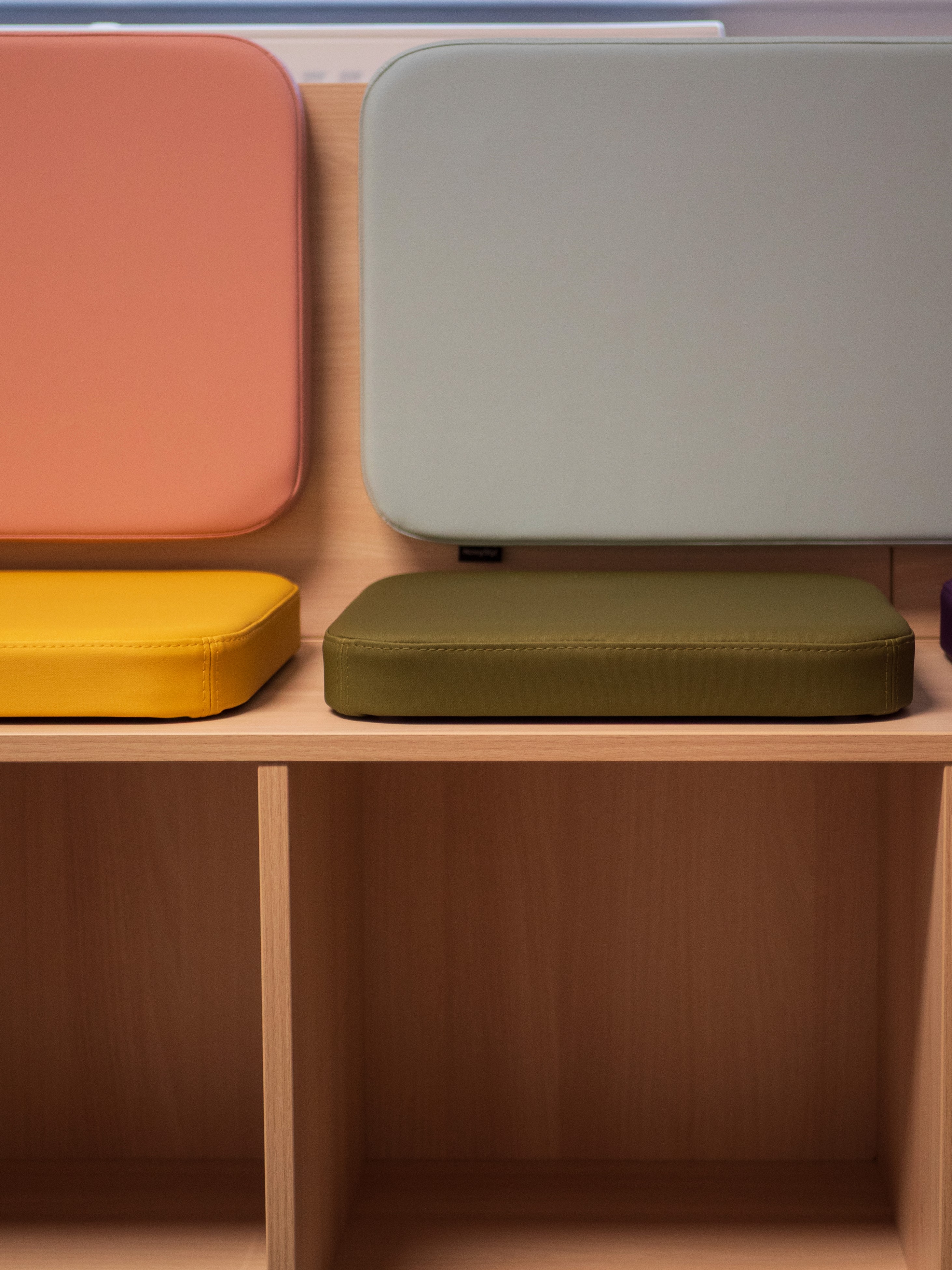
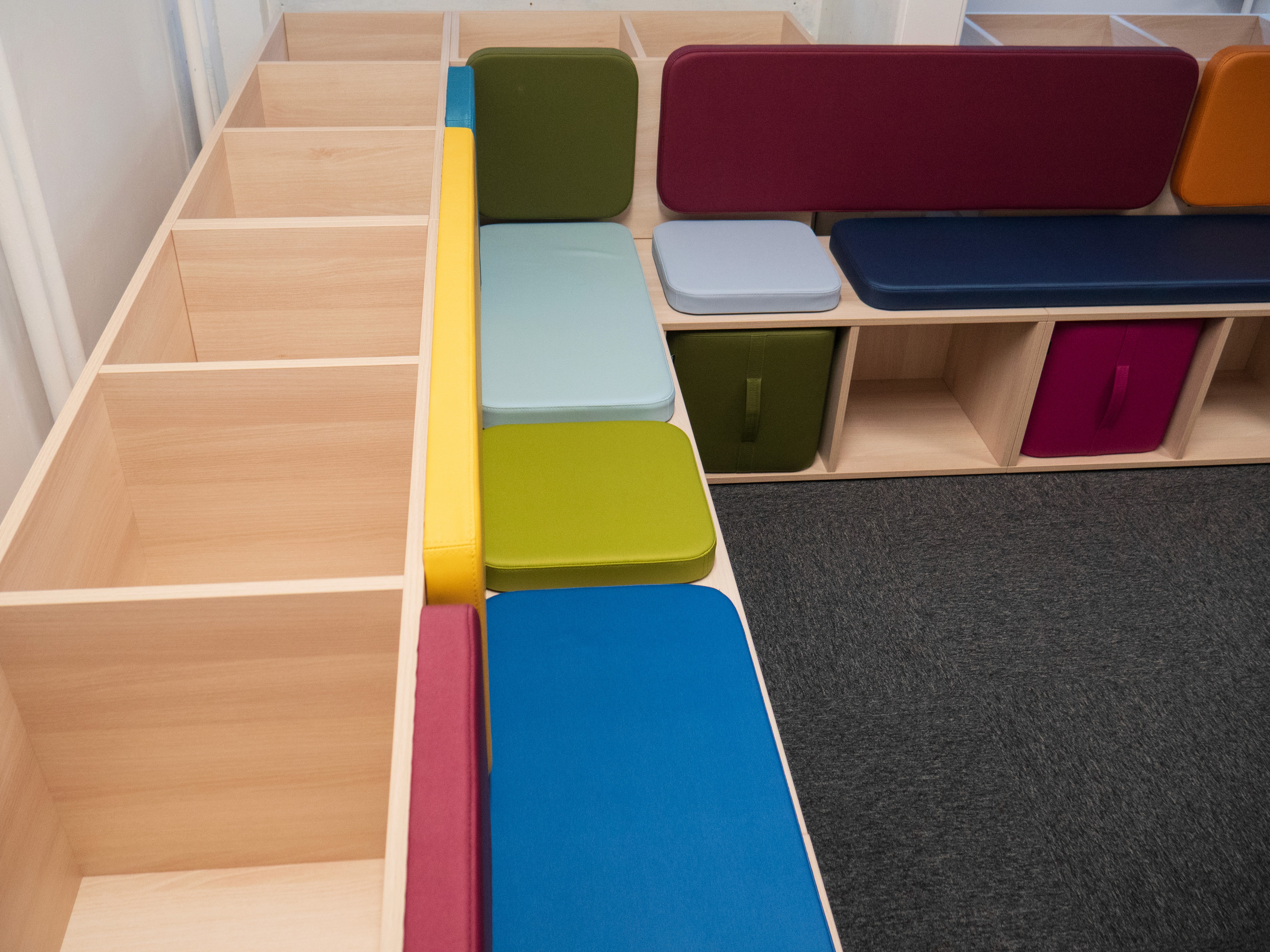
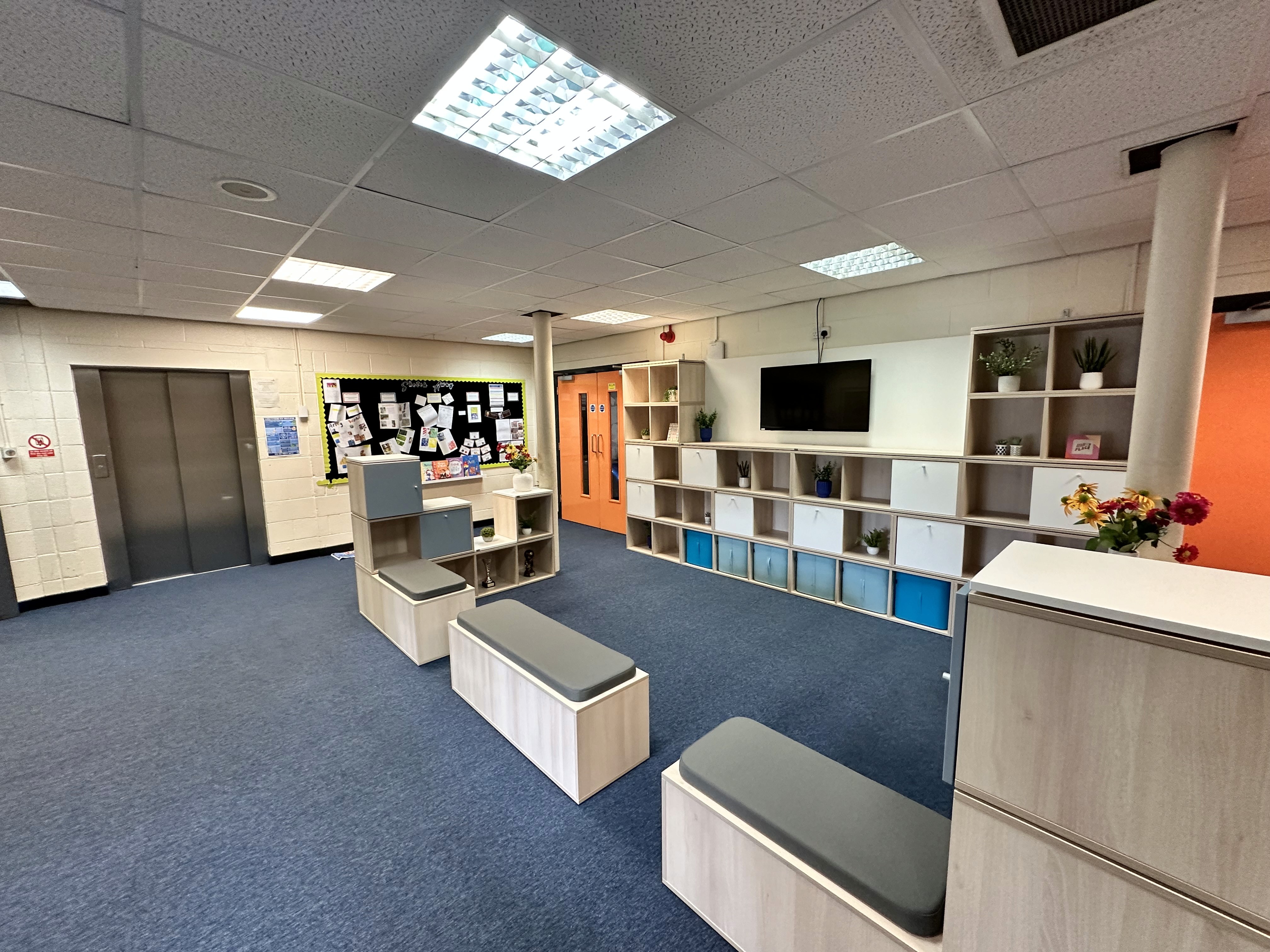
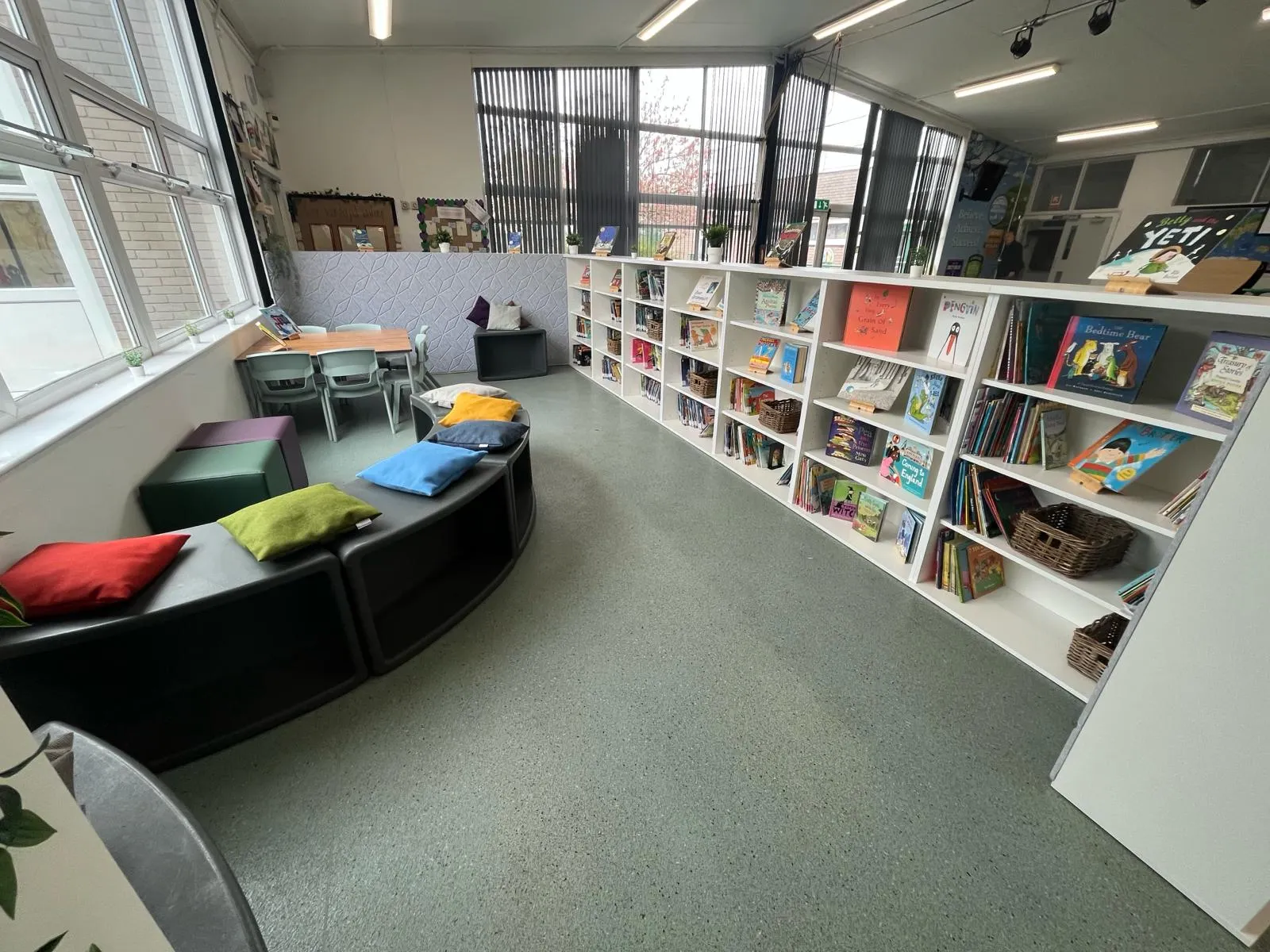
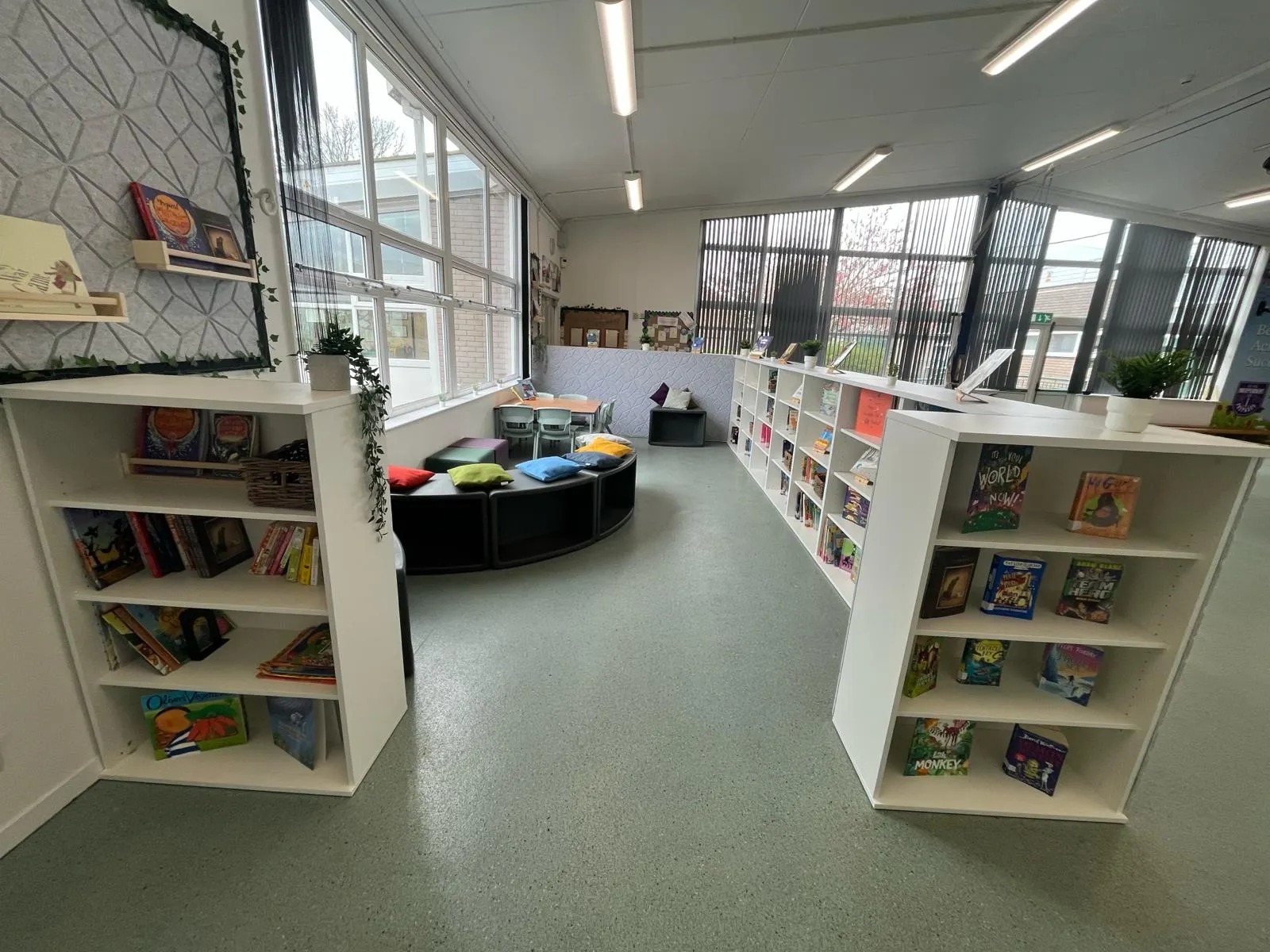
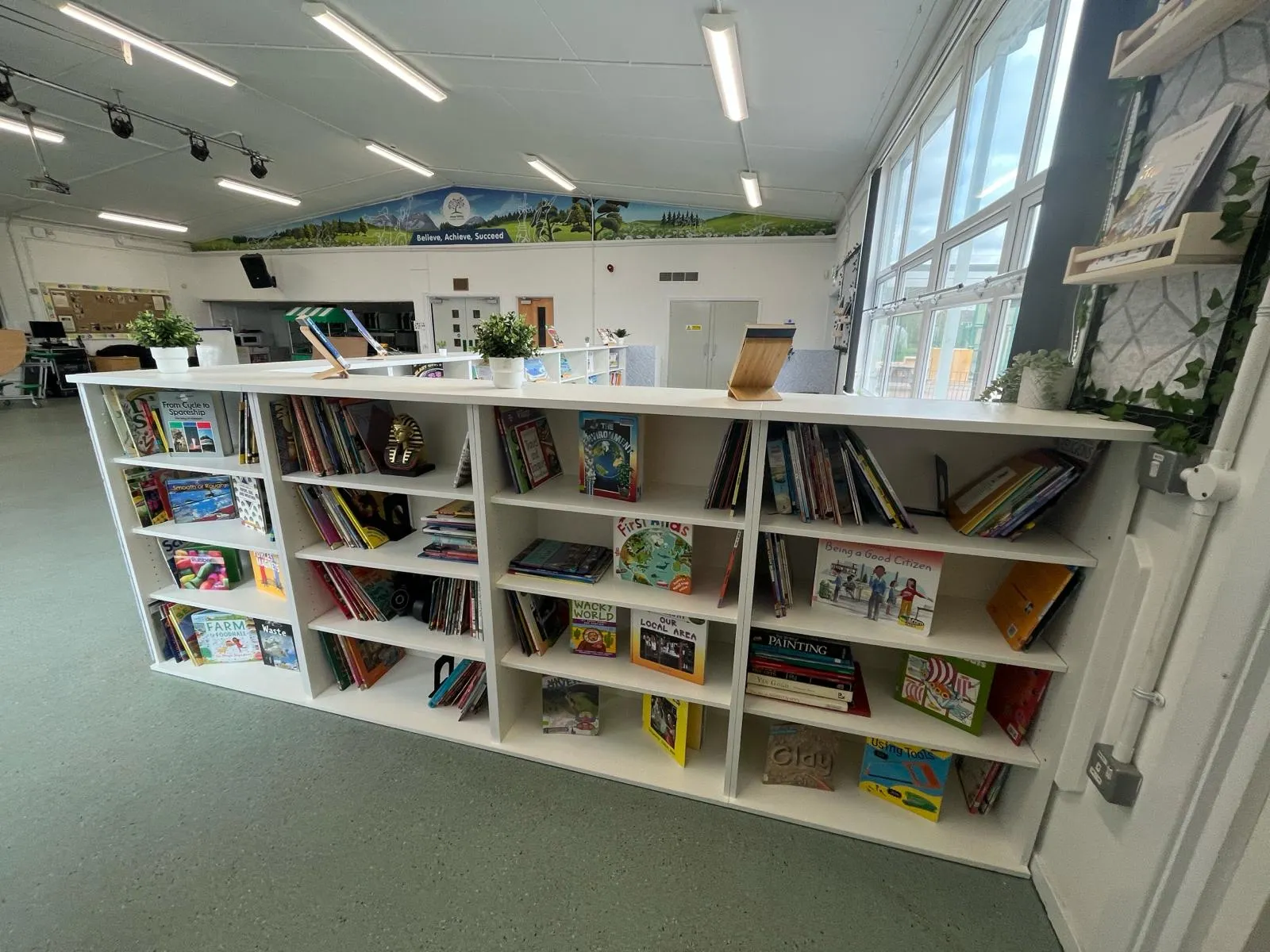
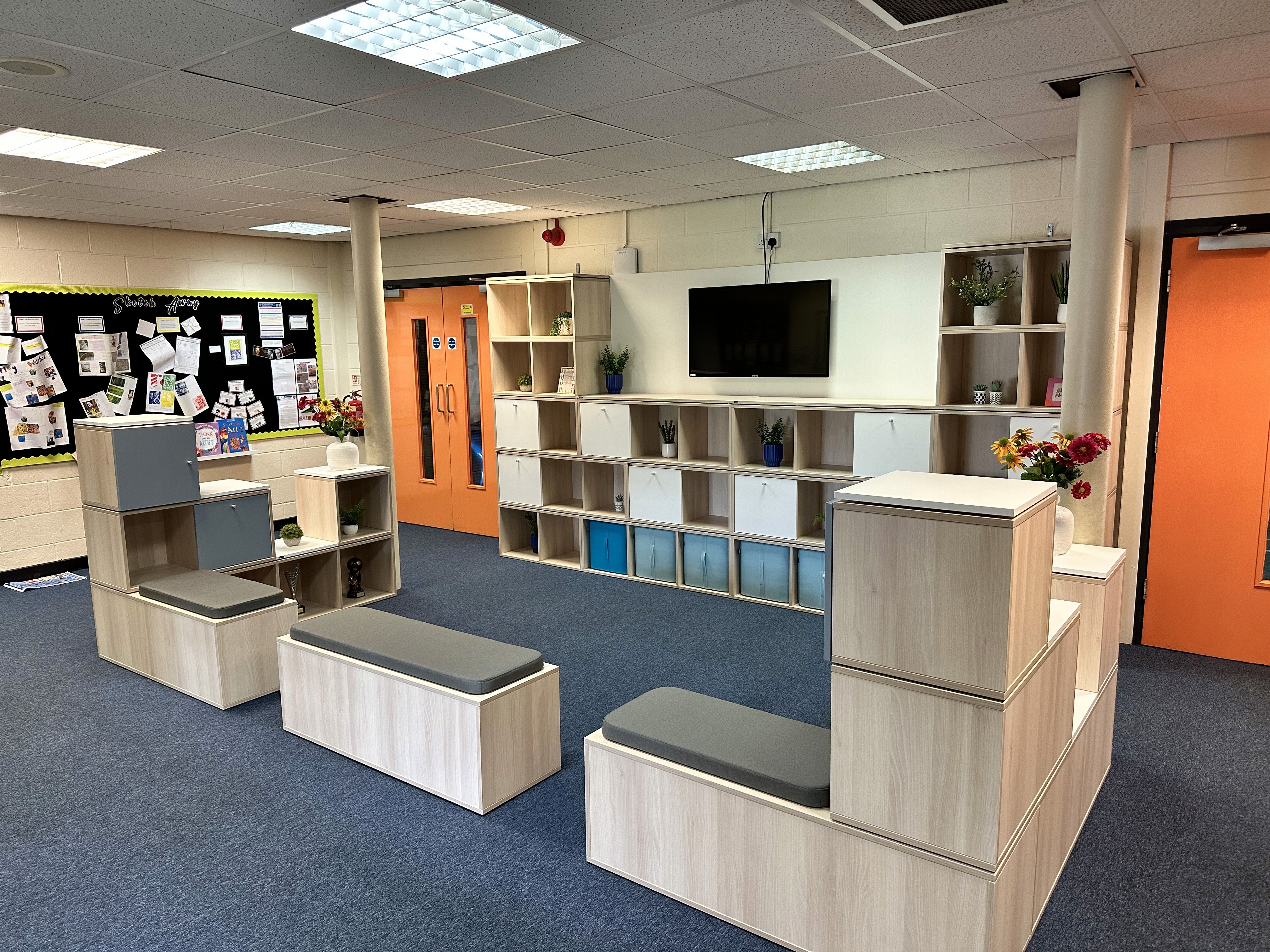
The brief required transforming an institutional library corner into an inviting reading hub that encourages pupils to linger, browse, and develop love of reading. The space needed to feel warm and accessible, countering typical "quiet" library sterility. Design approach prioritised layered zones and discovery. Rather than one uniform reading area, we created distinct micro-environments: an intimate reading nook with soft seating, an open browsing zone with casual perching spots, and flexible small-group work areas. This zonation allows different pupil types—introverts seeking solitude, social learners, and research collaborators—to each find their ideal space. Colour was used strategically: warm accent walls drew the eye, whilst soft neutrals prevented overstimulation. Materials emphasised comfort and durability. Low-height modular seating poufs from EromesMarko's range accommodated different learning positions and made the space feel less formal than traditional classroom furniture. Built-in perimeter storage maximised space without bulk, featuring open shelving to showcase book covers. Soft upholstery in tactile fabrics invited pupils to settle in. Good task lighting (500lux over reading areas) supported extended reading without eye strain. The result is a library corner pupils actively choose to visit. Circulation increased measurably, and staff observe pupils staying longer, exploring more deeply, and selecting challenging texts. The space has become an anchor of school culture Learn about our library design service.
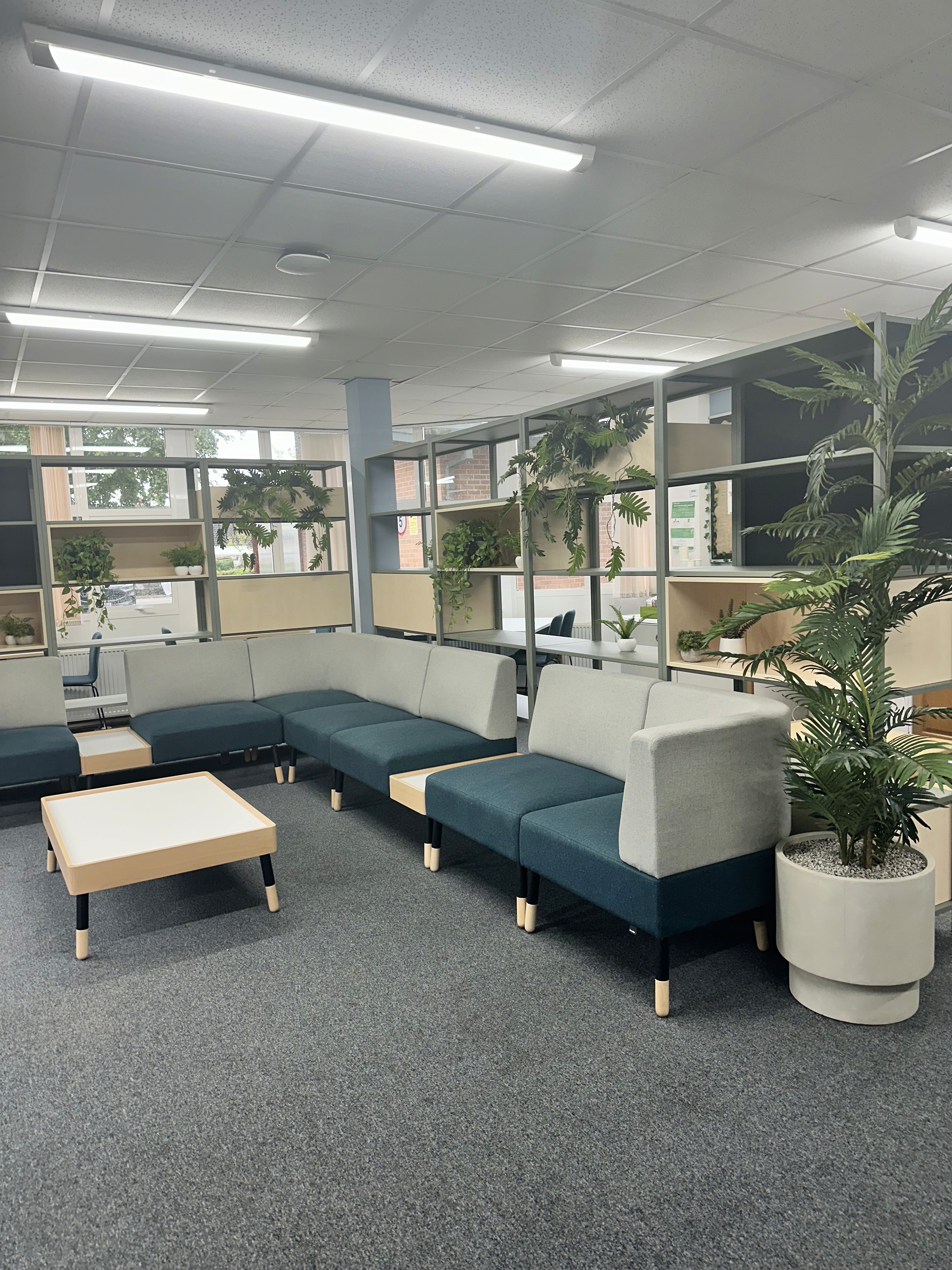
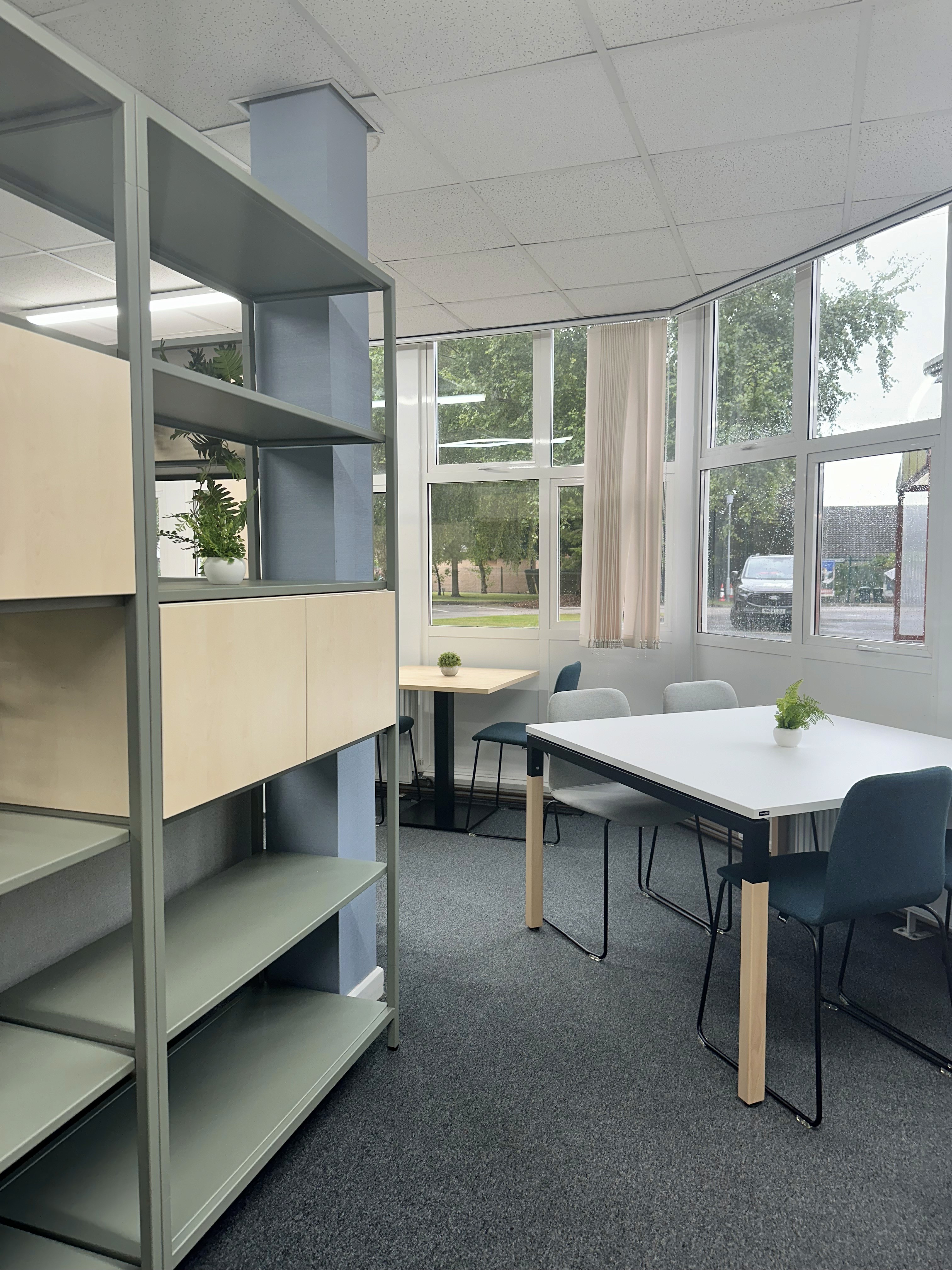
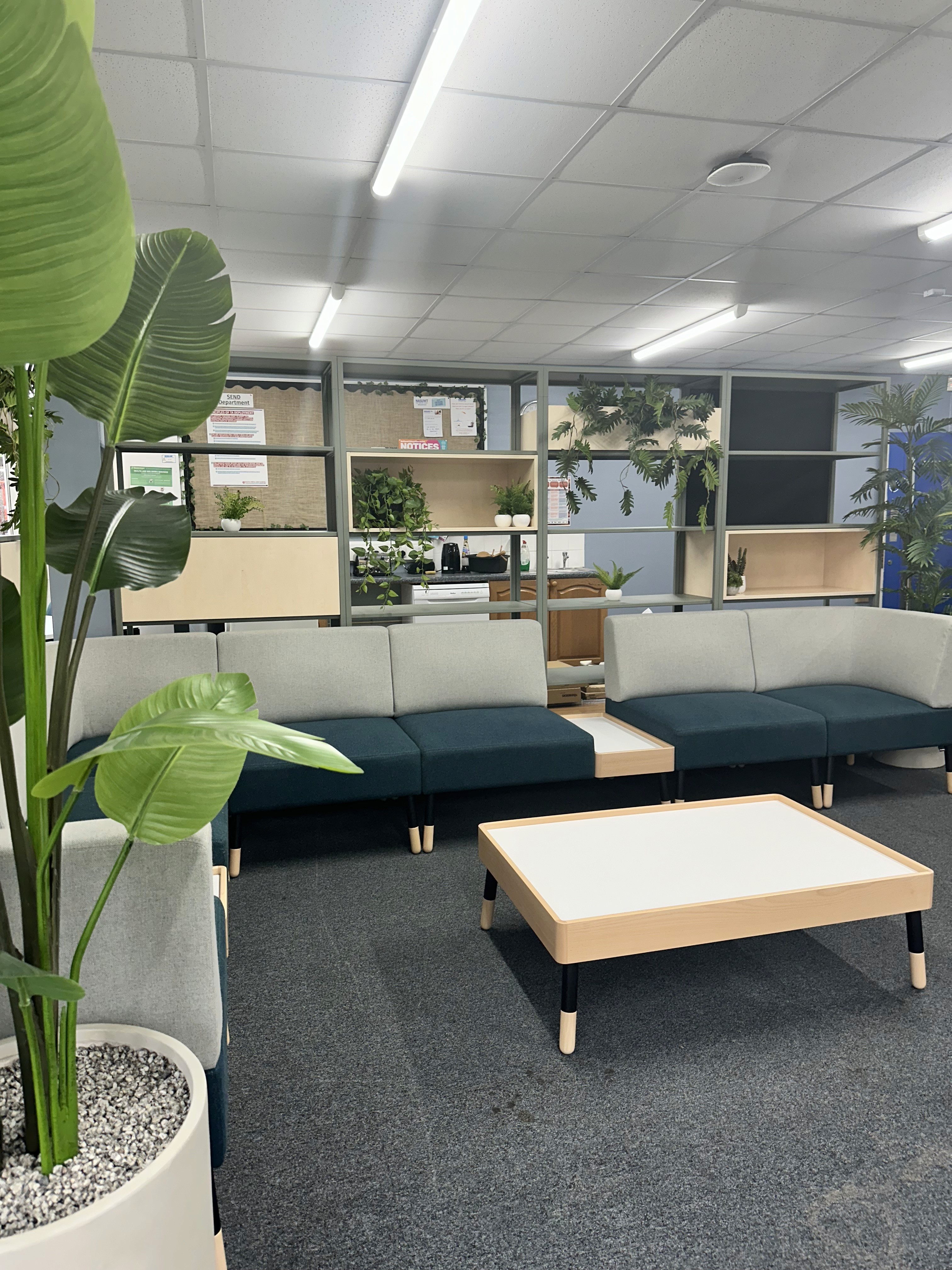
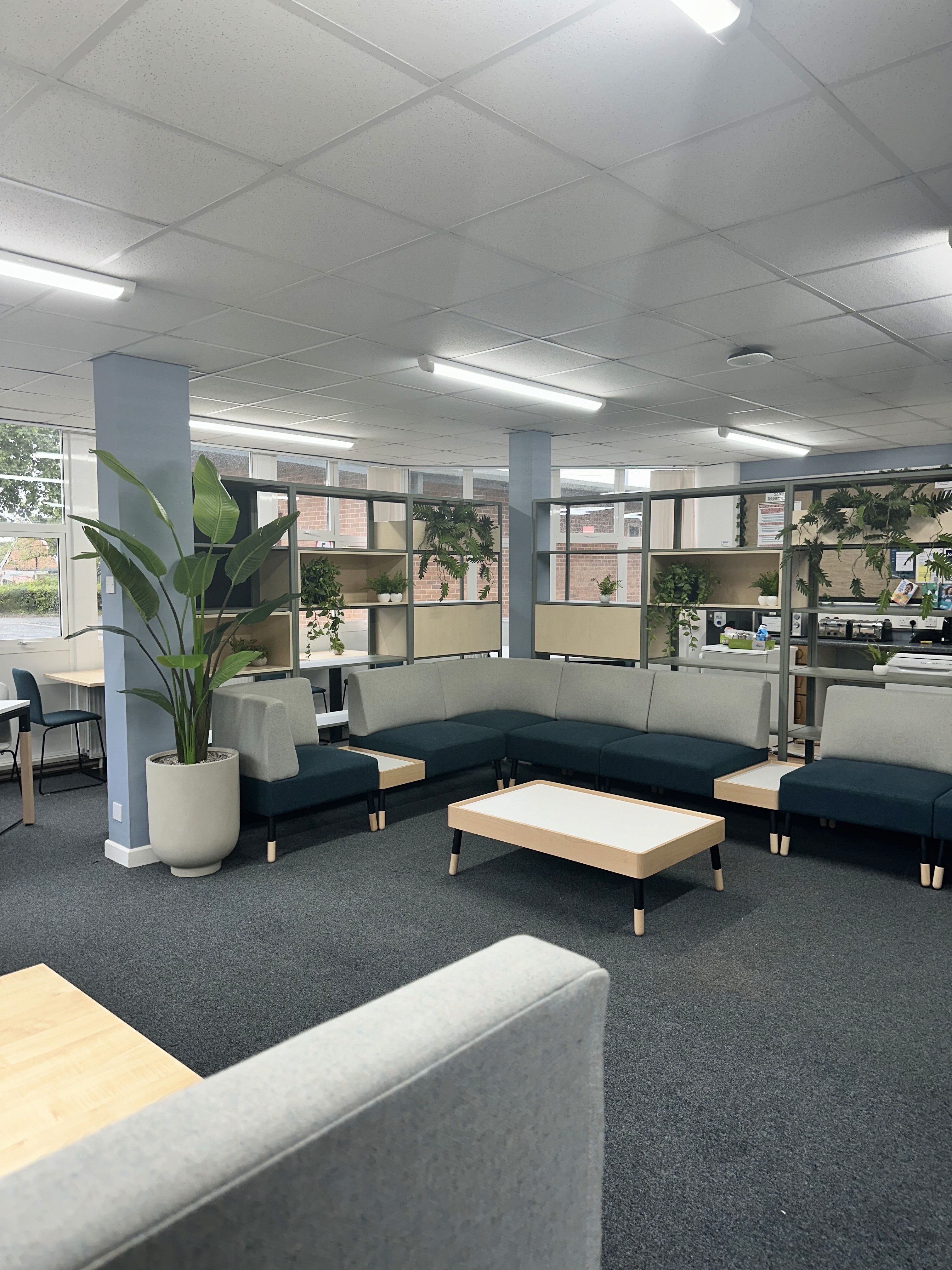
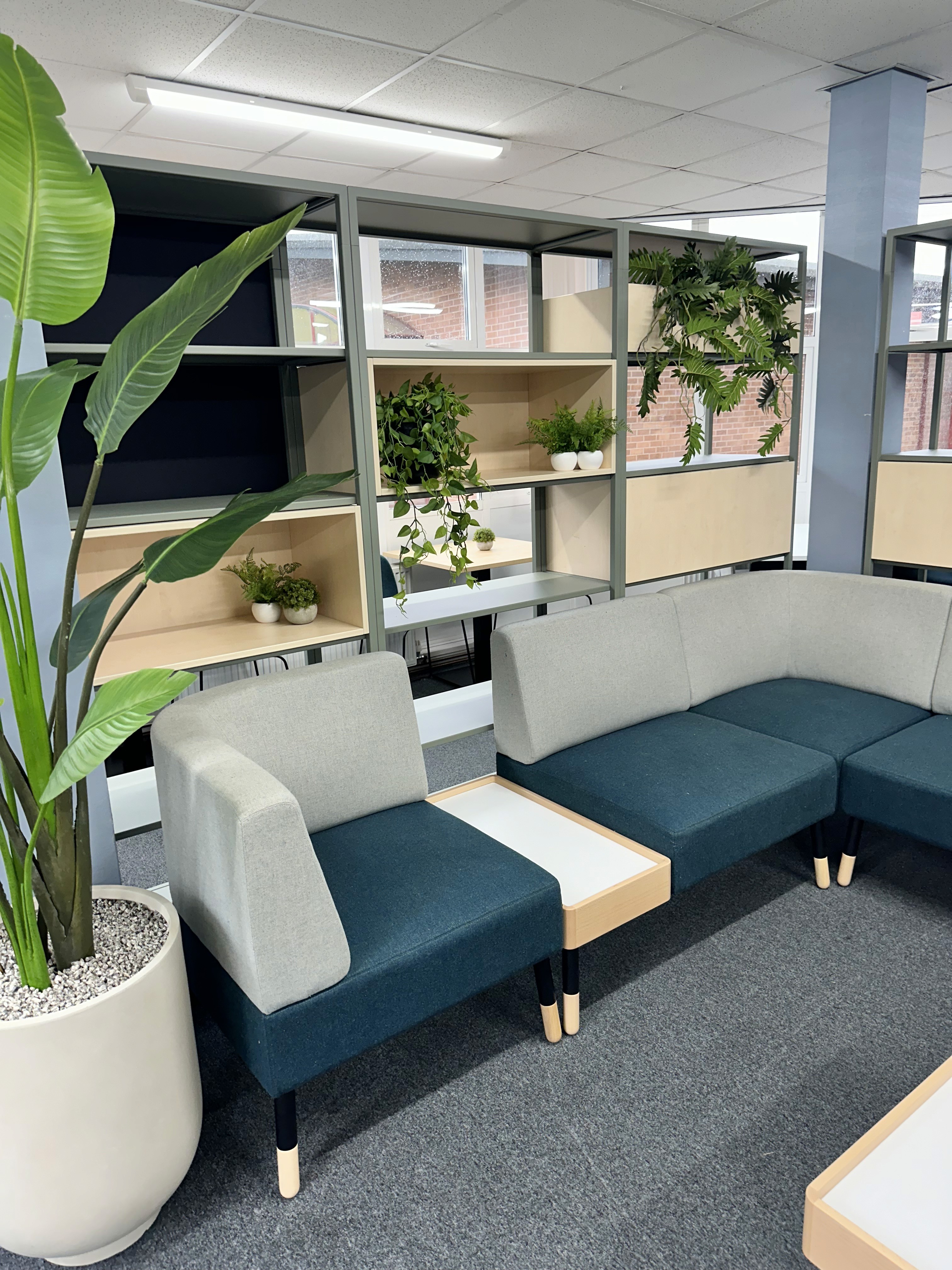
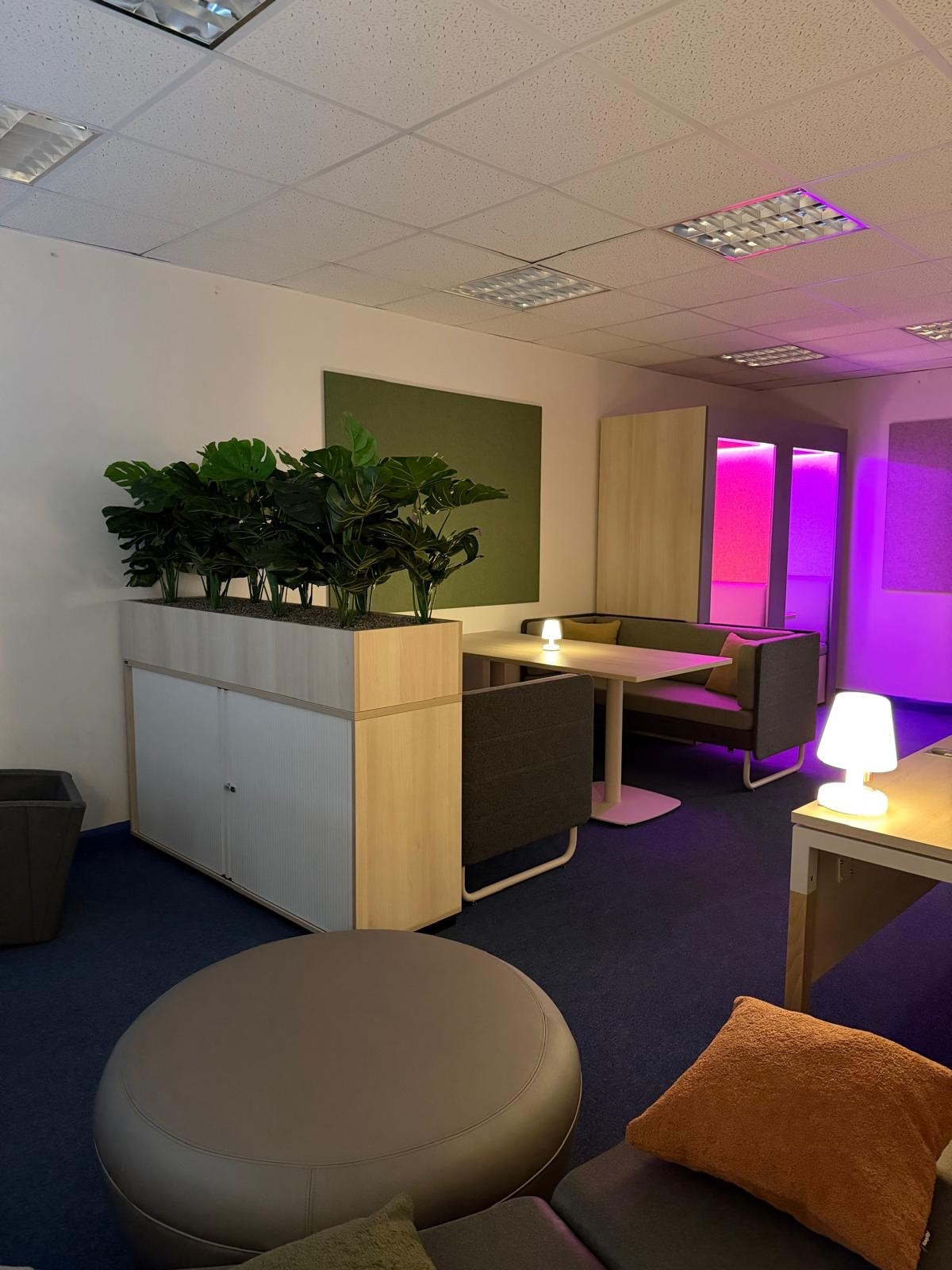
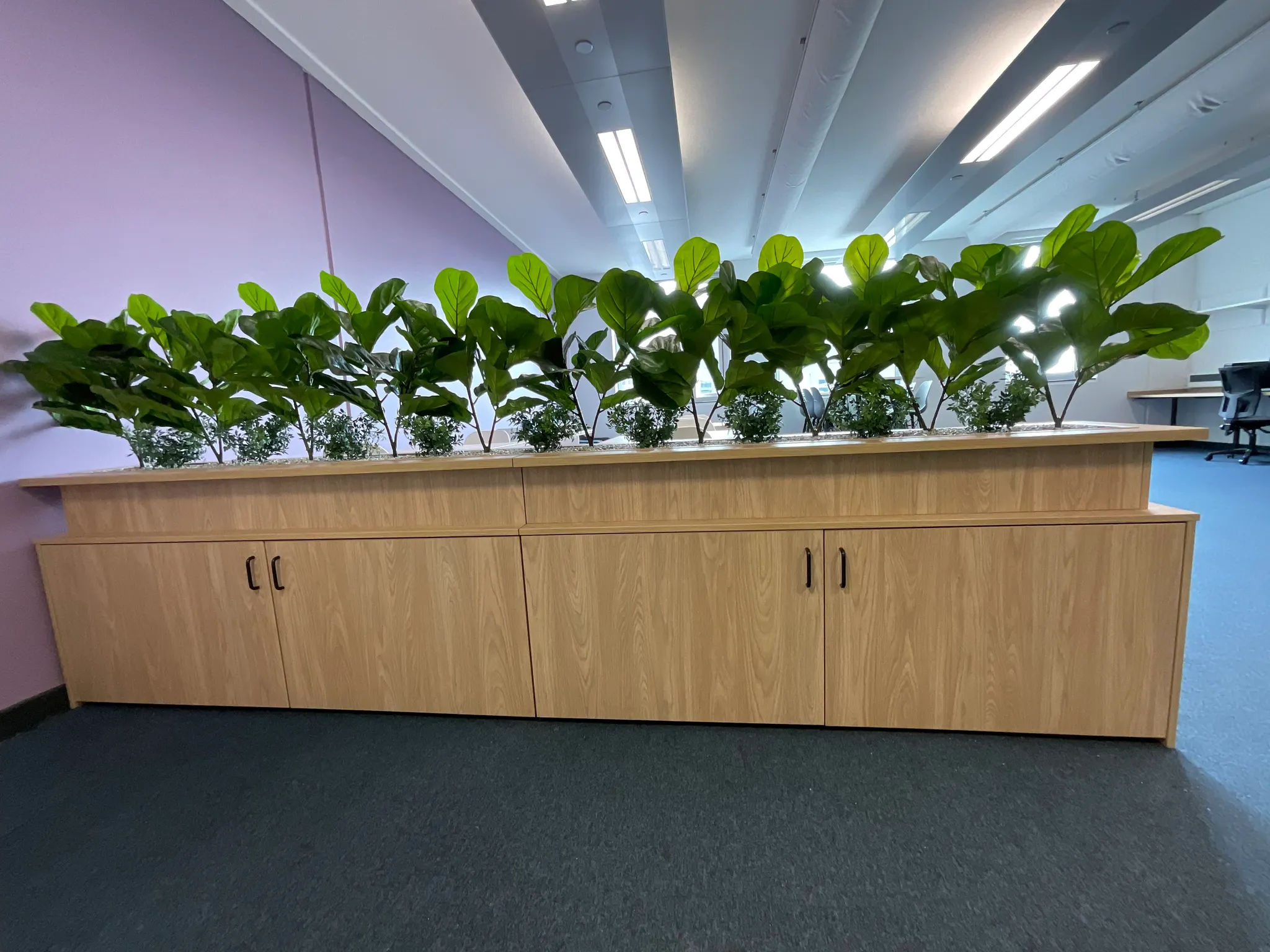
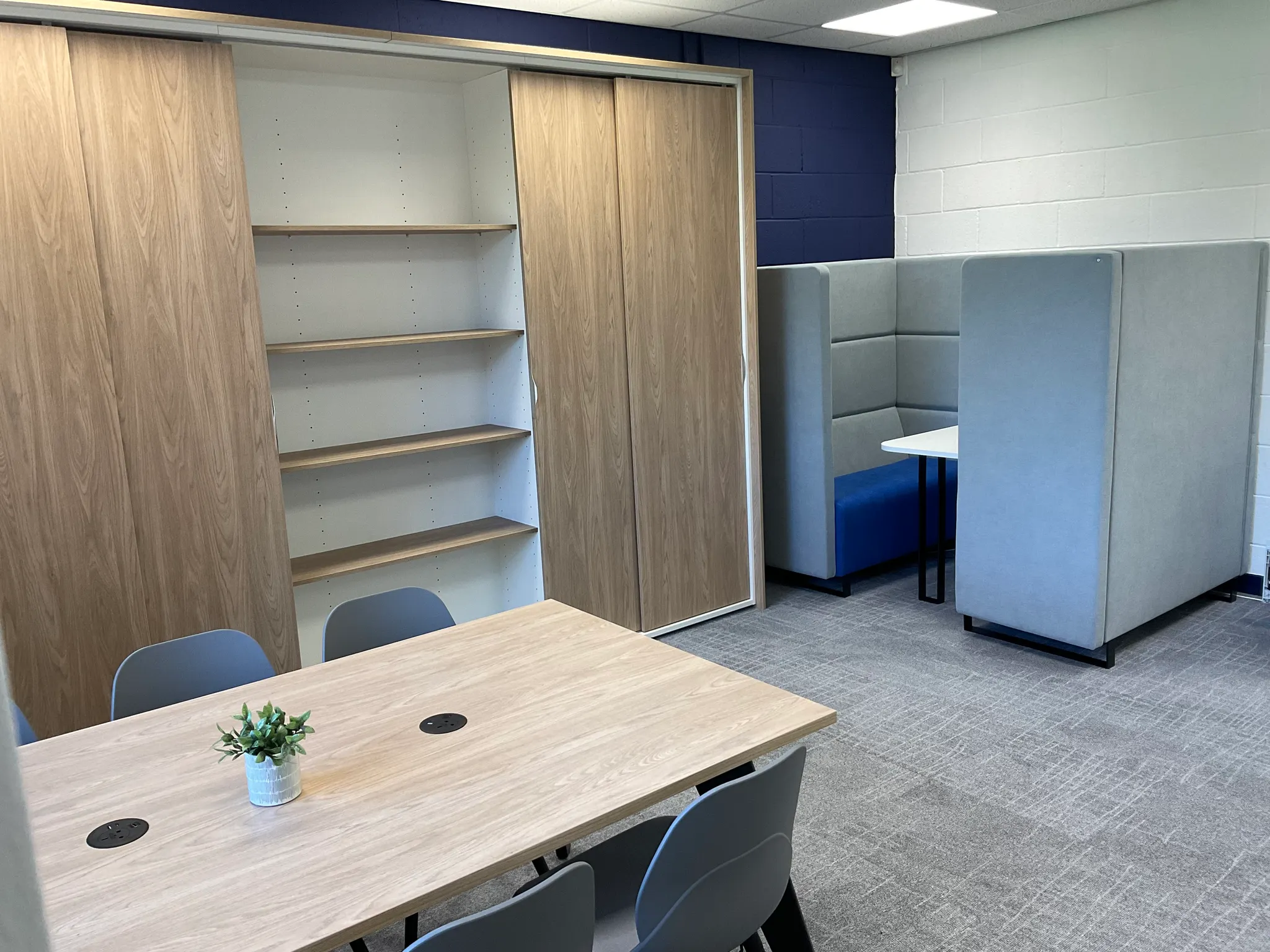
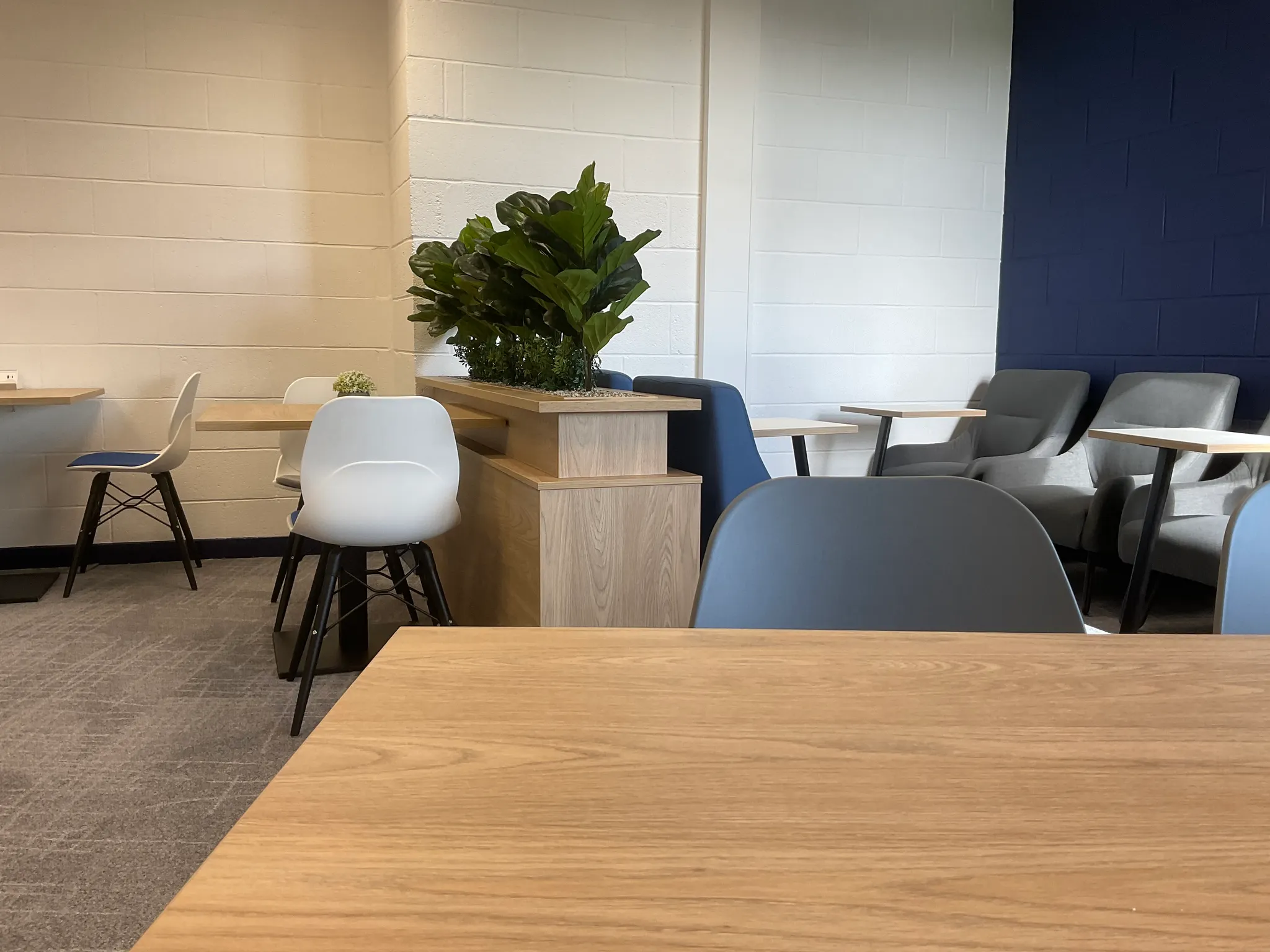
The brief was to redesign an exhausted staffroom—once a generic meeting space—into a genuine refuge where staff could rest, collaborate, and sustain wellbeing throughout the school day. Teachers needed multiple micro-environments within one room: recovery zones, collaborative work areas, and casual social spaces. Design approach used environmental psychology principles to create distinct functional zones without physical barriers. A soft seating lounge anchored one corner, creating a psychological "away" zone even within the same room. A practical table-work area served collaboration, planning, and eating. Open shelving and strategic planting acted as subtle spatial dividers, creating enclosure without claustrophobia. The colour palette—warm neutrals, soft greys, and natural wood—conveyed calm professionalism rather than institutional coldness. Materials focused on staff wellbeing. Ergonomic chairs supported proper posture during desk work, essential for staff spending long hours marking. Soft seating featured deep upholstery in natural fabrics, with throw cushions adding textural softness. Integrated planting brought biophilic benefits: improved air quality, psychological restoration, and a living reminder of nature. Lighting was carefully calibrated—2700K warm LEDs in relaxation zones, 4000K neutral in work areas—supporting both recovery and focus. The outcome transformed staff culture. Wellbeing surveys show marked improvements in stress and burnout scores. Staff actively use the space for genuine rest, not just transit through it. The design sends a powerful organisational message: your wellbeing matters Learn about our staffroom design service.
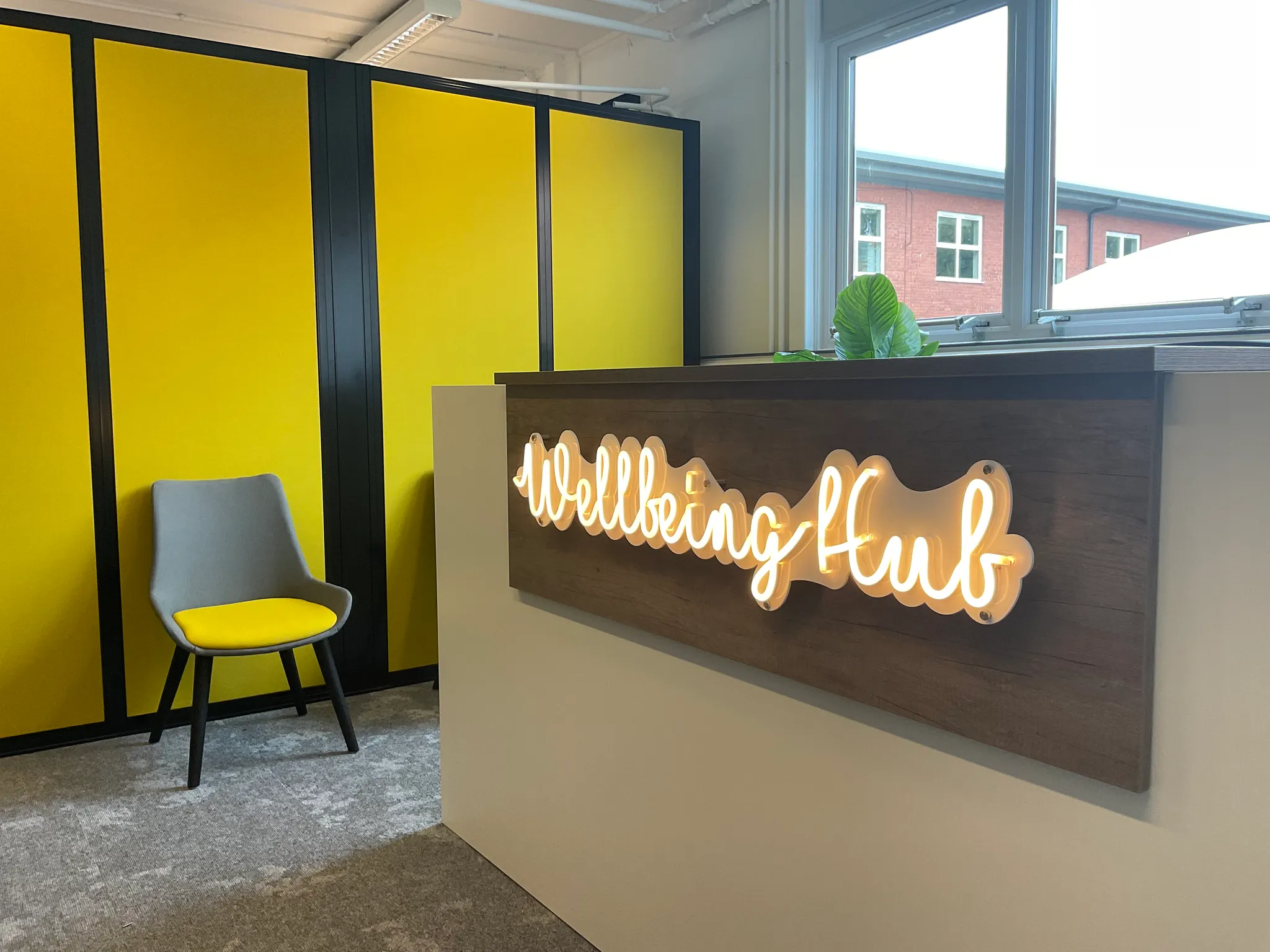
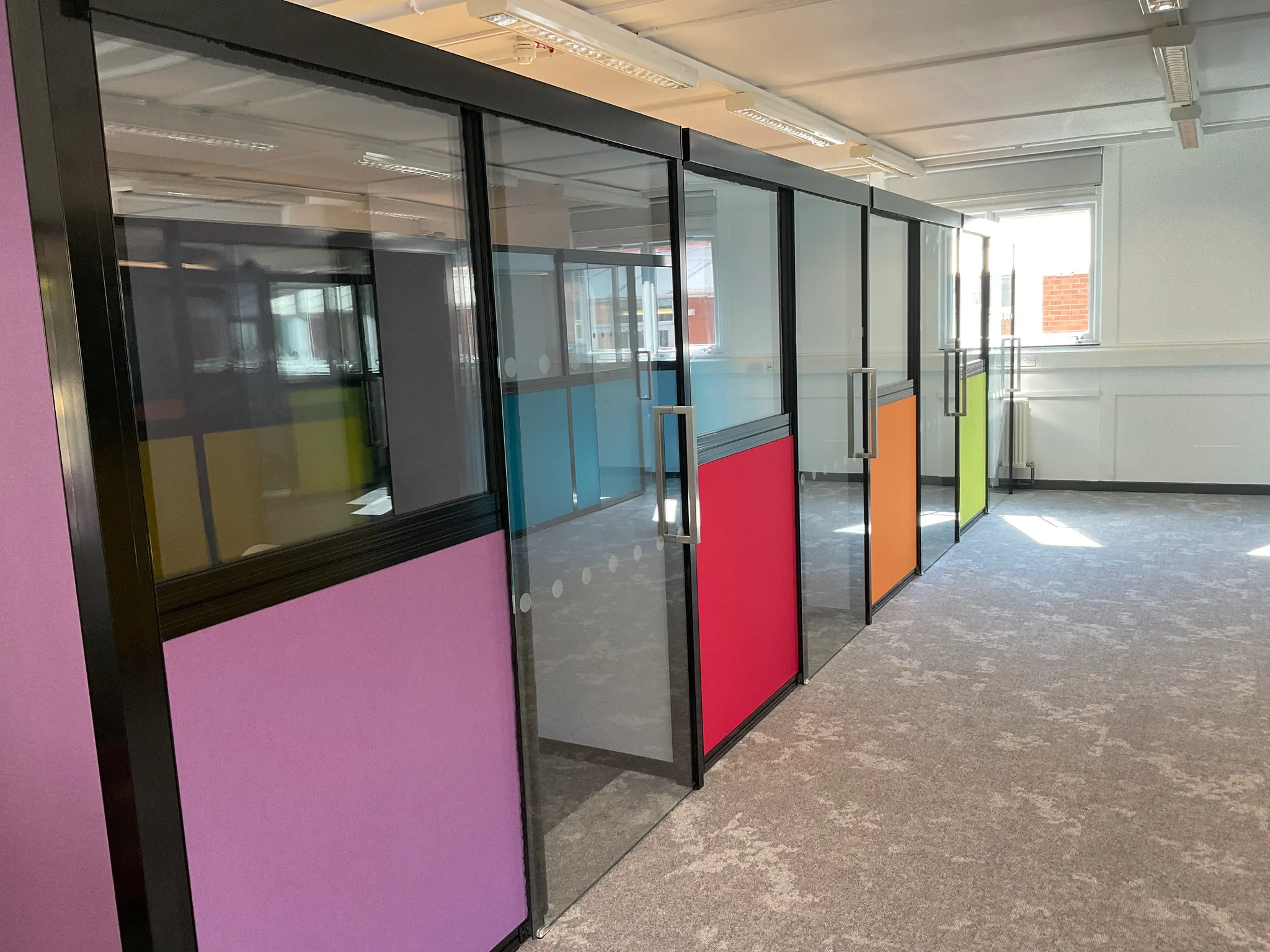
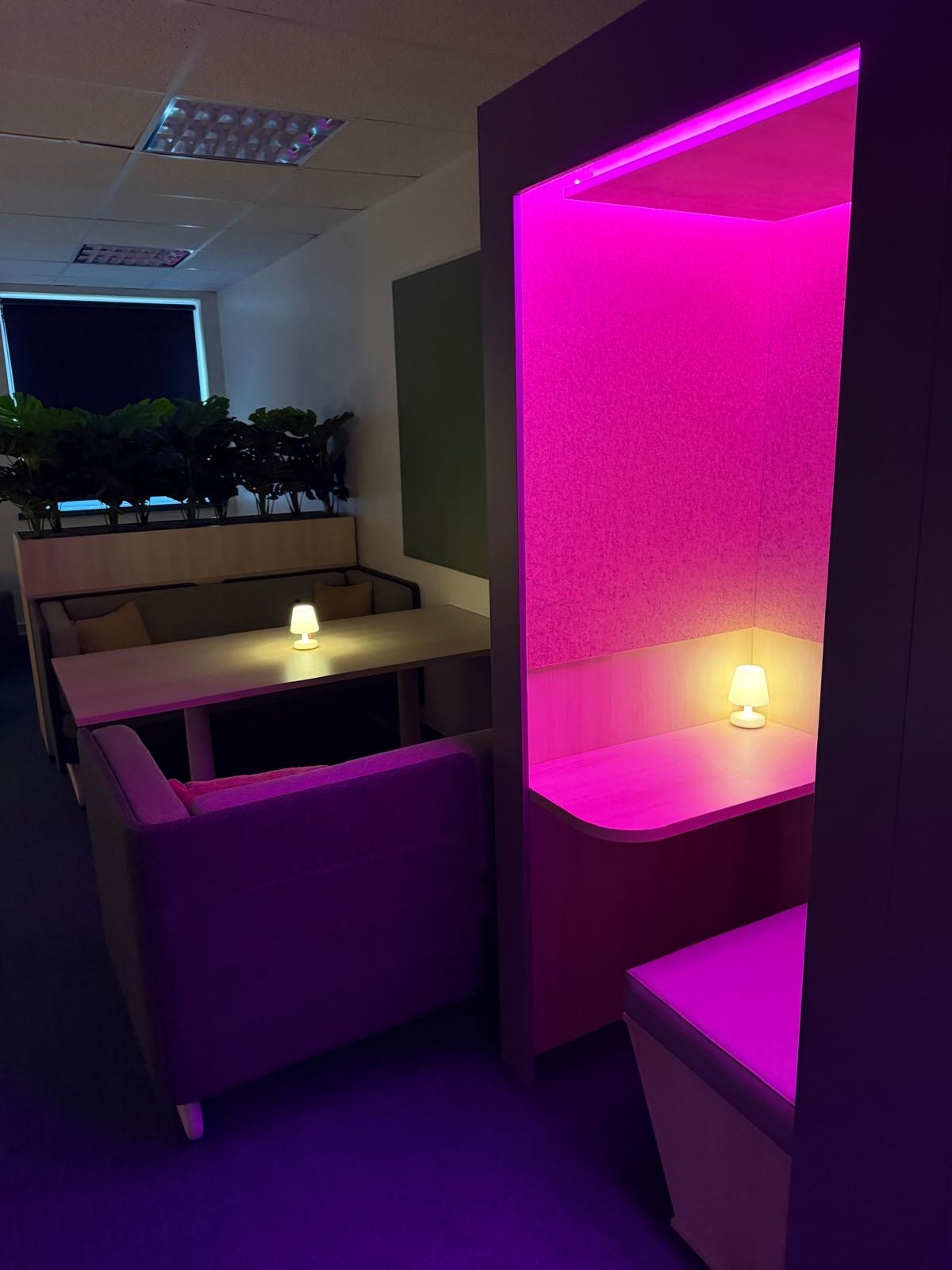
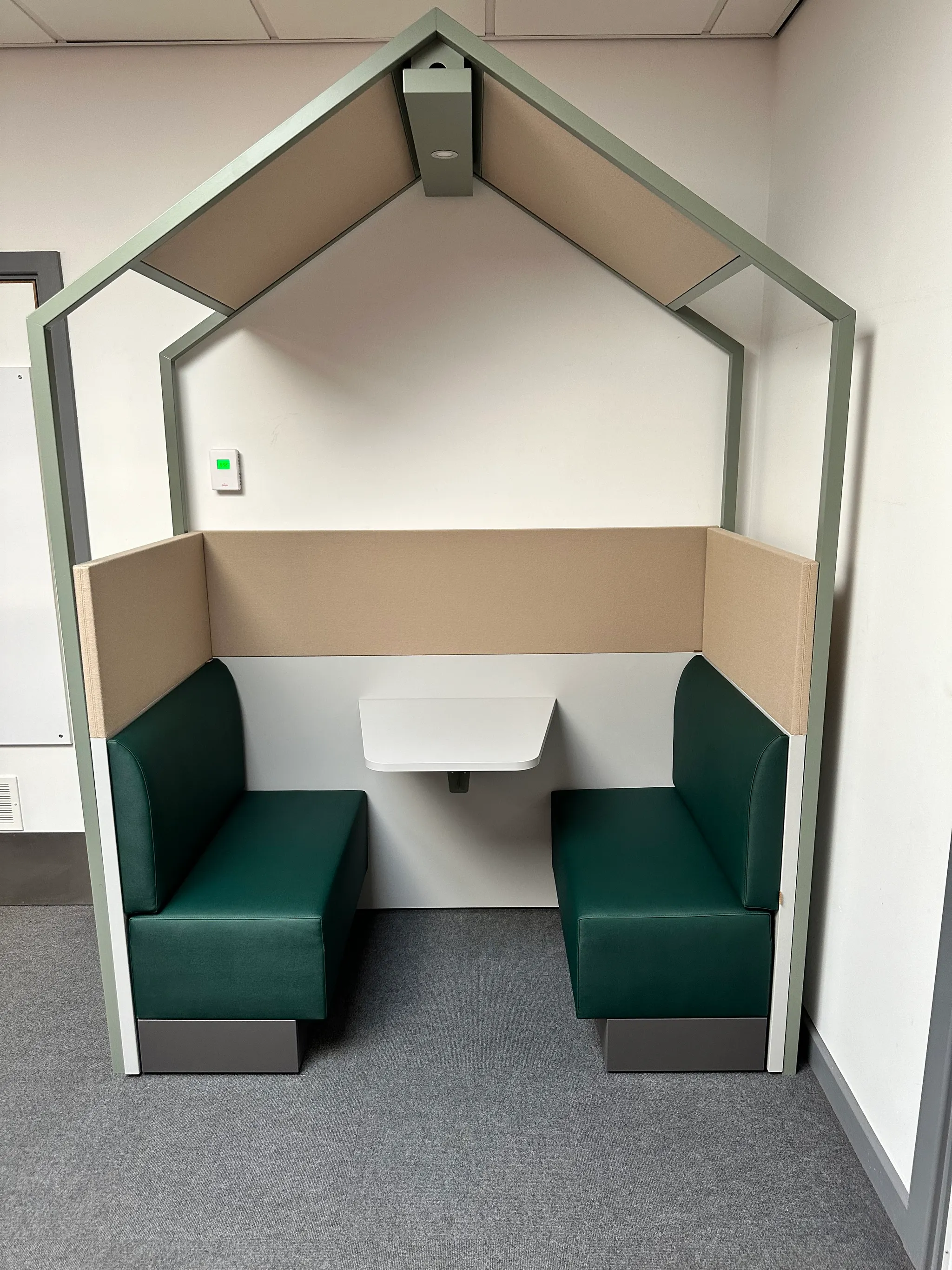
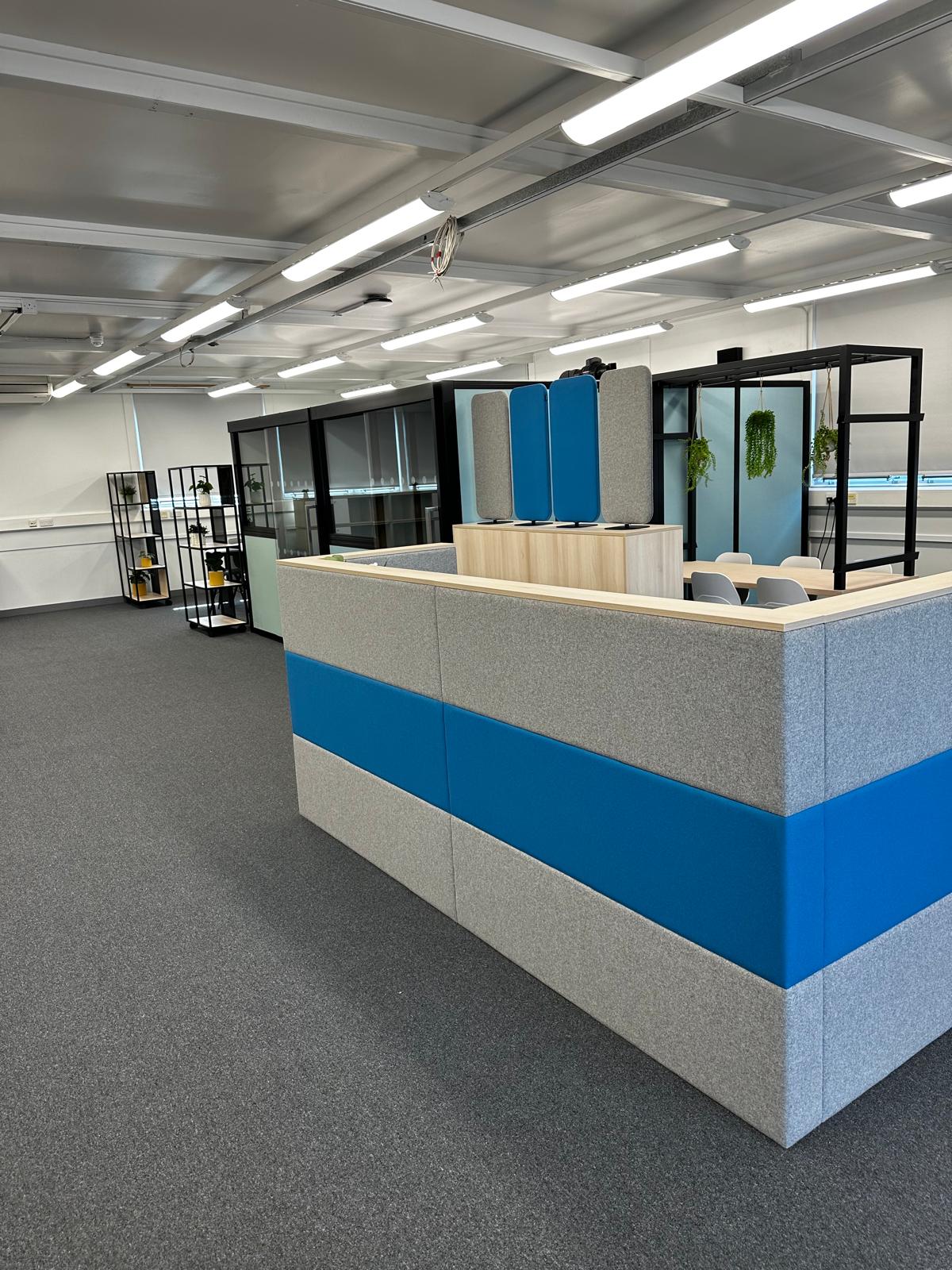
The brief required creating a dedicated wellbeing space within a large secondary school—a refuge where vulnerable pupils could access emotional support in a purpose-designed environment. The hub needed to feel markedly different from classrooms: calming, professional, and held. Design approach employed person-centred spatial design. The space centred on private consultation pods—intimate enough for one-to-one safeguarding conversations, but visible and safe—balanced with open reception and waiting areas. Bold, confident colour panels expressed positive mental health (vibrant but not overwhelming), whilst soft seating and warm lighting created sanctuary. The layout subtly guided movement: entering through a welcoming reception, progressing to pod zones, with quiet breakout seating for pupils decompressing between conversations. Materials and furniture selections prioritised psychological safety and durability. Private pods featured sound-absorbing panels and ergonomic seating for both adult and young person—essential when discussing difficult topics. Breakout seating combined soft poufs with proper back support. EromesMarko’s student furniture ensured durability for high-use school settings, whilst fabrics could be easily cleaned if pupils became distressed. Warm, natural materials (wood, linen, leather) created an almost domestic feel—a deliberate contrast to clinical institutional aesthetics. The result is a wellbeing space that pupils and staff genuinely respect. Attendance at counselling sessions increased. Pupils describe feeling "held" and "believed." The space itself communicates care, before any conversation begins Learn about our nurture hub design.
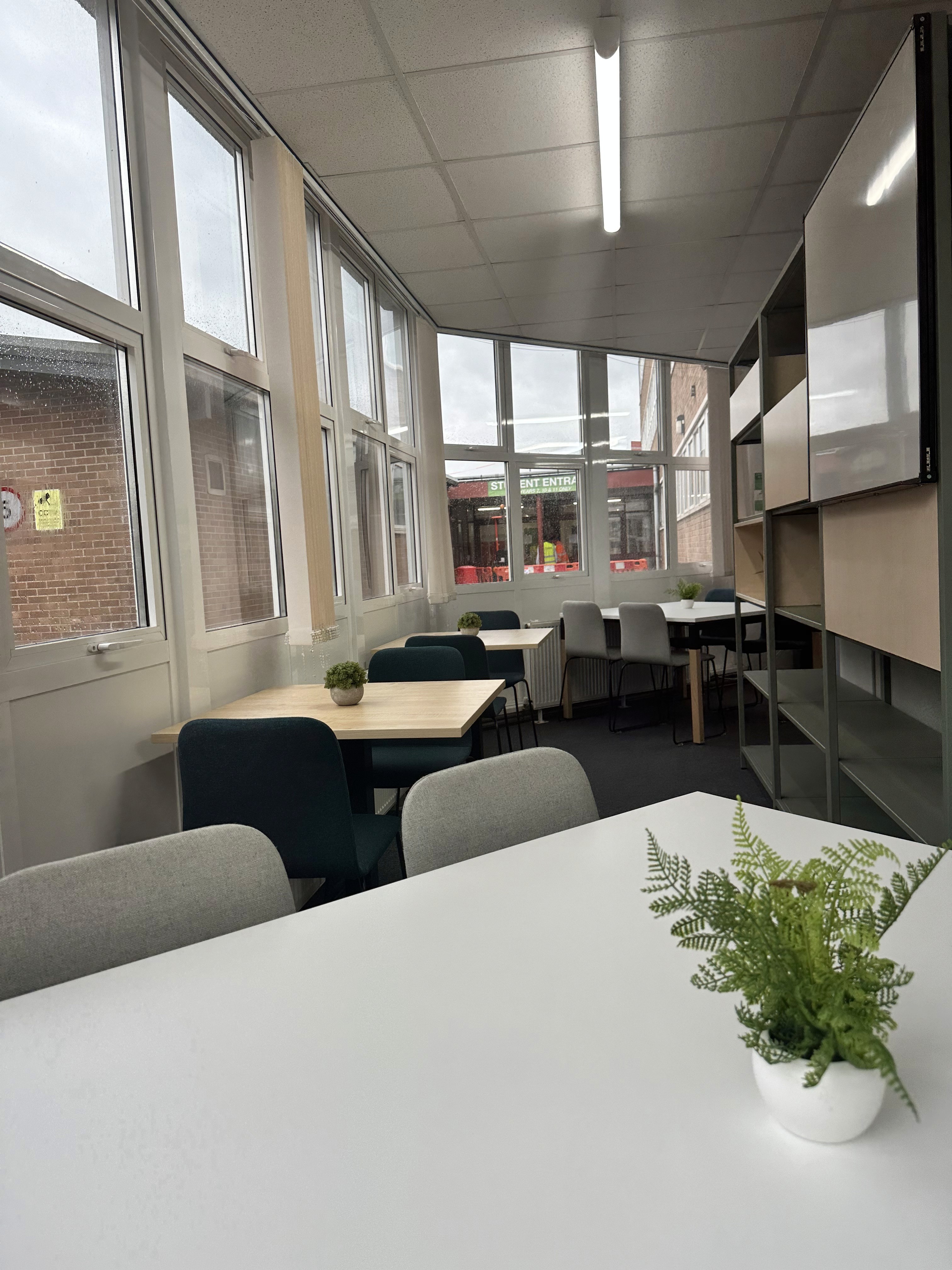
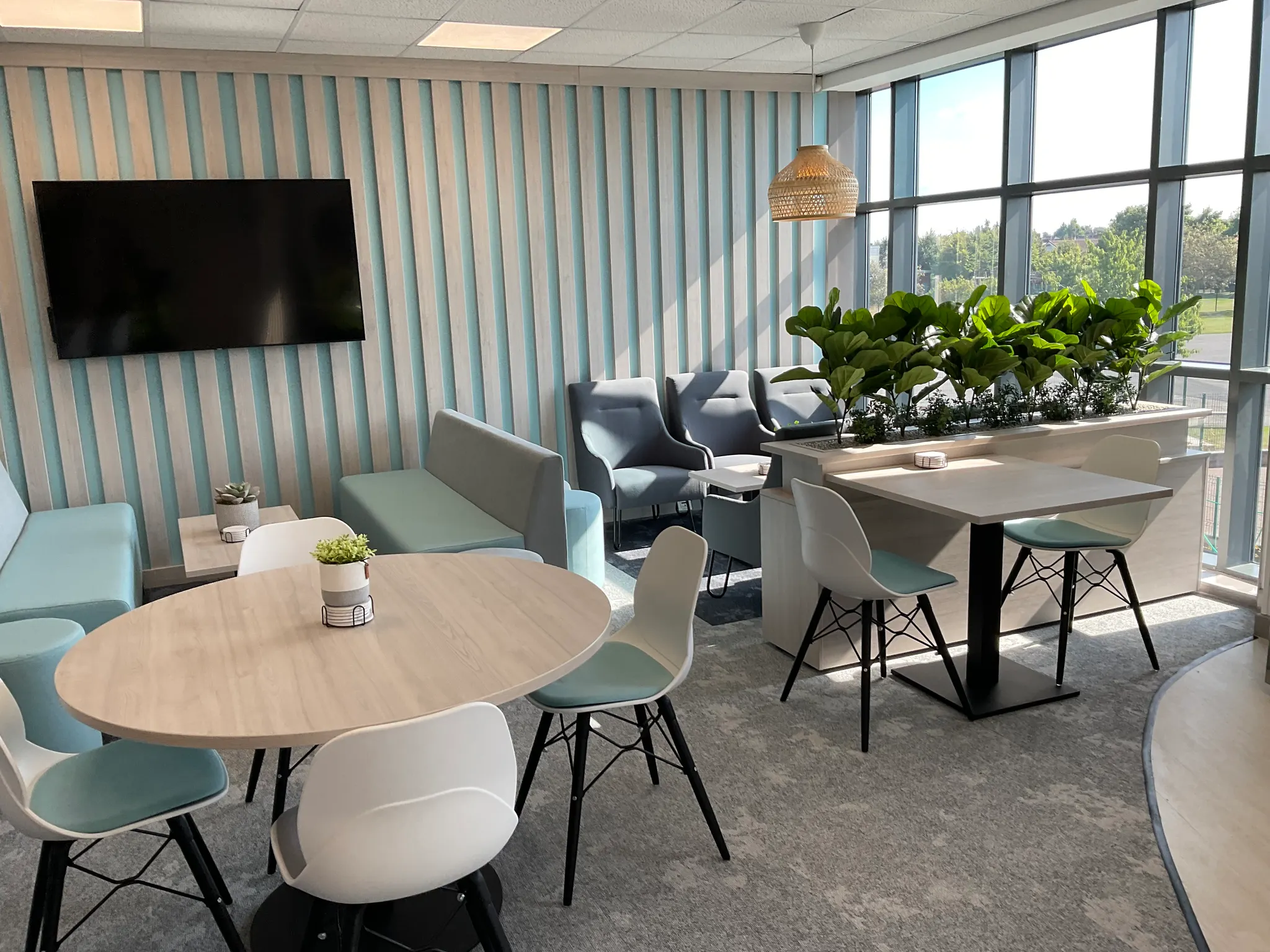
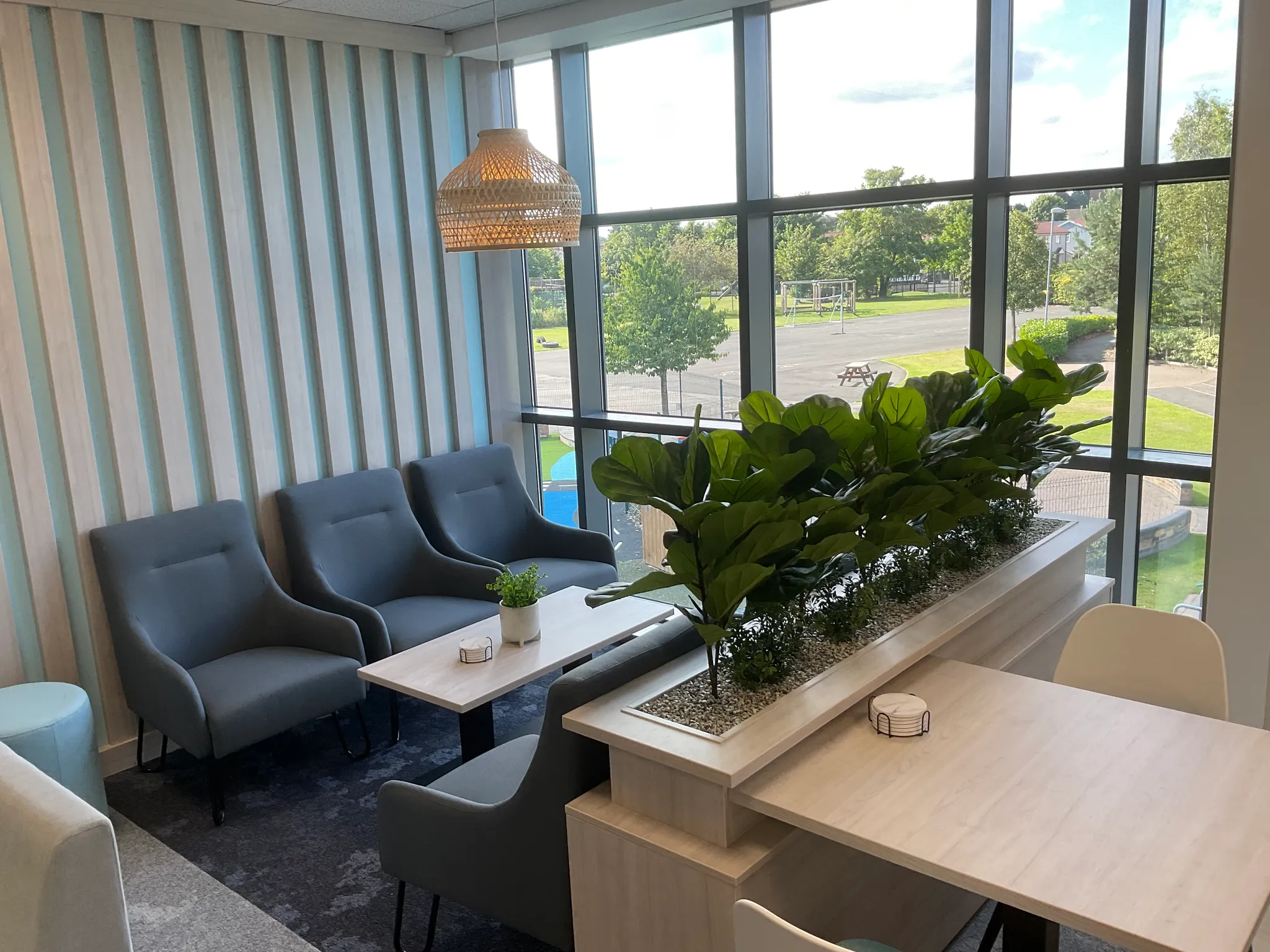
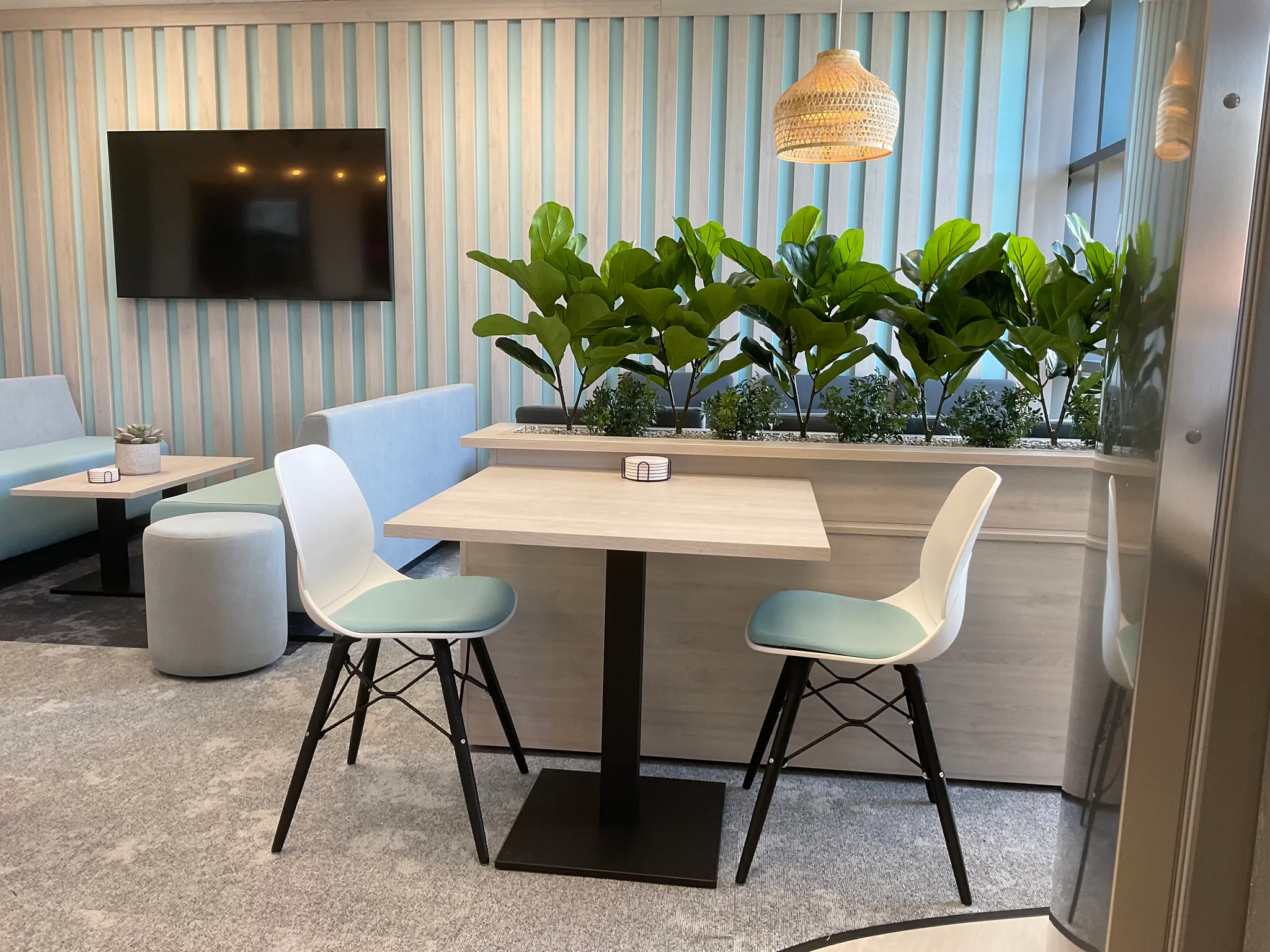
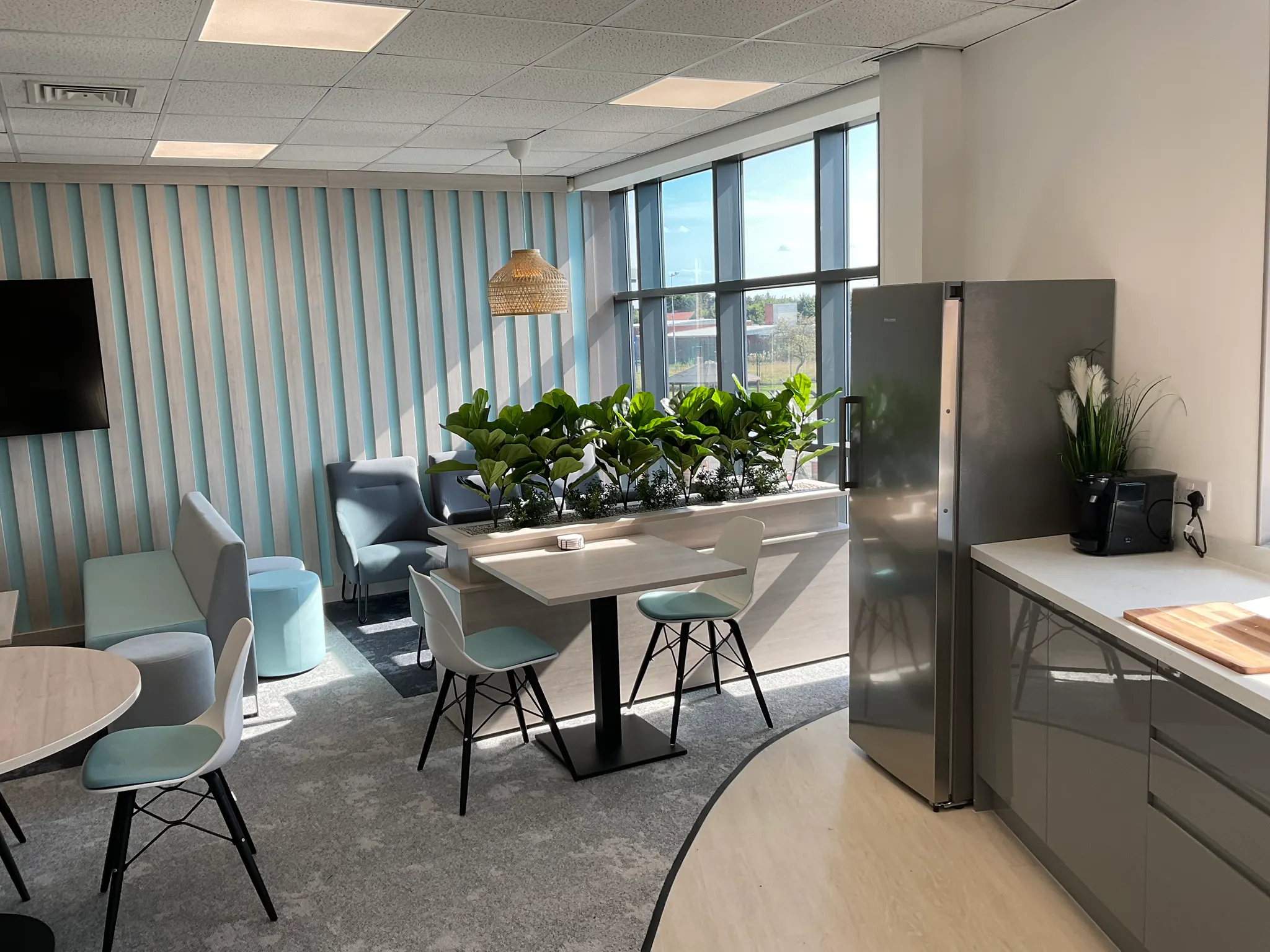
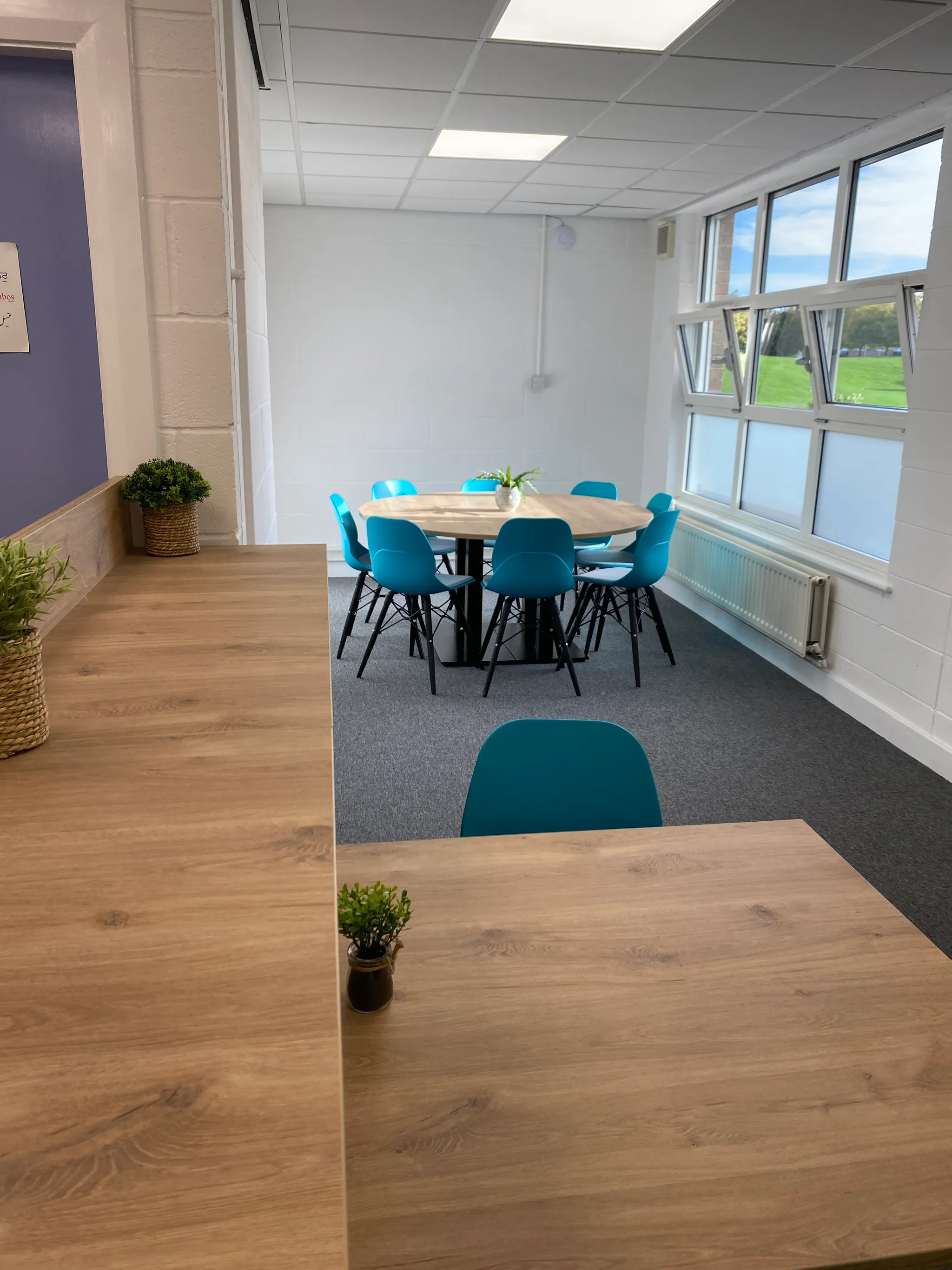
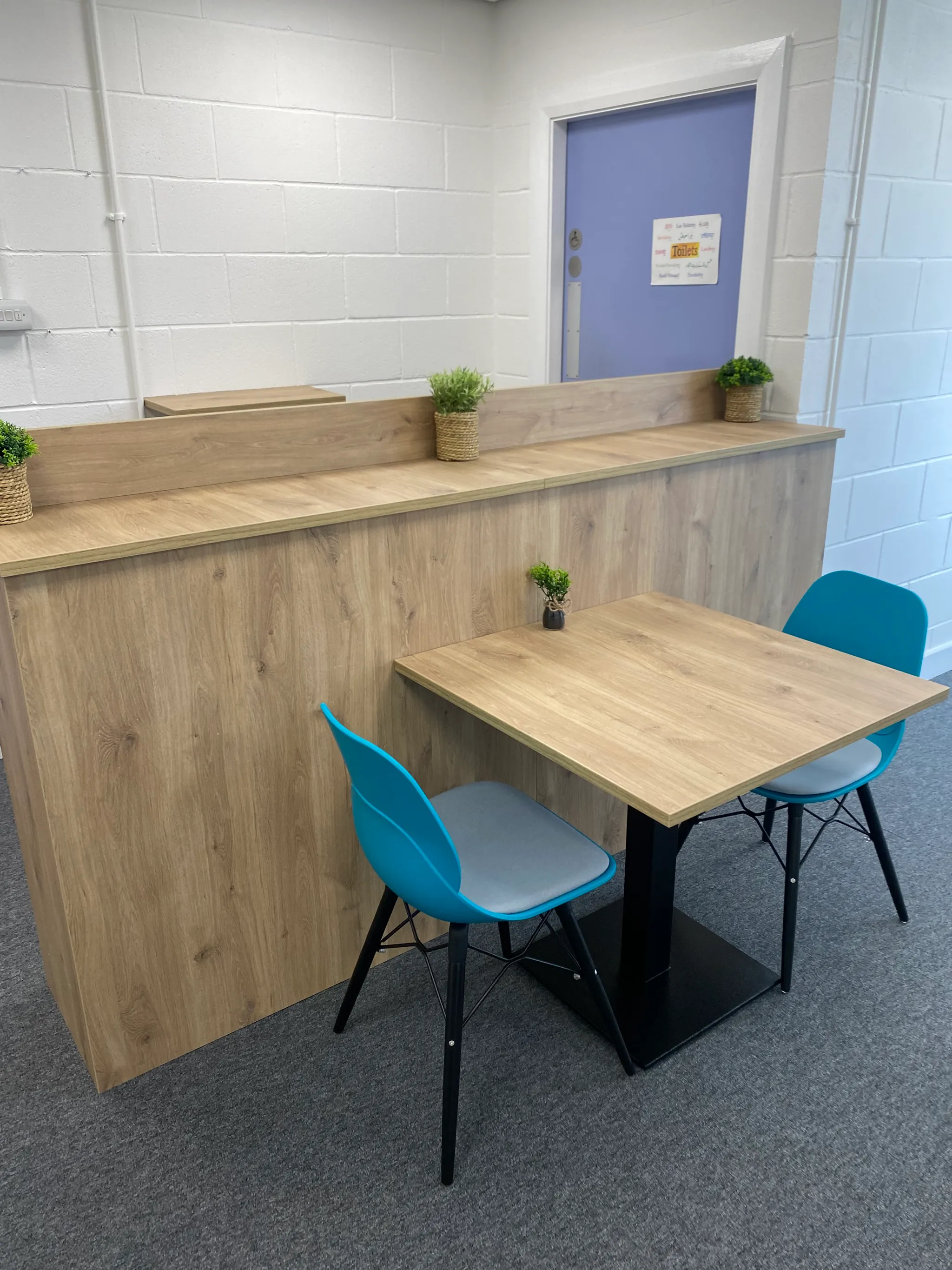
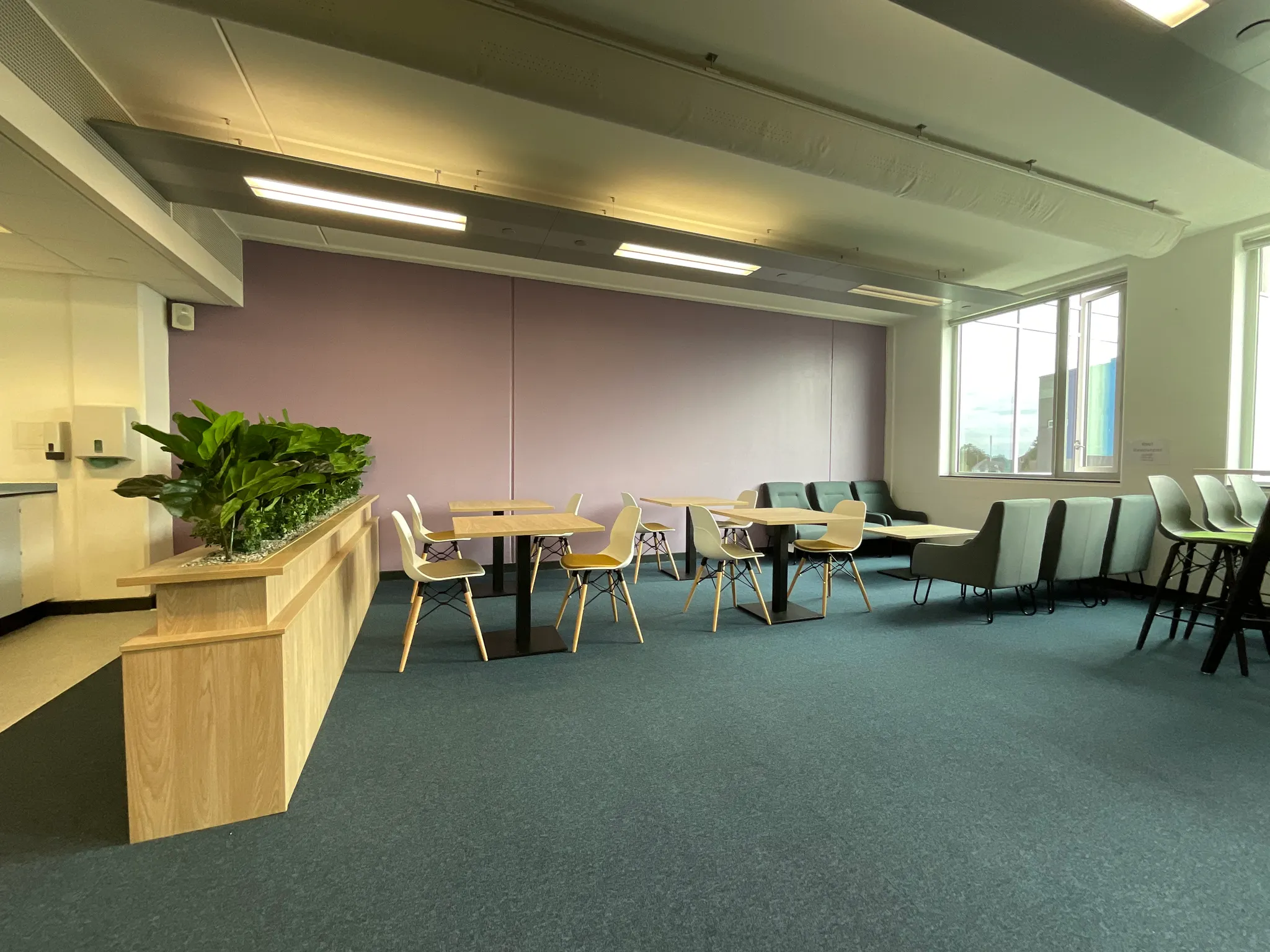
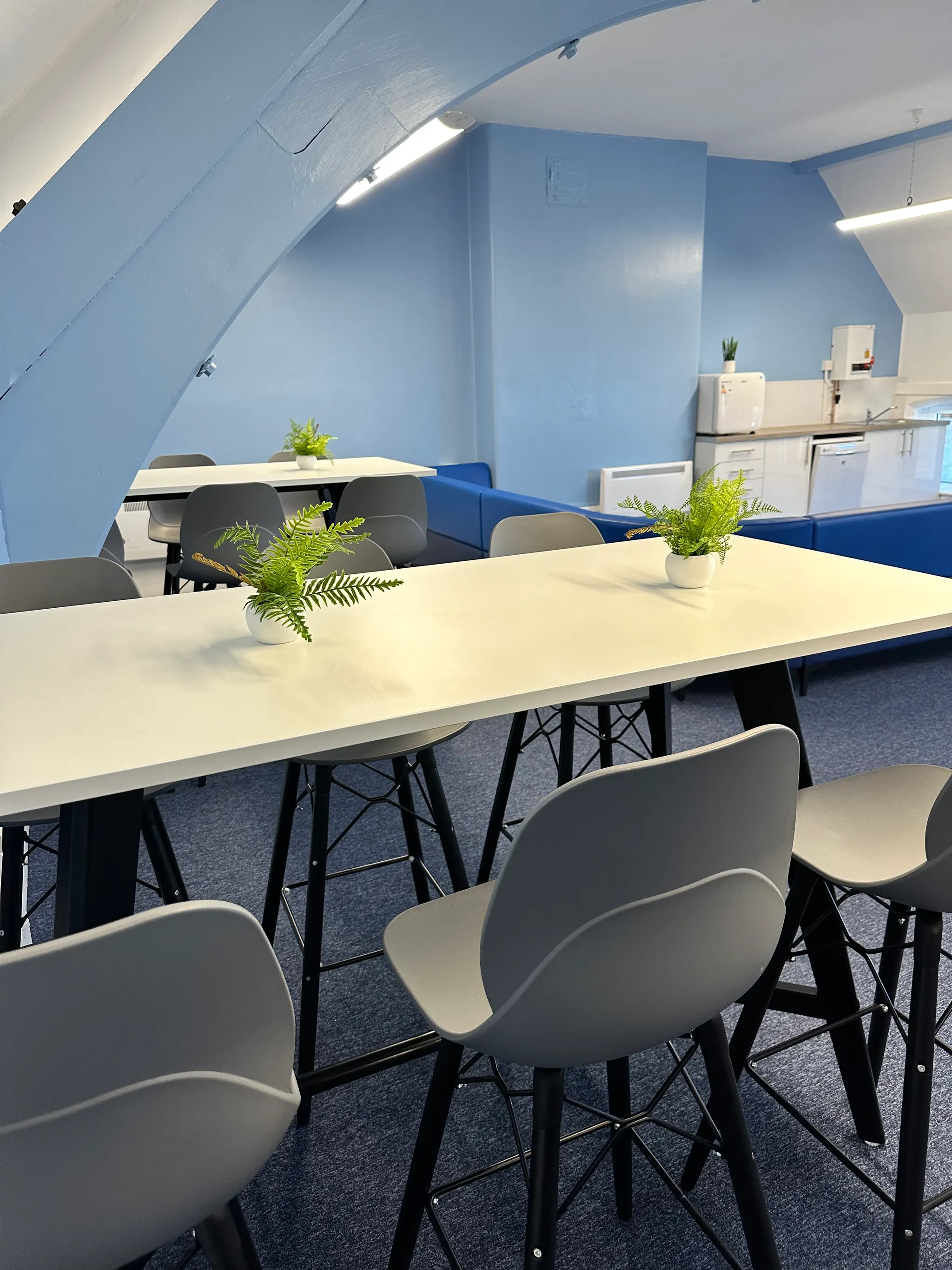
The brief was to create a comfortable staff rest area supporting a 200-person school community. Staff needed multiple simultaneous activities: eating lunch, catching up on admin, informal meetings, and genuine rest. The challenge was accommodating competing needs in one naturally-lit, moderate-sized room. Design approach used activity zoning to create psychological separation. A food zone with practical seating near the serving counter. A quiet lounge area with soft seating angled away from central traffic. A work station with proper desk space for marking and planning. Strategic furniture placement and half-walls created these zones without full partitioning, maintaining sight-lines for supervision and reducing institutional feel. Materials prioritised ease of maintenance and comfort. Wipeable upholstery in high-use areas (essential near food preparation) combined with softer fabrics in quiet zones. Tables featured durable surfaces that resisted staining and scratching. Ergonomic office chairs supported desk work, whilst lounge seating was deeper and more cushioned. Integrated storage reduced visual clutter—staff could stow personal items, keeping the space feeling less crowded. The outcome is a staffroom that actually functions across multiple use-cases simultaneously. Staff wellness improves measurably when they can genuinely rest, not sit in institutional discomfort. The design respects that teachers need quiet retreat, social connection, and practical work space—often all at the same time Explore our staffroom refurbishment expertise.
The brief required creating a focused, distraction-free study environment within a busy secondary school. Pupils with concentration needs—whether dyslexic learners, anxious exam-takers, or those awaiting exam access arrangements—required a calm, controlled space designed specifically to support focus. Design approach emphasised sensory control. Minimal visual complexity, neutral colour palette, adjustable lighting, and sound dampening all worked together. Furniture was carefully spaced to prevent crowding: too many bodies in one room creates ambient anxiety. Sight lines were managed so pupils could focus on work, not classroom activity. The room felt purposeful but not austere—warm materials prevented it feeling like an examination cell. Materials focused on minimal distraction and psychological safety. Simple, unadorned desk surfaces prevented visual clutter. Adjustable task lighting (supporting different visual needs) with minimal glare. Ergonomic seating properly supported posture during extended study periods. Natural light was controlled with adjustable blinds, allowing pupils to manage their own sensory environment. Some pupils need brightness; others need softer conditions. The design accommodated both. The result is measurably improved concentration. Pupils report less anxiety when studying here compared to standard classrooms. Exam access arrangements work more effectively in a space specifically designed for focused work. Teachers note that pupils who study in this room demonstrate better retention—the reduced cognitive load from environmental noise management frees mental resources for actual learning Explore our classroom design expertise.
A departmental staffroom serving a specific subject faculty required thoughtful design accommodating diverse staff activities: collaborative planning meetings, assessment marking, professional discussion, and brief social breaks between teaching commitments. The previous space felt institutional and unwelcoming, inadvertently contributing to staff fragmentation and missed opportunities for cross-curricular collaboration. We specified a flexible layout with a large work table suitable for collaborative planning activities, genuinely comfortable seating for restorative breaks, significantly improved kitchen facilities, and thoughtful filing and storage systems supporting department-specific organisational needs. Colour and lighting choices deliberately aimed at energising the space rather than institutional or clinical appearance. Acoustic treatments reduced noise transmission to adjacent teaching spaces. The outcome demonstrates notably improved department cohesion, more frequent spontaneous collaboration and informal professional discussion, and measurably improved staff satisfaction scores in surveys about working environment. Meeting records document increased frequency of collaborative planning meetings held in this space, indicating measurable improvement in departmental cohesion. Department-level examination results have improved in the subsequent academic year.
Sensory rooms provide regulated multisensory stimulation supporting students with significant sensory sensitivities, sensory processing differences, or autism spectrum support needs. This dedicated room required careful, evidence-based curation of sensory elements promoting calm and focus without overwhelming sensory input or creating dysregulation. We integrated specific equipment: controllable lighting systems with colour options supporting mood and arousal state, diverse tactile surfaces supporting exploration, movement opportunities, and carefully selected auditory elements. Seating options supported both active sensory exploration and quiet regulation. Colour schemes used calming tones proven in research to support sensory integration. Storage kept materials organised and visually uncluttered, maintaining the calming environment. Temperature and air quality received attention. Observation by trained staff indicates substantial improvements in student regulation and emotional stability, with measurable reductions in anxiety episodes and improvements in ability to engage in learning following sensory room use. Monitoring of sensory room usage shows students increasingly accessing it proactively rather than reactively, demonstrating improved emotional awareness. Behaviour incident rates among regular sensory room users have measurably reduced.
This dedicated nurture space serves students requiring intensive emotional support and regulated environments away from the sensory stimulation and pace of standard classrooms. The design brief placed sensory calmness and psychological safety as fundamental, non-negotiable requirements for the space. We created a soft, warm palette using natural timber elements, high-quality acoustic panels, and carefully calibrated low-level lighting that measurably reduces stress responses and promotes emotional regulation. Seating options range from structured task chairs for structured intervention work to cushioned floor platforms and comfortable armchairs for relaxation and recovery. Materials selection prioritised easy-clean, durable surfaces suitable for intensive daily use by students with varying sensory needs. The space includes practical elements supporting self-care routines: a dedicated area for calming drinks and snacks, soft sensory tools, and clear visual schedules. Feedback from both students and trained staff indicates significantly improved emotional regulation capabilities, with students demonstrating noticeably better composure and engagement in learning following sessions in this dedicated environment.
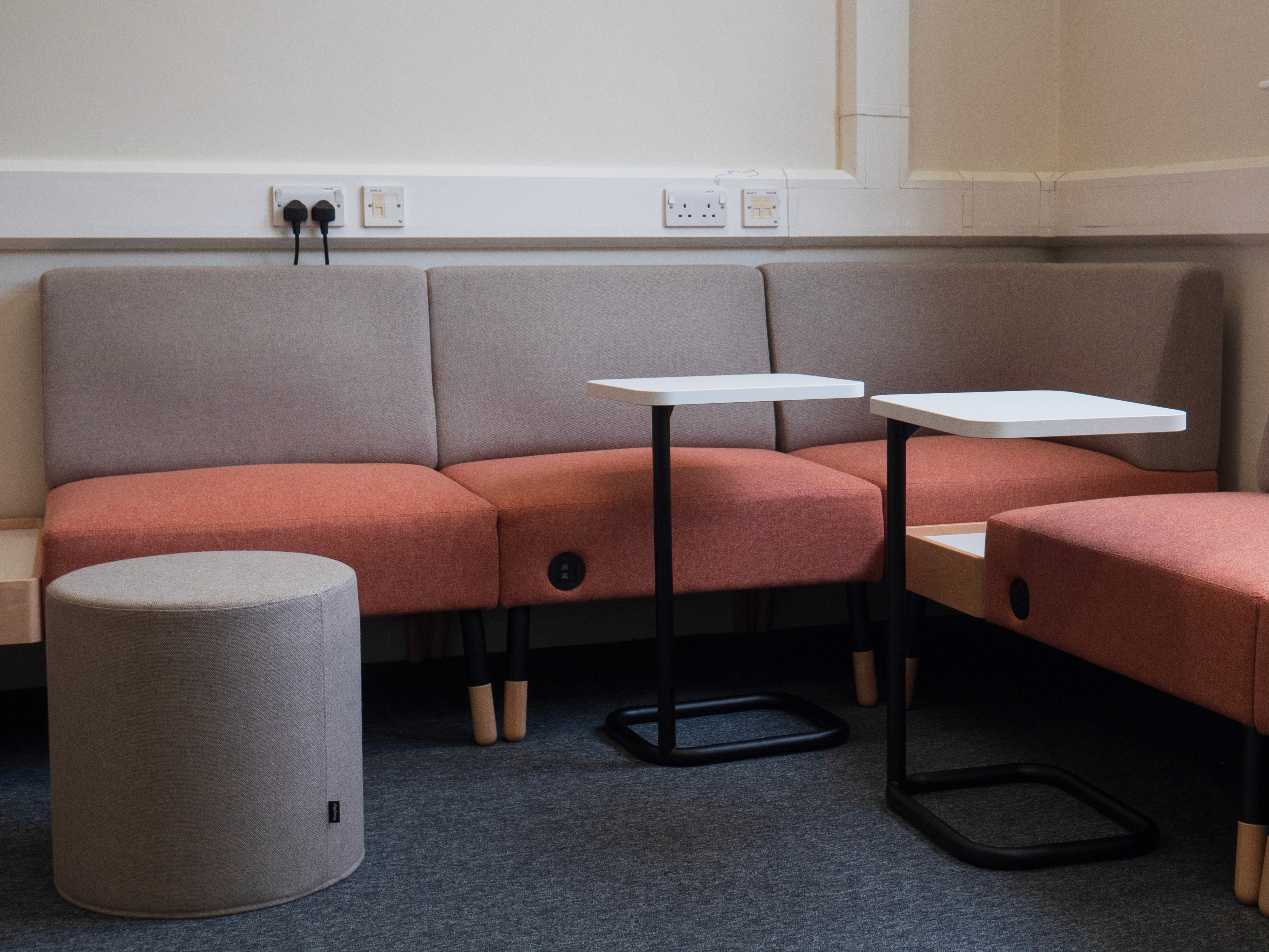
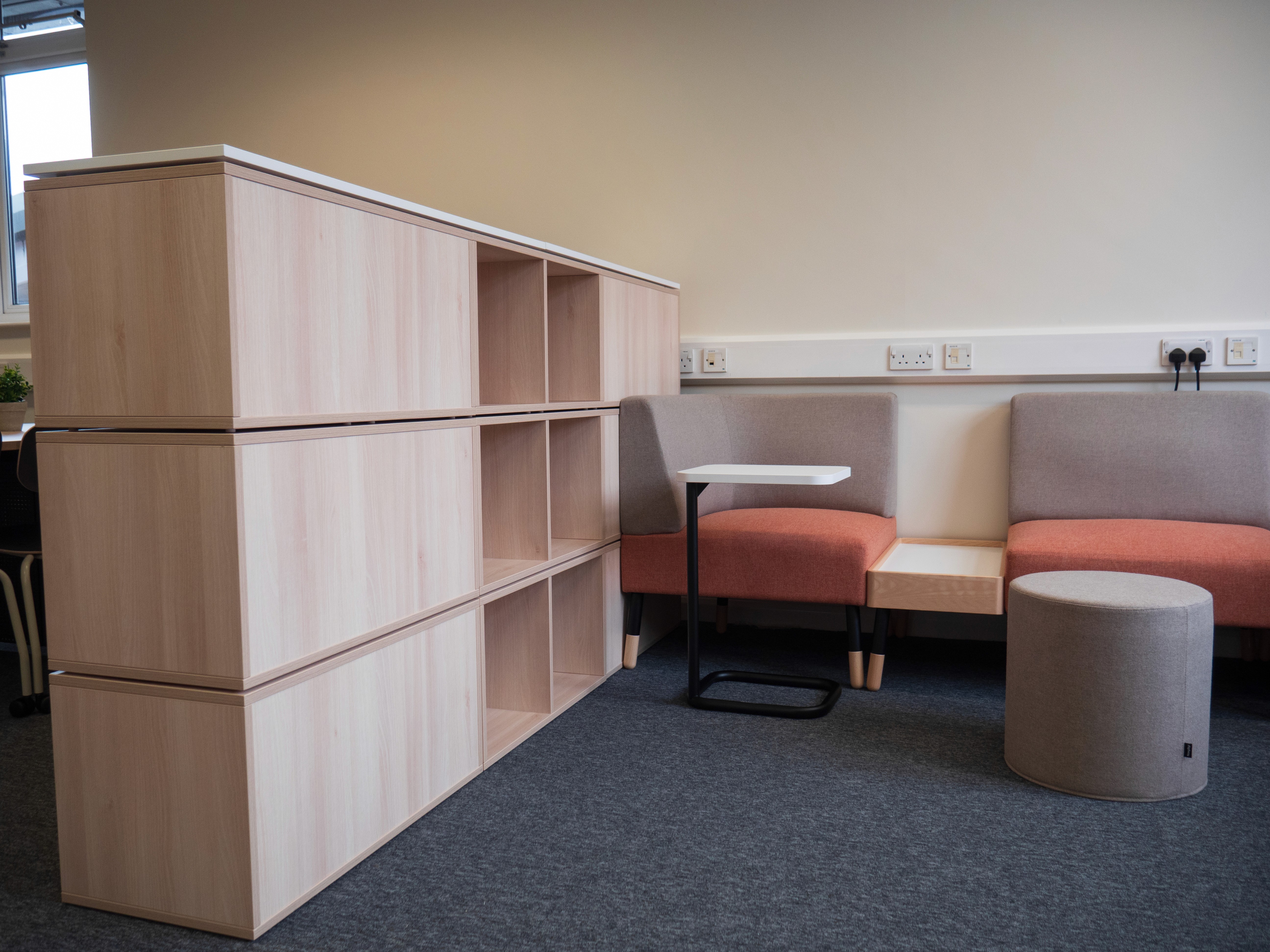
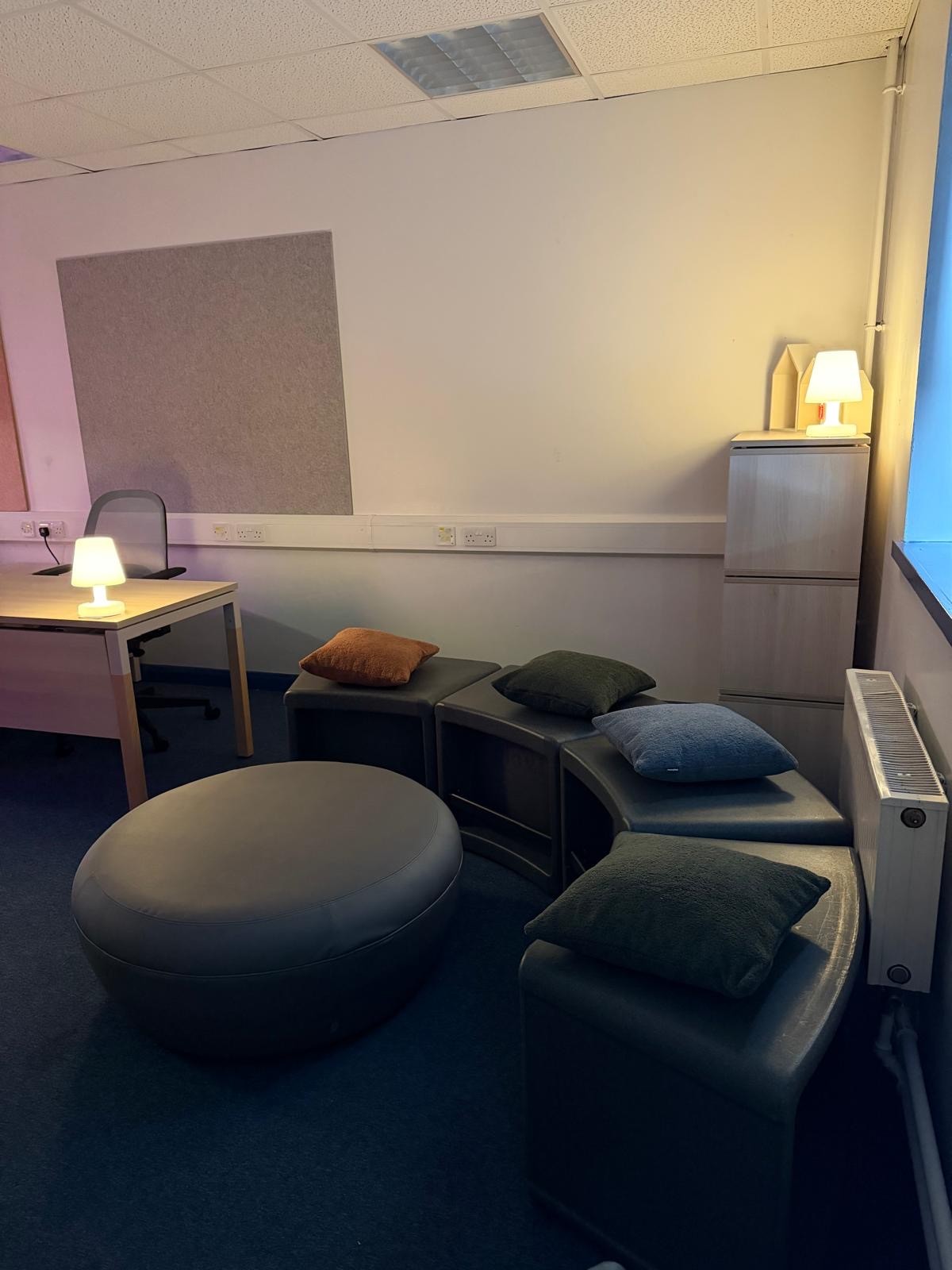
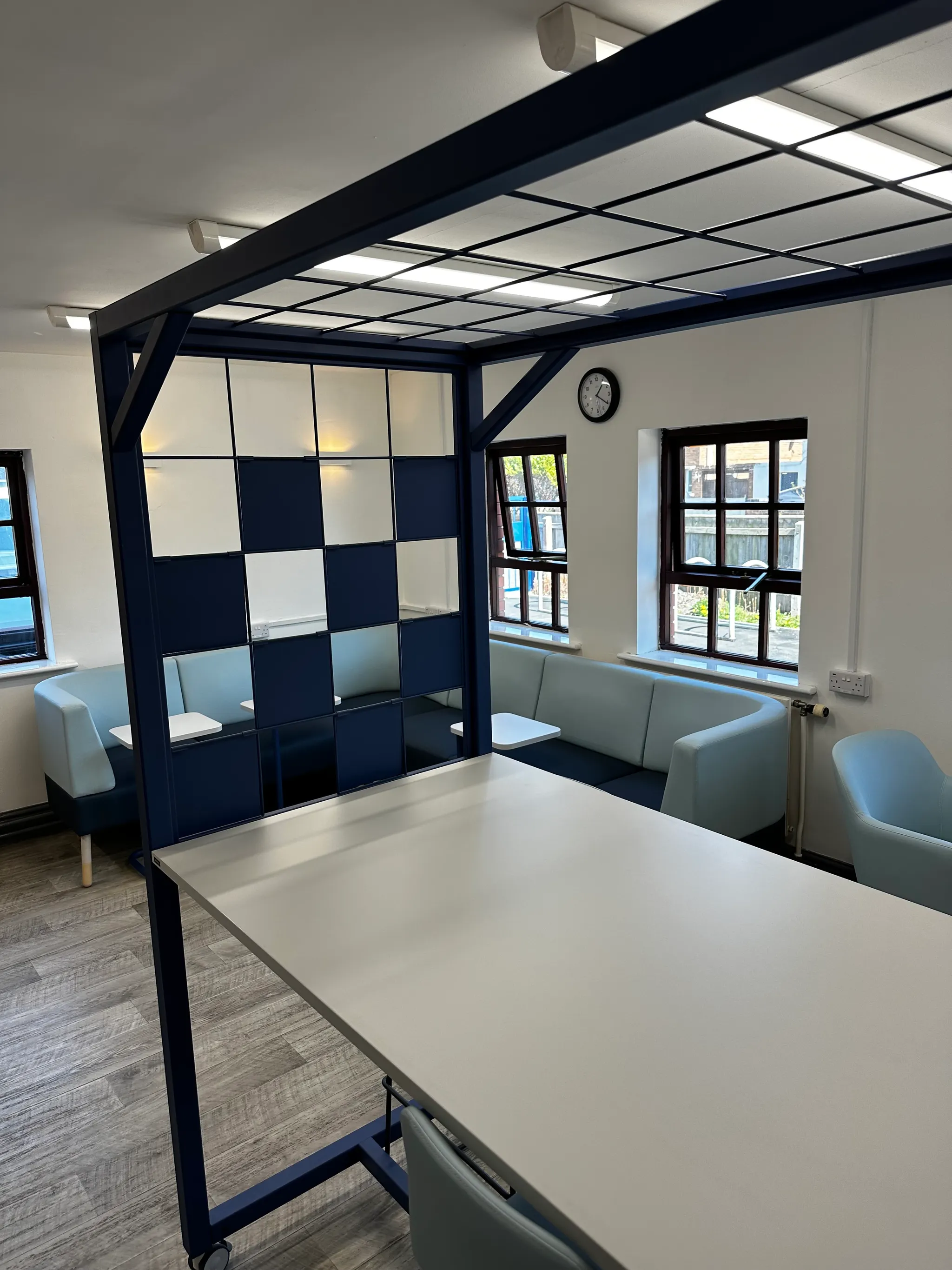
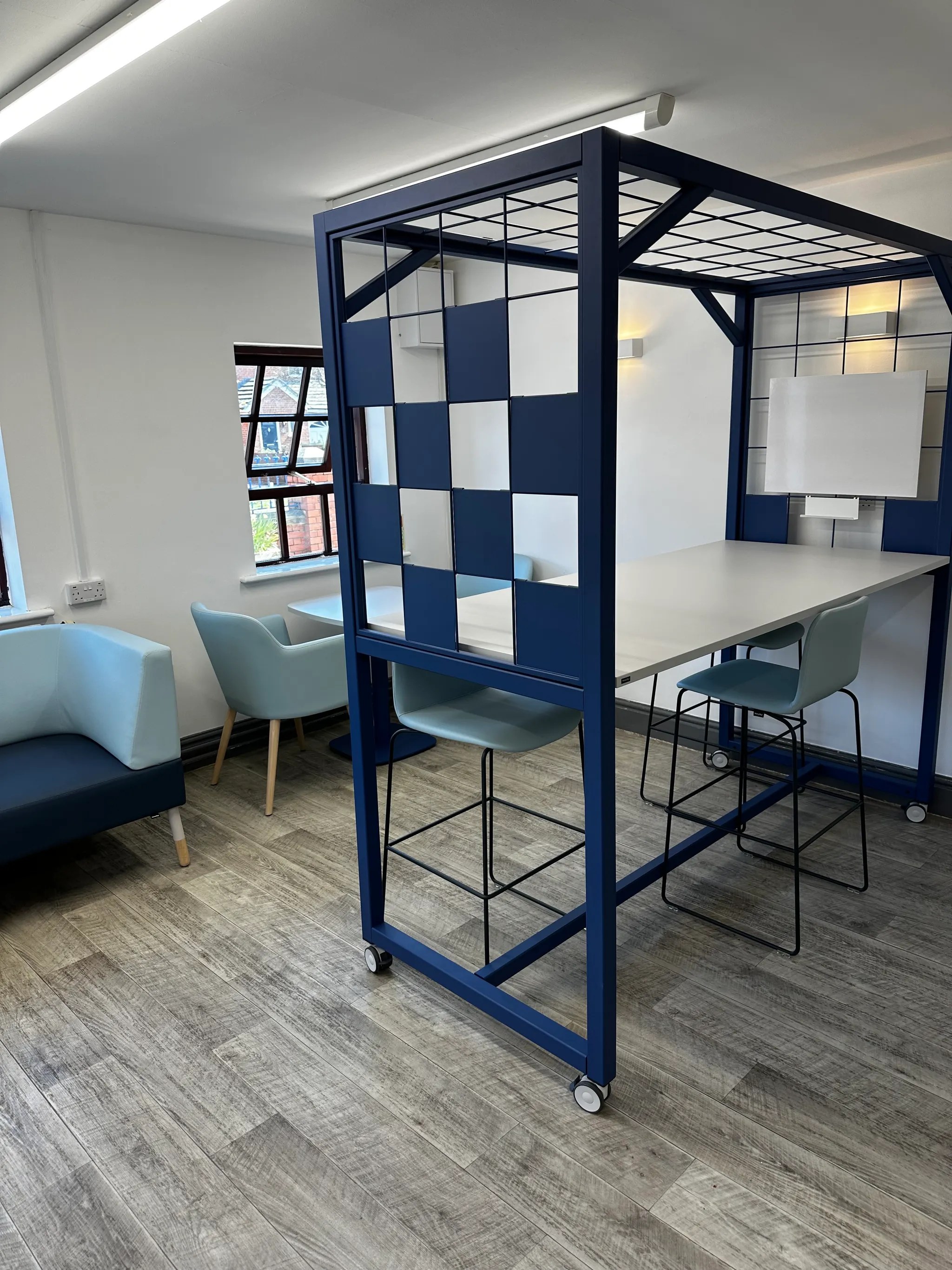
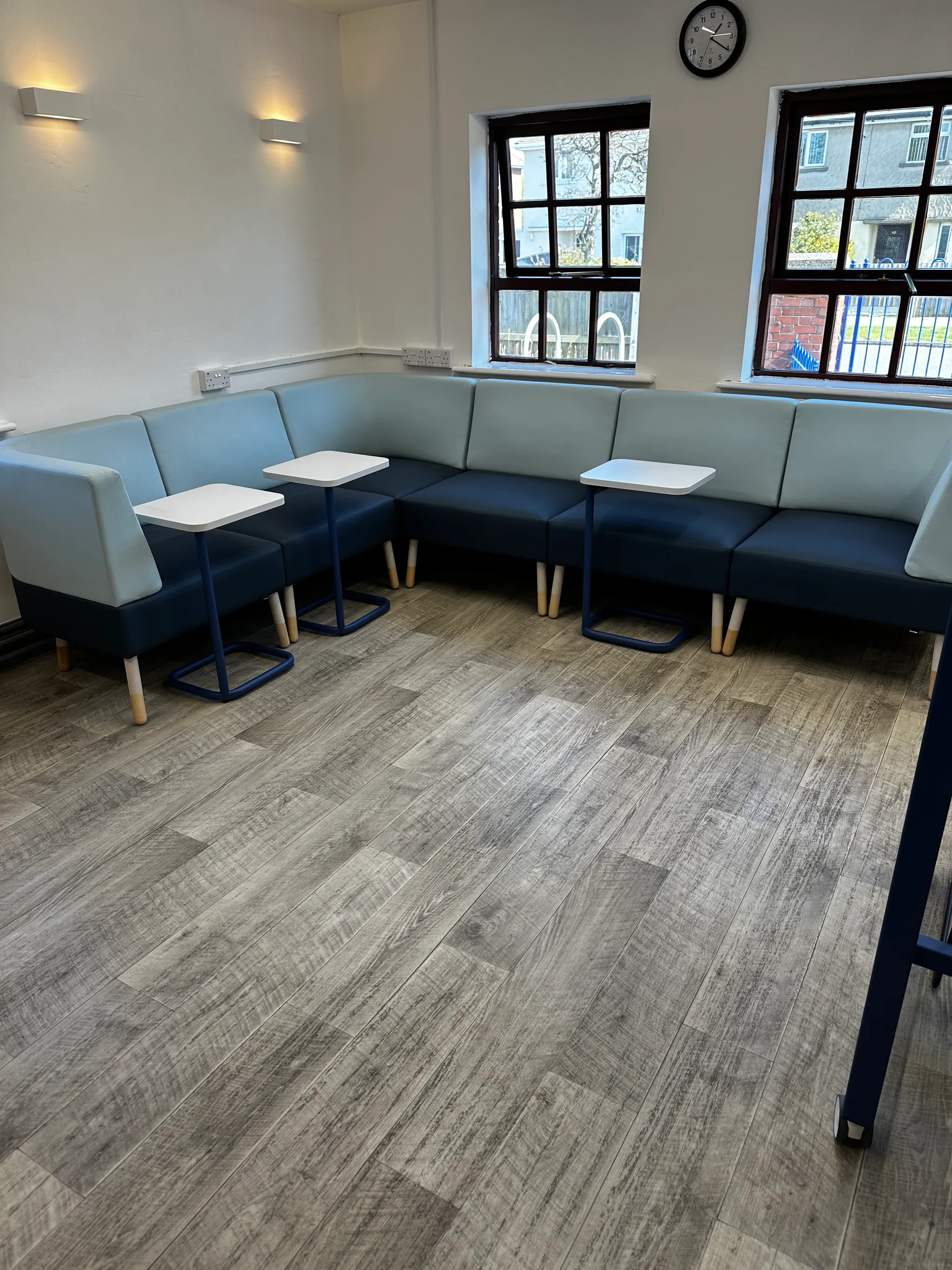
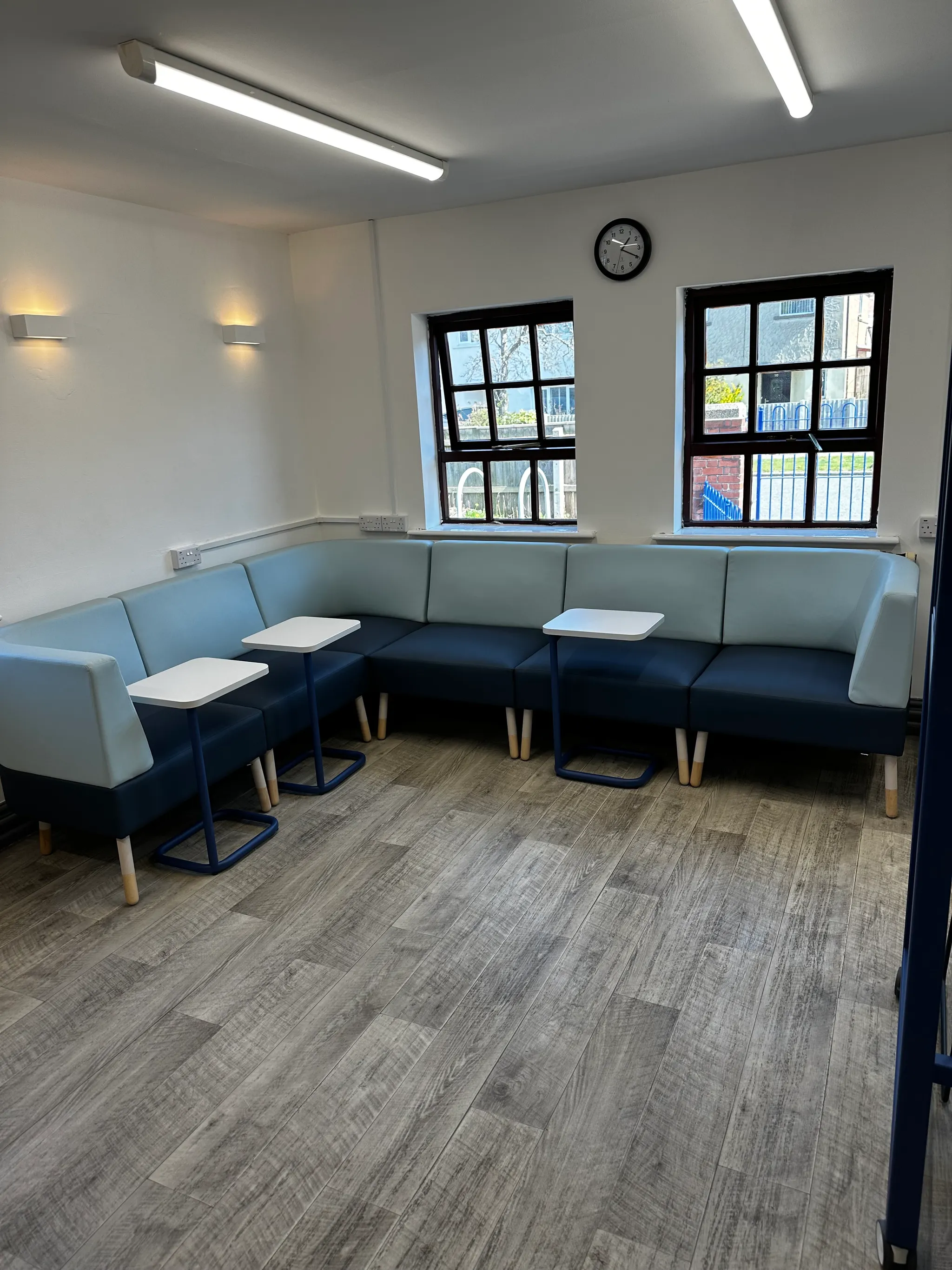
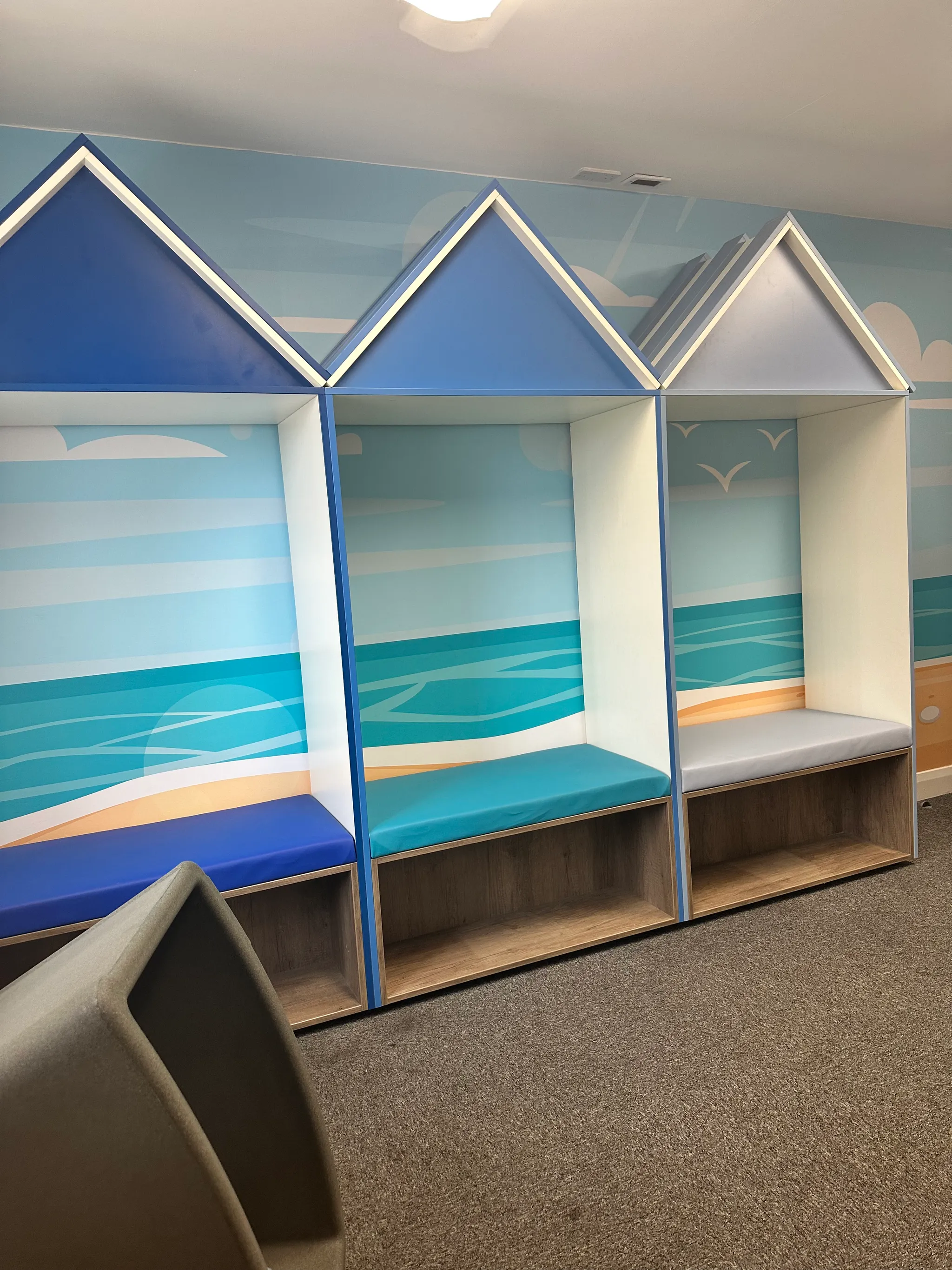
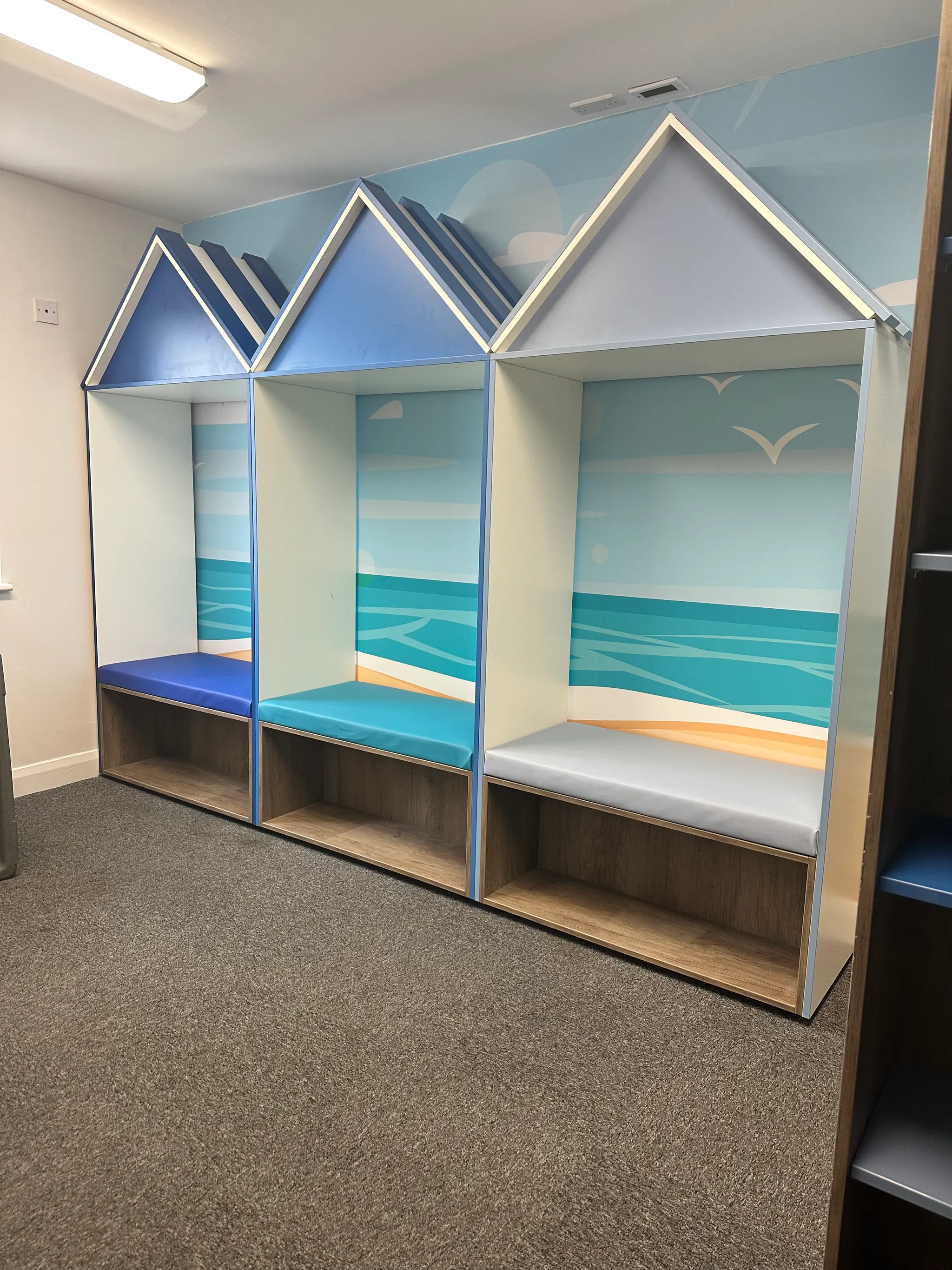
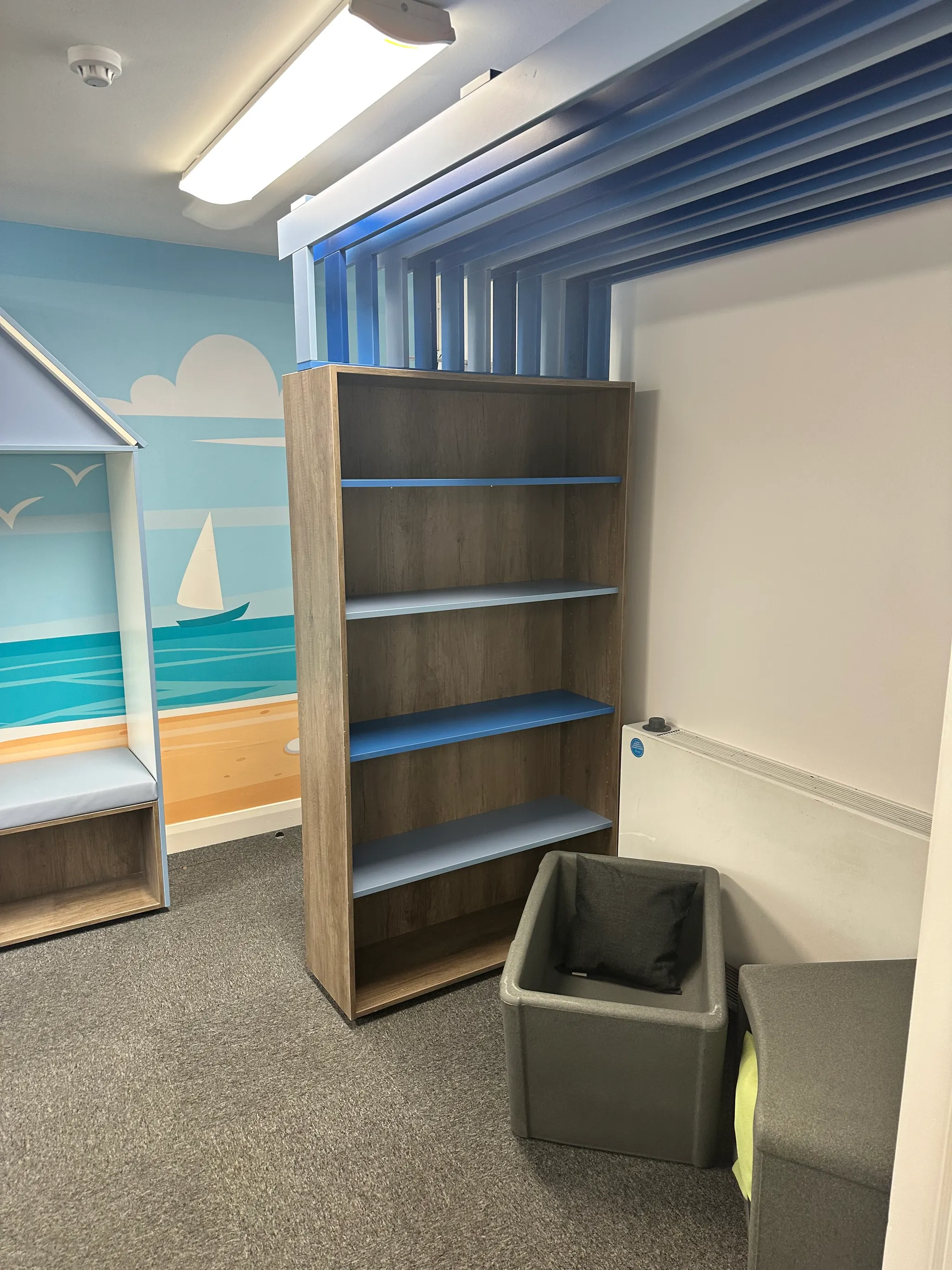
With integrated seating, practical shelving, soft finishes, and biophilic-inspired design elements, the Nurture Hub has been created as more than just a functional area. It is a space where people can pause, reset, collaborate, and feel supported.
A comprehensive nurture facility designed to support students experiencing emotional, behavioural, and developmental challenges requiring intensive, sustained intervention. The facility needed to balance structured intervention spaces with low-stimulus recovery areas, creating a complete support environment rather than temporary refuge space. We created distinct zones using spatial planning and architectural finishes: a main intervention area with flexible furniture for therapeutic activities and structured skill-building, quieter retreat areas for emotional regulation and nervous system recovery, and a kitchenette for basic self-care routines and informal relationship building. Materials selection emphasised durability, safety, and visual warmth throughout, with rounded corners, soft furnishings, calming colour tones, and maintenance-friendly surfaces. Storage systems are clearly organised yet discrete, reducing visual clutter. Staff report significantly improved outcomes in emotional literacy and behaviour regulation, with quantifiable reductions in crisis incidents and improved school attendance rates among supported students. Parent feedback consistently identifies this facility as transformative in supporting their children's emotional development and school integration.
An ageing, unwelcoming staffroom required comprehensive refurbishment to create a genuinely restorative space where staff could meaningfully disconnect from work demands and professional stressors during limited break times. The previous space felt dated and uninviting, with severely insufficient comfortable seating and poor kitchen facilities contributing to staff using breaks for administrative work rather than rest. We redesigned with quality comfortable sofas and chairs mixed with some task-oriented seating, significantly improved kitchen with modern appliances, larger counter space, and better storage layout, and created distinct zones for different break-time activities—socialising, quiet resting, individual work. Soft furnishings, warm lighting, and indoor plants contributed to a homely, welcoming atmosphere. Staff satisfaction scores increased notably following the renovation, with staff reporting they now consistently use break times for genuine rest, social connection, and mental health recovery. Staff satisfaction surveys show this space consistently rated as meeting genuine wellbeing needs, with particular appreciation for the comfortable seating and kitchen improvements. Stress-related absences have reduced measurably among teaching staff.
A primary school library transformation that needed to serve dual critical purposes: supporting curriculum-aligned research skills development and fostering a lifelong love of reading in younger students. The design challenge centred on creating an environment that felt simultaneously structured for purposeful learning and inviting for independent browsing and pleasure reading. We implemented colour-coded zones with height-appropriate shelving, allowing young children to independently locate books and resources without adult assistance, building research skills and confidence. Story corners featured cushioned seating, soft lighting, and engaging displays to create intimate reading nooks that felt like safe sanctuaries. The furniture selection prioritised safety, durability, accessibility, and ergonomic appropriateness for developing bodies, with rounded edges, stable step-stools, and teacher-accessible organisation systems. Visual supports and picture-based labelling help children navigate independently. Teachers report increased borrowing rates across ability levels and improved reading comprehension outcomes, particularly among reluctant readers who now choose the library voluntarily for recreational reading.
This central student services hub required careful consolidation of multiple separate functions into one coherent, welcoming space. The design challenge involved accommodating diverse activities including student inquiries, counselling referrals, attendance administration, and informal peer support, all within one location. We created open areas for inquiries with clear sightlines and accessible counter height, private consultation rooms ensuring confidentiality for sensitive conversations, accessible reception seating, and dedicated staff work areas. Colour and furnishing choices deliberately prioritised a welcoming rather than institutional atmosphere, reducing stigma and barrier to student access. Appropriate technology infrastructure supported both student-facing service systems and back-office administrative functions. Signage was clear and reassuring. The outcome demonstrates measurably improved student accessibility to vital services, noticeably reduced stigma and anxiety around service engagement, and quantifiable improvements in attendance rates and pastoral support outcomes. Monitoring of service access shows increased student usage across all services, suggesting reduced stigma and improved accessibility. Qualitative feedback from students identifies this space as crucial to their school experience and support network.
A flexible primary classroom supporting inquiry-based and student-centred learning required furniture systems enabling rapid teacher-led reconfiguration in response to evolving pedagogical needs and learning activities. The previous fixed furniture arrangement severely limited instructional flexibility and teacher responsiveness. We specified lightweight, stackable furniture allowing multiple configurations: organised rows for focused whole-group instruction, grouped tables for collaborative peer learning, open carpet areas for discussion and sharing, and defined zones for different activity types. Open shelving displayed learning resources making materials visually accessible and supporting child independence in selecting appropriate resources. Floor cushions and varied seating heights provided flexible options. Teachers report significantly improved ability to implement varied pedagogical approaches throughout the day and between lessons, measurably increased student engagement and independence in learning, and improved behaviour during transitions. Behaviour records show marked improvements during transitions between learning activities, with reduced anxiety and resistance to movement. Student engagement in learning is noticeably more sustained across different activity types.
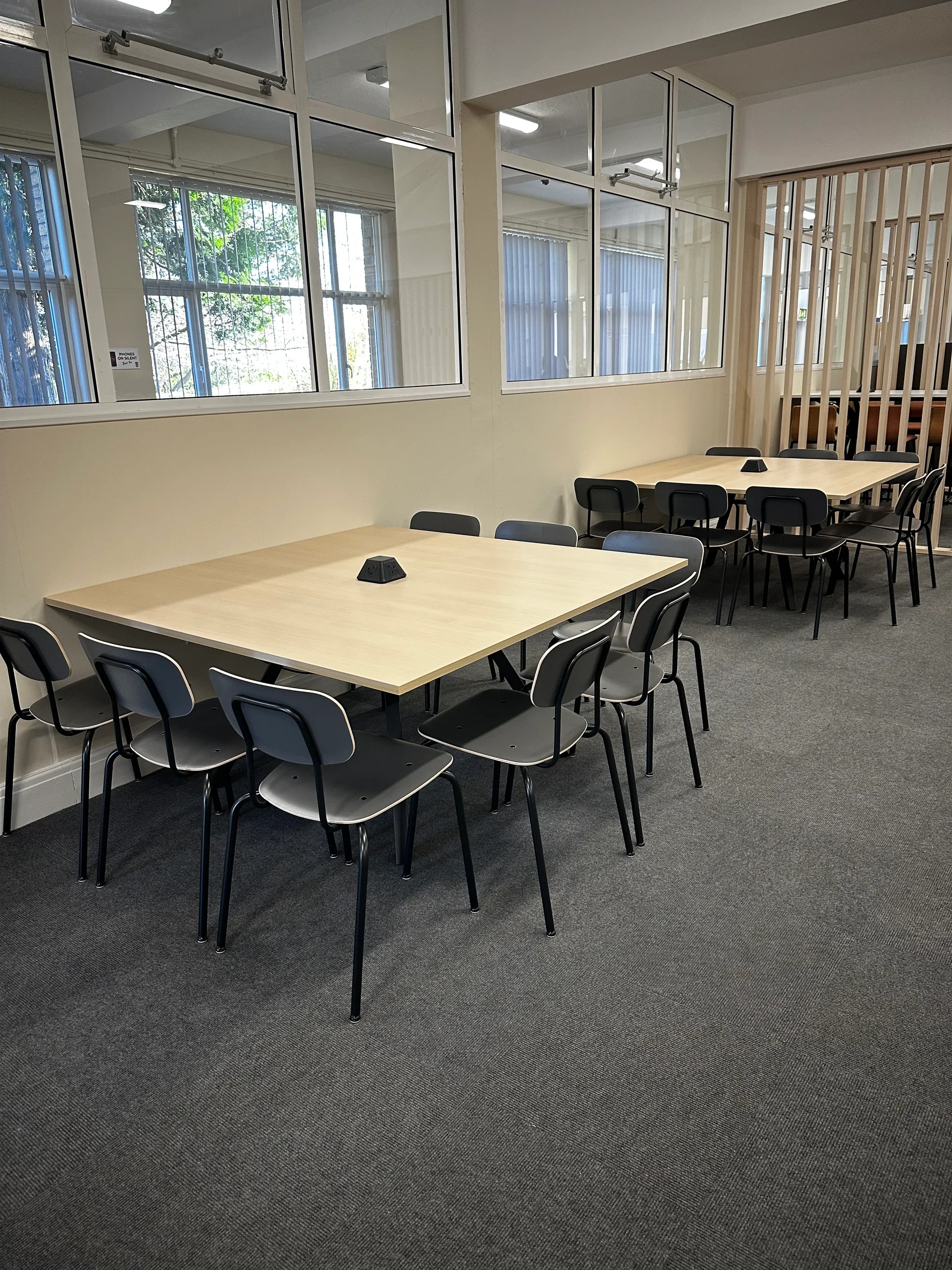
A central staffroom serving multiple departments and diverse staff types required thoughtful zoning ensuring genuine compatibility between different break-time needs and work activities. The design balanced social and relaxation functions with the practical reality that some staff work through breaks, others need quiet time, and others require marking space. We created a relaxation zone with genuinely comfortable seating supporting true rest, a work zone with large tables and accessible power for assessment marking, separate quiet area for staff preferring minimal interaction, and significantly improved kitchen facilities. Acoustics were carefully managed to reduce noise transfer between distinct zones. Colour schemes used warm but professional tones encouraging both relaxation and focus. Feedback indicates measurably improved staff wellbeing, reduced inter-departmental tensions around space usage, genuinely improved break-time quality, and increased informal cross-department connection. Usage monitoring shows all zones are utilised throughout the day, confirming the design accommodates varied staff preferences and needs. Staff report improved collegial relationships and reduced feelings of isolation, particularly for individual subject specialists.
This comprehensive library transformation needed to address multiple problems: outdated spatial layout, minimal IT integration, and spaces not conducive to collaborative learning and varied learning styles. The redesign created distinct, well-defined zones: quiet individual study areas with personal desks and comfortable seating, group work tables with presentation capability, computer stations with height-adjustable ergonomic setup, and an inviting modern reading lounge. Shelving was reorganised dramatically improving browsing accessibility with clear genre and topic signage. Comprehensive acoustic treatments enabled simultaneous use of different areas without acoustic disruption. Lighting was upgraded substantially supporting comfortable extended reading and study. Power infrastructure integrated throughout supporting technology use. The outcome demonstrates dramatically increased library usage across all year groups, improved research outcomes in academic work, and consistent positive feedback from students identifying the library as preferred study location. Comparative data on library book borrowing shows substantial increases across all year groups, with particularly strong growth in reluctant readers accessing the space. End-of-year achievement data demonstrates improvements in literacy outcomes across lower-ability groups.
A dedicated low-intensity support space for vulnerable learners requiring calm environments and psychological safety during difficult moments or periods of stress. The design emphasised emotional containment through thoughtful environmental design, reducing the need for behavioural management interventions. We specified soft furnishings throughout, optimised natural lighting with blackout options for overwhelming sensory states, and comprehensive acoustic treatments reducing external noise and chaos. Furniture included comfort-focused options like supportive armchairs and floor cushions alongside task-focused surfaces for structured activities and skill-building work. Colour selection used warm, neutral tones proven in research to promote emotional regulation and calm. The space includes practical elements like a kitchenette for hot drinks, grounding activity kits, and comfortable spaces for staff to sit alongside students during distress. Staff report improved emotional stability in students, dramatically reduced incident frequency, and consistently positive feedback from parents regarding their children's engagement with the facility and demonstrated improvements in emotional regulation skills.
A flexible learning pod supporting diverse uses including small group interventions, one-to-one support conversations, and breakout learning space required maximising functionality within constrained spatial footprint. We specified modular furniture enabling rapid reconfiguration, moveable acoustic screens for both visual and acoustic privacy during sensitive conversations, and clearly organised storage systems colour-coded by intervention type or activity focus. Comfortable seating balanced professional appearance with emotional accessibility for vulnerable students. Acoustic treatments addressed the specific challenge of sound isolation in limited space. Soft finishes and lighting contributed to welcoming atmosphere. Observation indicates excellent space utilisation across all intended purposes, with measurable improvements in intervention effectiveness, positive student feedback identifying it as valued safe space, and staff reporting notable improvements in student engagement during sessions. Behaviour monitoring data from intervention staff indicates measurable reductions in crisis incidents when students work in this dedicated space. Parents consistently report their children discussing positive experiences in this supportive environment.
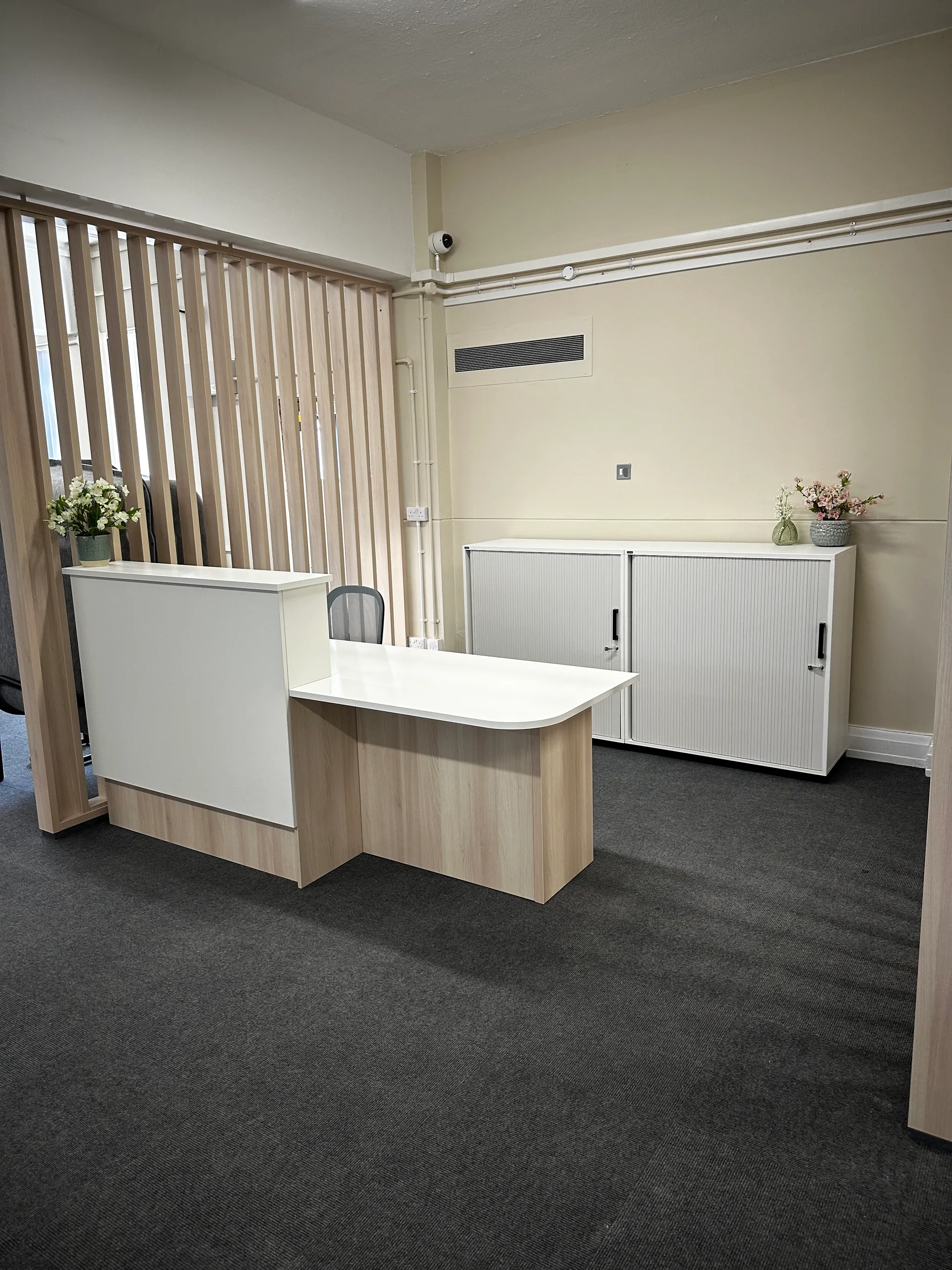
The school office processes hundreds of interactions daily, from student inquiries and sick bay access to parent meetings and confidential administrative matters. The redesign required a thoughtful approach to create an efficient workflow without sacrificing the welcoming, accessible atmosphere essential for students and families. We separated the reception counter from back-office functions with custom cabinetry that provides visual screening for confidential conversations and secure storage for sensitive student files. Ergonomic desk solutions with adjustable components support extended sitting periods during peak activity times whilst maintaining quick access to frequently needed resources and communication systems. The reception area features welcoming seating with sightlines allowing staff to monitor student activities whilst handling inquiries. The new layout has eliminated operational bottlenecks during peak arrival and departure periods, improved document management and student information security, and created a more professional, welcoming environment that positively reflects the school's values and commitment to student care. Staff time-motion studies show improved efficiency during peak periods, with reduced queue times and fewer confused interactions. Parent feedback indicates improved satisfaction with office experience and professional impression of the school.
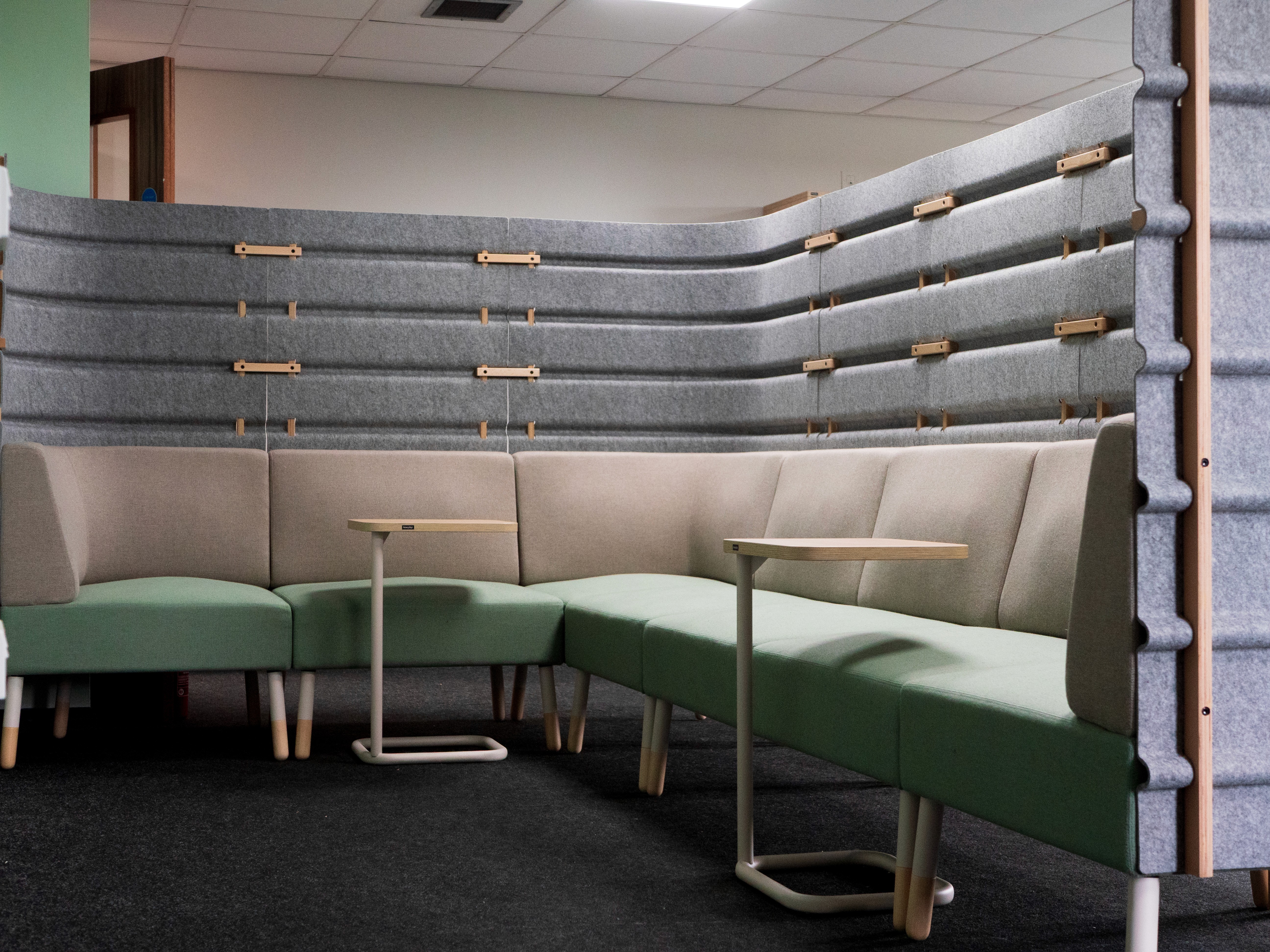
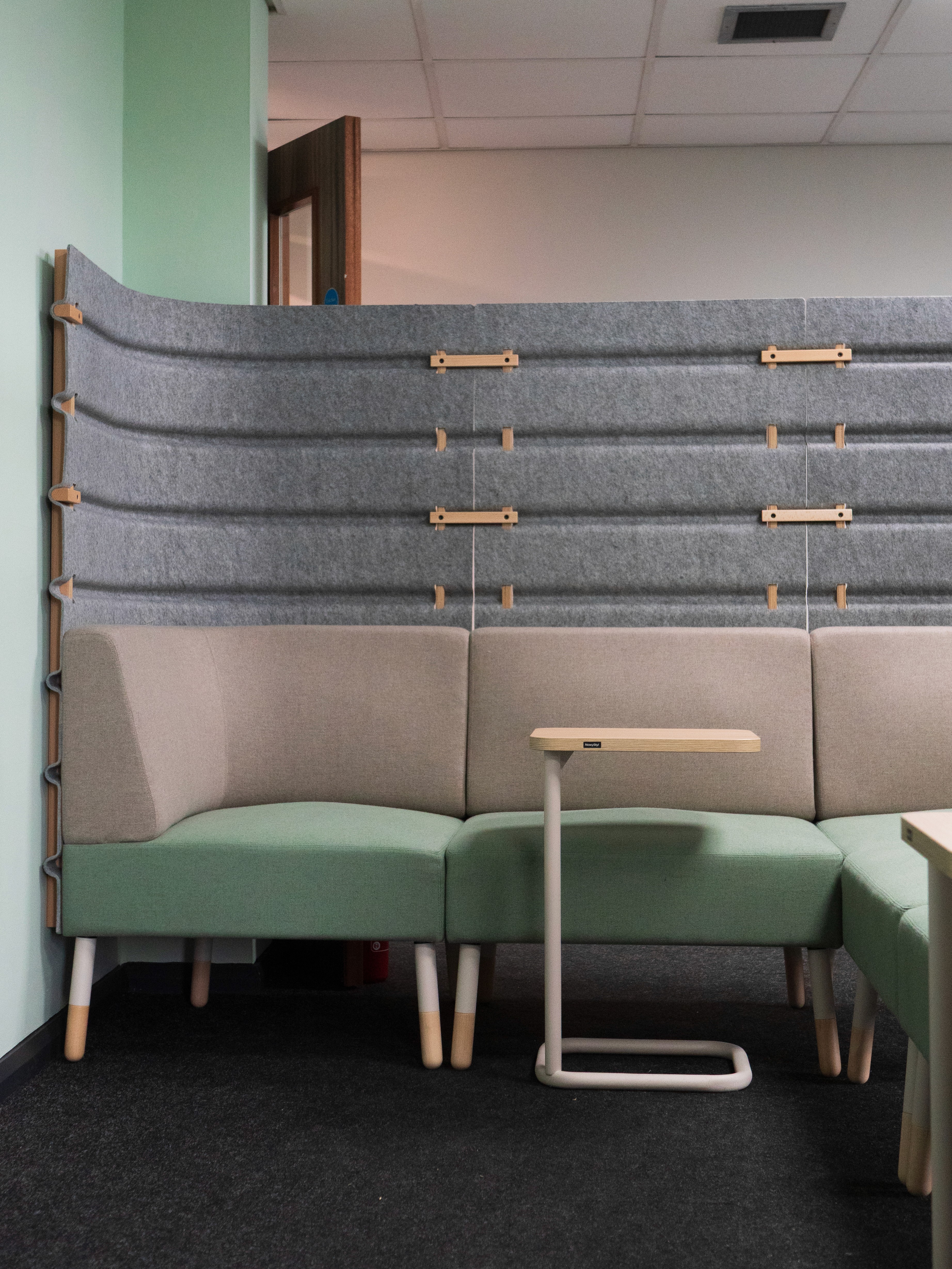
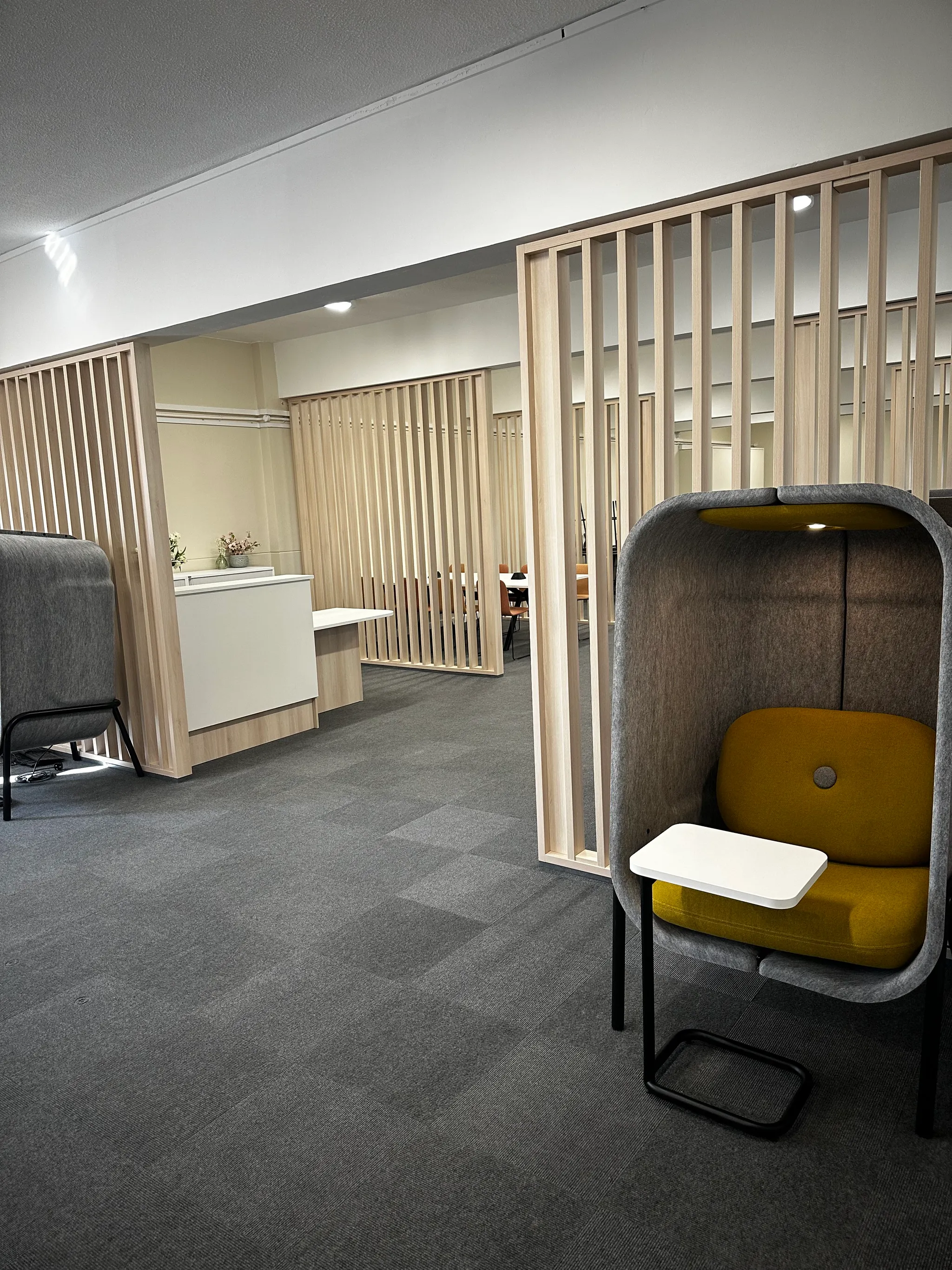
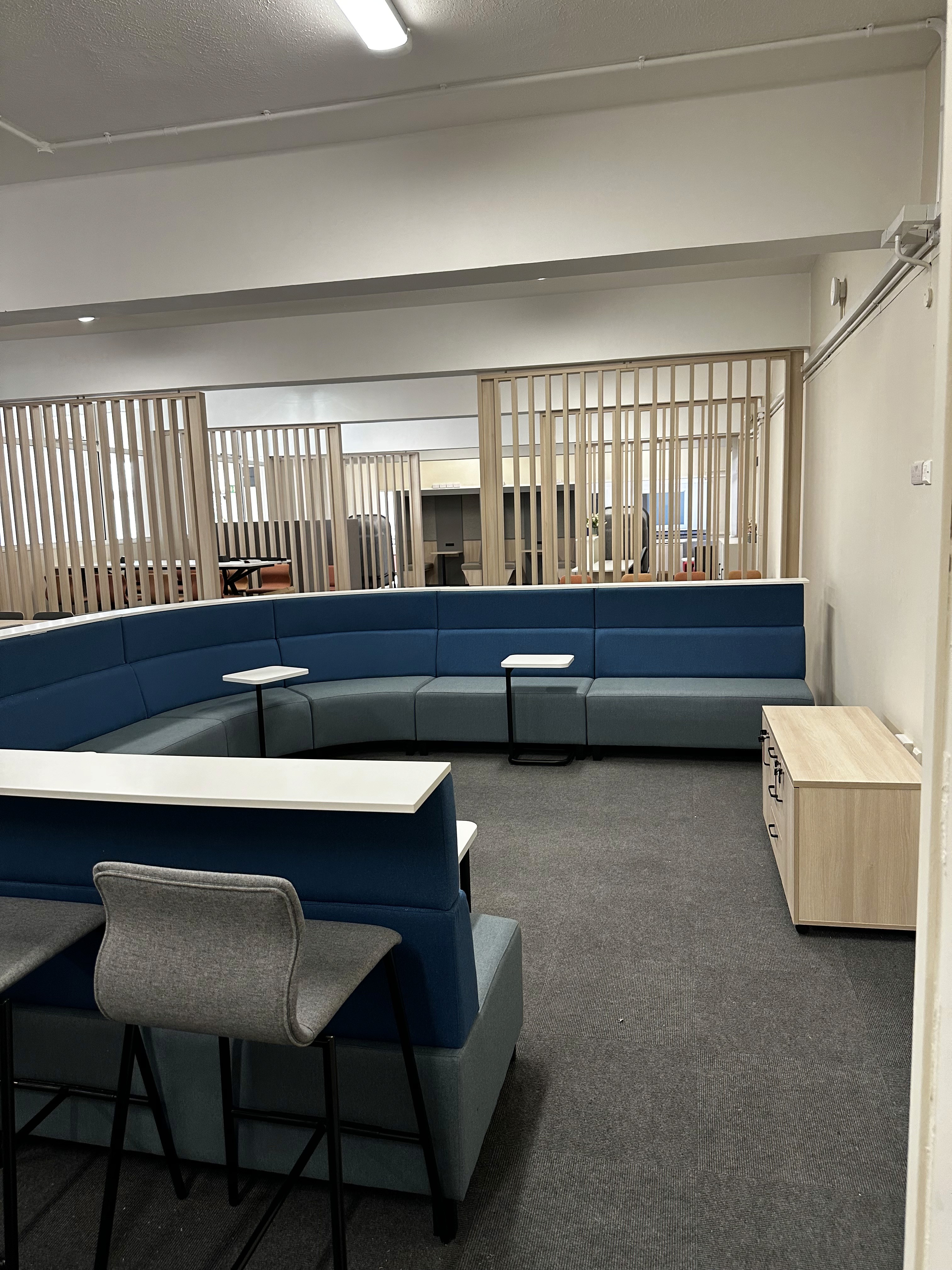
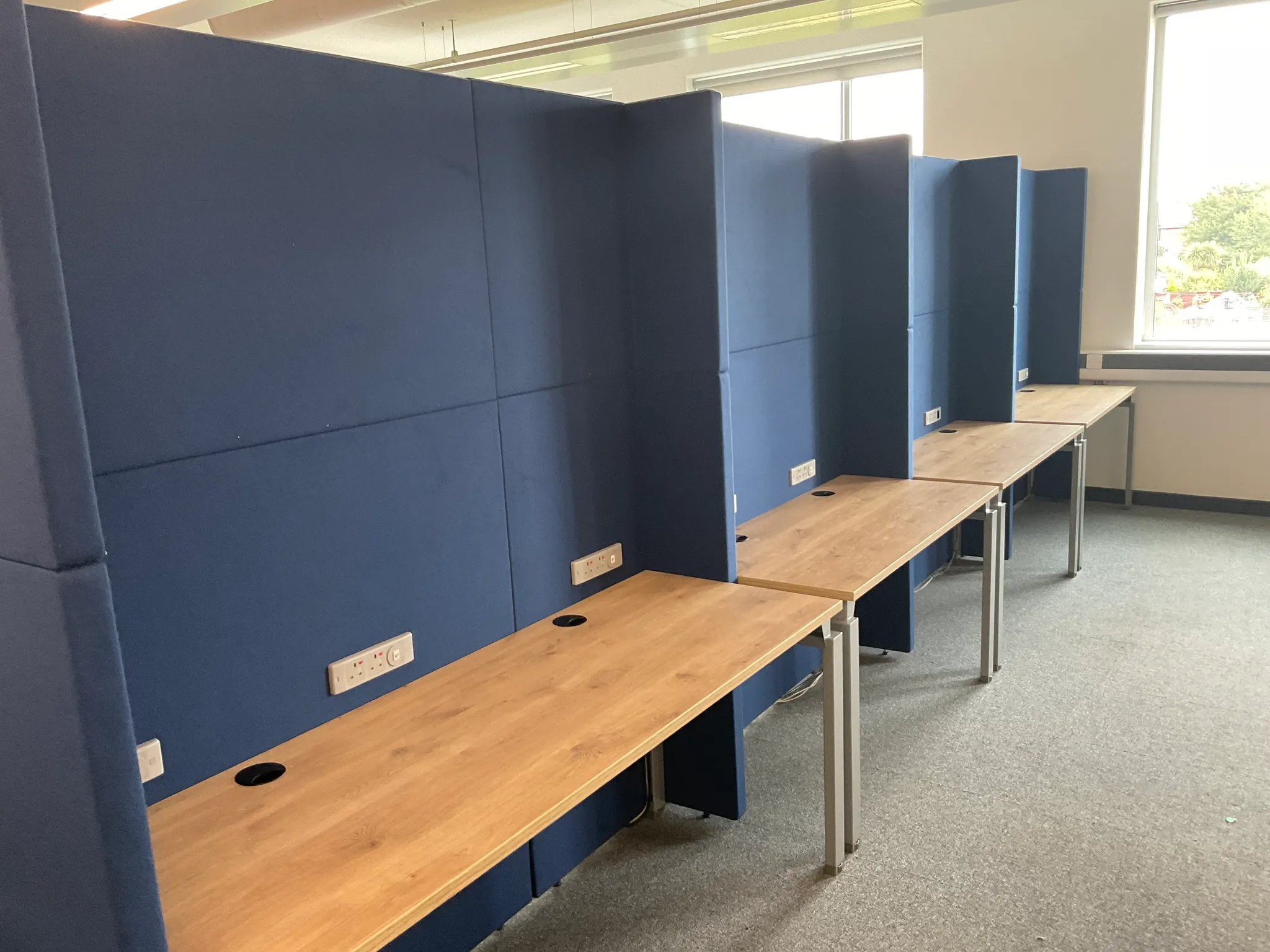
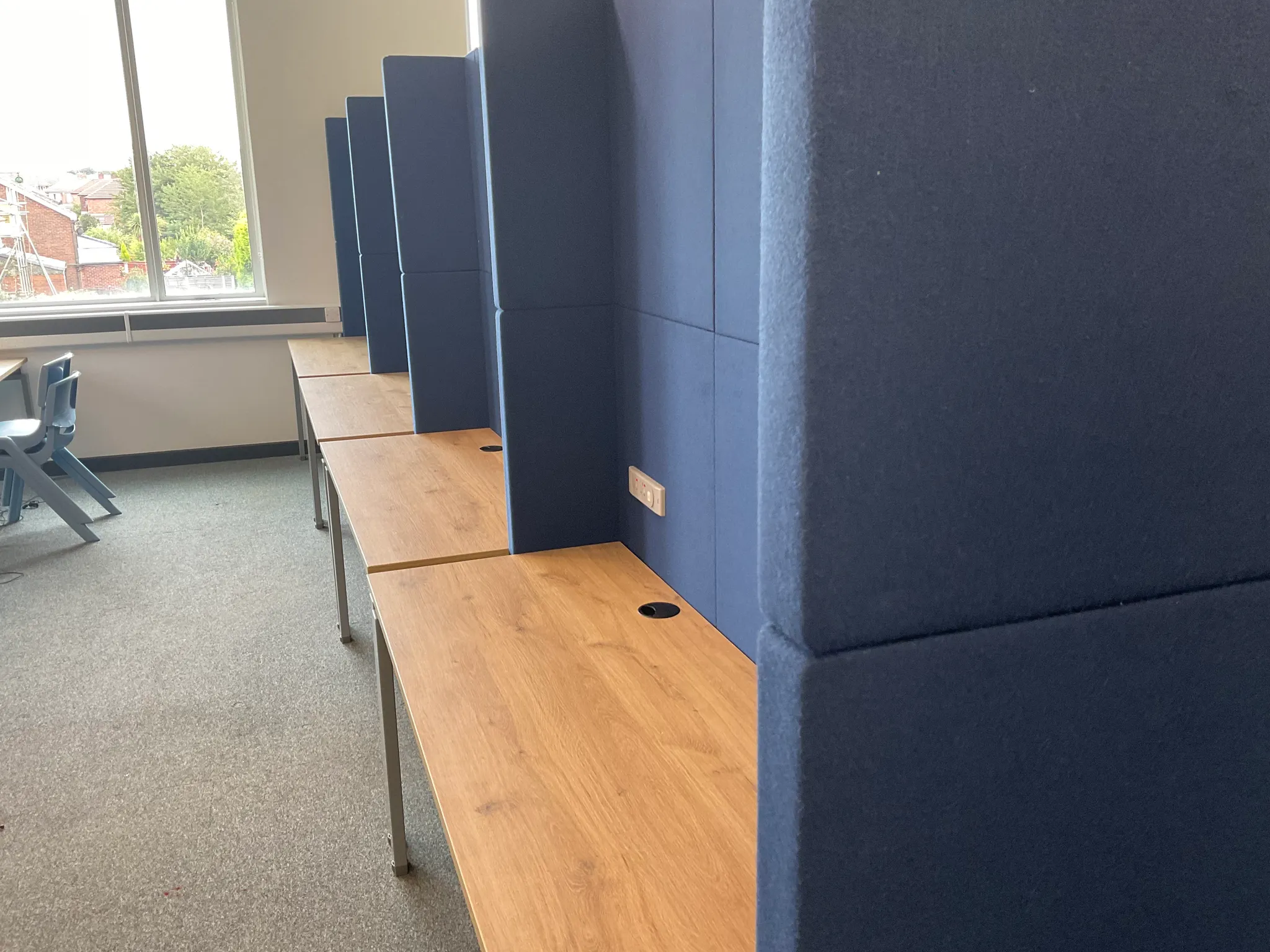
This secondary school library required a significant transformation to become an active hub of collaborative learning and focused independent study. The design challenge was to create distinct zones that accommodated both intensive group research projects and individual reading without acoustic interference or visual distraction. We implemented a carefully planned sectional approach, with low-height bookcases and angled acoustic panels strategically positioning study pods to create both visual and acoustic separation. The furniture selection prioritised durable hardwood frames with high-quality fabric-wrapped screens, creating a contemporary aesthetic that appeals to older secondary students whilst maintaining professional educational standards throughout the space. Colour-coded zones and clear wayfinding systems help students independently locate resources by subject area. The integrated technology provision includes group work tables with presentation screens and individual quiet study carrels with power access. The outcome has been remarkably measurable: teachers report substantially increased library usage during free periods, with students consistently choosing it as a preferred location for peer-assessed group work, independent research projects, and exam preparation. Academic achievement data shows improved research literacy amongst students who regularly engage with the library resources.
A staffroom renovation focusing on creating functionally distinct areas serving the diverse and competing needs of school staff across different time periods and preferences. The challenge involved managing intense demand during busy morning arrival and midday lunch periods whilst providing genuine break-time sanctuary for stress reduction. We created a larger, well-appointed dining area accommodating simultaneous use by multiple staff without crowding, improved kitchen facilities with modern appliances and expanded counter space reducing morning congestion, quiet break zones offering staff preferring minimal interaction a refuge, and maintained a work area for necessary assessment work or preparation. Furnishing choices deliberately prioritised comfort and visual quality alongside durability. The outcome includes measurable improvements in staff satisfaction surveys and observed reduction in staffroom-related tensions and conflicts. Detailed usage logs demonstrate all zones are well-utilised, indicating the design successfully serves diverse staff needs. Staff satisfaction has improved particularly among newer staff, with the space contributing to positive induction experiences.
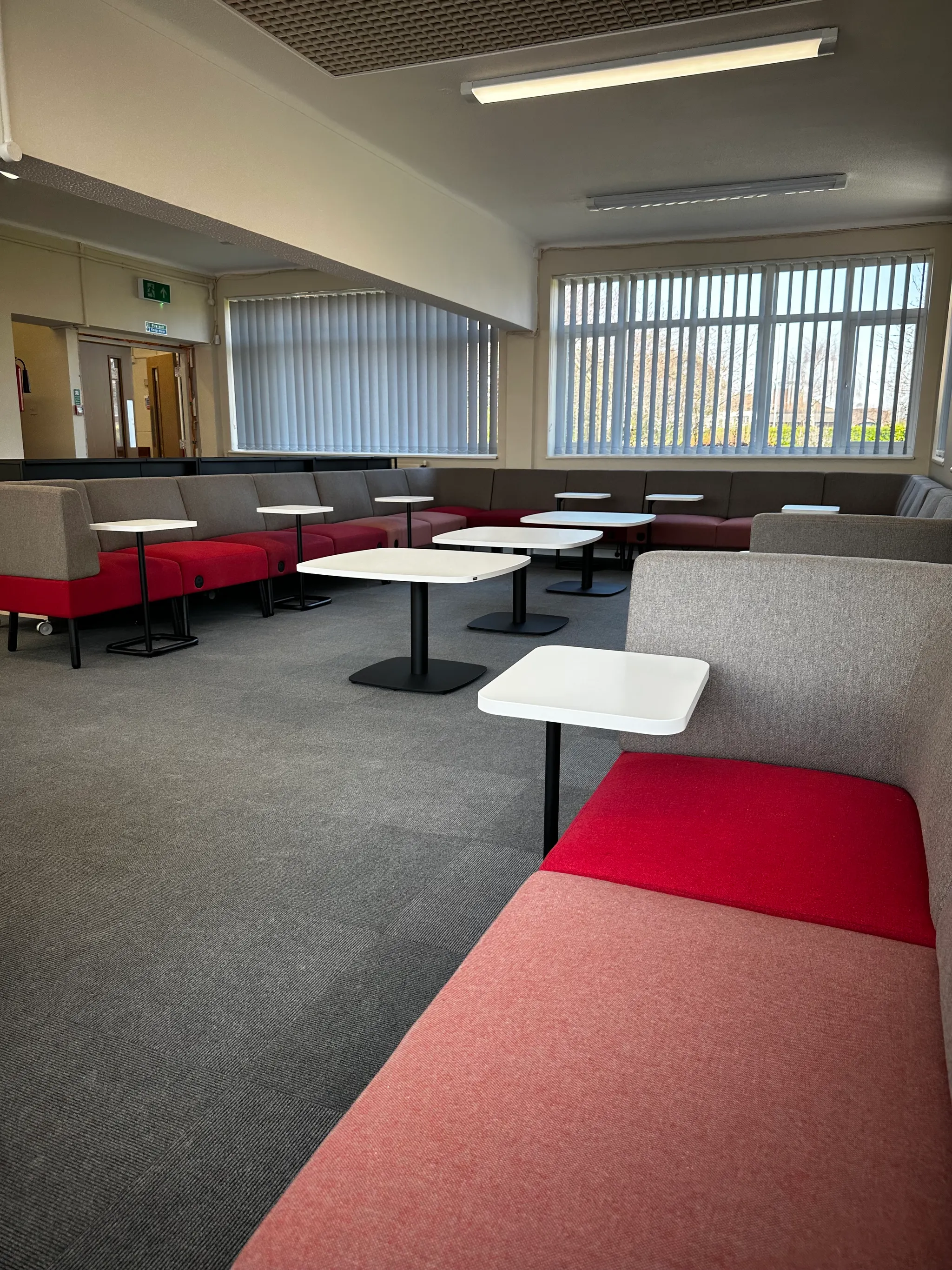
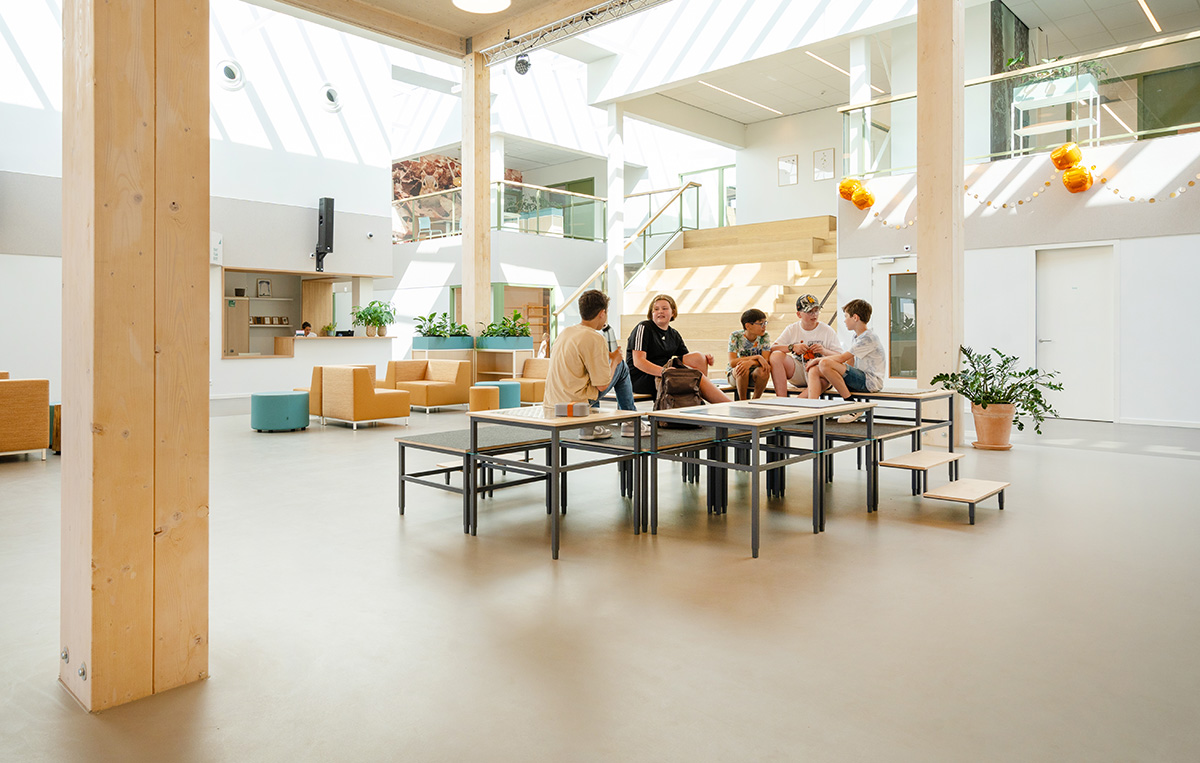
This sixth form space creation transformed underutilised corridor space into a distinctly valued common room supporting the developmental transition to sixth form study and independence. The design balanced providing genuine social sanctuary with supporting academic work and community. Comfortable seating in thoughtful groupings enabled varied social configurations, work tables provided dedicated space for independent study and group projects, and a kitchenette supported self-directed refreshment management. The aesthetic deliberately moved away from institutional design, using sophisticated contemporary colour schemes and quality furnishings signalling genuine respect for student autonomy and emerging identity. Appropriate technology infrastructure supported both social and academic uses. The space measurably improves sixth form retention, student sense of belonging and community, and serves as effective social and academic hub for sixth form development. Tracking of student use patterns shows consistent occupancy throughout break times and free periods, demonstrating genuine student ownership of the space. Sixth form retention rates in the school have measurably improved since the renovation.
Faculty spaces require careful, intentional design to create genuinely restorative environments where staff can meaningfully decompress during limited break times. This staffroom renovation focused on providing comfortable seating options, accessible refreshment facilities, and clear visual and acoustic separation from the main school environment's demands. We provided a considered mix of seating types accommodating different break-time activities: relaxation-focused comfortable sofas for genuine rest, social-interaction furniture in grouping arrangements, and individual task-oriented seating for staff who need to work through breaks. The kitchen area was completely redesigned with improved appliance layout, additional storage, and expanded counter space, significantly reducing congestion and frustration during peak morning and midday periods. Materials emphasised durability and easy maintenance given intensive daily use by multiple staff members. Staff feedback indicates notably higher satisfaction with the space overall, measurably improved morale, and observed increased use of break times for genuine rest and recovery rather than rushed, incomplete disconnection.
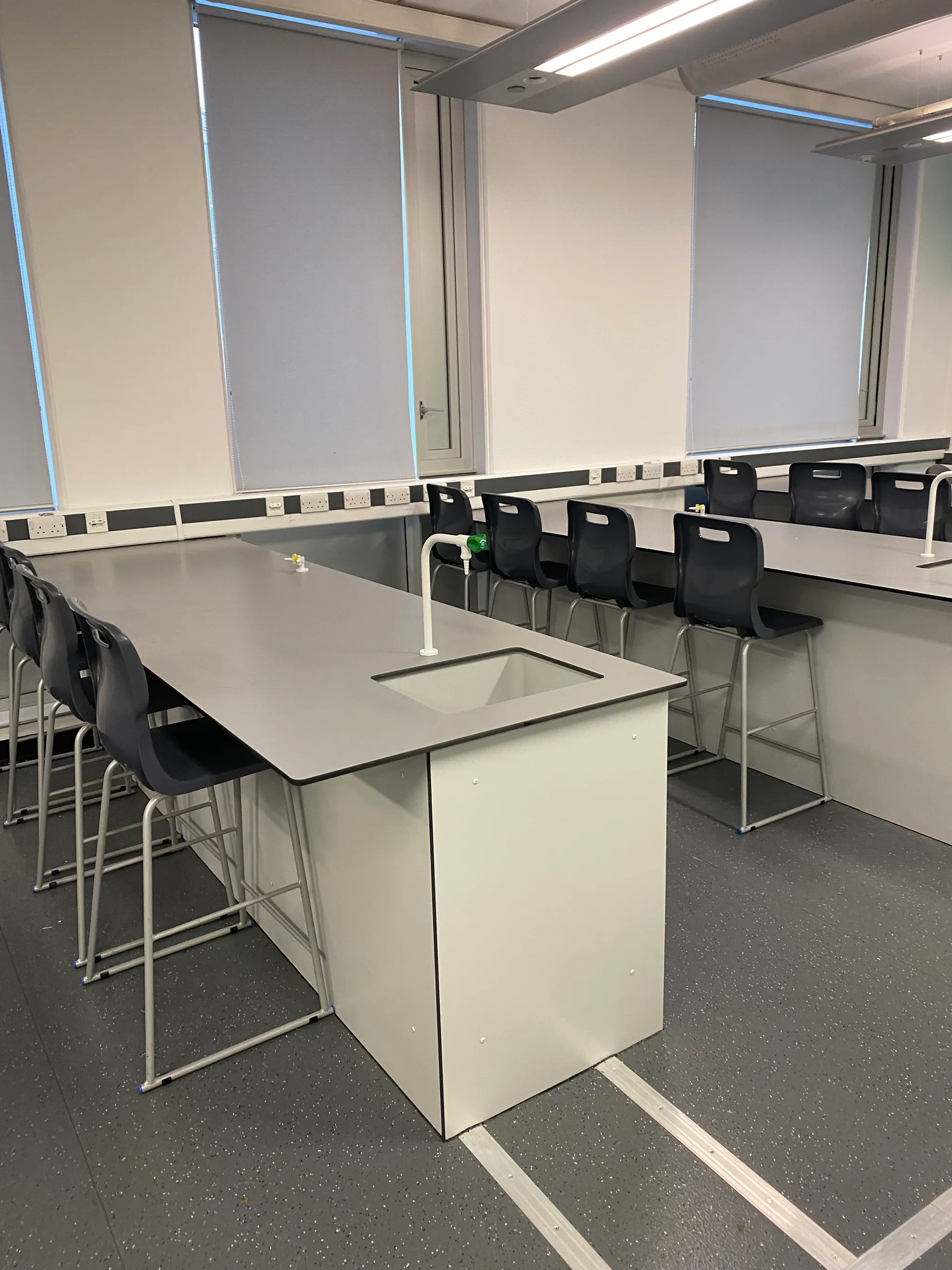
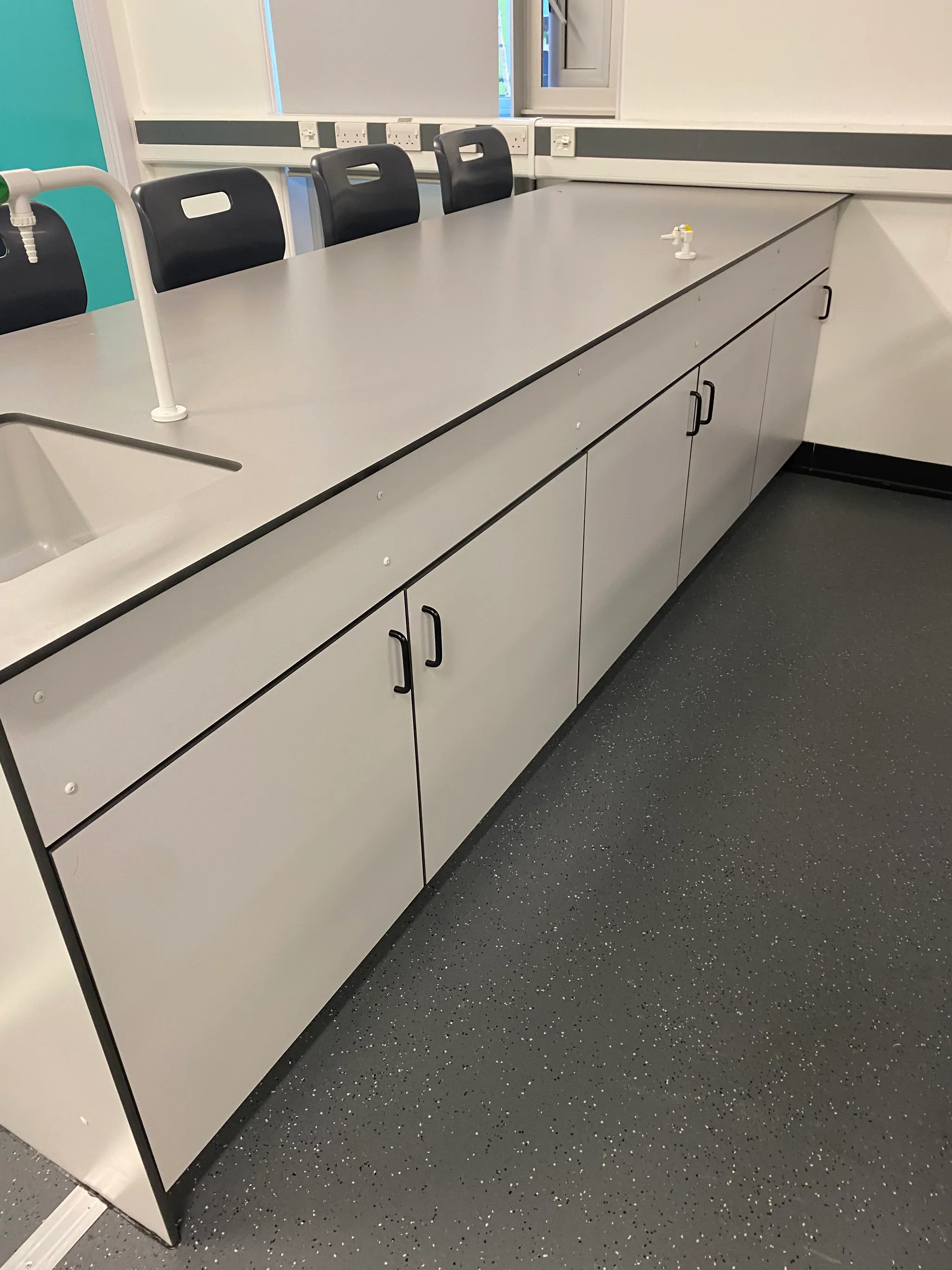
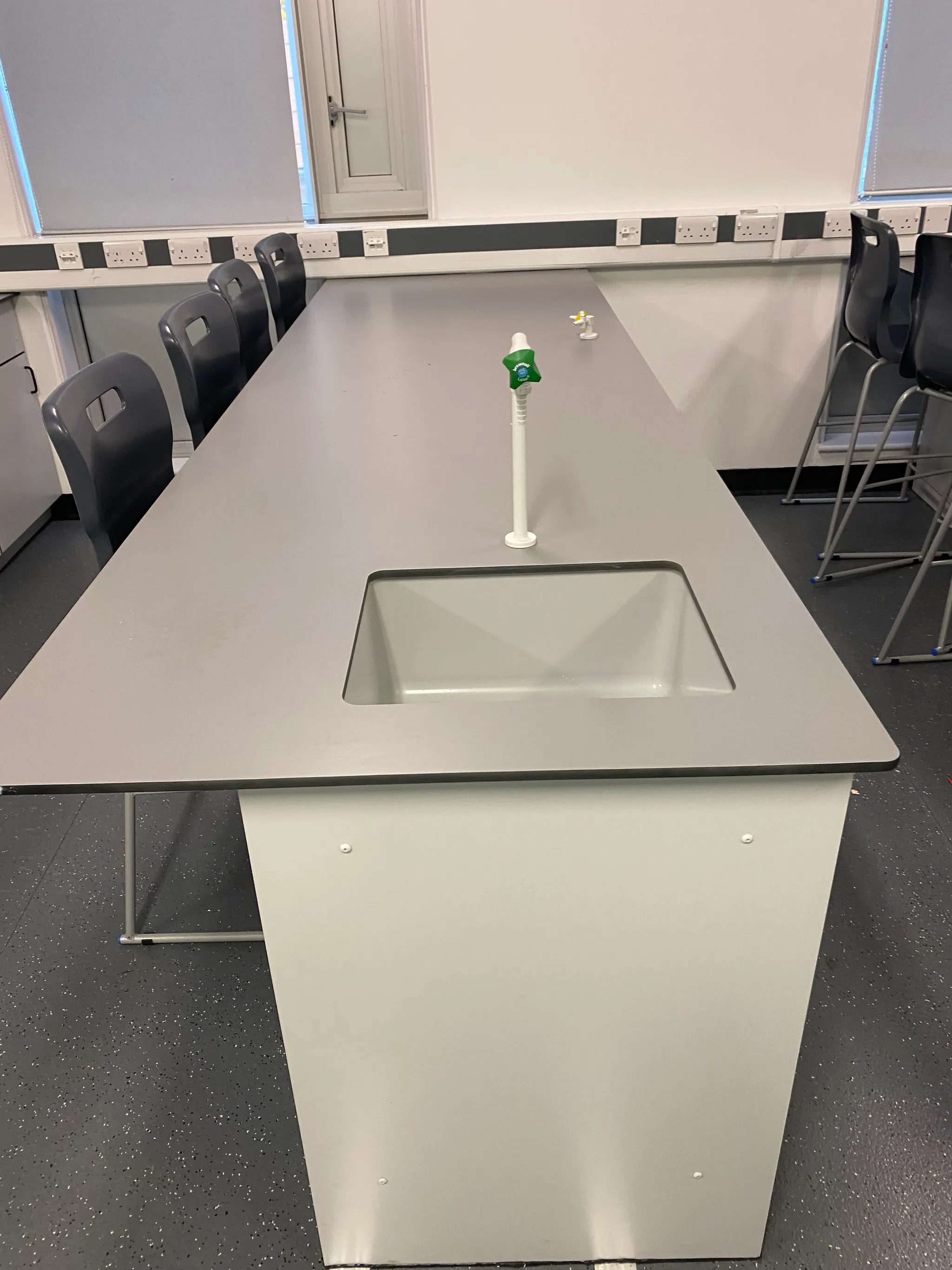
Science laboratories demand meticulous planning balancing safety requirements, practical functionality, efficient workflows, and student engagement during experiments and demonstrations. This lab renovation focused on secure storage systems for hazardous materials, accessible benching supporting diverse practical activities, and clear sightlines enabling consistent teacher supervision. We implemented modular workbenches allowing flexible grouping configurations to support different practical activities, from paired investigative work to whole-group demonstrations. Storage solutions carefully separated frequently used apparatus from hazardous materials through clearly organised, labelled cabinetry with appropriate safety seals. Materials prioritised chemical-resistant surfaces, robust construction, and easy decontamination procedures. Integrated technology provided data capture options for digital investigations. Teachers report improved experiment engagement and participation, significantly reduced setup time and safety concerns, and enhanced safety compliance monitoring. Students demonstrate better practical technique and deeper conceptual understanding of scientific processes through hands-on engagement supported by this improved environment. Safety incident tracking demonstrates measurable improvements, with students demonstrating significantly improved safety awareness and equipment handling. Practical examination results show marked improvements in technique marking and methodology understanding.
This primary classroom renovation supported mixed-age learning and differentiated instruction strategies requiring highly flexible furniture systems and accessible storage enabling rapid teacher-directed reconfiguration. The teacher needed to effectively manage multiple simultaneous learning activities with children at different developmental stages and ability levels. We created learning zones with distinct, clearly defined purposes: a direct instruction area allowing whole-group attention, small group work tables with flexible configuration, independent work stations at appropriate heights, and an appealing book corner encouraging voluntary reading. Furniture prioritised adjustability and lightness, enabling rapid reconfiguration between varied activities without physical effort. Storage systems used visual labelling and colour-coding supporting child independence in accessing materials and returning them appropriately. Colour and finishes were chosen to be calming rather than overstimulating. Teachers report improved transitions between different activity types, notably better behaviour management, and measurably increased time on task across differentiated learning groups. Time-on-task monitoring shows substantially increased focused engagement during differentiated learning sessions, particularly for lower-ability groups who thrive with reduced visual distraction. Individual progress tracking indicates measurable acceleration in learning outcomes.
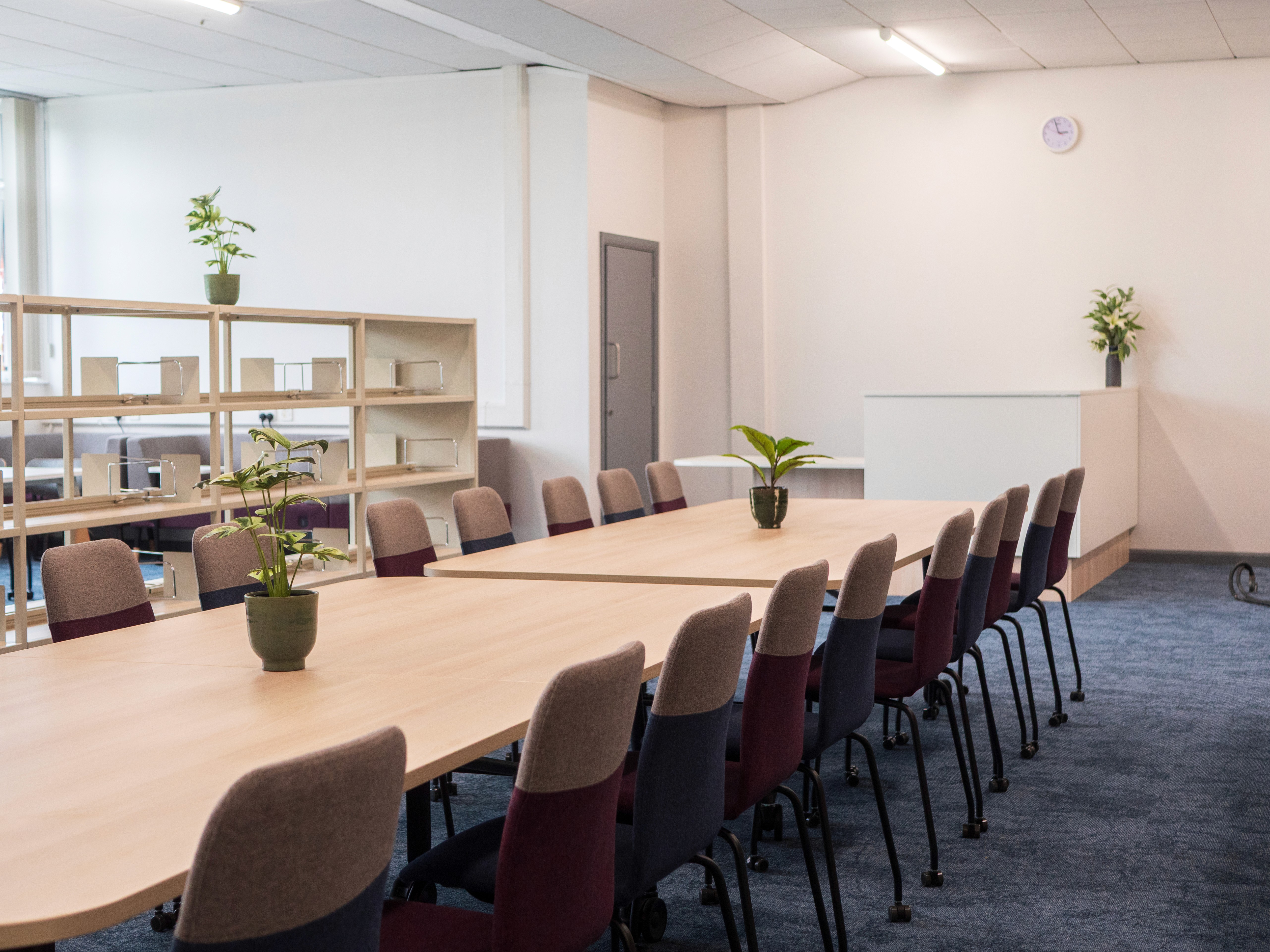
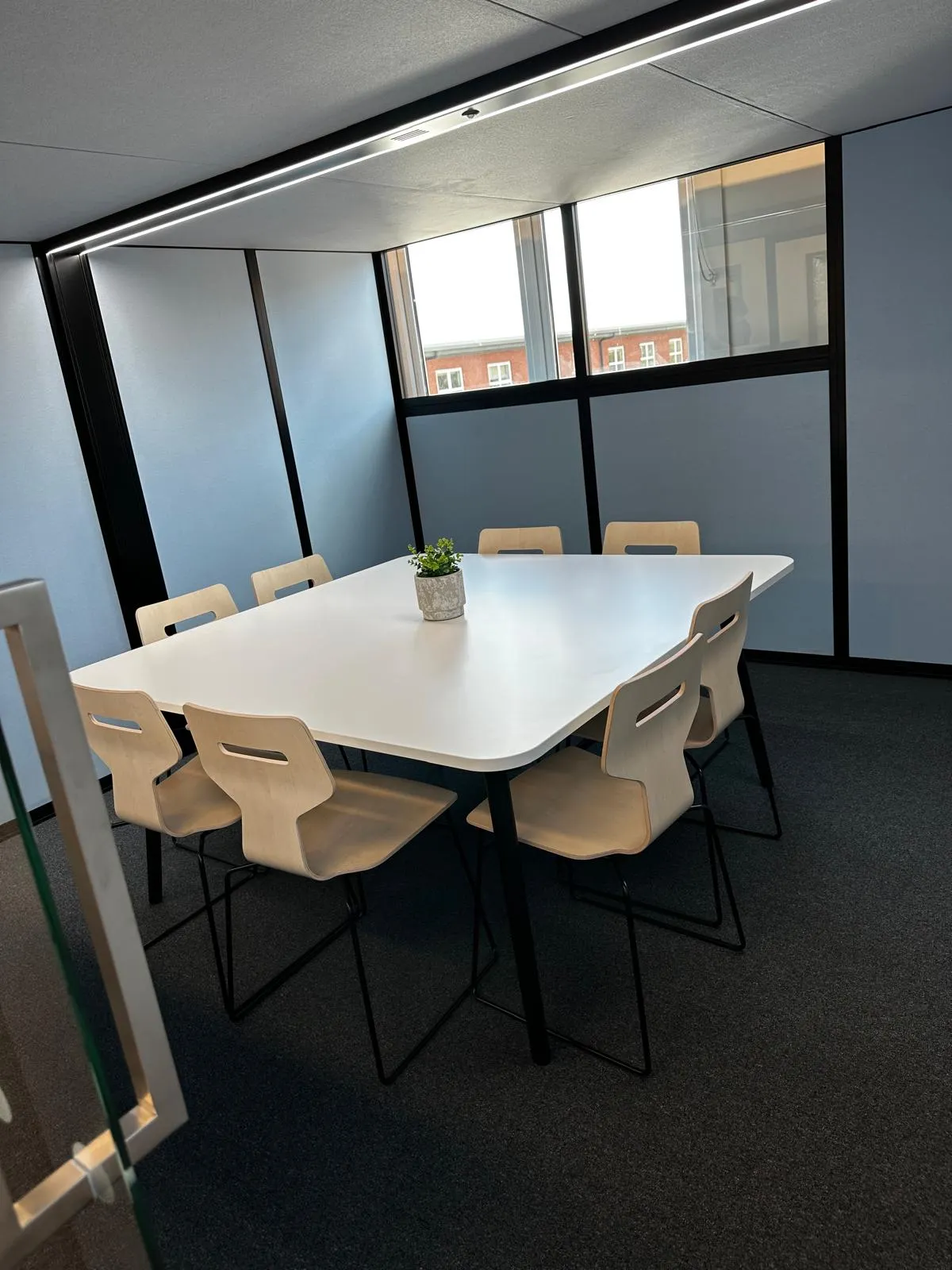
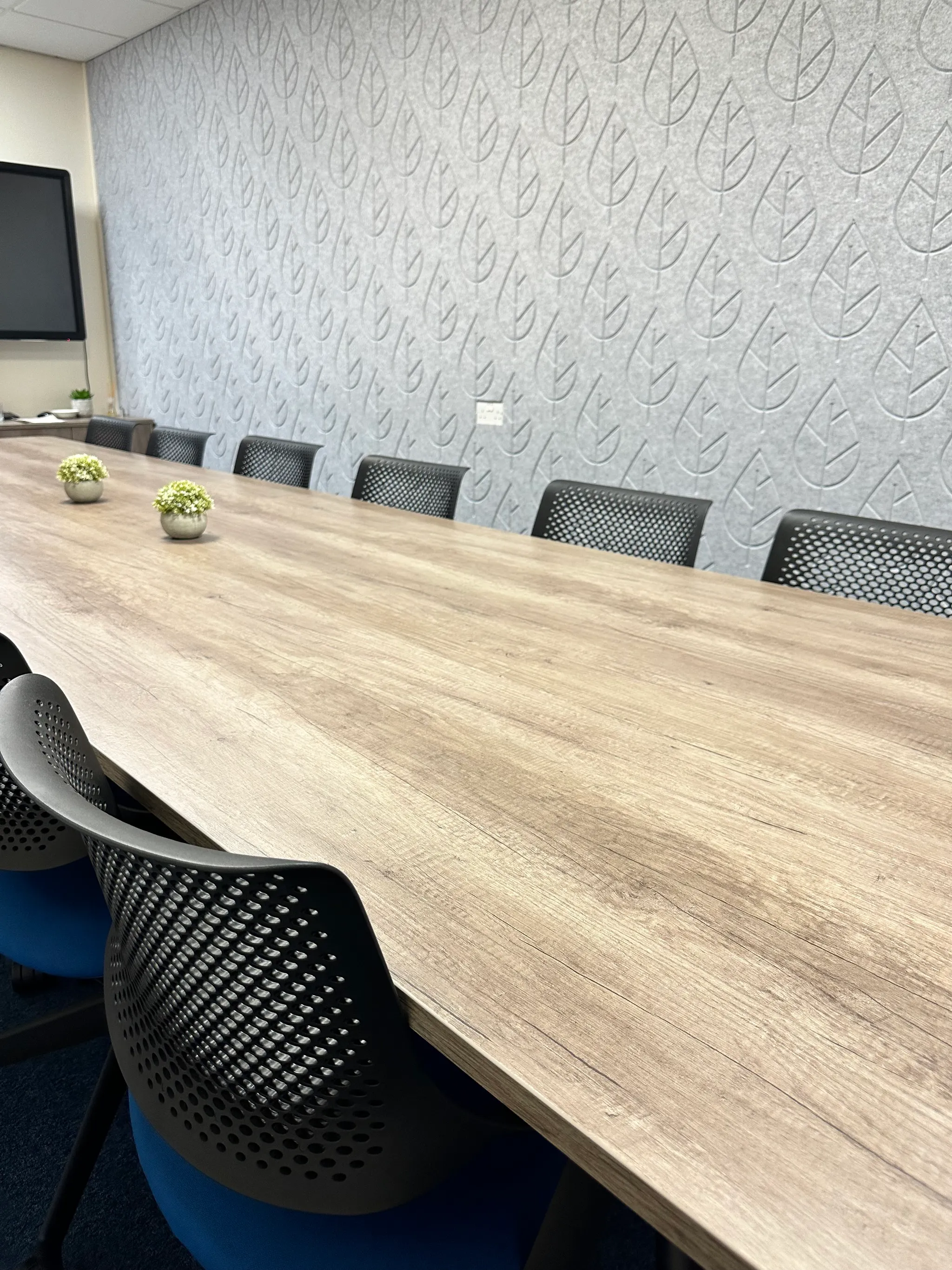
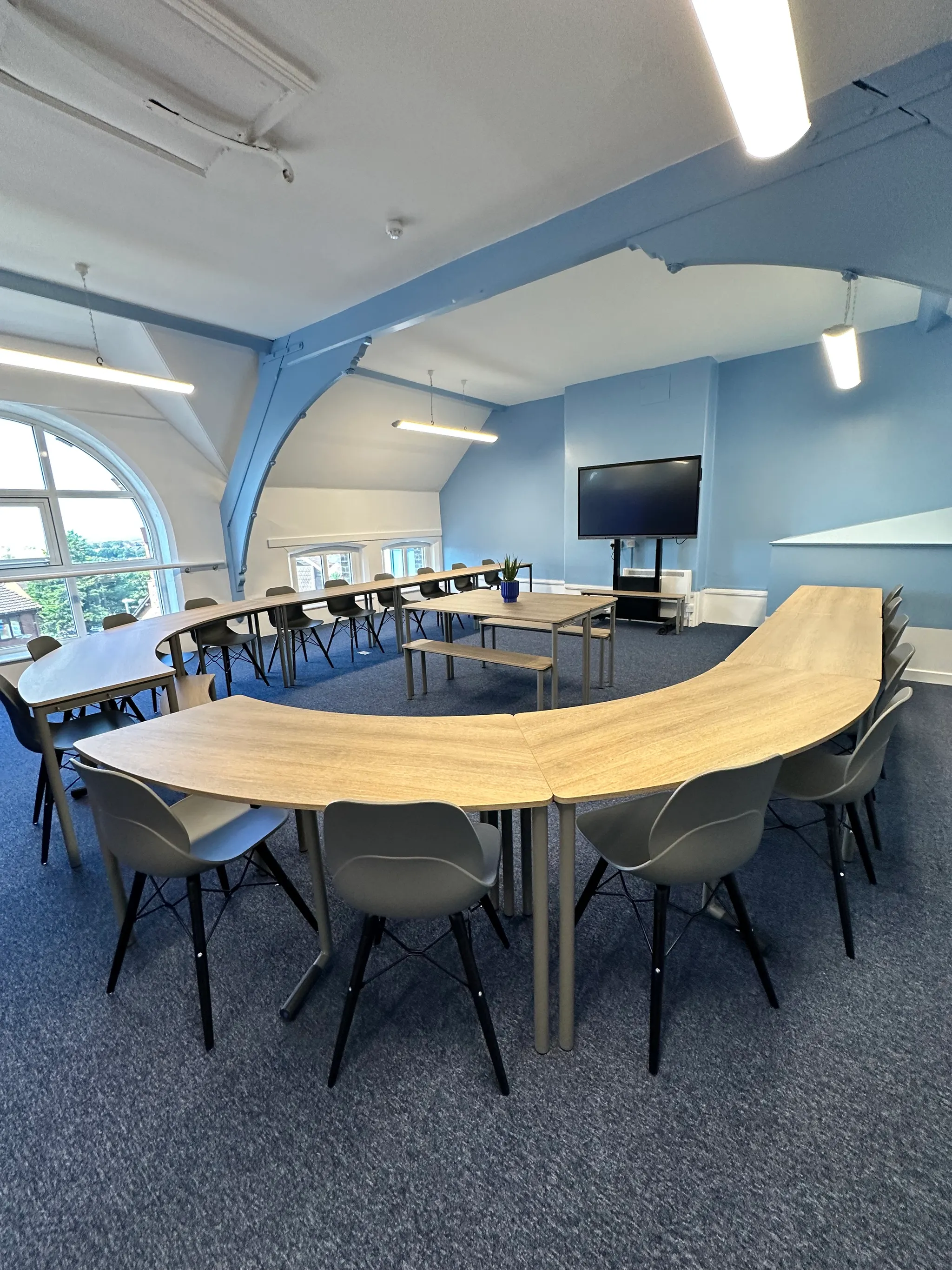
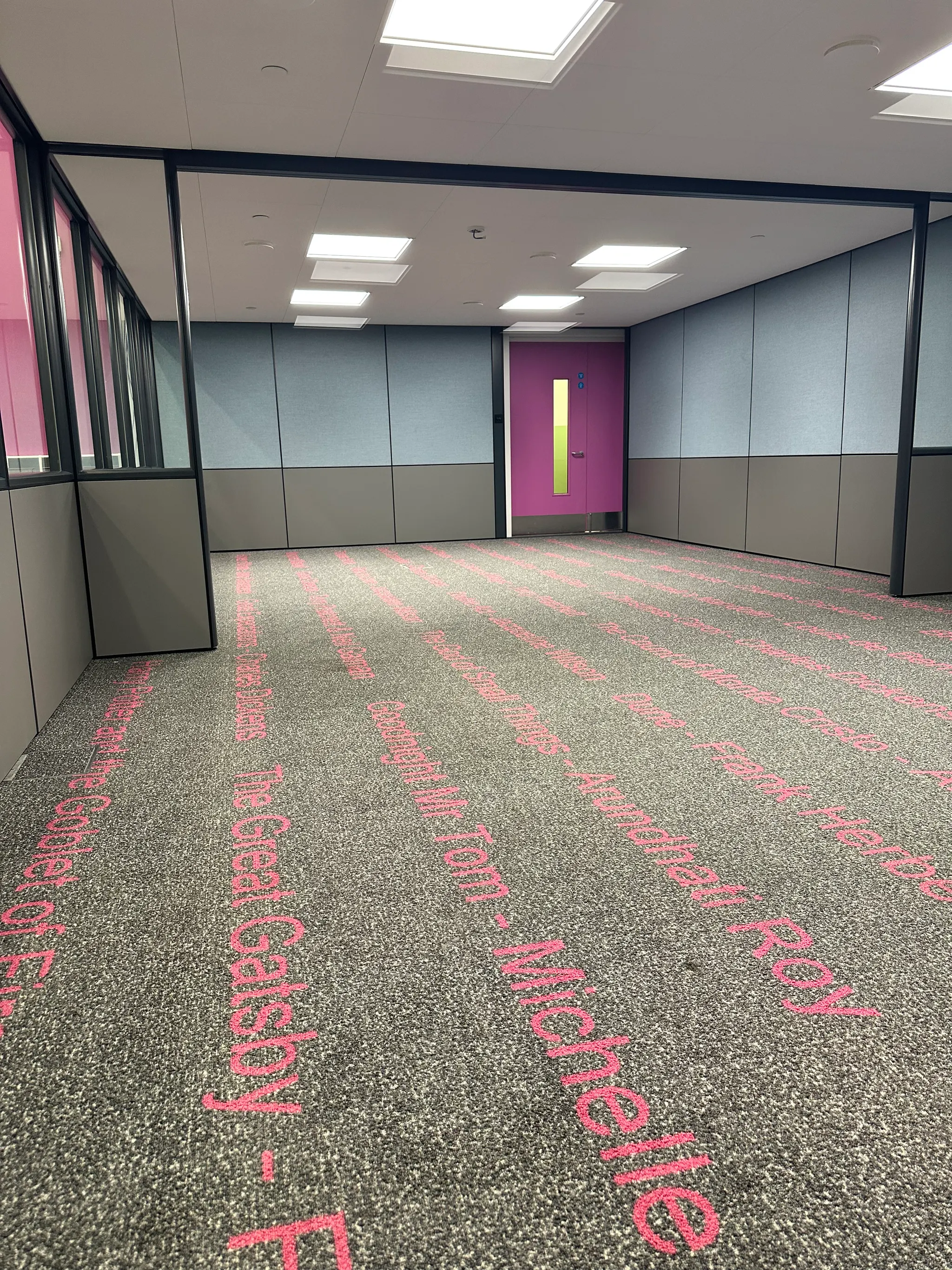
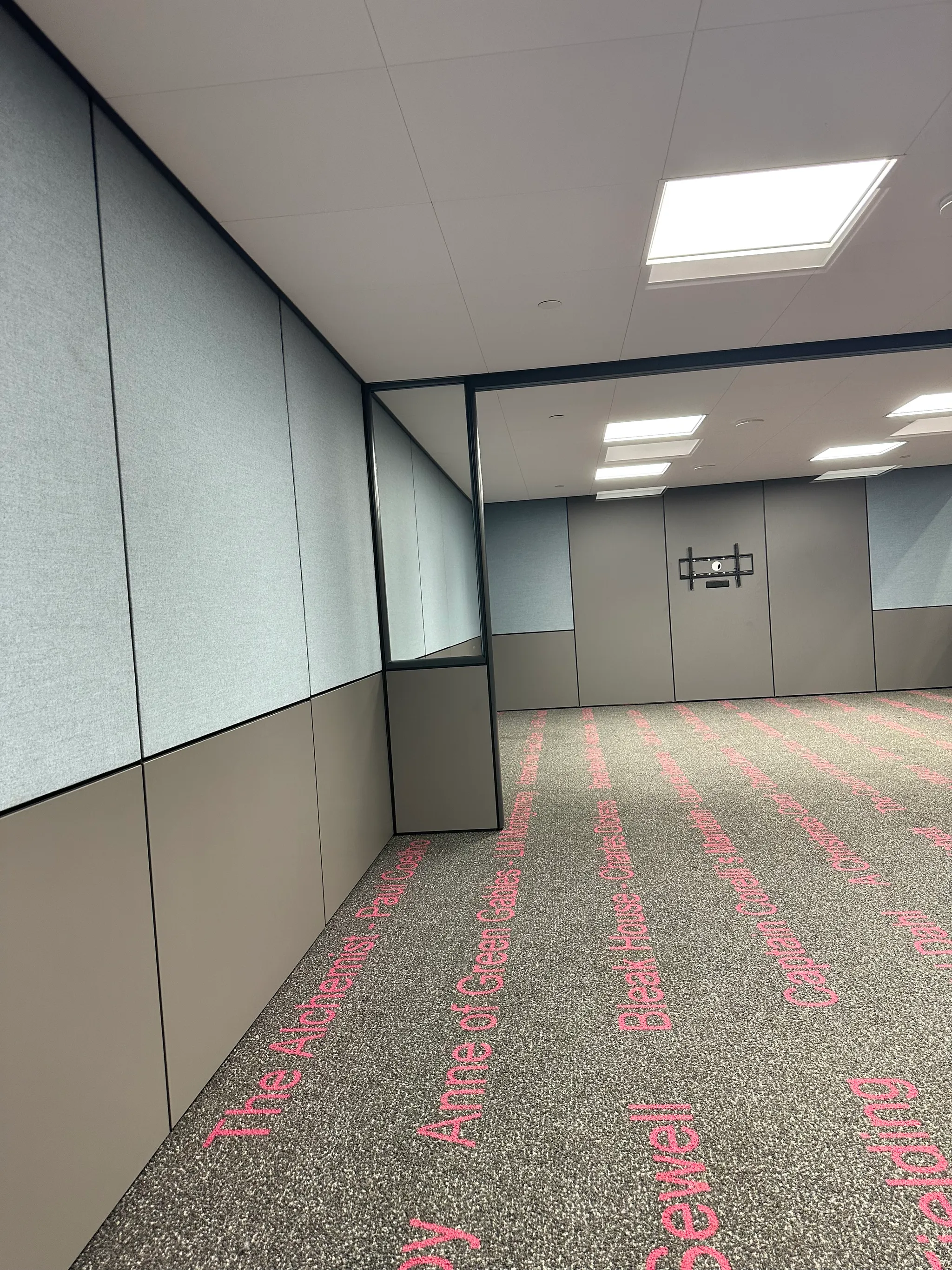
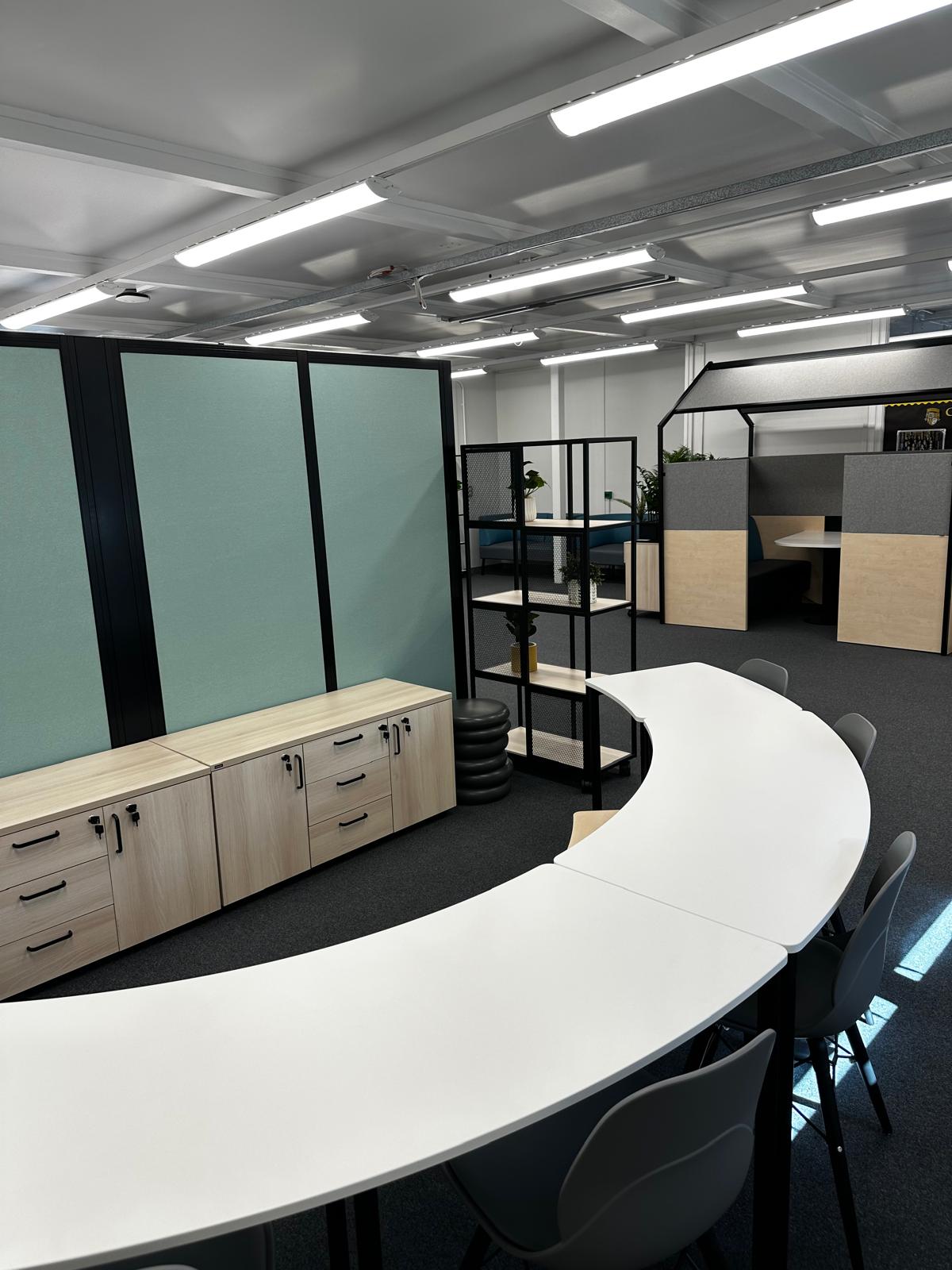
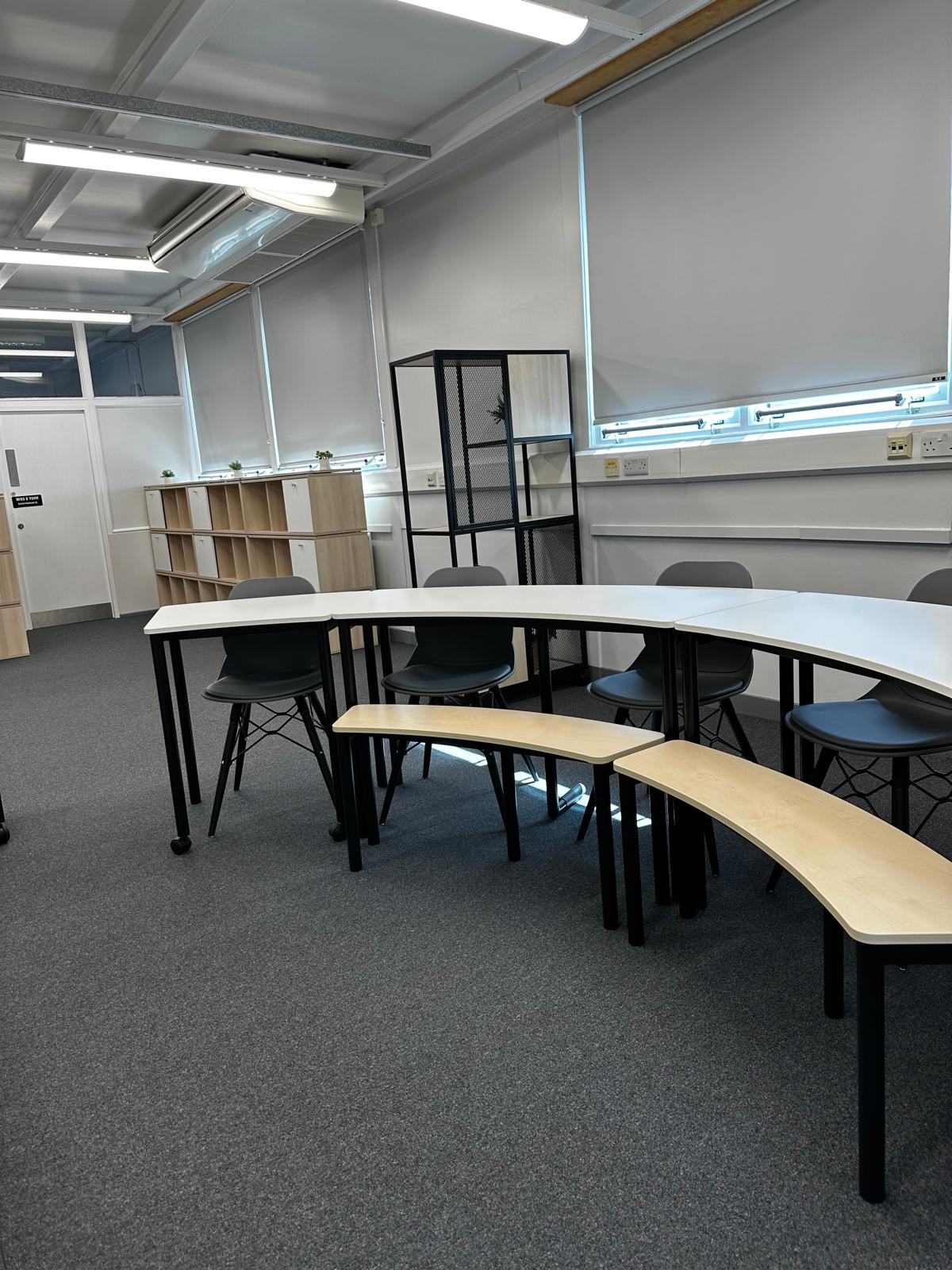
This multipurpose meeting space accommodates diverse functions ranging from confidential one-to-one conversations with parents to full staff briefings, training sessions, and formal governance meetings. The design solution required both flexibility and professional credibility without appearing temporary or makeshift in function. We specified modular furniture systems that allow rapid configuration changes, supporting formal boardroom setups with fixed positioning for serious governance discussions, semicircular discussion arrangements for collaborative planning, and flexible classroom-style training layouts. The selection emphasised acoustic quality through specialist panel screens and sound-absorbing wall materials, essential for maintaining confidentiality in sensitive conversations. Integrated technology infrastructure embedded throughout supports presentations, video conferencing, and collaborative content sharing. Storage systems keep materials organised and out of sight. The outcome demonstrates measurable improvements in meeting efficiency, participant engagement, and space utilisation, with the room now achieving 80% booking rates across diverse meeting functions and feedback from regular users consistently noting improved focus and professionalism.
A staffroom redesign that prioritised genuine inclusivity for all staff types working across different schedules, departments, and roles within the school. The previous layout felt cramped and unwelcoming, effectively excluding part-time staff, visiting specialists, and peripatetic educators who had nowhere designated to feel like valued members of the school community. The new design incorporated clearly defined functional zones: a relaxation area with genuinely comfortable seating, a work zone with desk space and IT access for independent work, a dining area with significantly improved kitchen facilities, and a quiet corner for individual breaks and meditation. Furniture selection used flexible, modular systems that could adapt to evolving staff needs and community changes. Clear signage welcomed visiting staff and made the space feel genuinely inclusive. The outcome has been improved staff retention, measurably better department collaboration and cross-school relationships, and consistently positive feedback from all staff categories about feeling valued by the school community.
Staff professional development and external training requires appropriate learning environments distinctly different from normal workplace settings to signal focus and engagement. This training space needed to accommodate varying group sizes from five to thirty people and support multiple delivery methods whilst projecting professionalism and commitment to quality development. We specified stackable, mobile seating allowing U-shaped configurations for interactive discussion, classroom-style arrangements for presentations, small breakout groupings for practical activities, and open floor space for kinaesthetic learning. The room includes integrated presentation technology, breakout areas for group activities and discussions, and flexible space for practical demonstrations or simulations. Acoustic treatments support clear audio without excessive reverb or distracting external noise. Materials prioritised durability and visual professionalism throughout. Feedback from both training providers and participating staff indicates measurably improved engagement and learning retention, with the space successfully facilitating more interactive, participant-centred delivery methods. Feedback from training providers identifies this space as supporting delivery of more interactive, engaging training. Post-training evaluation scores have improved measurably, with particular appreciation for the flexible configuration options.
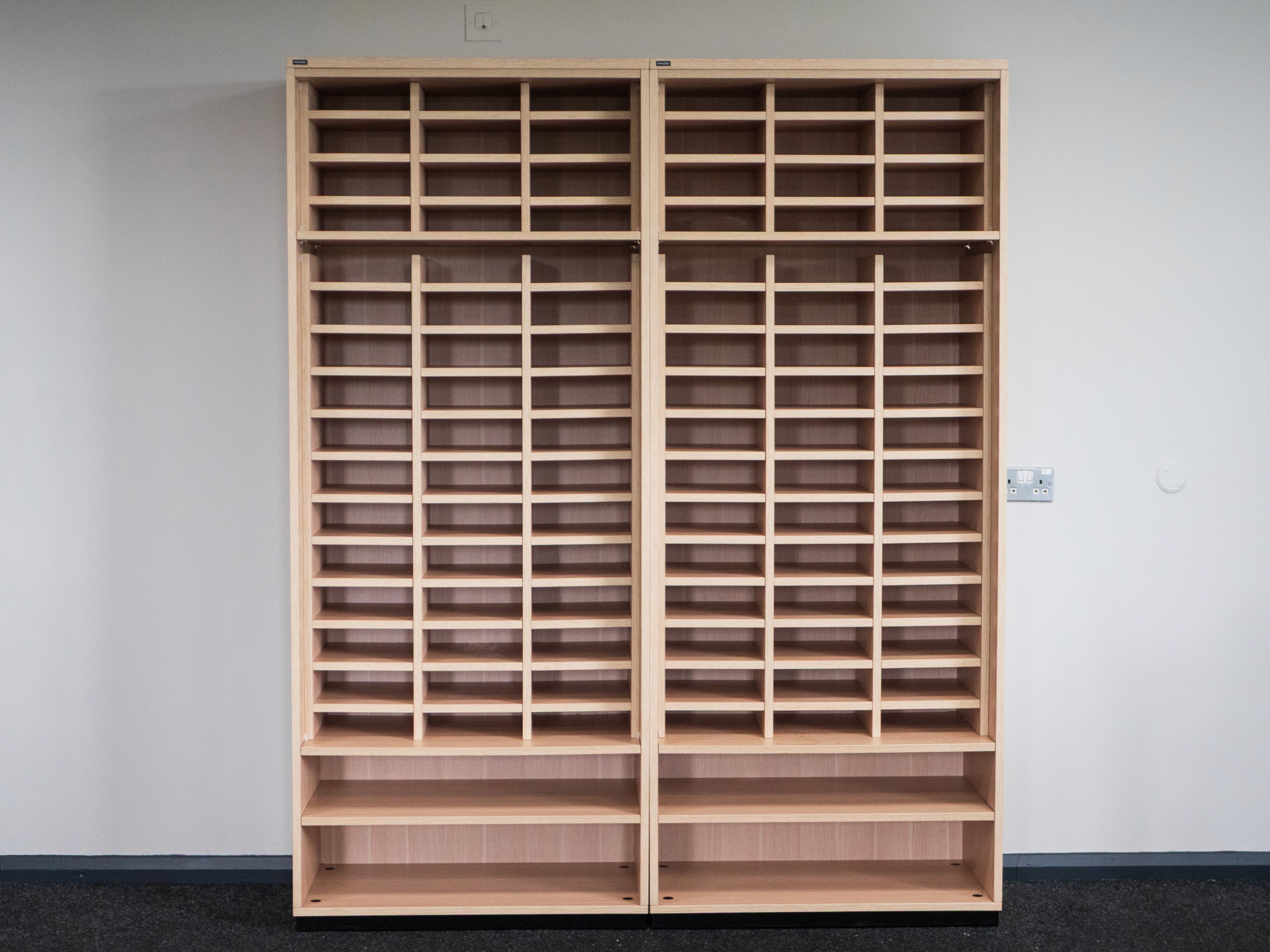
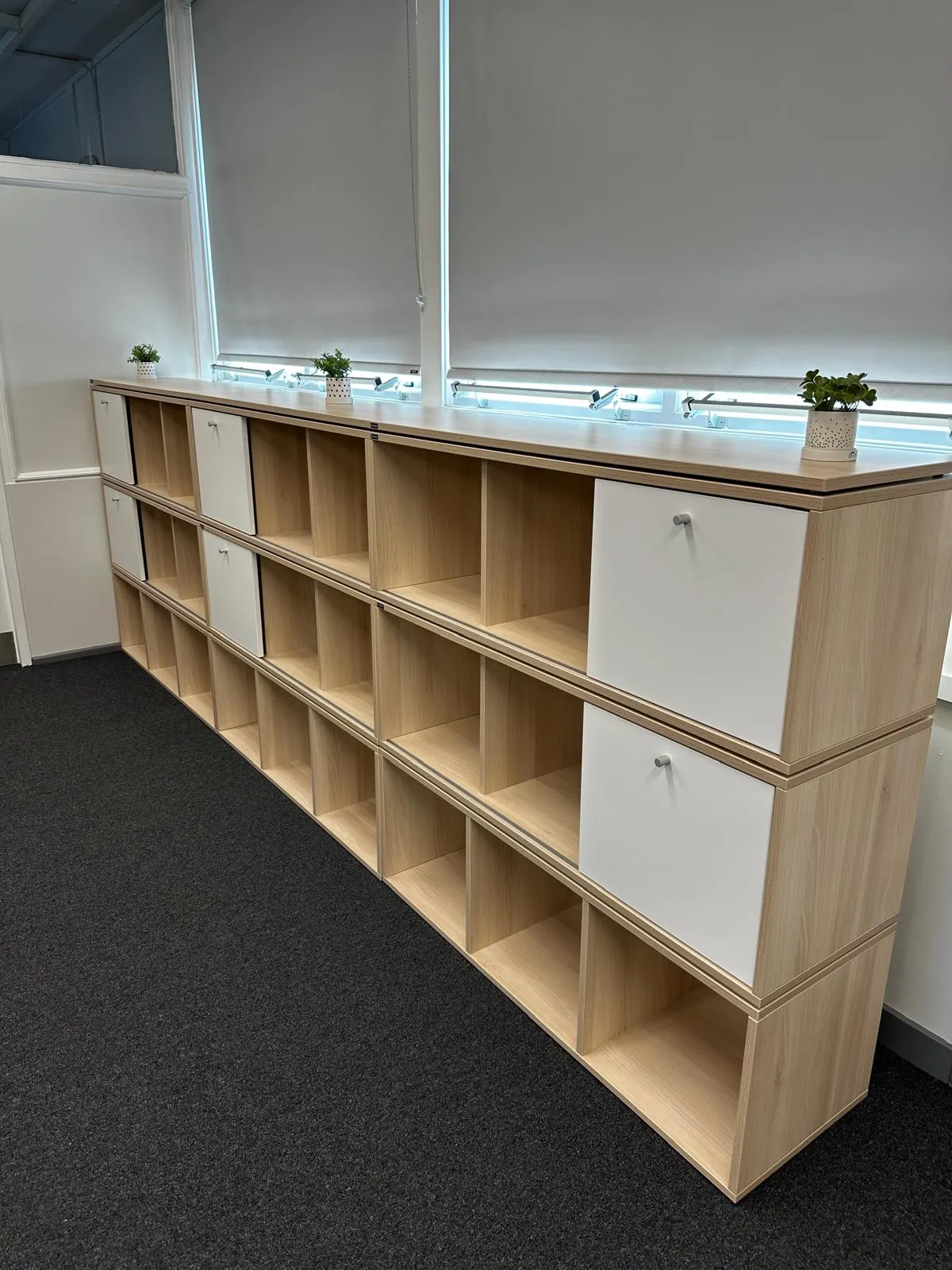
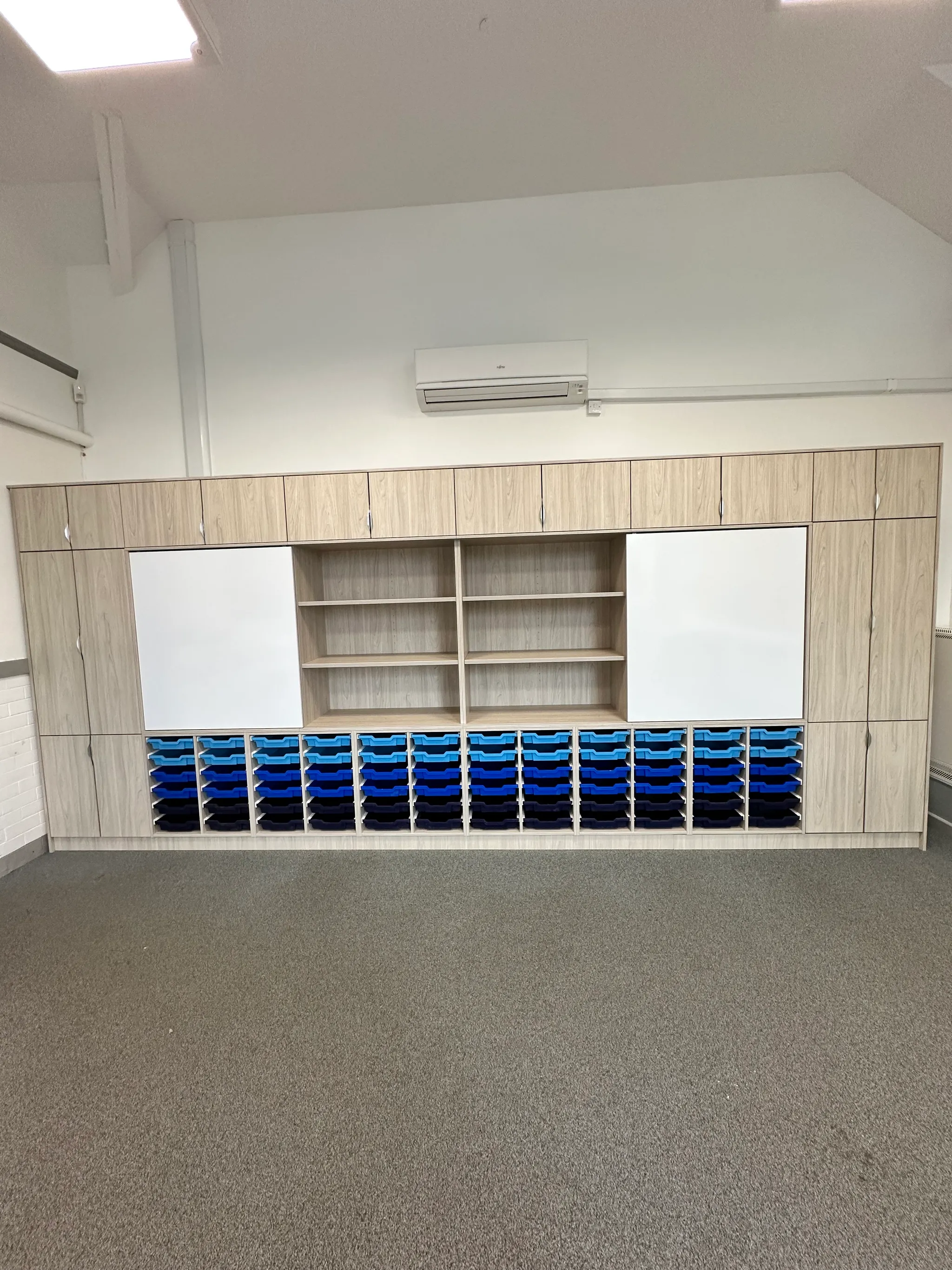
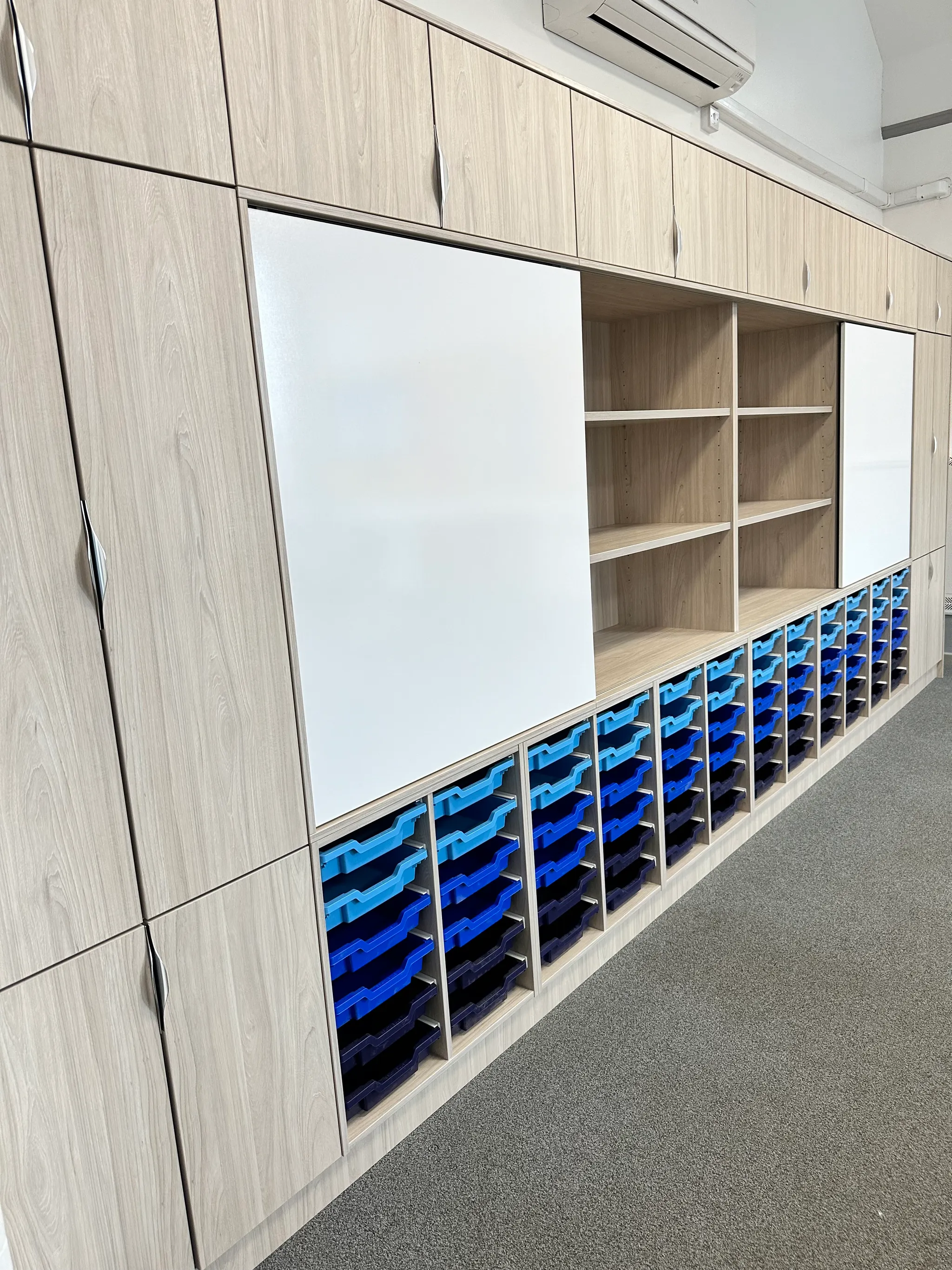
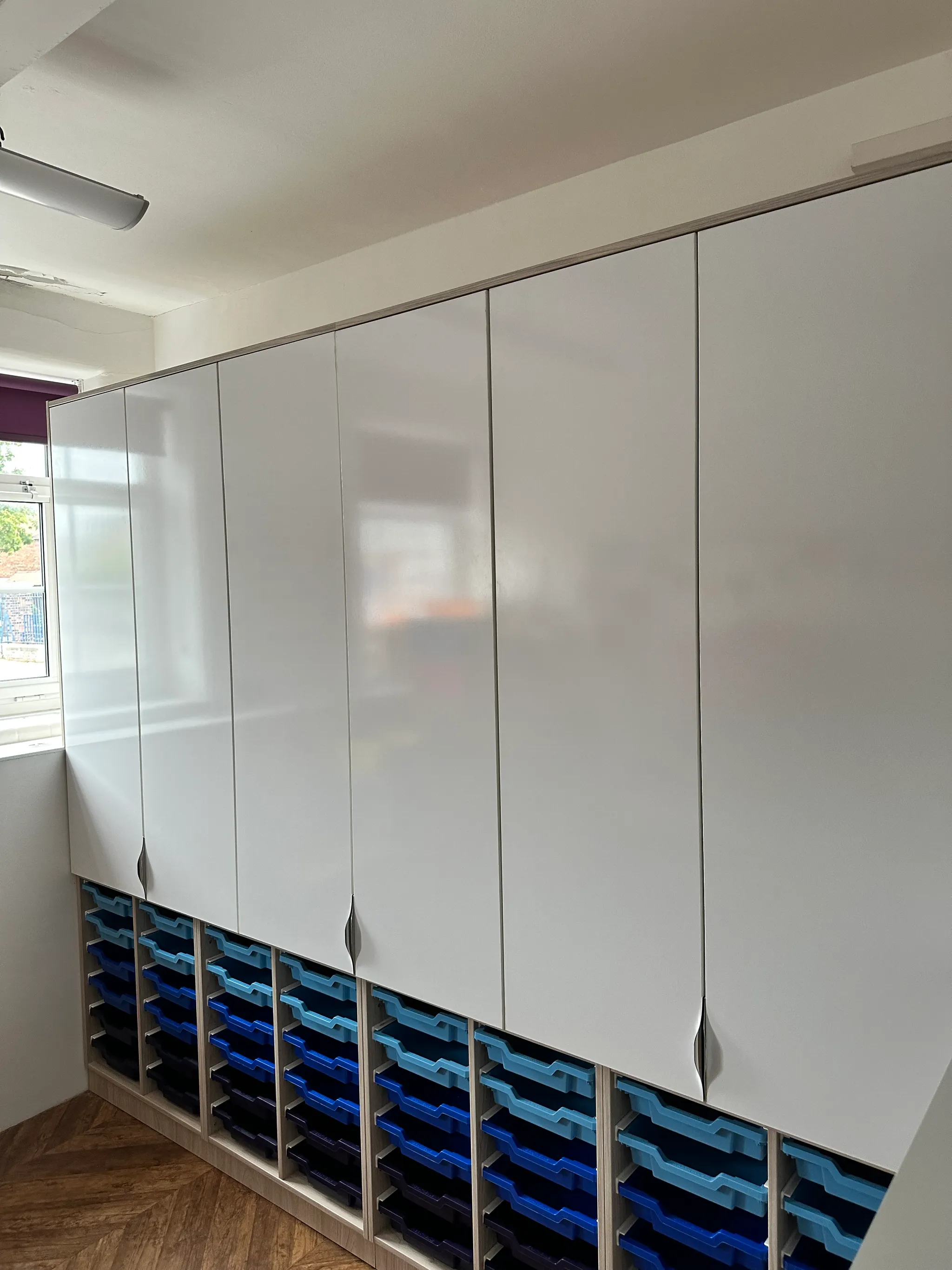
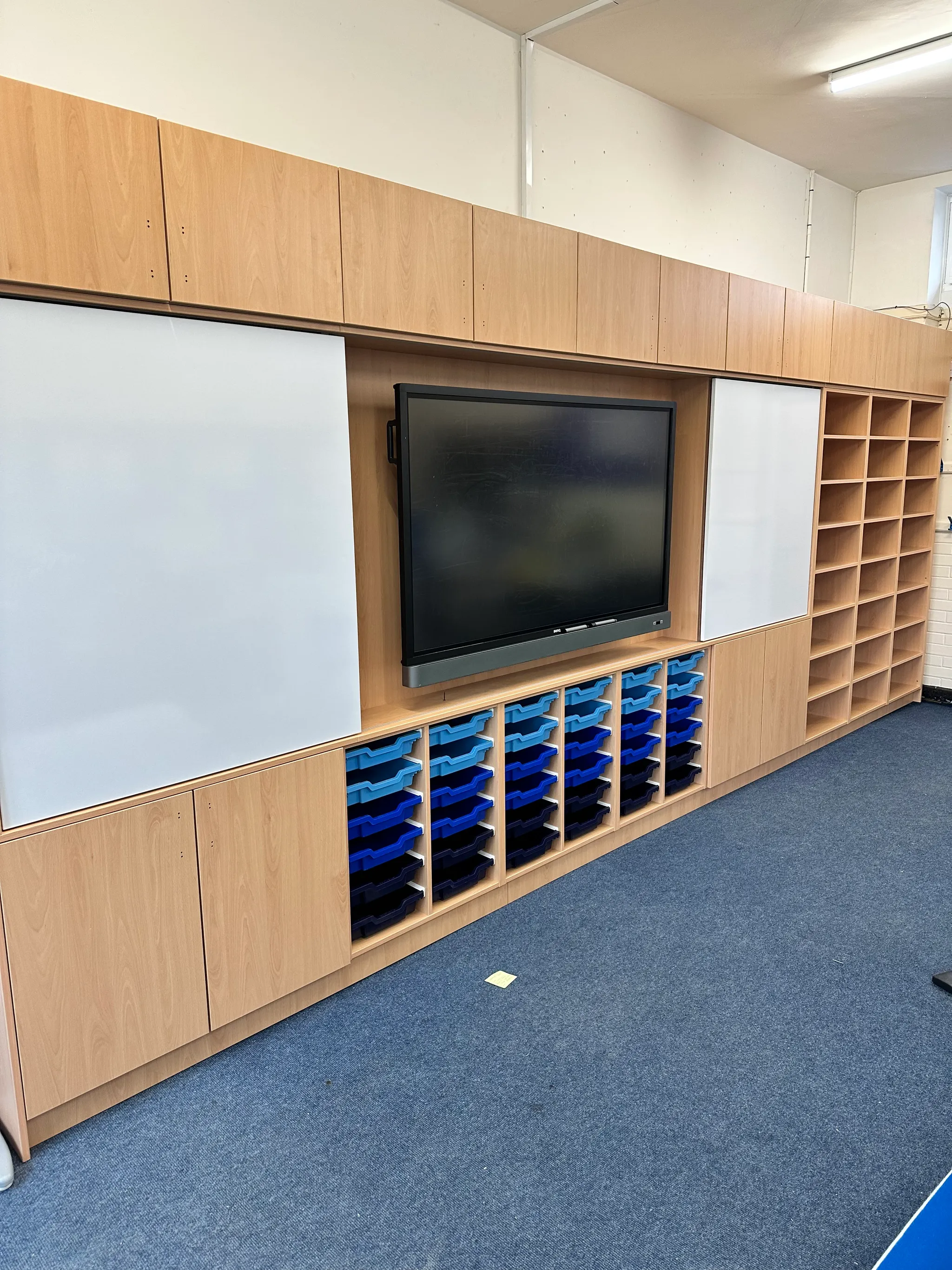
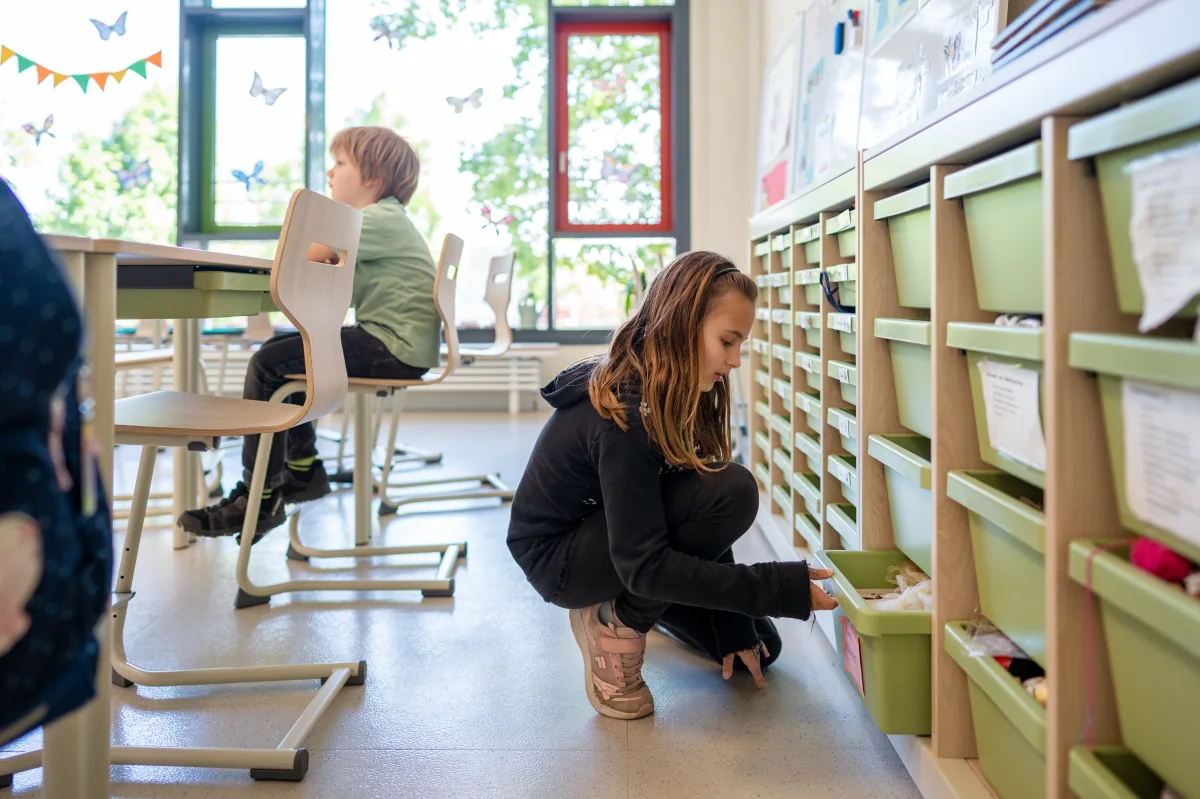
Classroom storage typically becomes disorganised chaos within weeks without clear systems; this bespoke solution creates an accessible, visible, intuitive system that maintains order whilst teaching children valuable organisation and independence skills. The wall system features clearly labelled, eye-level storage for children's frequently accessed materials and higher shelving for teacher-managed resources requiring adult distribution. We used colour-coded containers and open shelving to make the organisation system transparent and intuitive even for young children. Visual labels combined words with pictures supporting emerging readers. The construction uses reinforced wall-mounting systems capable of safely holding substantial weight under daily use demands. Materials prioritised durability and ease of cleaning given intensive daily use by young children engaged in messy learning activities. Shelving positioning and heights were ergonomically calculated for child independence. Teachers report dramatically improved classroom management and transitions, visibly cleaner learning environments throughout the day, and substantially reduced time spent searching for resources or managing storage chaos.
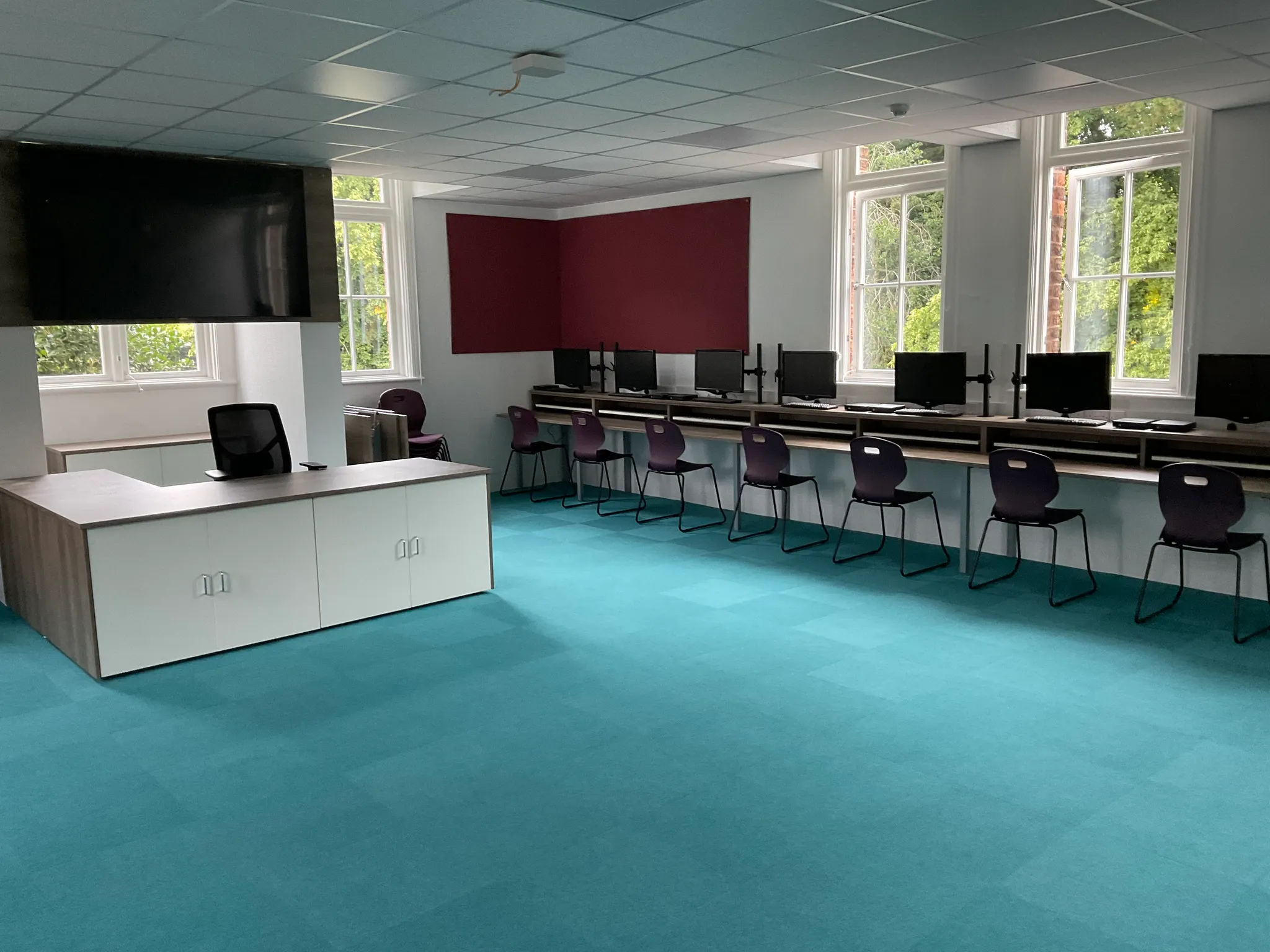
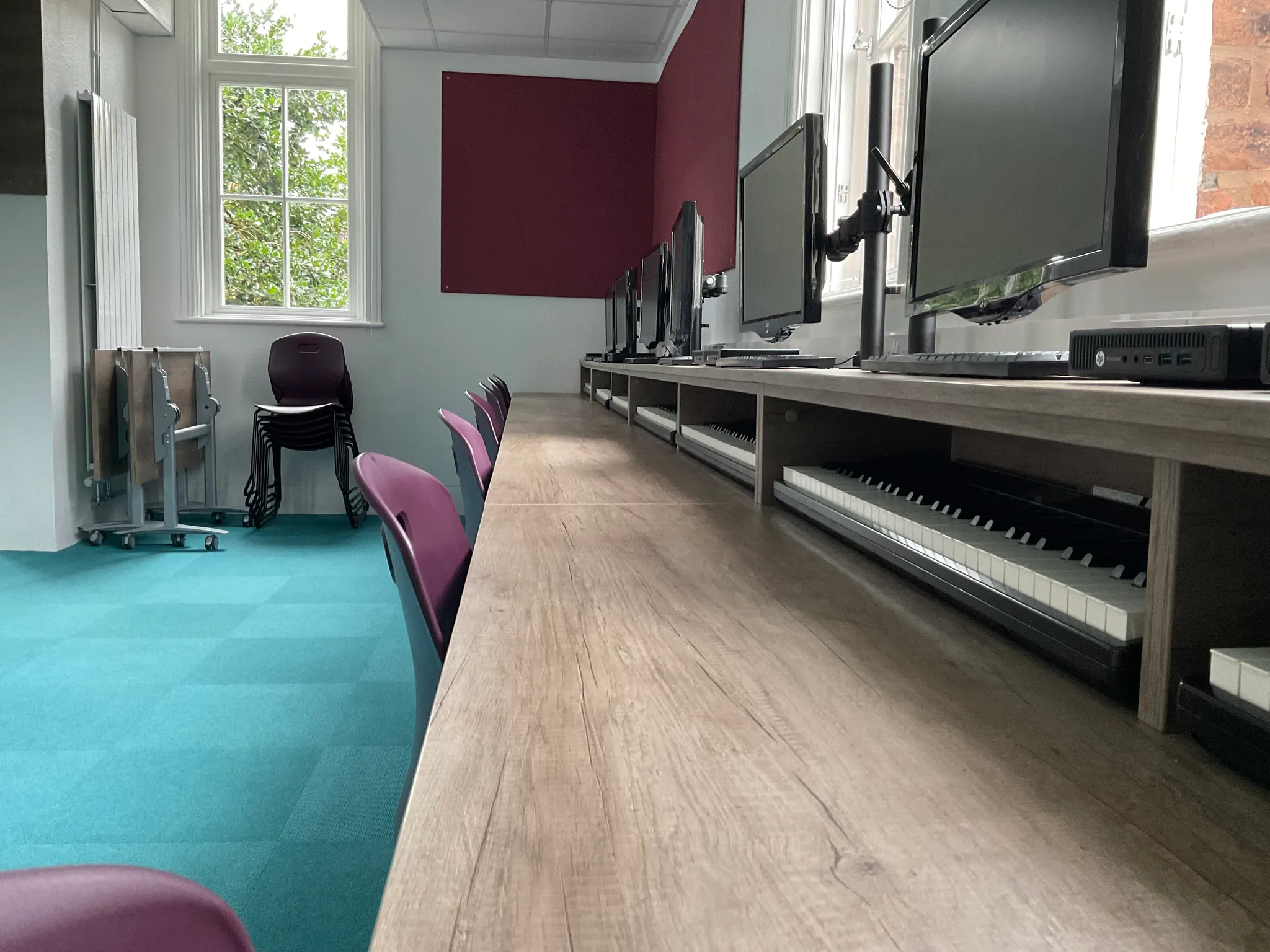
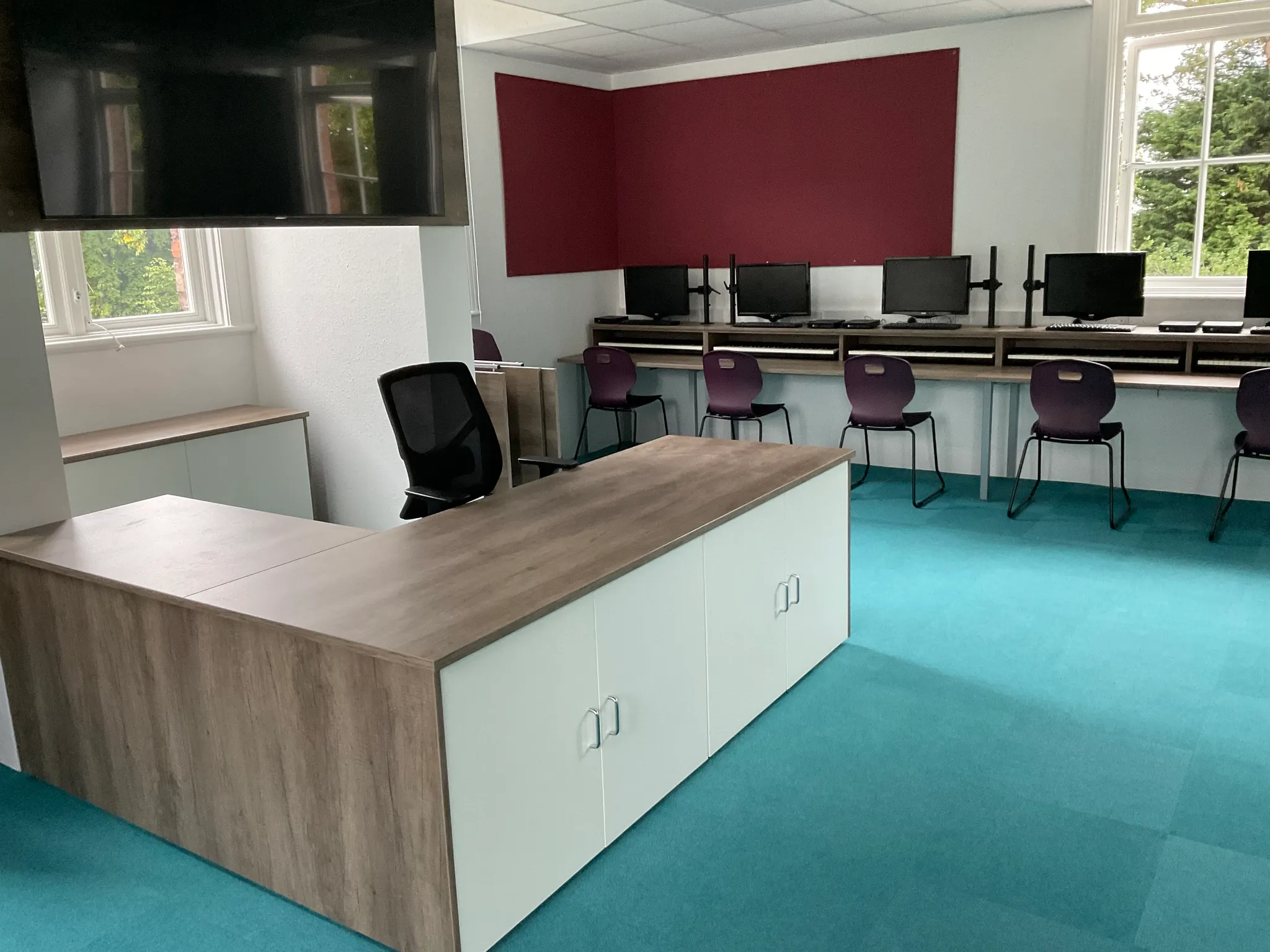
Music teaching requires specific environmental conditions that standard classrooms cannot provide: acoustic isolation preventing sound transmission to other teaching spaces, optimised reverberation characteristics supporting vocal and instrumental quality, appropriate storage for valuable instruments and equipment, and sightlines supporting the mirror and visual feedback essential for technique development. This music room renovation addressed all these critical considerations. We implemented comprehensive acoustic treatments through specialist wall panels and suspended systems, carefully calibrated to optimise sound quality for vocal development, instrument practice, and ensemble work. Storage solutions included secure instrument cabinets with ventilation appropriate for wooden instruments and sheet music organisation systems. Flooring selection supported prolonged standing required by performers whilst managing acoustic properties. Practice areas included mirrors for visual technique feedback, music stands, and integrated technology access. Music staff report visibly improved rehearsal quality and sound production, better student focus and persistence during practice, and measurably improved achievement across graded music examinations.
This sixth form common space required a distinctly more sophisticated aesthetic than typical student areas, reflecting emerging maturity whilst maintaining appropriate pastoral oversight and support. The design incorporated comfortable seating for genuine relaxation and social connection, work tables with integrated IT access supporting independent study and project work, and refreshment facilities enabling self-directed break management. Materials selection deliberately prioritised quality finishes over purely institutional durability, communicating respect for student autonomy and emerging identity. Colour schemes used sophisticated, contemporary aesthetics deliberately appealing to older adolescent sensibilities and identity. Technology infrastructure supported both social connection and academic work. The space succeeds in its dual purpose of creating genuine social sanctuary and supporting independent study, measurably improving sixth form retention rates, measurably improving student engagement, and creating valued community space. Observation notes from pastoral staff indicate this space functions effectively as a genuine bridge supporting the developmental transition from secondary to sixth form. Students report feeling respected and trusted in this environment, supporting emerging autonomy.
This flexible learning pod serves as breakout space for emotional regulation, small group intervention room, and one-to-one support space within a larger school structure. The multipurpose nature required careful planning to successfully support these diverse functions within modest spatial footprint. The design incorporated modular furniture allowing quick reconfiguration for different activity types, moveable acoustic screens for visual and sonic privacy during sensitive conversations, and clearly organised storage for materials specific to different intervention types. Comfortable seating options balanced professional appearance with emotional accessibility for vulnerable students. Materials prioritised quiet, soft finishes reducing acoustic echo and creating calming sensory environment. Lighting was optimised to feel welcoming rather than clinical. Observation by trained staff indicates excellent and consistent utilisation across all intended purposes, with students reporting it as a valued safe space and intervention providers citing noticeably improved focus and measurably improved outcomes from sessions conducted in this environment. Extended observation confirms the space is genuinely utilised across all intended purposes, with strong usage patterns suggesting students and staff value its availability. Intervention outcome data demonstrates improved effectiveness of sessions conducted in this environment.
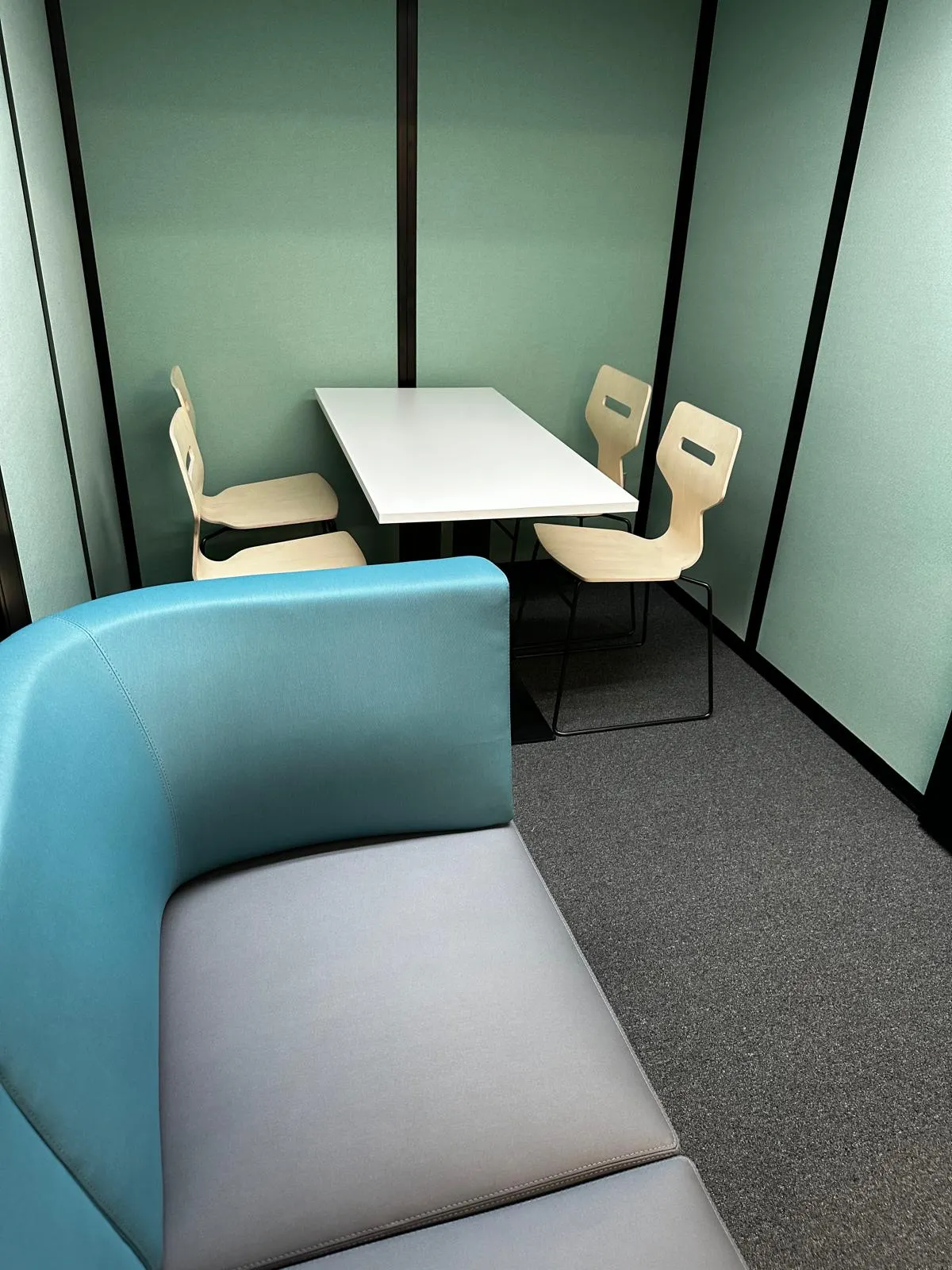
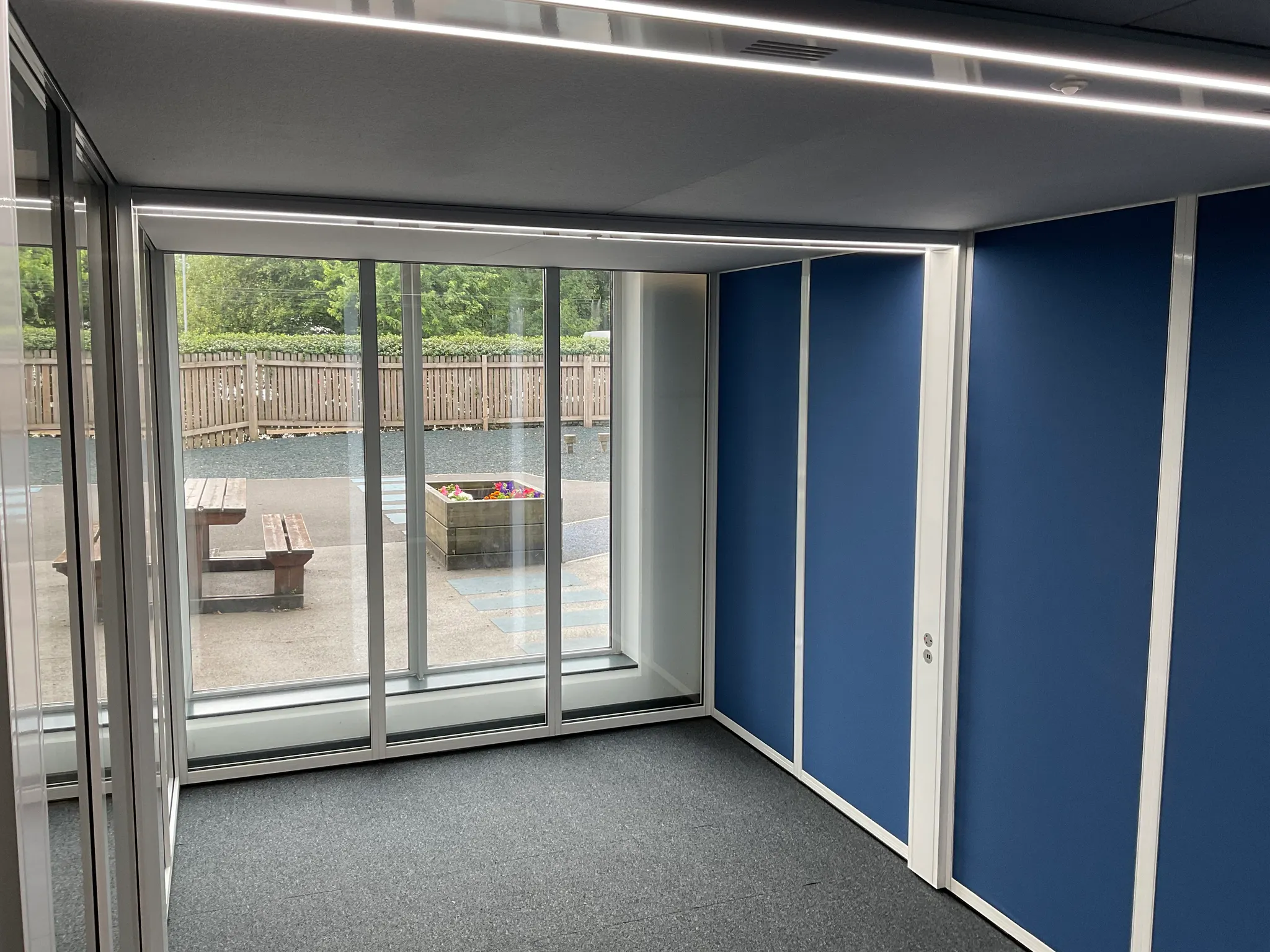
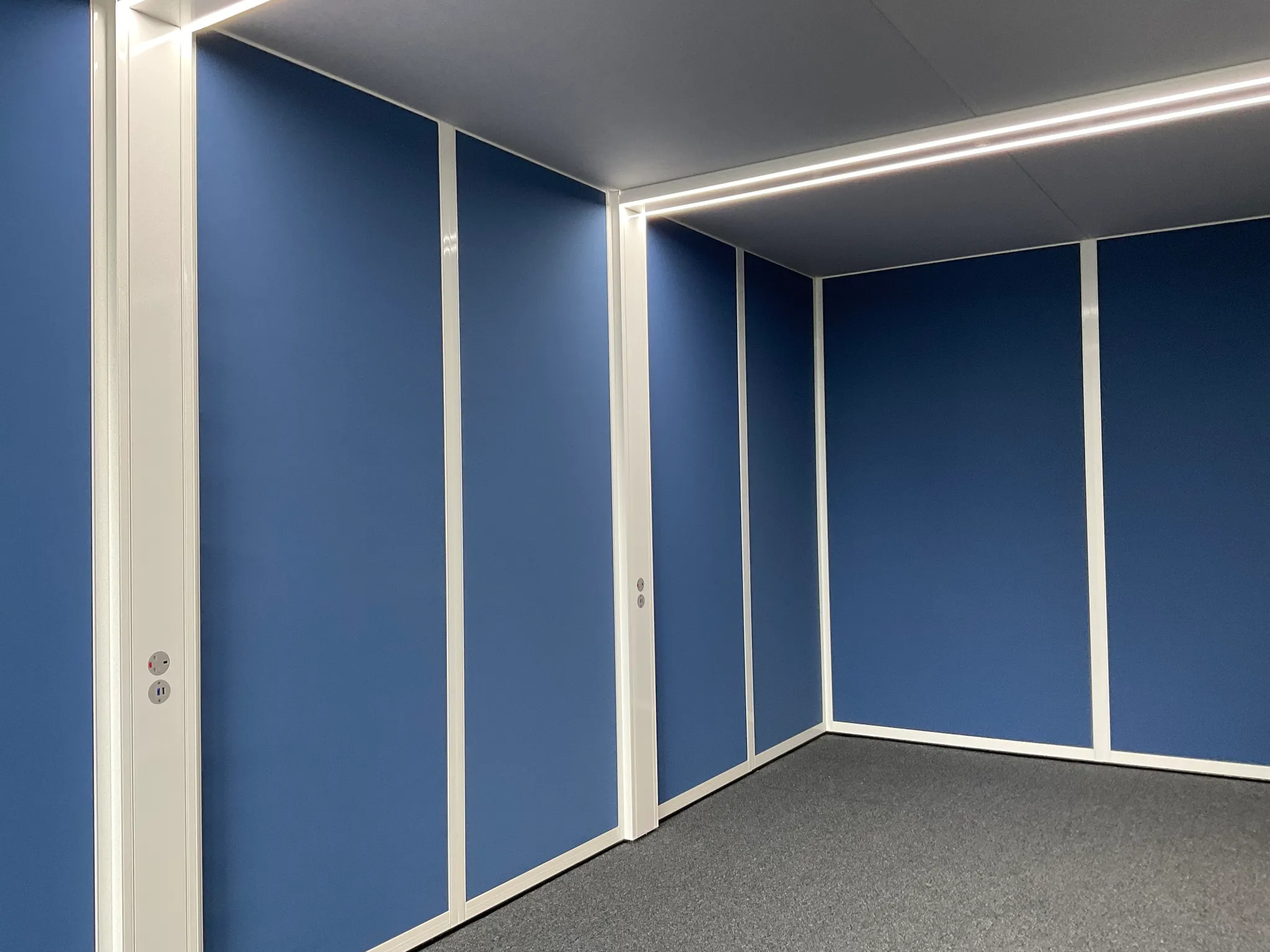
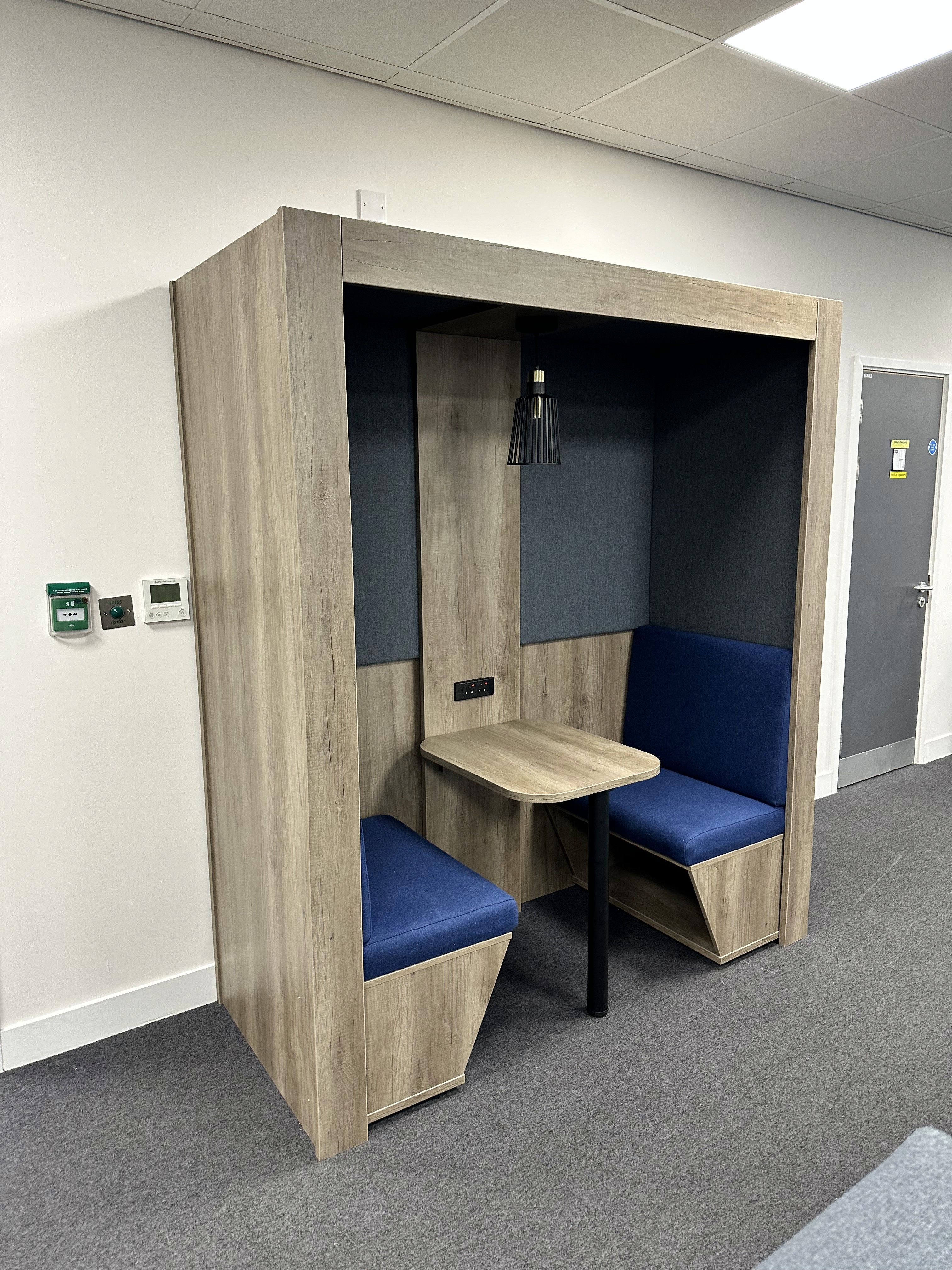
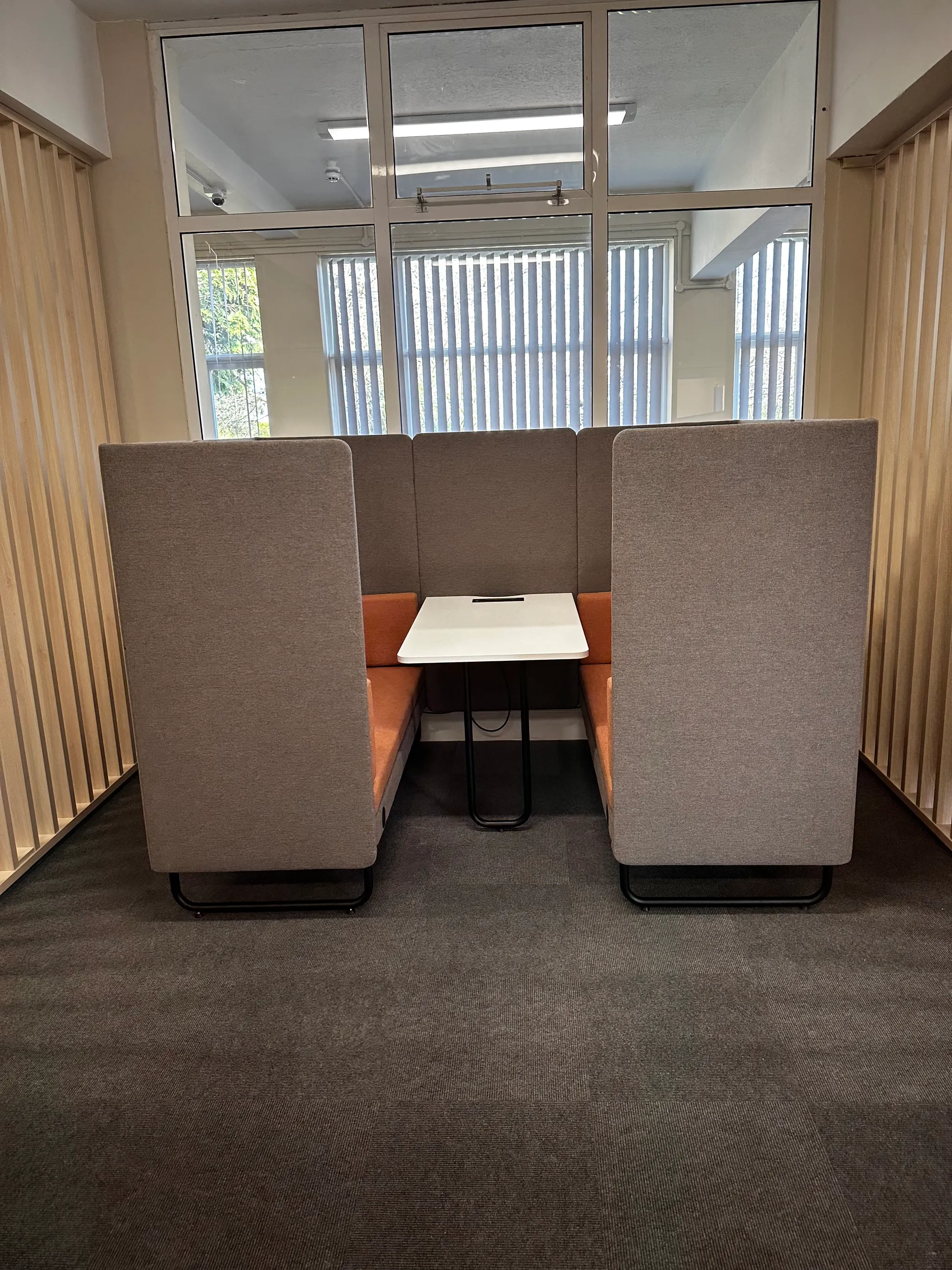
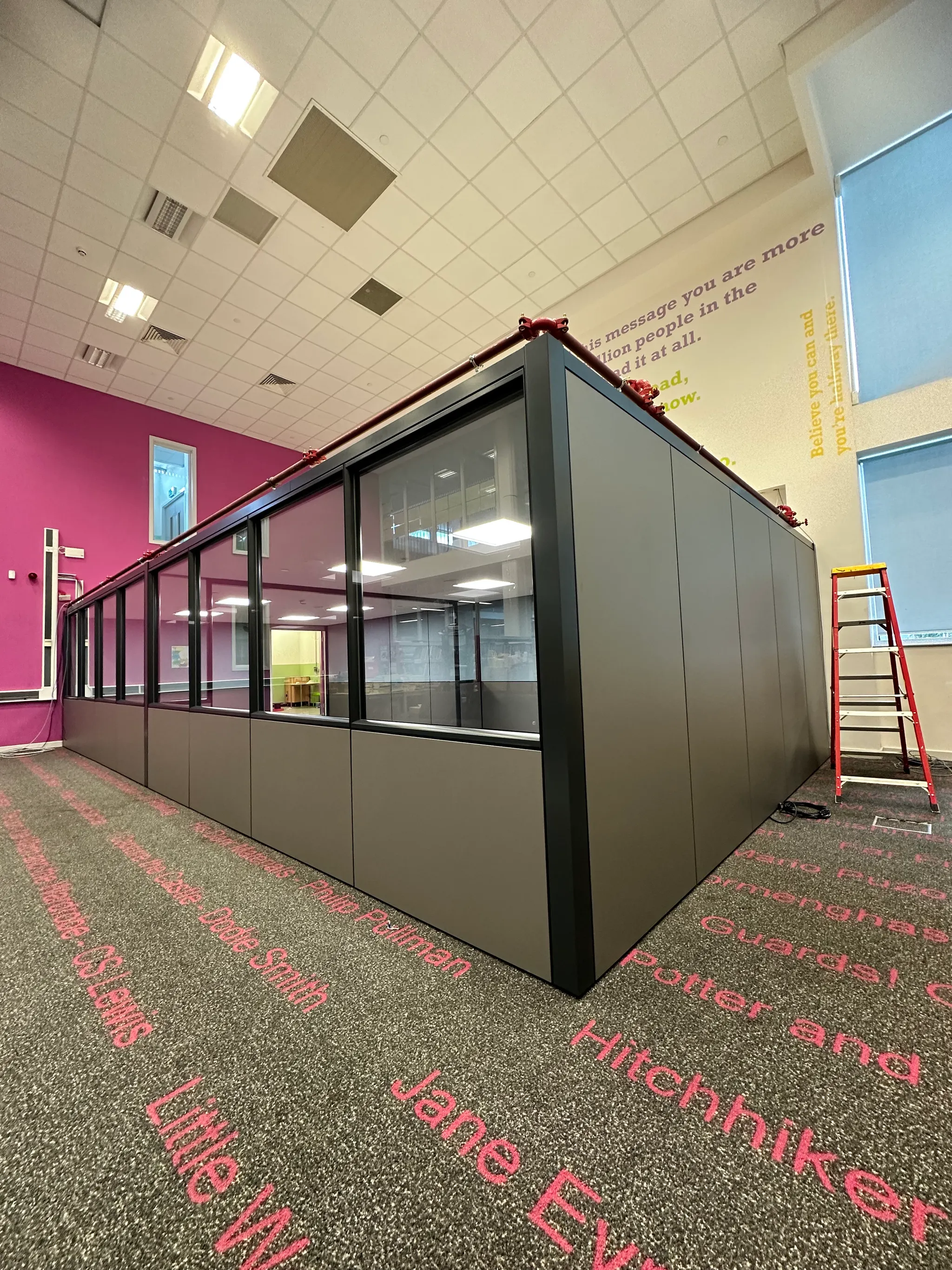
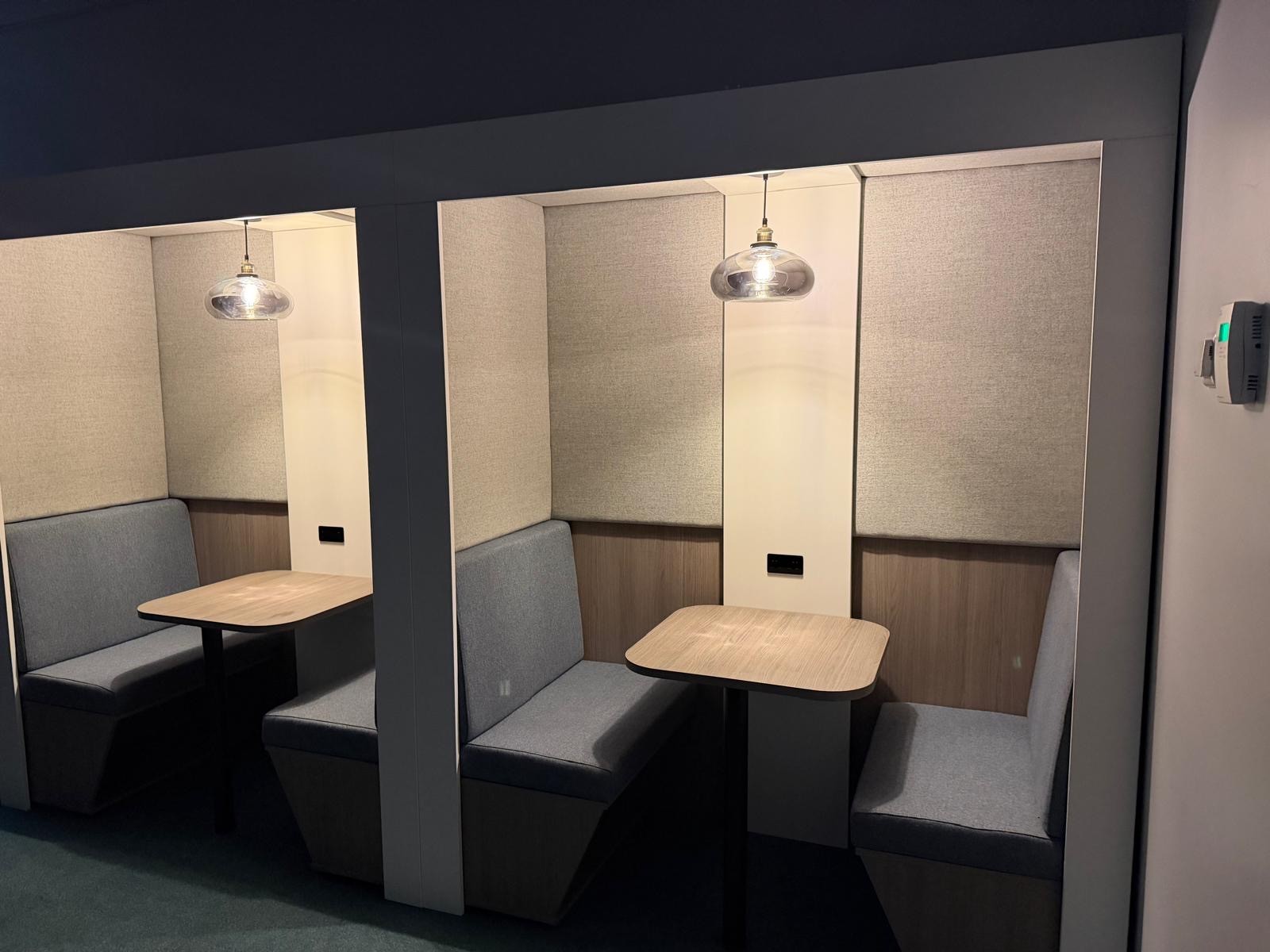
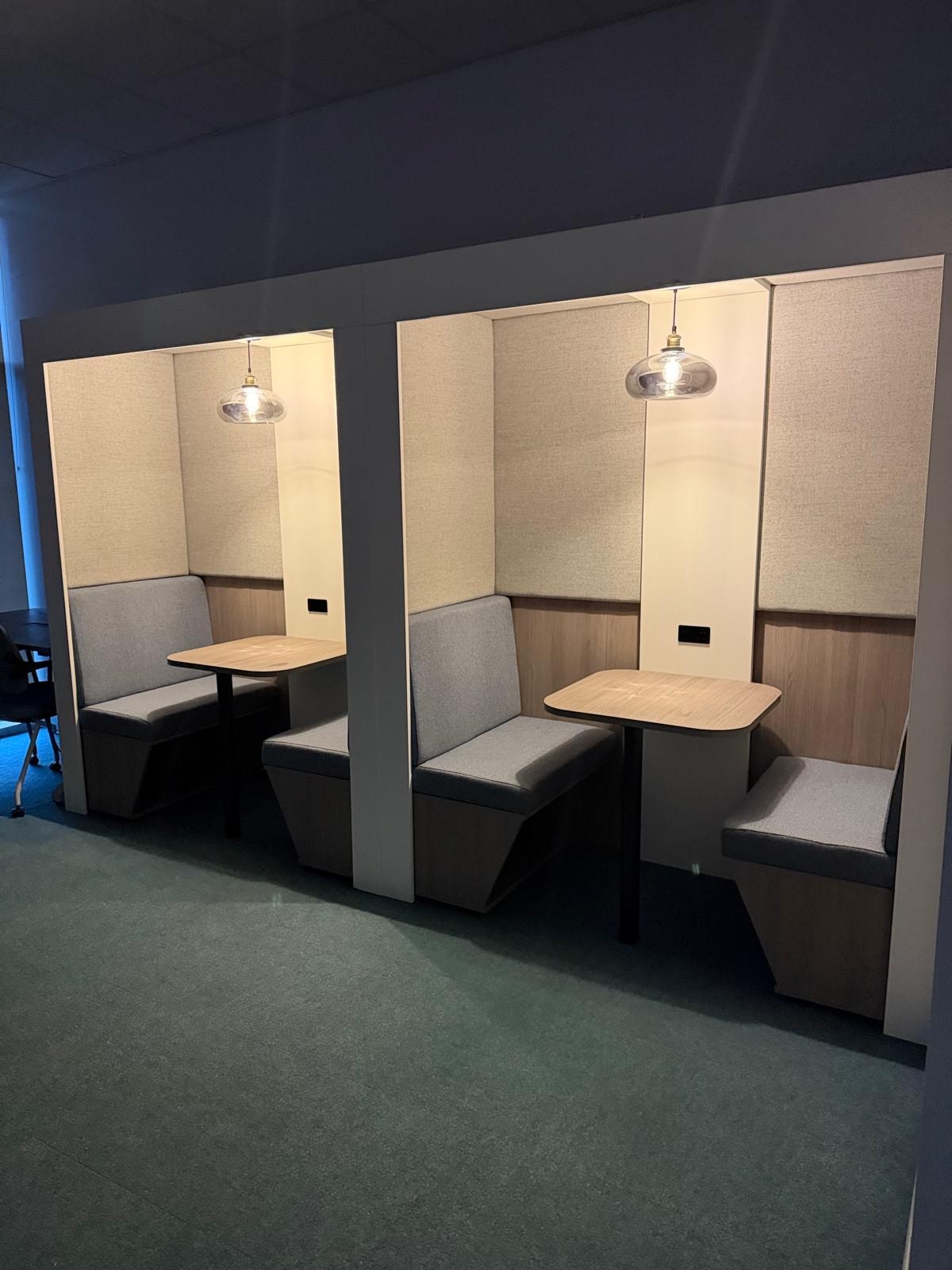
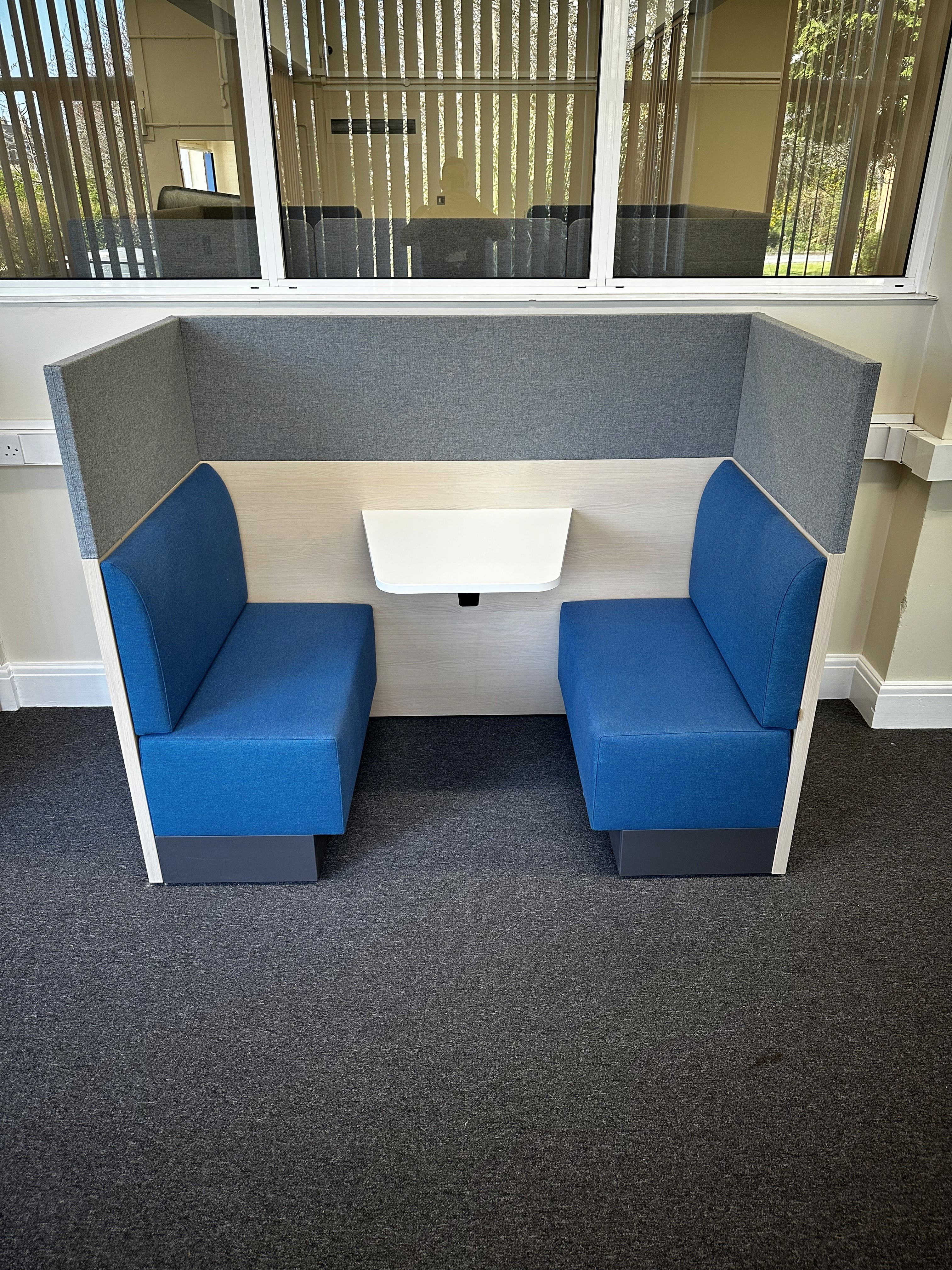
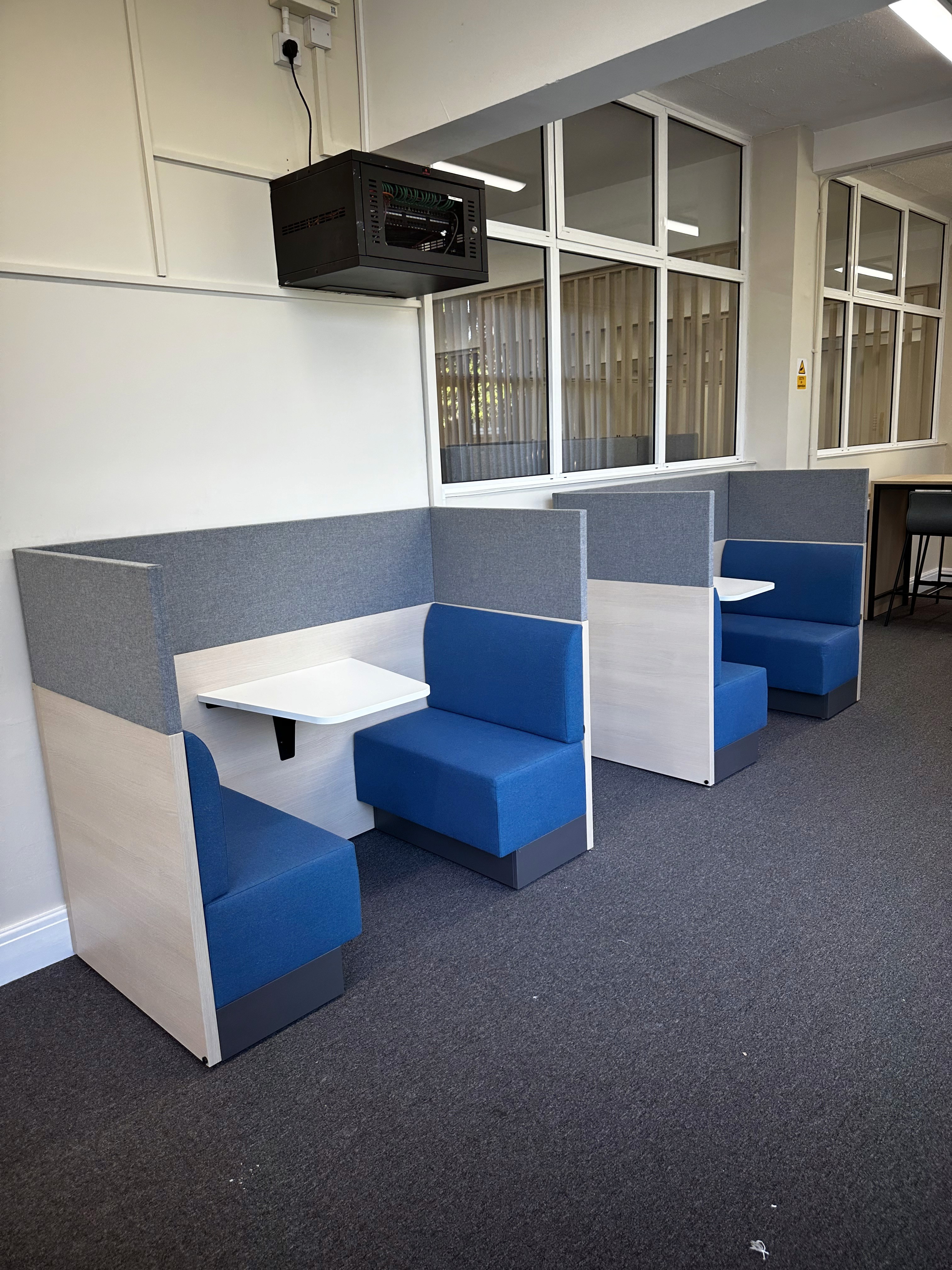
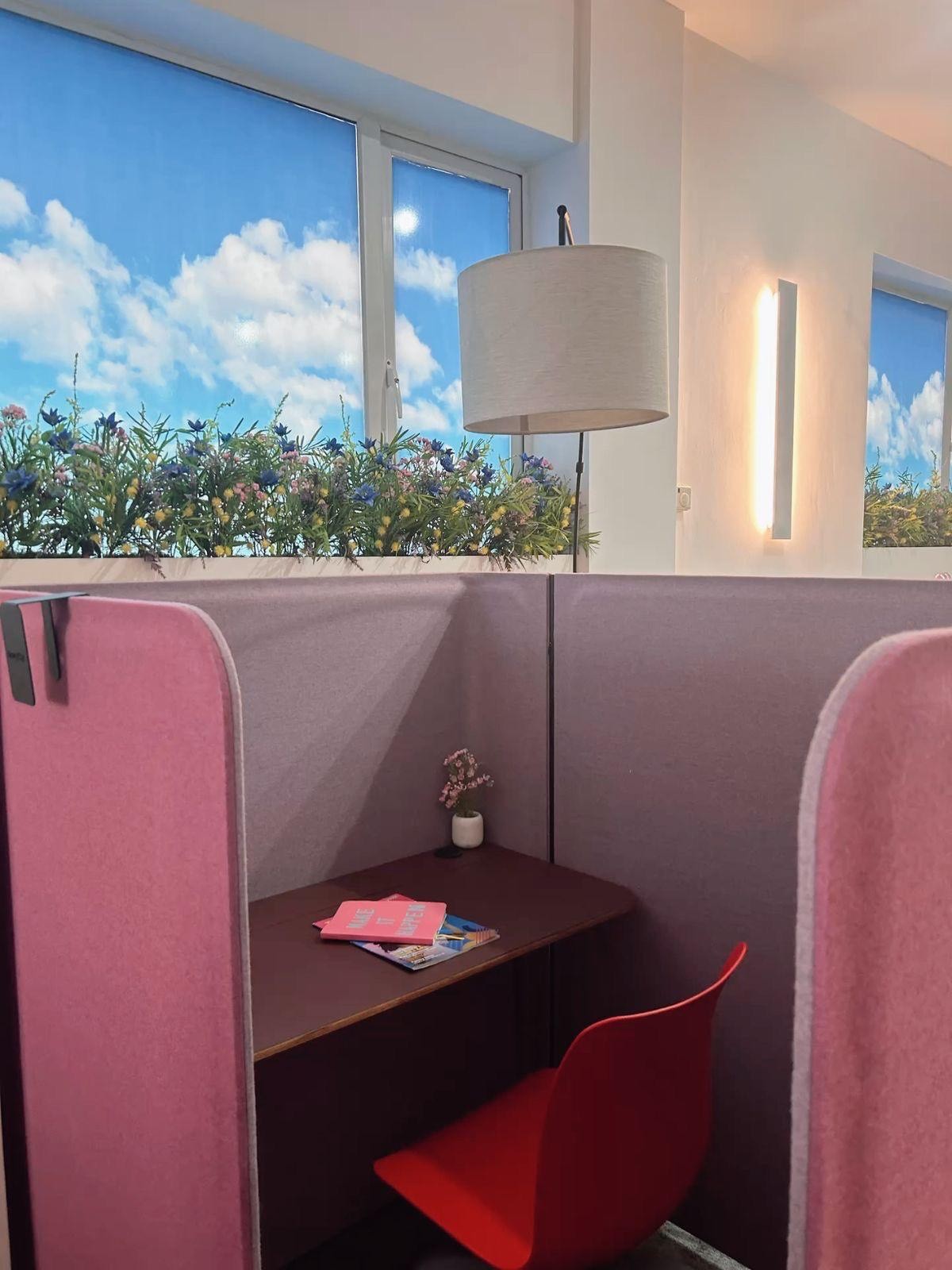
These acoustic isolation booths provide essential quiet, low-distraction spaces supporting students requiring focused concentration for formal assessment, targeted intervention, or work impacted by sensory sensitivities or attention needs. Open classroom environments create significant distracting auditory and visual stimulation for these students, compromising assessment validity and learning outcomes. Each booth provides sound isolation through specialist acoustic panels, carefully controlled lighting reducing visual distraction, and comfortable seating supporting extended concentration periods. Ventilation was carefully engineered preventing temperature buildup during intensive use. Storage accommodates materials and resources for different activity types. Teachers report dramatically improved assessment validity when students with attention or sensory needs can work in these controlled environments, significantly higher achievement outcomes, and improved student confidence and engagement in learning. Extended observation by teachers confirms measurable improvements in assessment validity, with students producing work demonstrating their true capability rather than being limited by environmental distraction. Students report feeling safer and more supported in these spaces.
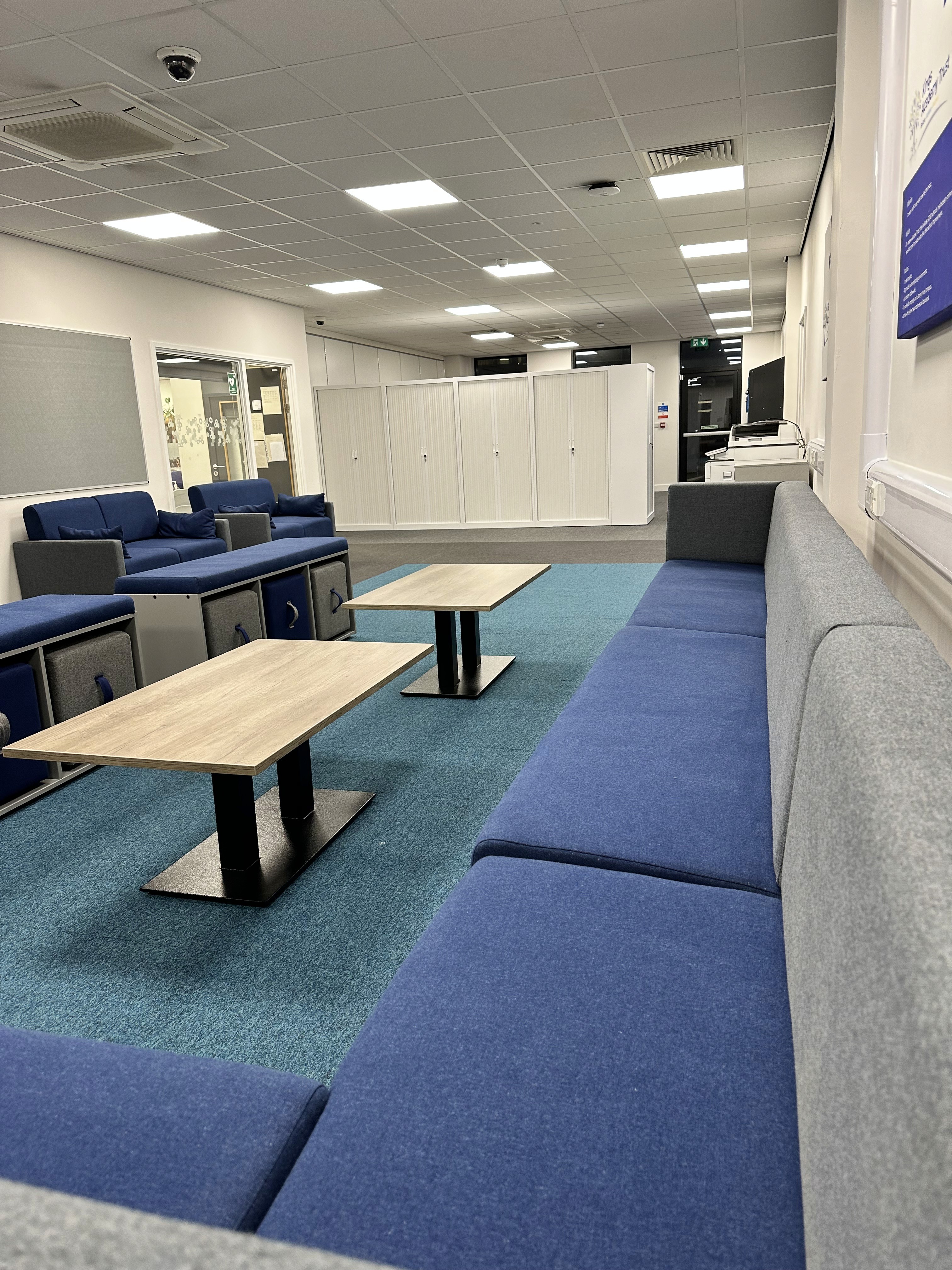
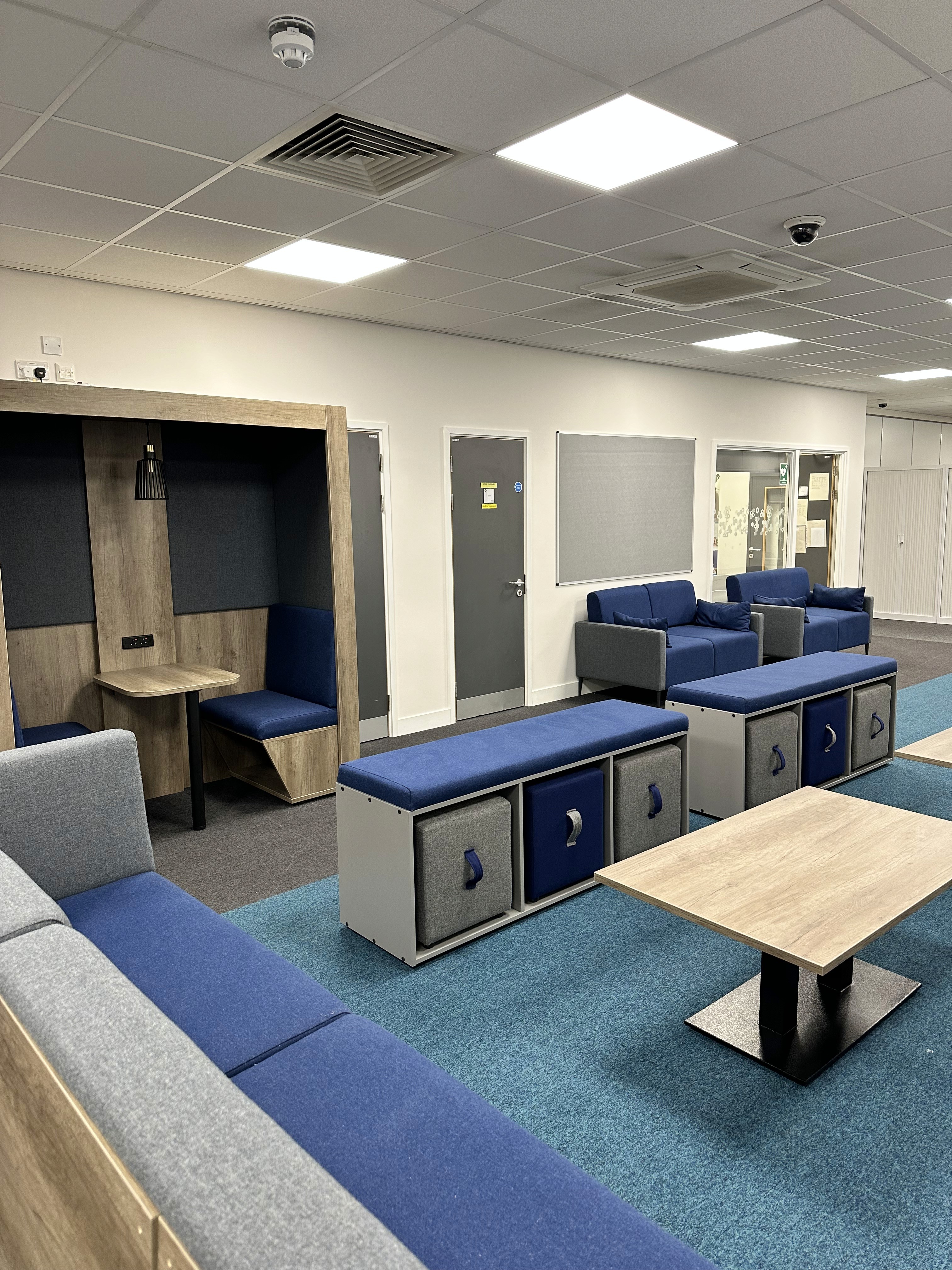
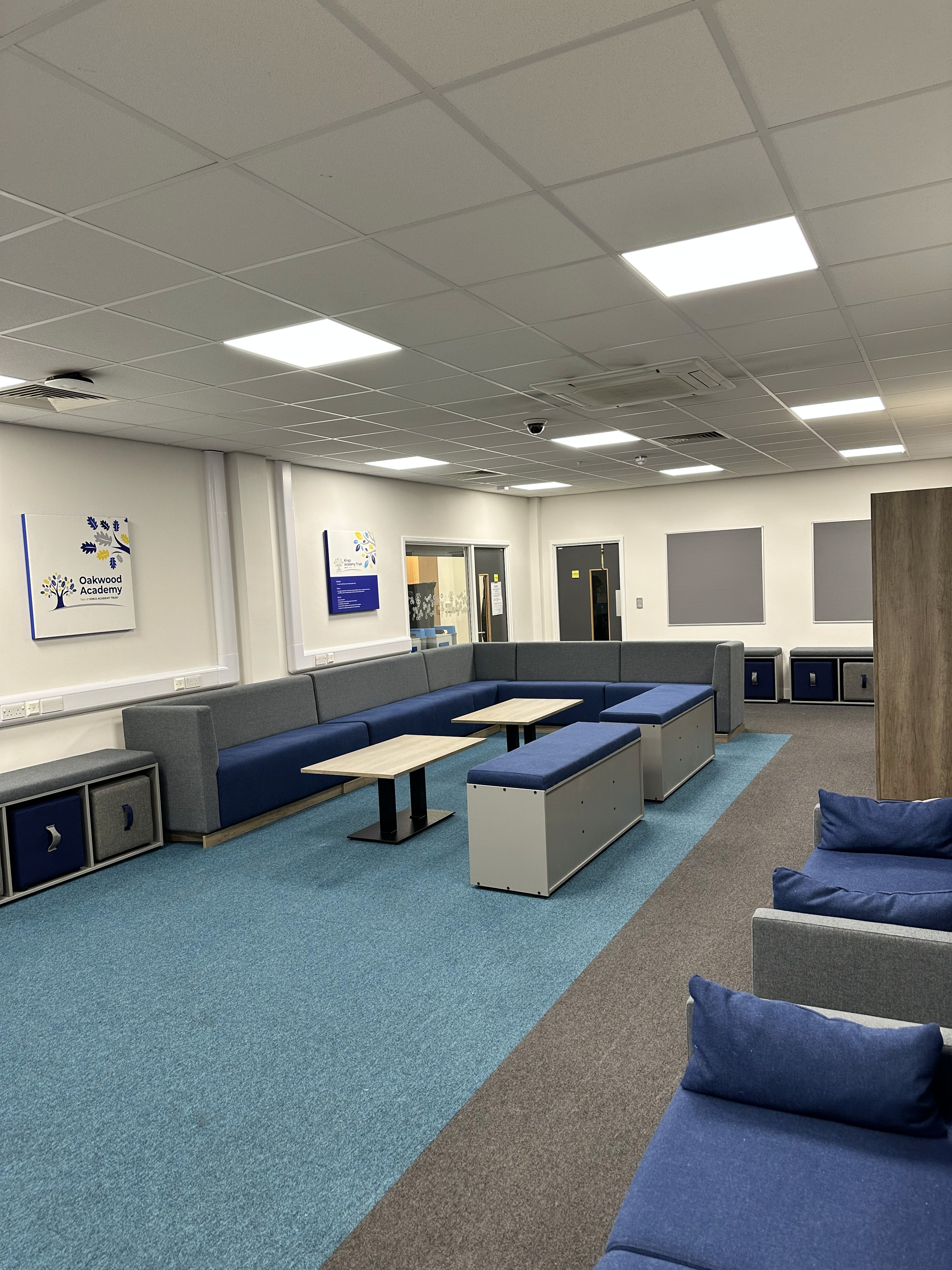
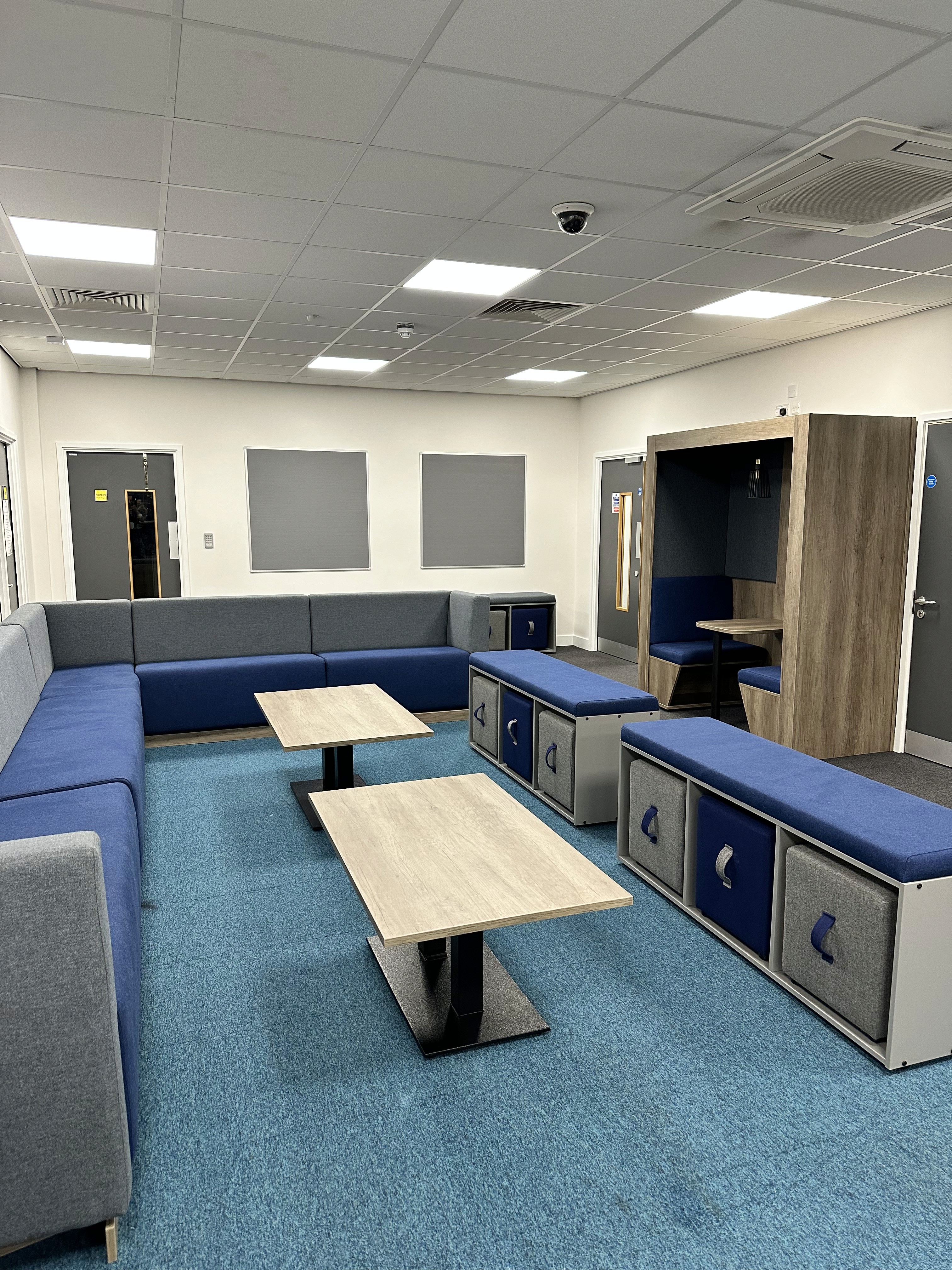
This transitional space between classrooms needed transformation from underutilised empty corridor into a genuine learning and wellbeing area supporting student mental health. The design brief called for flexible usage accommodating different groups and diverse purposes throughout the school day. We installed modular seating arrangements, low tables suitable for peer learning or casual social time, and soft furnishings creating distinctly informal atmosphere compared to formal teaching spaces. The layout strategically allows clear sightlines for staff supervision and wellbeing monitoring whilst feeling sufficiently distinct from structured learning environments to serve its refuge purpose. Acoustic treatments reduce noise transmission to adjacent teaching spaces, allowing learning to continue uninterrupted. Usage monitoring shows consistent occupation throughout the day, with students independently choosing the space for peer study groups, emotional regulation, relaxation, and social time. Staff observations indicate measurable improvements in student wellbeing and reduced behavioural incidents linked to overwhelm. Usage observations show consistent occupation with diverse groups choosing the space for varied purposes throughout the day. Incident reports indicate reduced anxiety-related behaviours and improved student ability to regulate independently.
A contemporary sixth form common room designed to explicitly support the psychological transition from structured classroom learning to increasing independence and emerging adult identity. This demographic requires spaces that reflect their developing sense of self and autonomy whilst maintaining appropriate pastoral oversight and support. We created distinct, thoughtfully designed areas: casual seating in varied groupings enabling flexible social configurations, quiet study nooks with dedicated desk provision and good lighting, and a refreshment area supporting self-directed break management. The furniture selection deliberately moved away from institutional primary-coloured designs, emphasising quality and contemporary aesthetics that signal respect for their developing maturity and emerging identity. Colour schemes used sophisticated, age-appropriate tones. Materials prioritised both durability and visual quality, communicating that the school values this age group. Staff report improved sixth form retention and enrolment from external candidates, markedly more positive attitudes toward school, and measurably successful use of the space as transformational developmental environment supporting the transition to adult independence.
This staffroom specifically serves part-time and visiting staff working variable schedules, requiring design that created belonging and inclusion for people with limited daily time in the school community. The challenge involved creating space that felt genuinely welcoming despite their non-standard schedules and roles. We provided clearly designated coat storage and lockers for personal belongings, comfortable seating for brief resting periods, readily accessible kitchen facilities supporting quick refreshment needs, and prominent noticeboard systems communicating school information and community announcements. The overall aesthetic explicitly communicated inclusion, professional respect, and valuing of all staff roles. Clear signage welcomed visiting staff. The space avoided feeling temporary or secondary. Usage surveys indicate significantly improved engagement by peripatetic and part-time staff, with measurable improvements in their sense of belonging and professional connection to the school community. Documentation of usage by visiting and part-time staff shows marked increases in breaks taken in the staffroom, suggesting improved sense of inclusion. Feedback from peripatetic educators identifies this as one of their most welcoming professional spaces.
A single-student intensive support room providing emotional sanctuary and psychological safety during significant distress or nervous system dysregulation episodes. The environment itself functions therapeutically, prioritising sensory calmness and psychological safety above activity provision or task focus. We created a multisensory environment using carefully controlled lighting, warm colour tones, and natural materials. Seating options included comfortable armchairs and floor cushions supporting different comfort and safety needs. Sensory tools were thoughtfully integrated throughout the space—fidget options, weighted blankets, grounding items. Temperature control, air quality, and acoustic properties received meticulous attention. Visual clutter was minimised. Staff report remarkable improvements in de-escalation timeframes and reduced crisis incidents, with some students demonstrating ability to self-regulate in approximately half the previous duration. Parents consistently identify this space as transformative for their children's emotional wellbeing and school integration. Documentation by intervention staff shows students increasingly able to access this space independently when dysregulated, rather than requiring adult guidance. Staff report improved student capacity for self-awareness and emotional vocabulary.
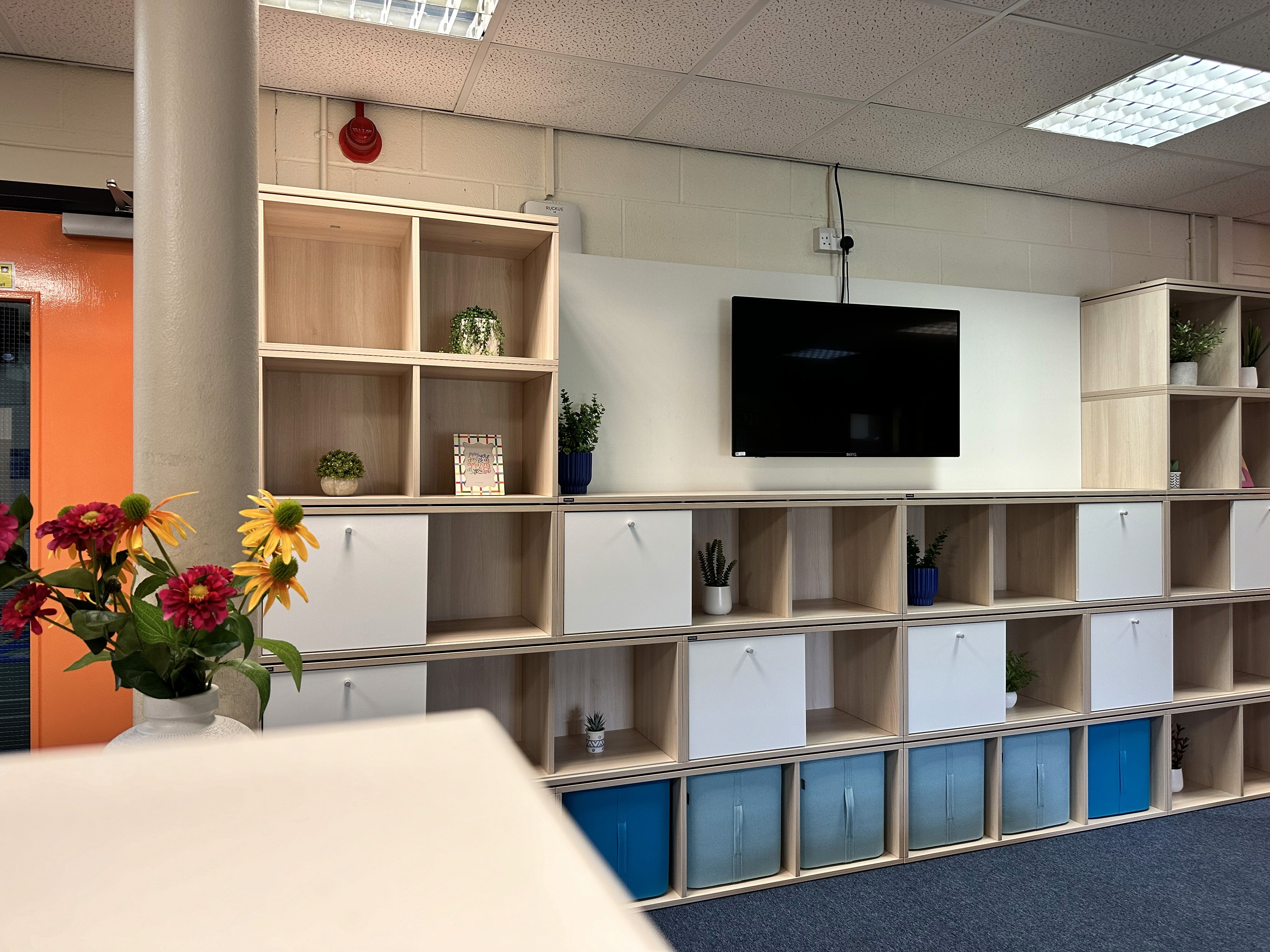
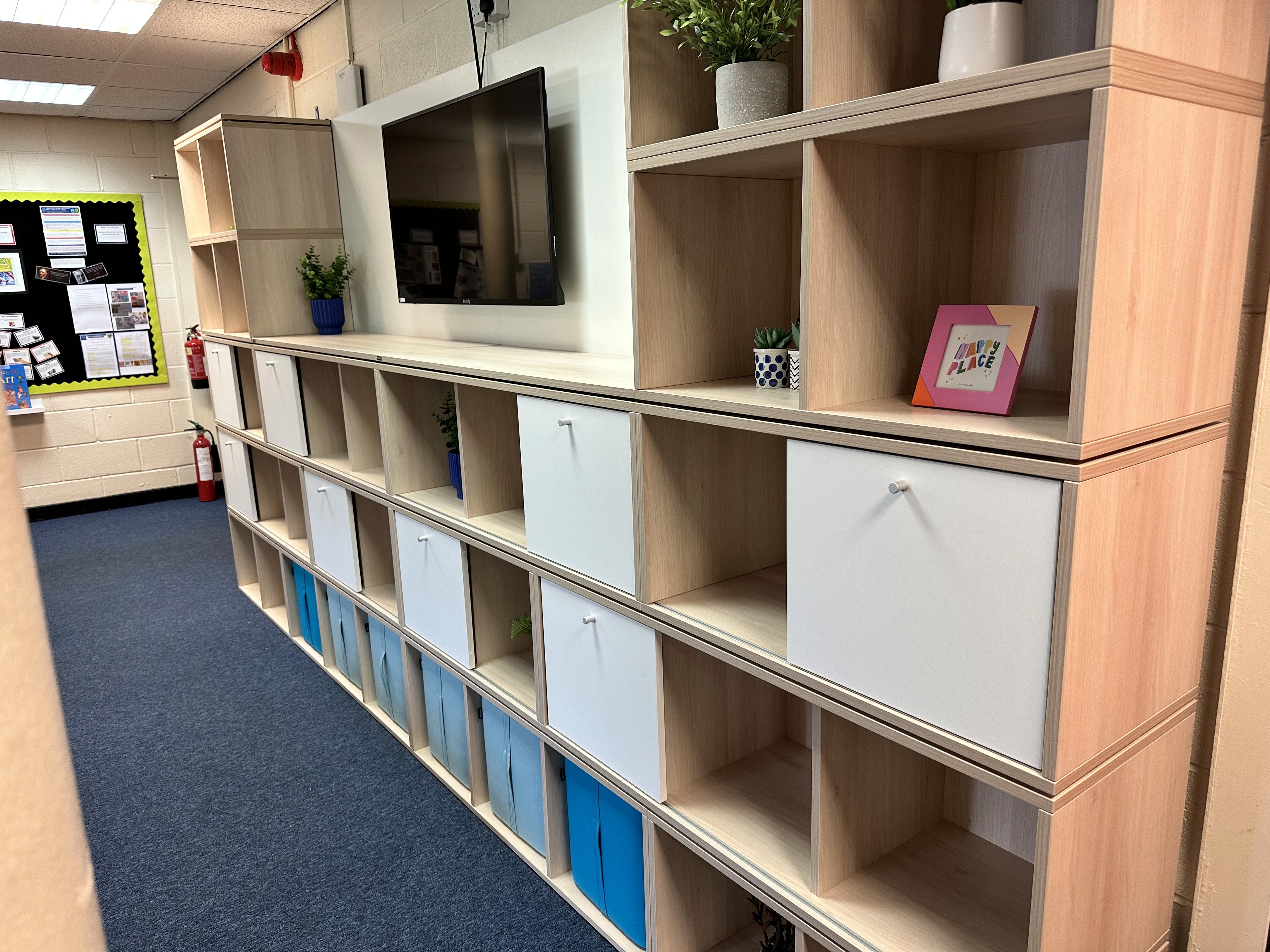
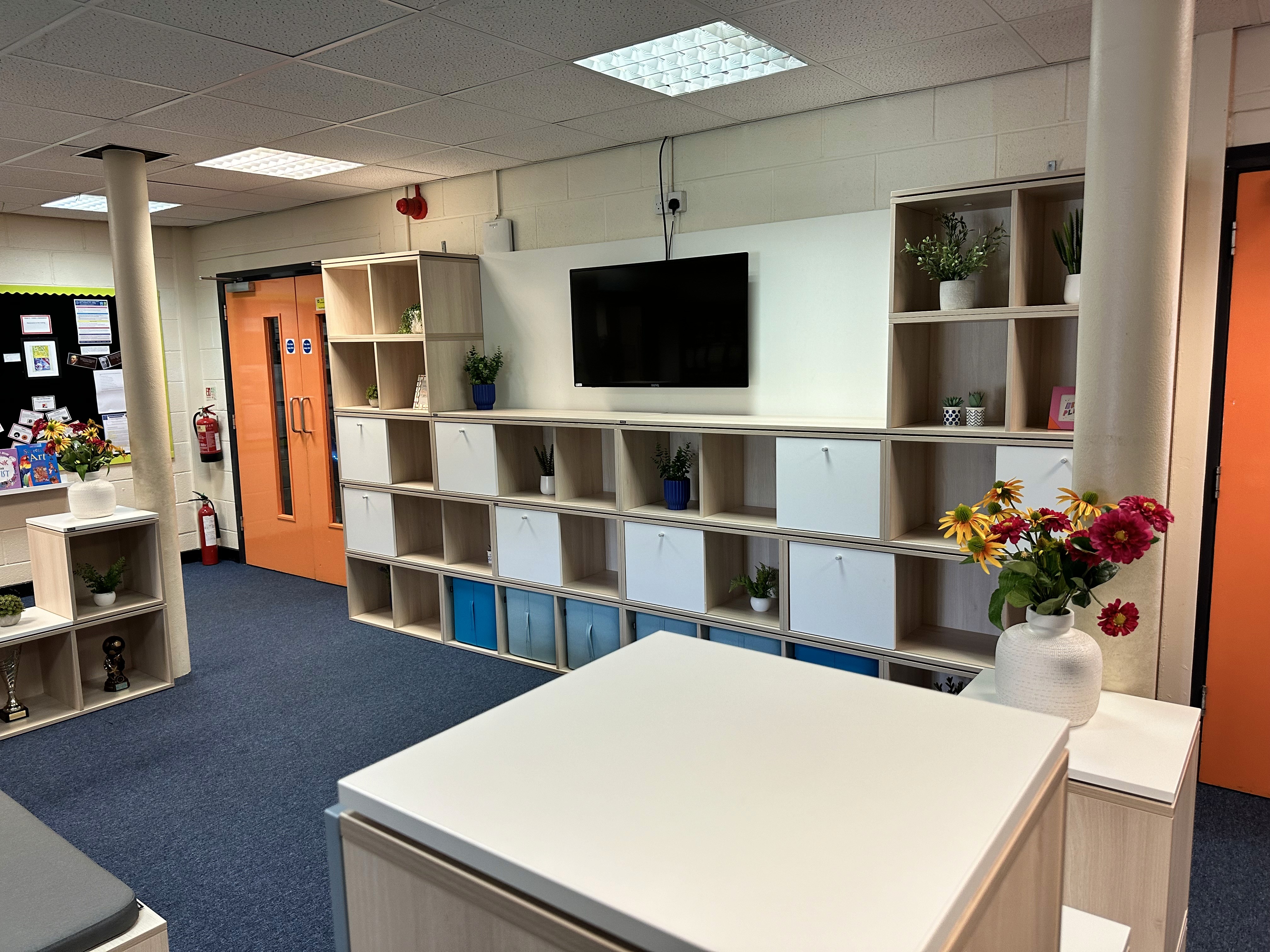
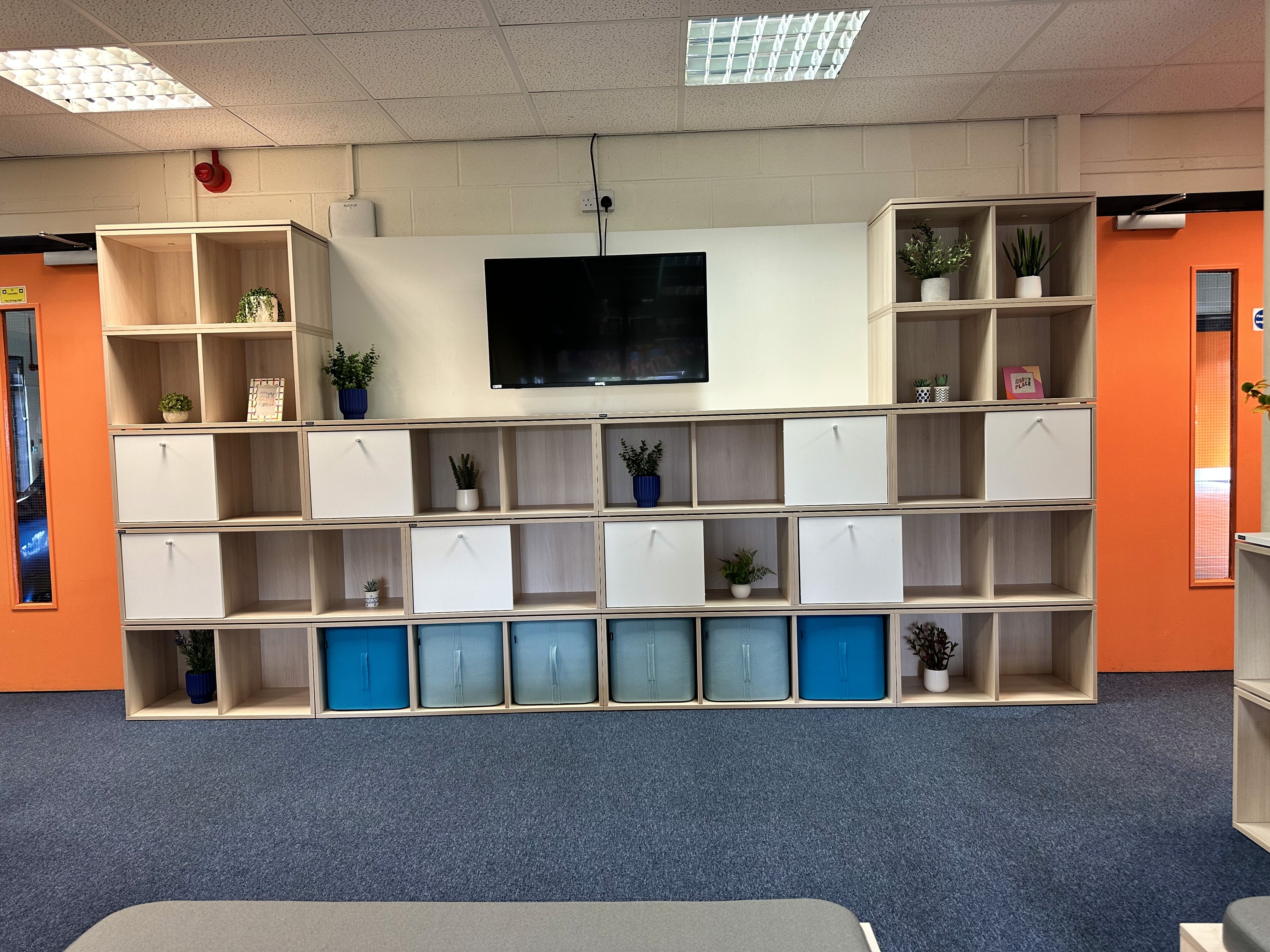
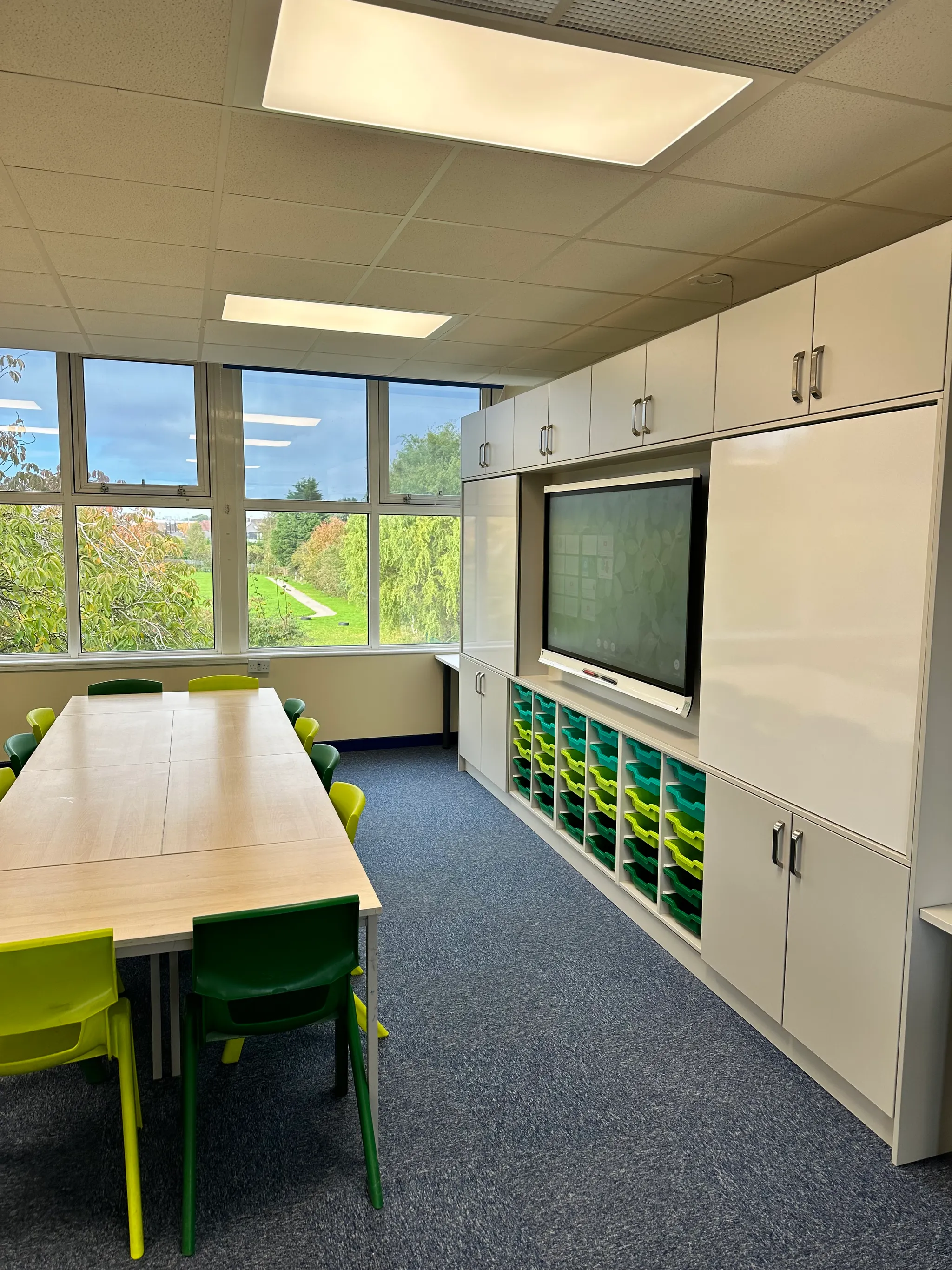
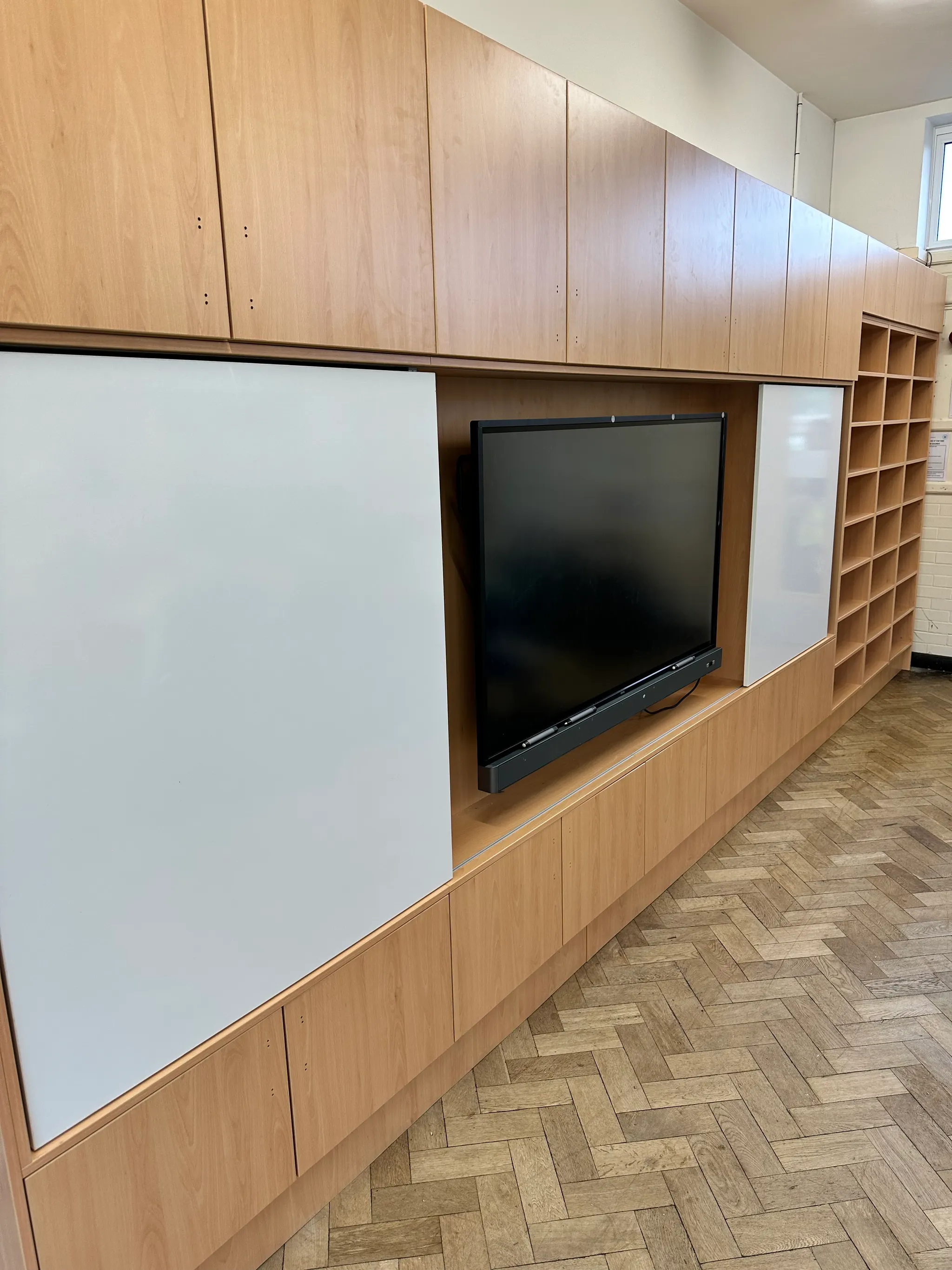
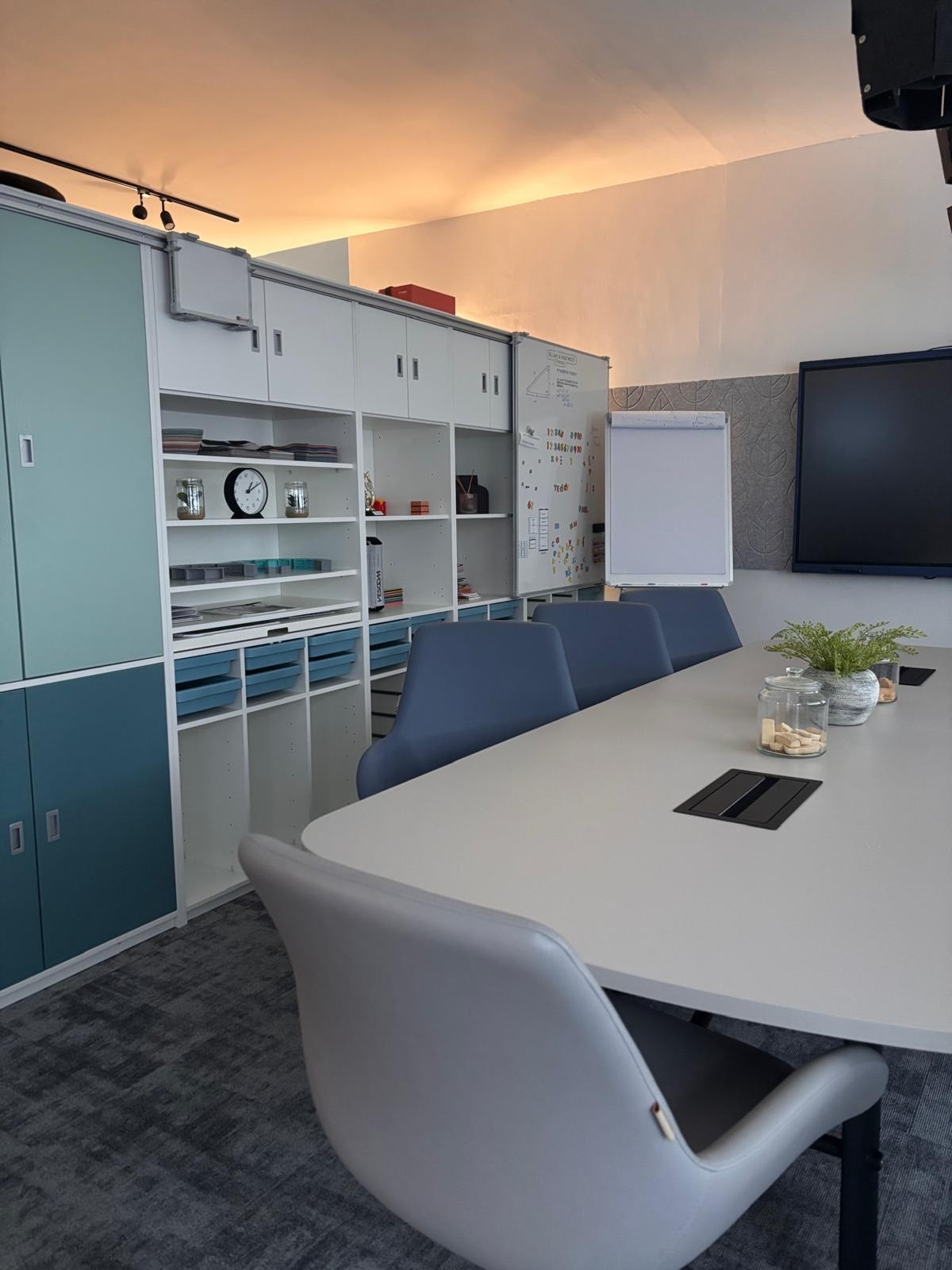
This custom teaching wall transforms the front of a classroom into an organised, professional teaching hub that dramatically improves lesson flow and resource management for busy educators. The design addressed multiple specific needs: clear visibility of learning objectives and success criteria, accessible storage for frequently used teaching materials, dedicated display space for current student work and reference materials, and integration of interactive learning surfaces. We created a modular shelving system with integrated display boards, magnetic surfaces for interactive learning activities, open storage for frequently accessed resources, and closed cabinetry for materials not in current use. The finishes combined professional aesthetics with practical durability, using high-pressure laminate surfaces and stable wall-mounted components engineered for classroom wear. Power outlets were integrated to support technology resources. Teachers report significantly reduced setup time between lessons, improved student focus as learning objectives remain visible throughout lessons, and substantially better organisation of teaching resources reducing daily frustration.
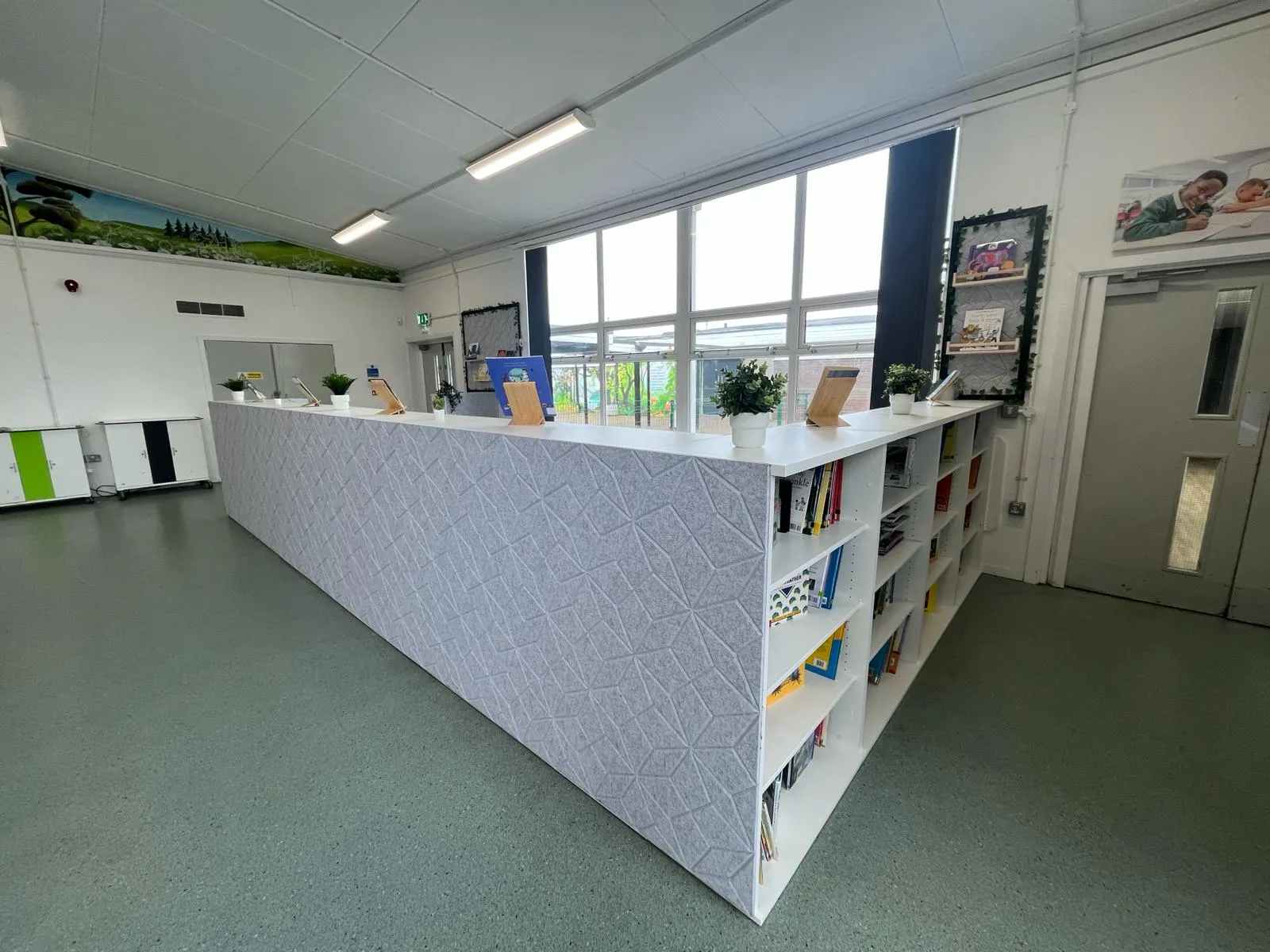
This library expansion urgently addressed insufficient seating capacity for multiple classes using the space simultaneously, causing queuing and frustration. The challenge involved creating distinct learning areas supporting different activities and intensity levels without physical partitions that would compromise sight-lines or reduce the perception of spaciousness. We implemented visual separation using strategically angled bookcases, varied furnishing heights, and area-specific colour accents helping users navigate intuitively. Reading areas featured genuinely comfortable seating, individual study pods provided fully focused environments with good lighting, and group work zones offered collaborative tables with presentation technology. Storage systems maintained visual openness and accessibility whilst efficiently concealing less frequently used materials. The outcome demonstrates markedly improved library capacity and utilisation rates, with multiple classes able to use the space simultaneously without disruption, crowding, or noise interference. Student feedback consistently identifies it as a preferred learning location. Usage data shows the space now consistently operates at high capacity with multiple classes using different zones simultaneously, confirming the design successfully addresses the original space shortage. Academic research assignments show improved citations and source variety.
Computer suite design requires careful consideration of screen ergonomics, postural support during extended sitting periods, equipment security and integrity, and appropriate technology infrastructure supporting educational objectives. This IT suite renovation prioritised comprehensive ergonomic workstation setup and improved pedagogical functionality. We specified height-adjustable desks accommodating students of different physical sizes and ensuring proper screen heights reducing eye strain, headaches, and postural fatigue from extended work sessions. Storage solutions secured equipment from theft and damage whilst allowing teacher access for maintenance and troubleshooting procedures. Integrated cable management reduced visual clutter and eliminated tripping hazards. Backup power systems protected against disruption. Teachers report improved student engagement with technology-based learning activities, substantially reduced postural complaints and discomfort, and noticeably better focus and stamina during extended screen-based learning sessions. IT support staff note substantially improved equipment organisation and reduced maintenance issues and repairs. Comparative data on assessment outcomes in technology subjects shows measurable improvements, particularly among students with previous concerns about postural discomfort. IT completion rates have improved, with fewer students reporting technology-related anxiety.
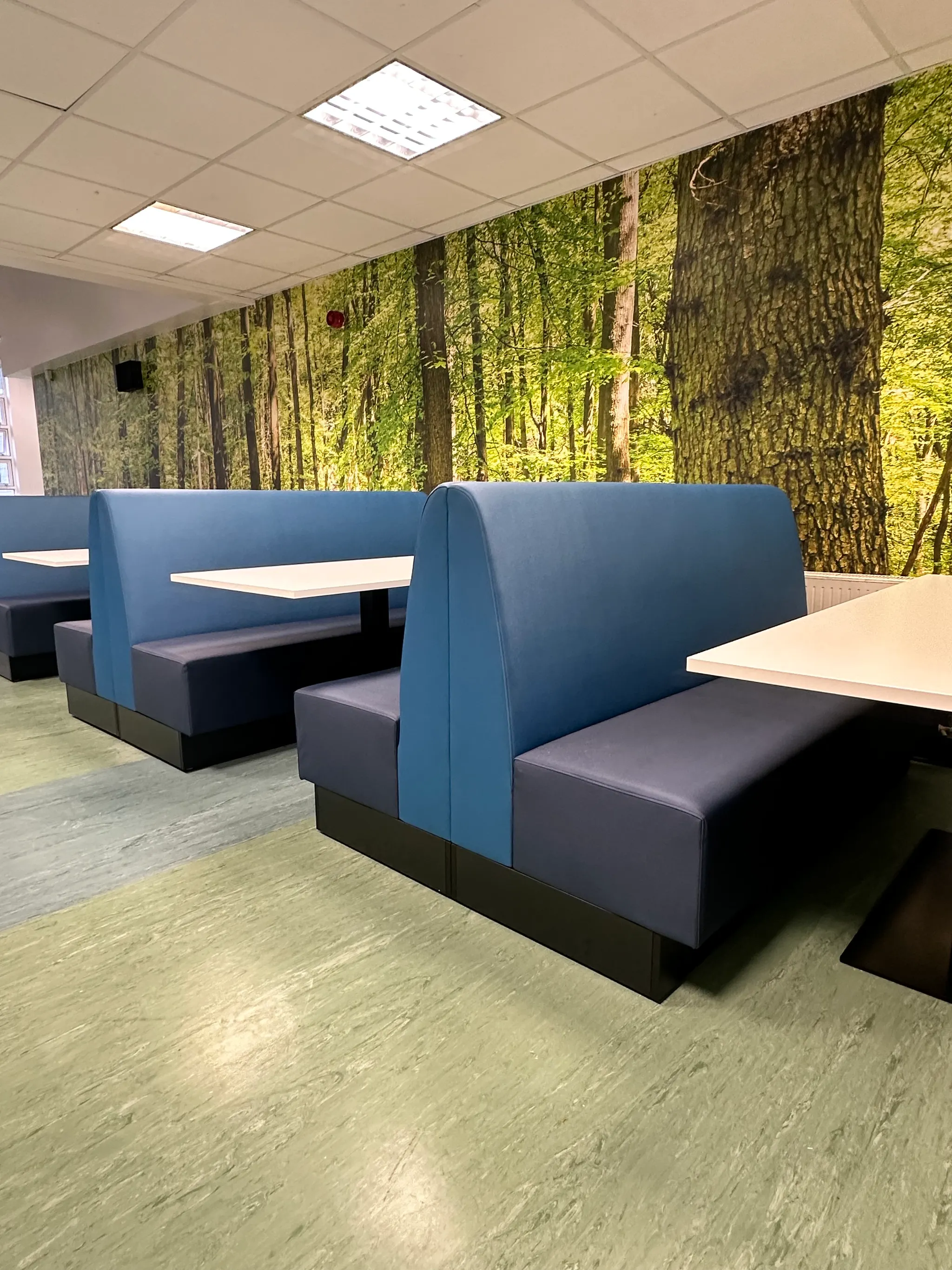
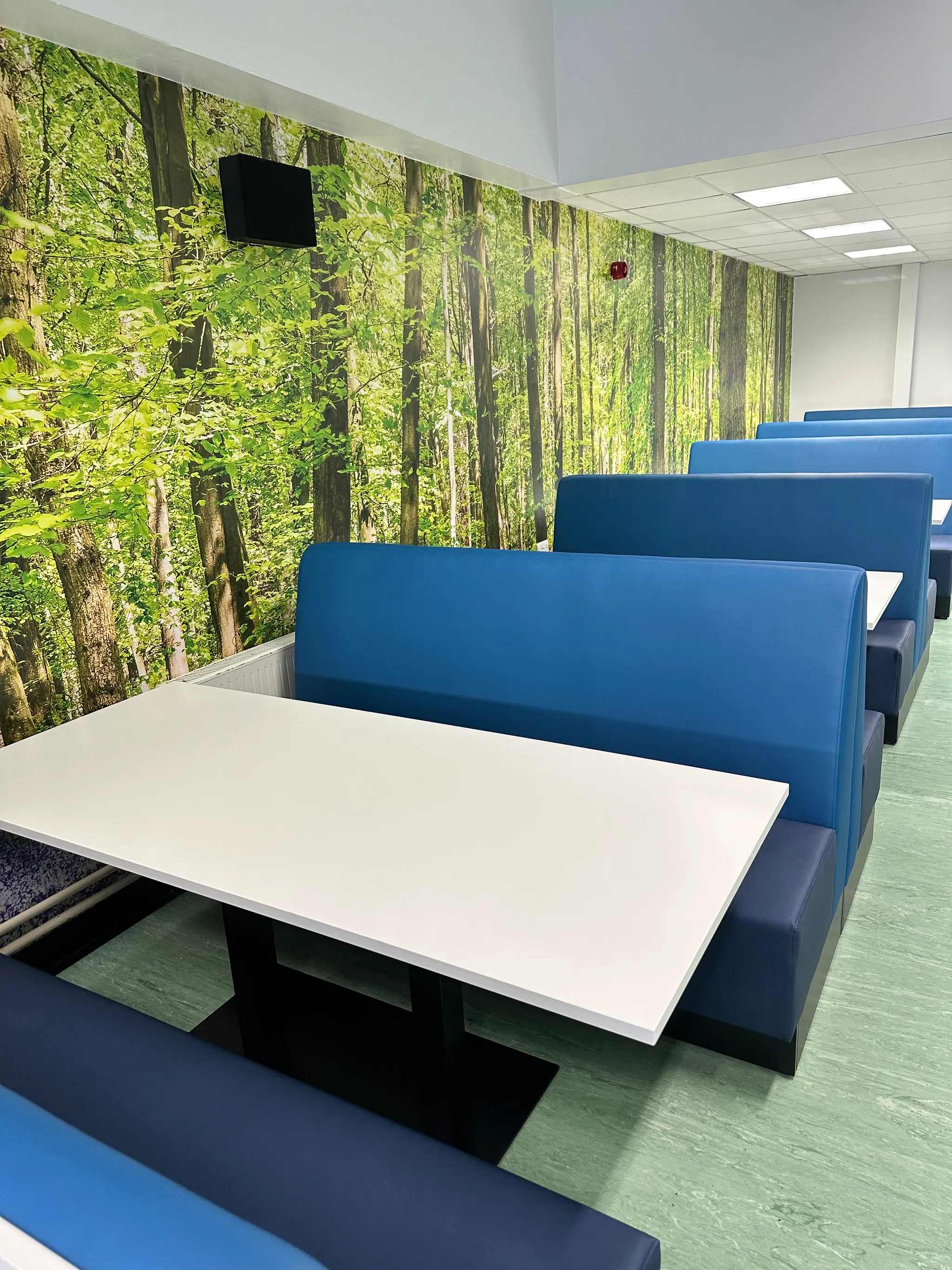
School dining areas must serve multiple functions simultaneously: efficient meal service during peak periods, casual gathering space for social connection, and occasional assembly venue—requiring careful planning for safety, traffic flow, and acoustic management. This canteen renovation focused on improving queue management systems and reducing frustrating wait times during peak service periods. We redesigned the service counter layout improving food accessibility and reducing bottlenecks in student flow. Dining furniture selection prioritised durability and stackability for regular cleaning and flexible arrangement depending on catering or assembly needs. Comprehensive acoustic treatments significantly reduced cacophonous noise levels, measurably improving the dining experience for all users. Supervision sightlines were enhanced through strategic layout allowing staff to monitor all areas. Student feedback indicates notably improved mealtime experience, reduced queuing frustration and complaints, and staff report smoother service operations and improved safety during peak periods. Monitoring of queue lengths and service times shows significant improvements during peak periods. Student feedback consistently identifies improved mealtime experience, with measurable reductions in food waste through improved access and presentation.
Collaborative interior solutions that blend design, function, and sustainability, tailored for education and business.
Your Journey to Better Spaces Starts Here
When designing interiors on paper, it can be difficult to truly understand how a space will feel. That is why we created the Werk Solutions showroom, a space where ideas become tangible.
Visit Our Showroom
The Werk Solutions Showroom Experience
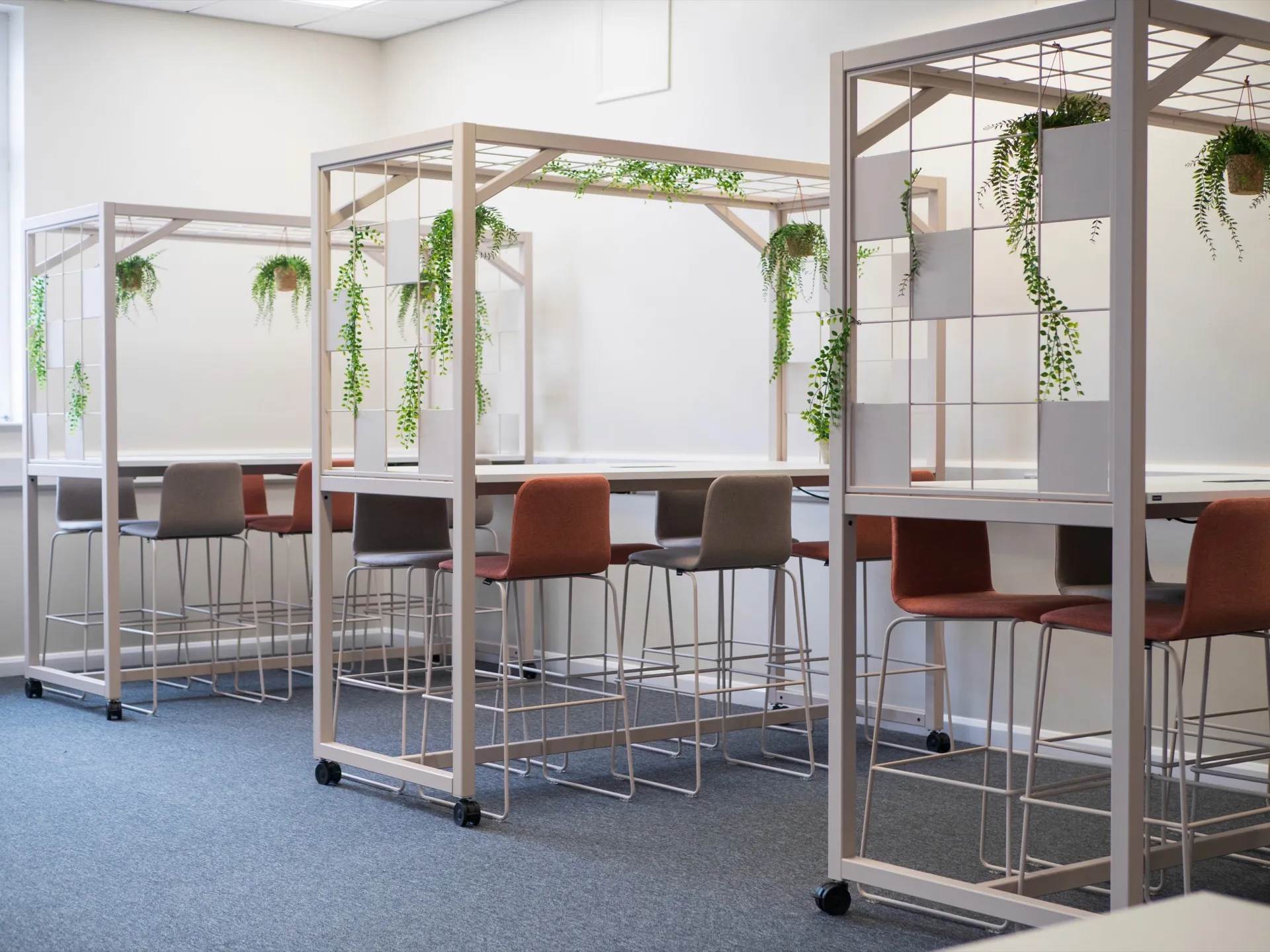
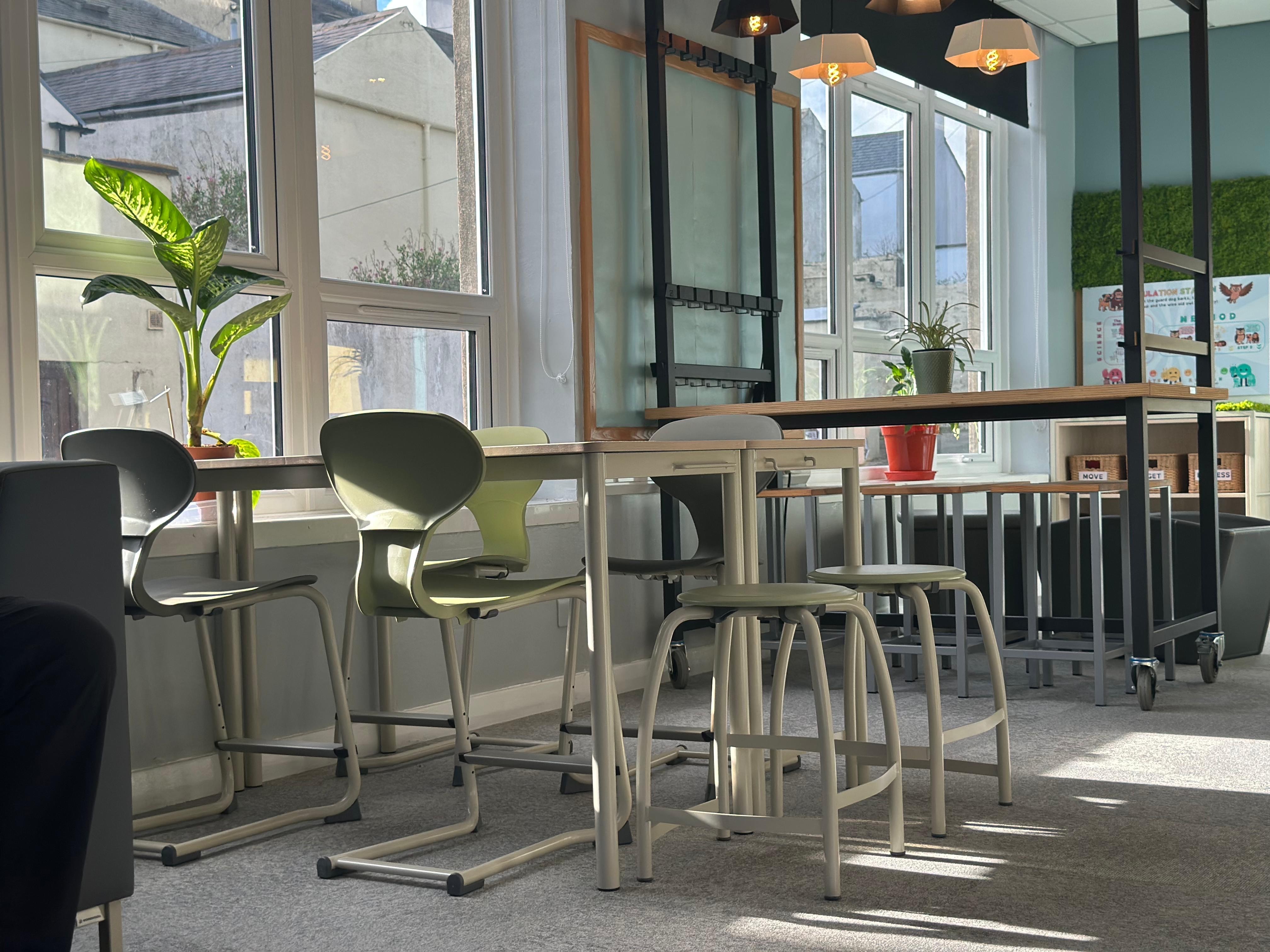
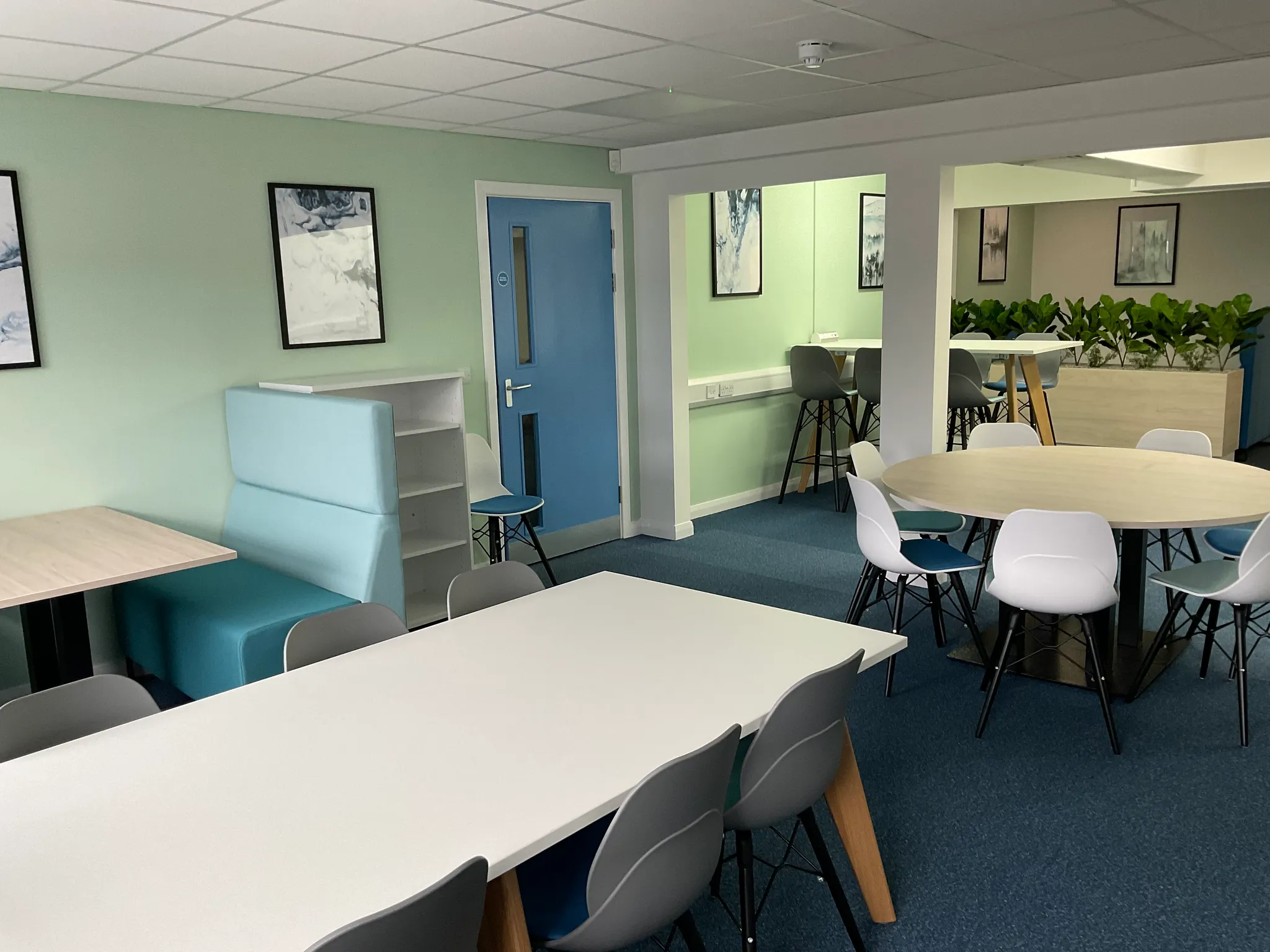
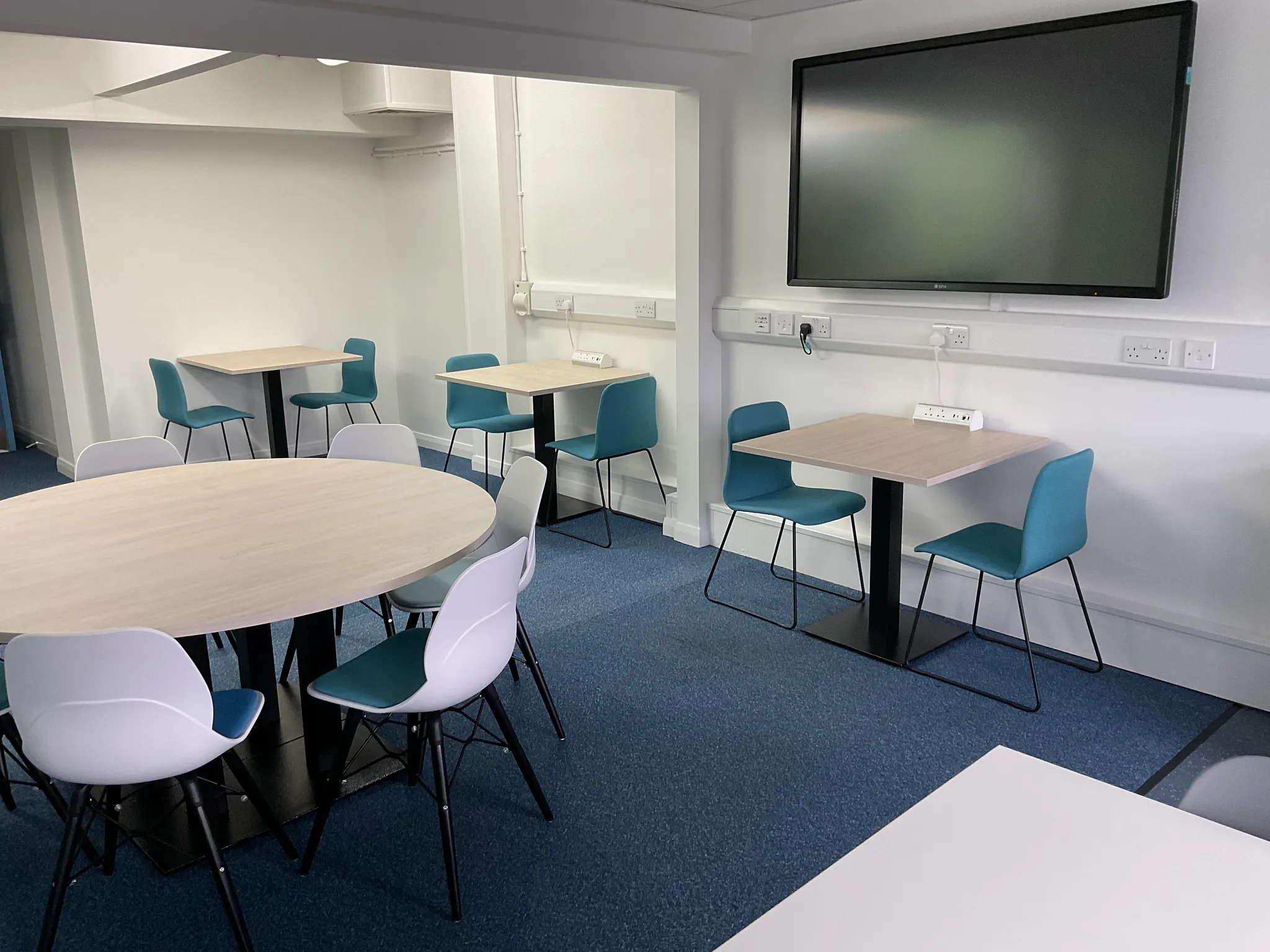
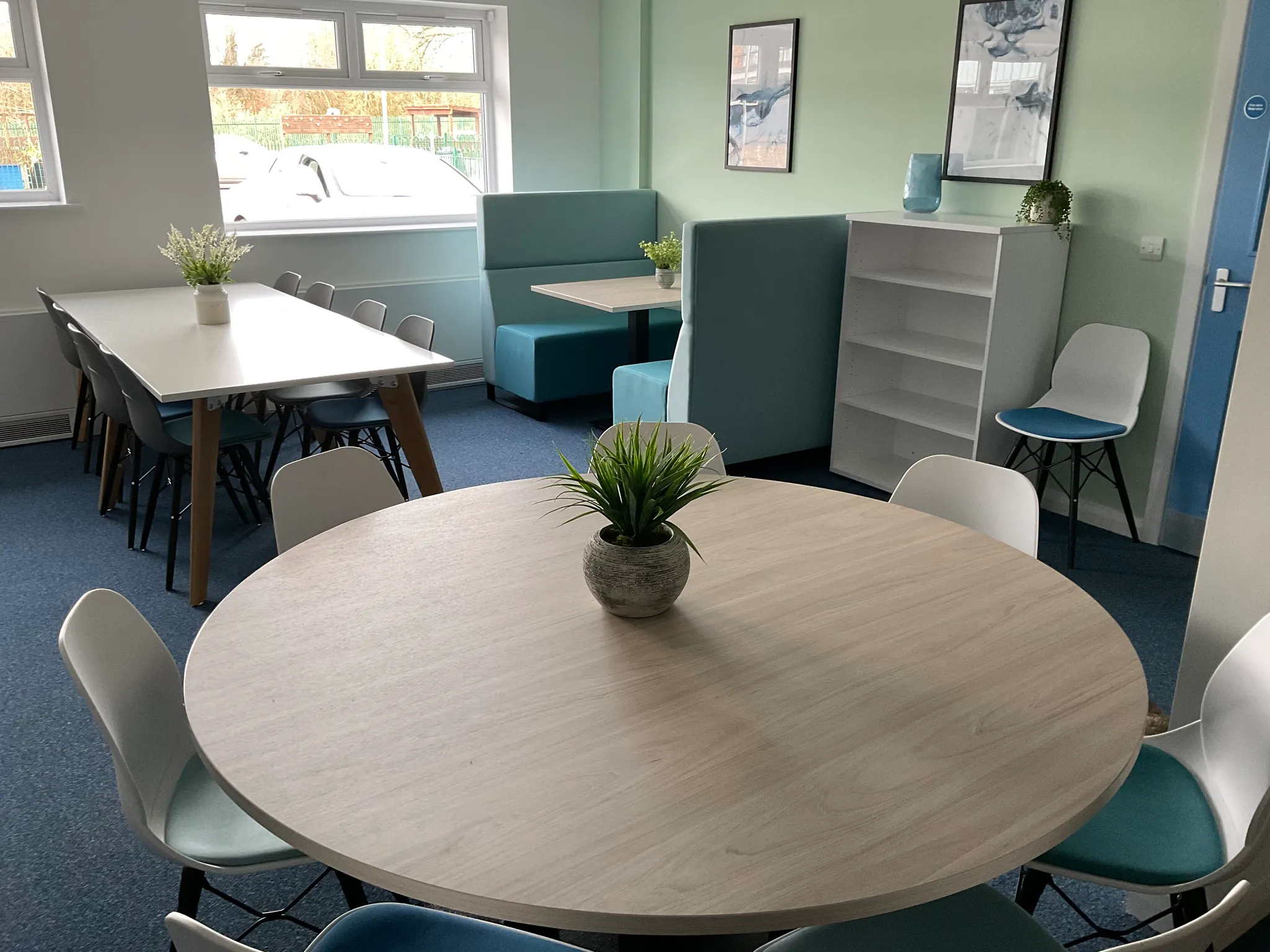
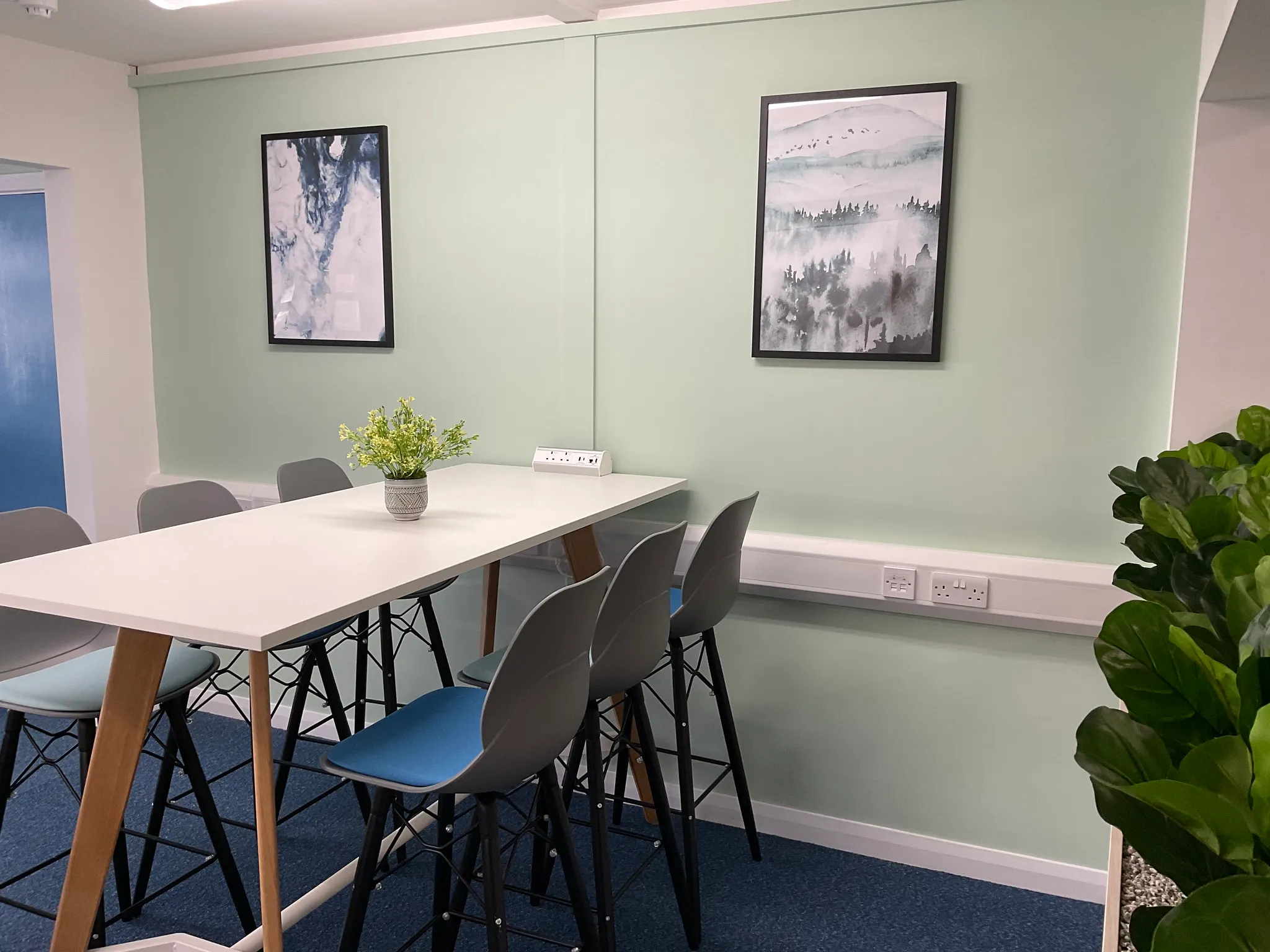
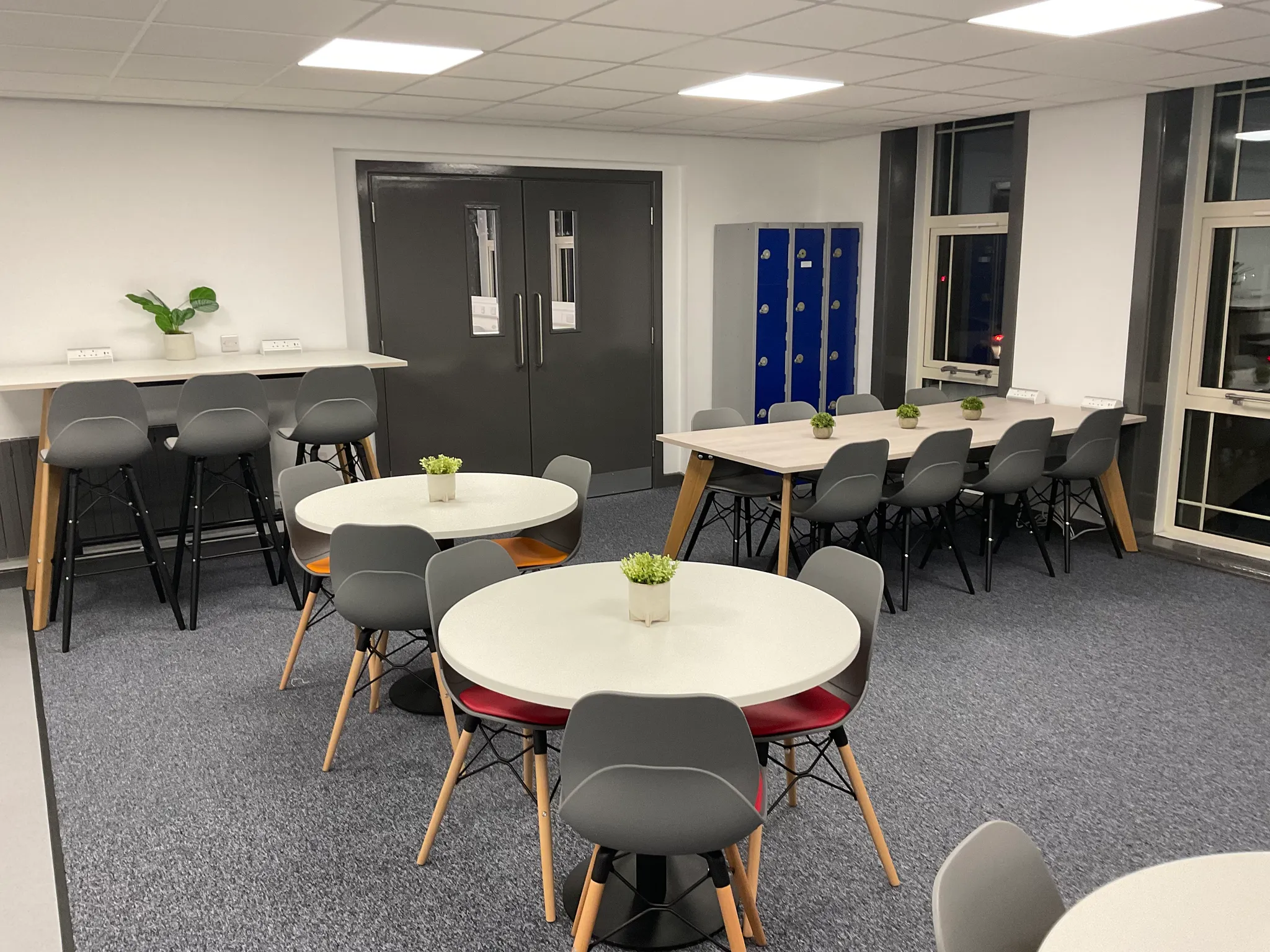
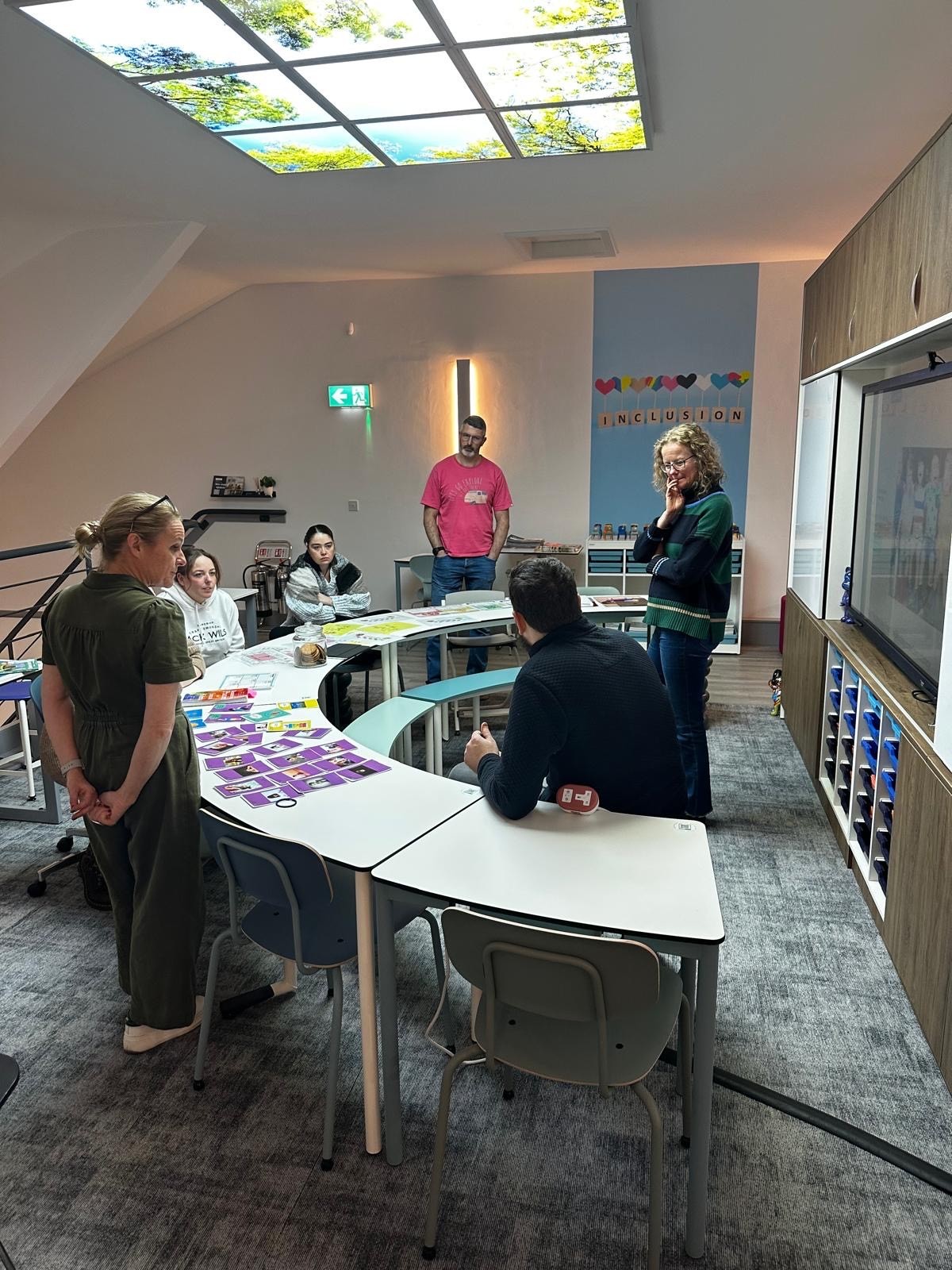
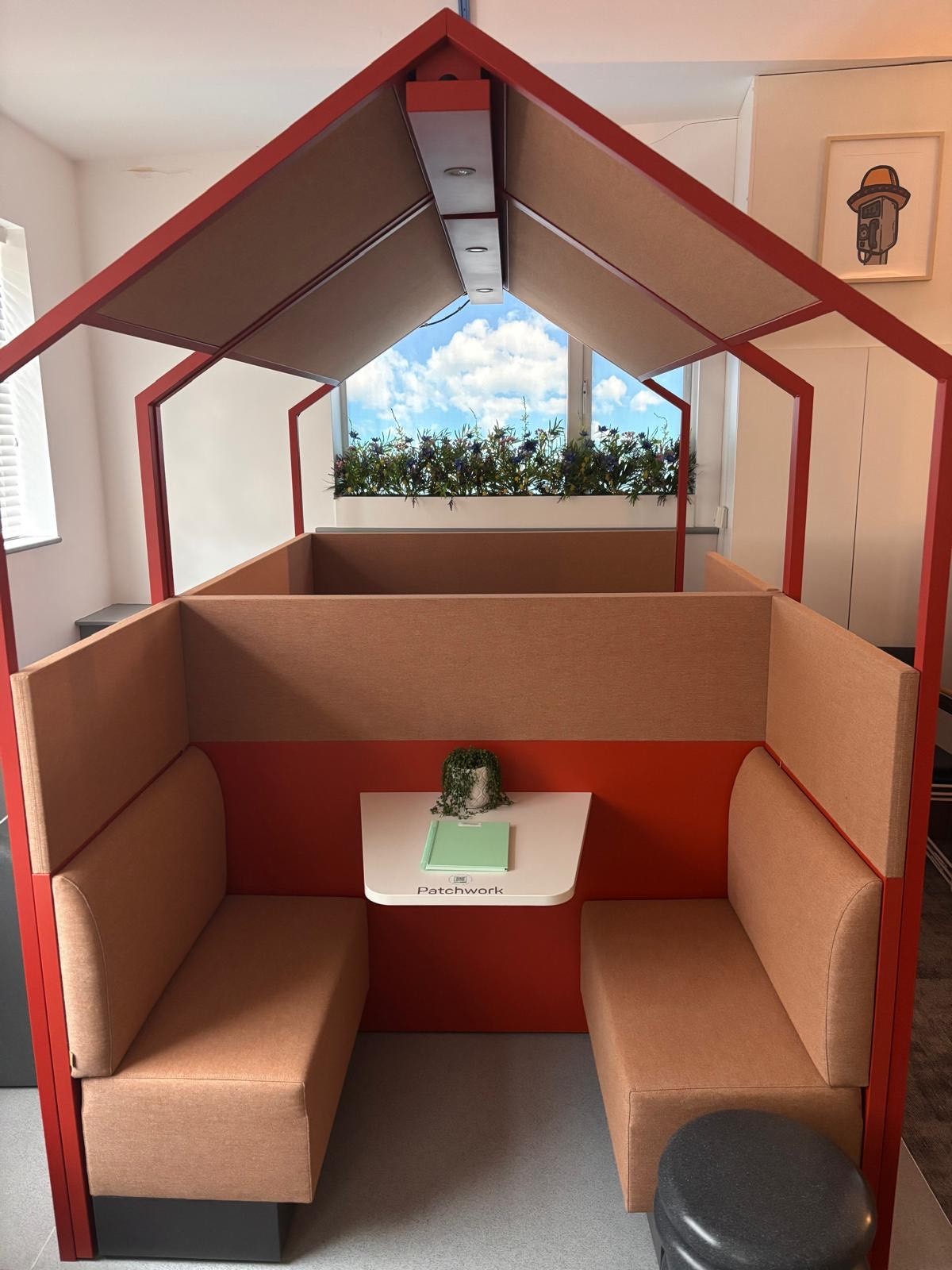
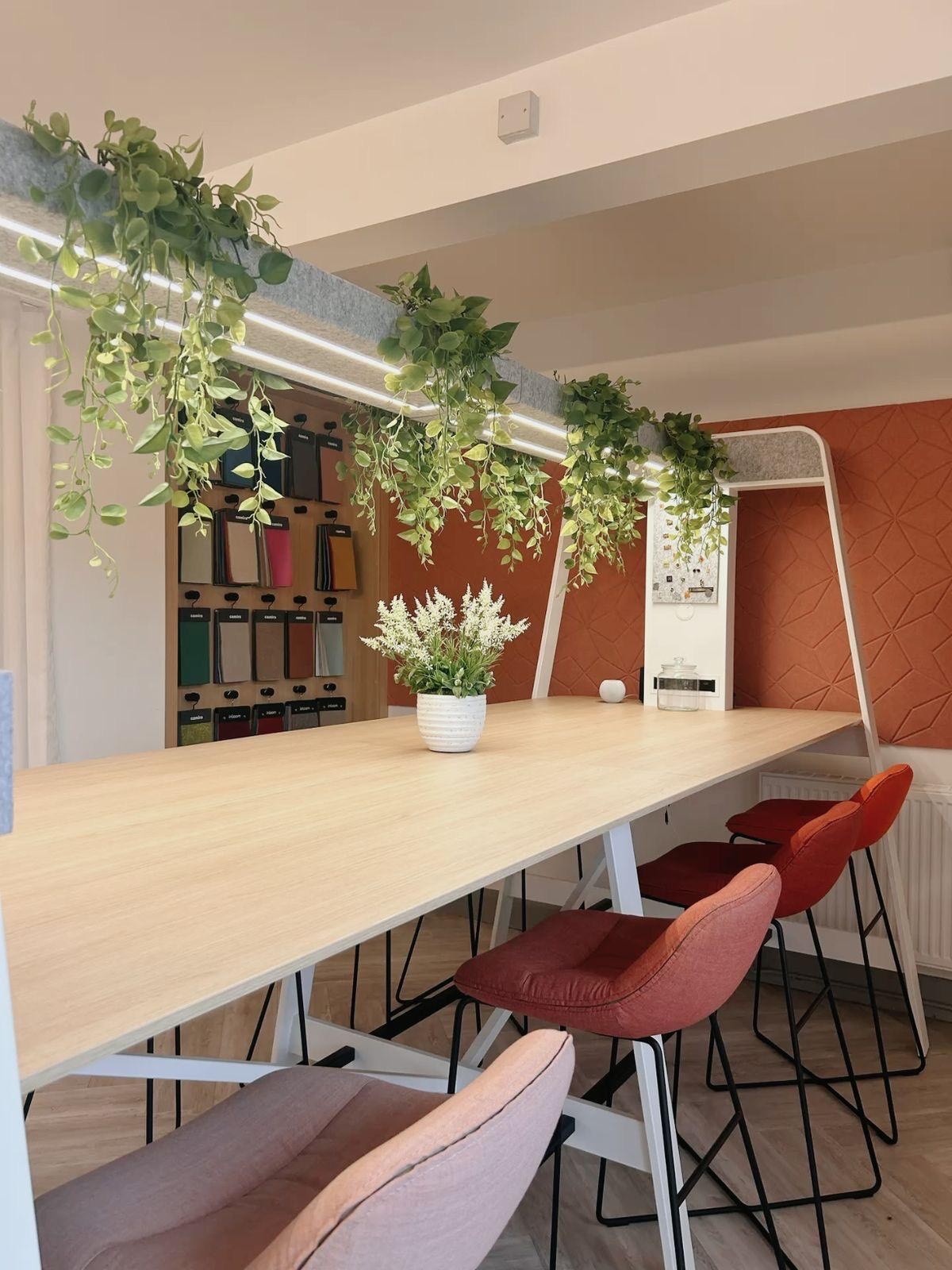
Our 5,000 square foot showroom in Wallasey, Merseyside, is purpose-built to help schools, trusts, and commercial partners visualise their projects before committing to design. Walk through fully configured classroom zones, library layouts, staffroom environments, sensory room demonstrations, and commercial office setups — all designed and furnished as they would function in real buildings.
At a glance:
5,000 sq ft · Mon–Fri, 08:30–17:30 · Groups up to 8–10 · In-person or Matterport 3D virtual tour · Typical visit 60–90 minutes.
What You Can See
The showroom is arranged as a series of fully furnished environments rather than a catalogue of products — so you can judge fit, finish, and flow in context.
Classroom zones — primary and secondary height specifications with storage solutions and teaching walls
Library fit-out — modern shelving, reading nooks, collaborative study tables, and IT-integrated resource areas
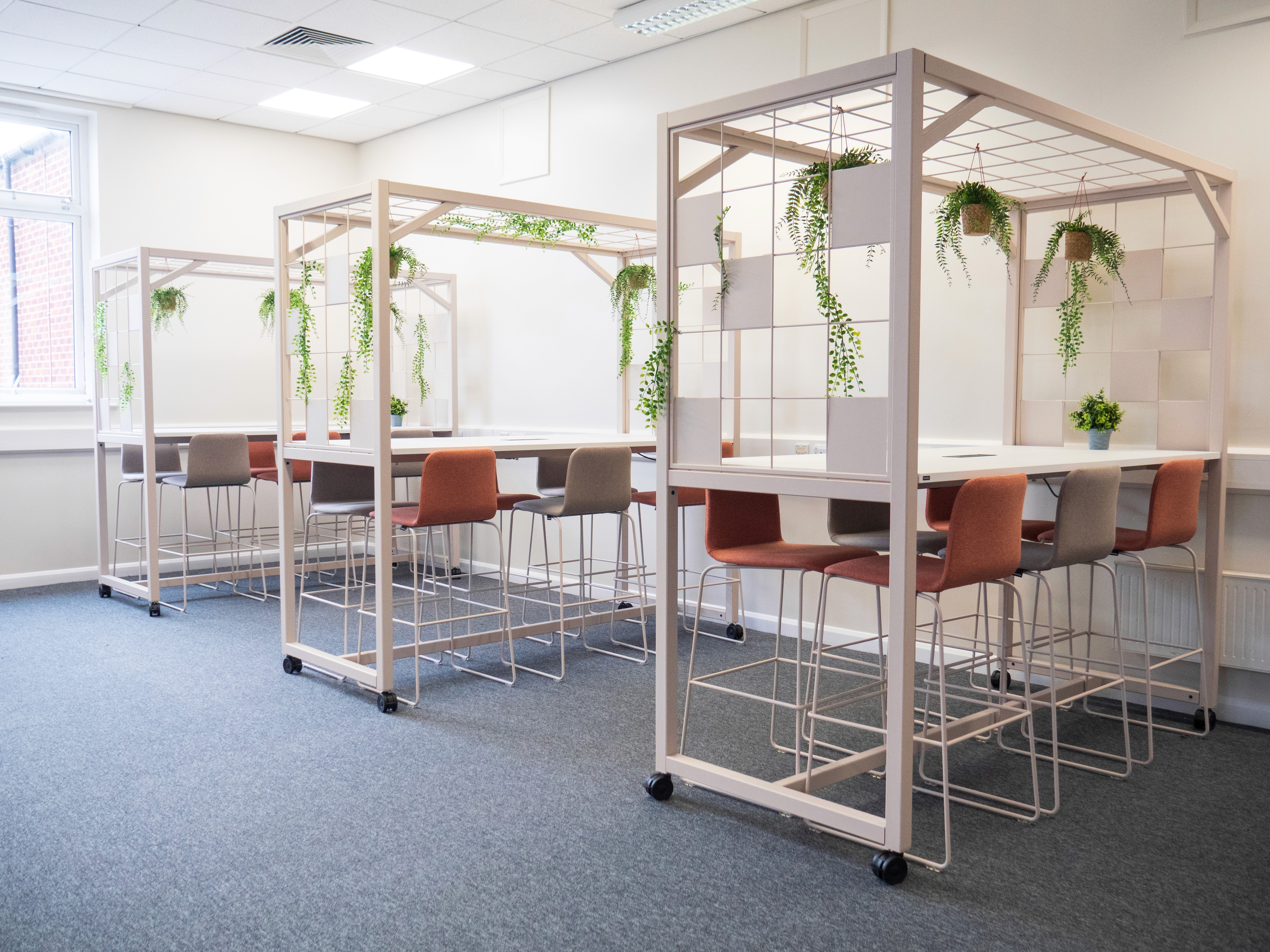
Commercial office setups — meeting rooms, breakout areas, and workspaces suited to North West businesses
Why Visit the Showroom
Seeing furniture at full scale is entirely different from looking at photographs or specifications. Our showroom helps you understand space utilisation, sight lines, colour combinations, and how different zones flow together. You can test chair heights, explore storage options, experience acoustics, and discuss specific challenges with our design team. School leadership teams, teaching staff, governors, and business managers are all welcome. Visiting early in your project planning means better decisions, confidence in your design direction, and fewer surprises when delivery arrives.
What Happens on a Visit
Most visits last 60–90 minutes and follow a simple rhythm:
Project brief — a short discussion about your space, constraints, and learning environment goals
Guided walkthrough — stopping at zones relevant to your school, with notes on pedagogy, accessibility, and sustainability
Materials and samples — finishes, fabrics, and product literature on hand for comparison
Practical alternatives — budget-sensitive and specification-specific options mapped to your brief
Capture and share — photograph key areas to take back to your wider team or governors
Matterport Virtual Tour
Cannot visit in person? Explore the showroom through our fully immersive Matterport 3D tour — navigate freely, zoom into specific furniture displays, and get a genuine sense of space and scale. Particularly useful for wider school teams, governors, and remote locations across the North West and beyond.
How to Book a Visit
Contact us to arrange a visit at a time that suits your team. We are open Monday to Friday, 08:30–17:30. Group visits of 8–10 are ideal; please allow a few weeks notice for larger groups. We also arrange specialist consultations for particular requirements — including SEND accessibility assessments and commercial space planning.
Book a showroom visit at a time that suits your team, or request a Matterport link if you are exploring remotely.
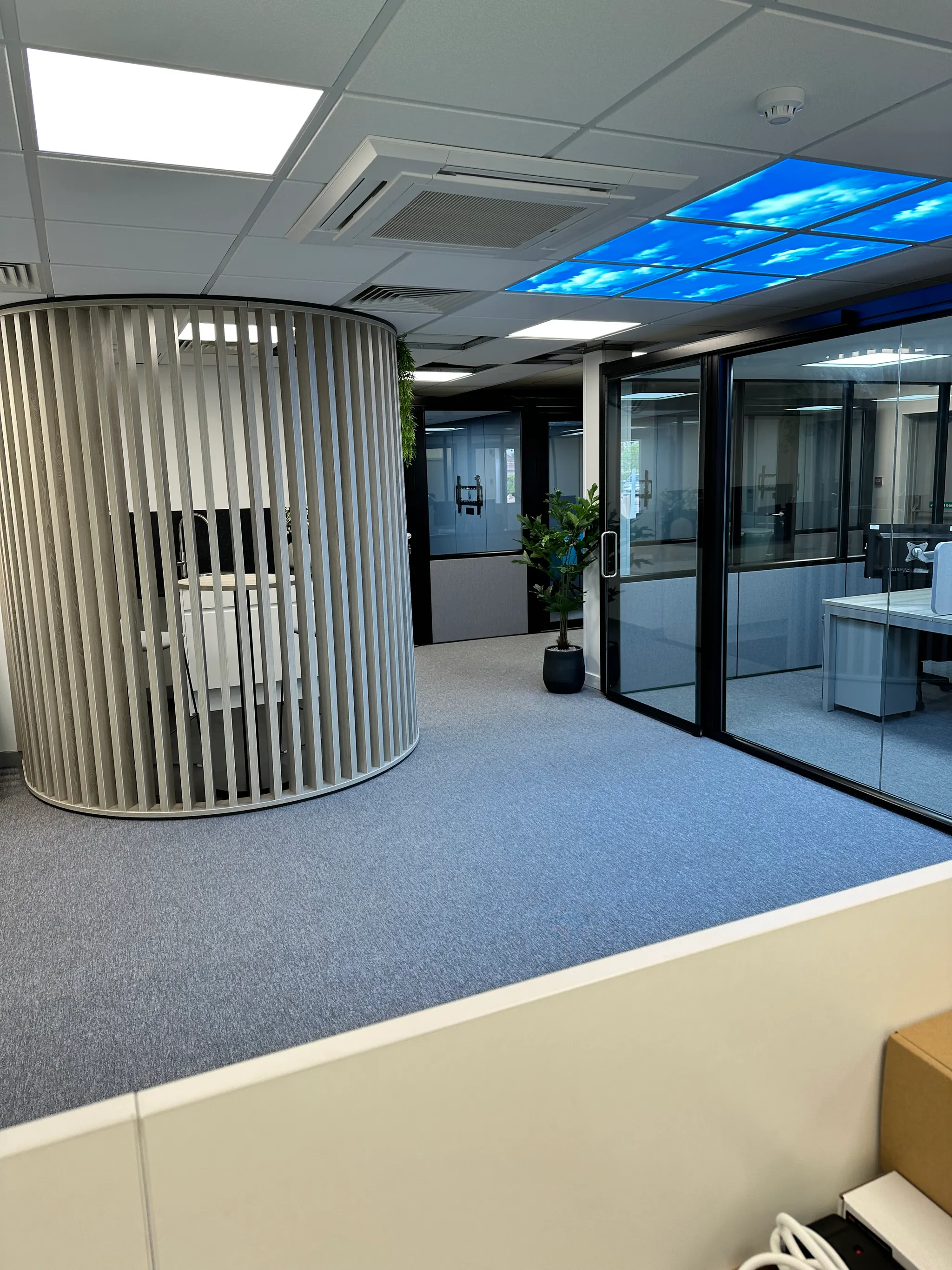
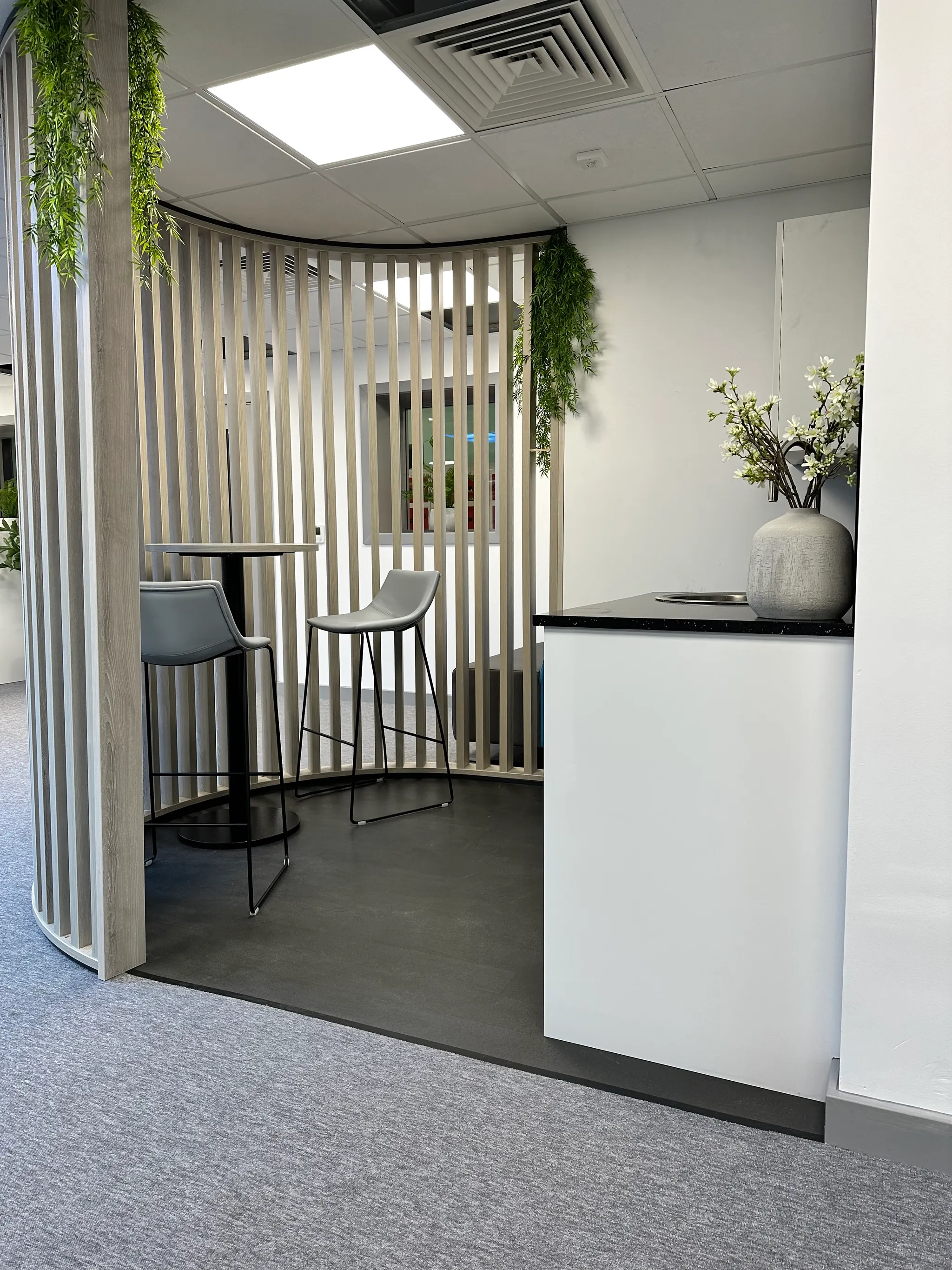
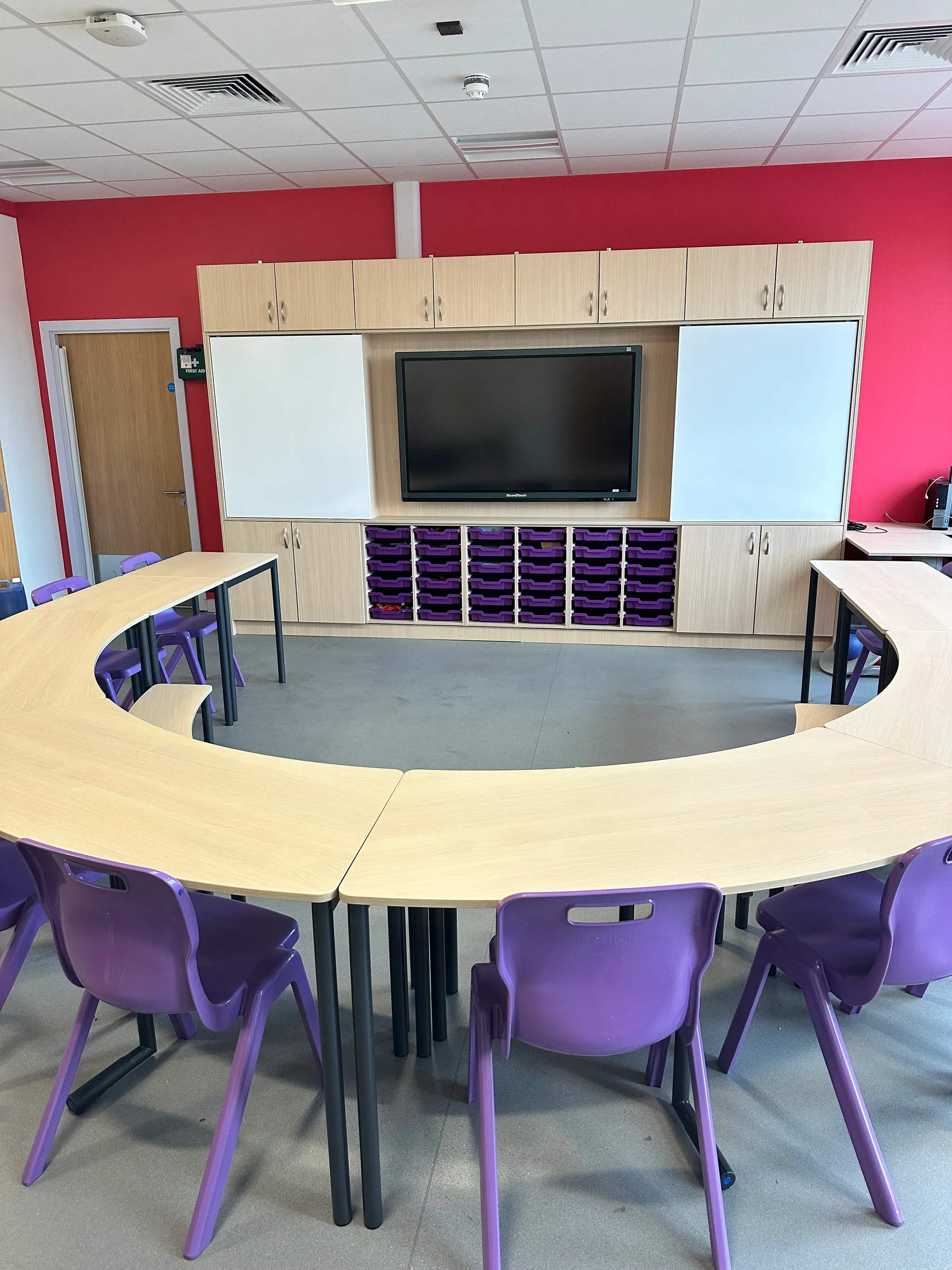
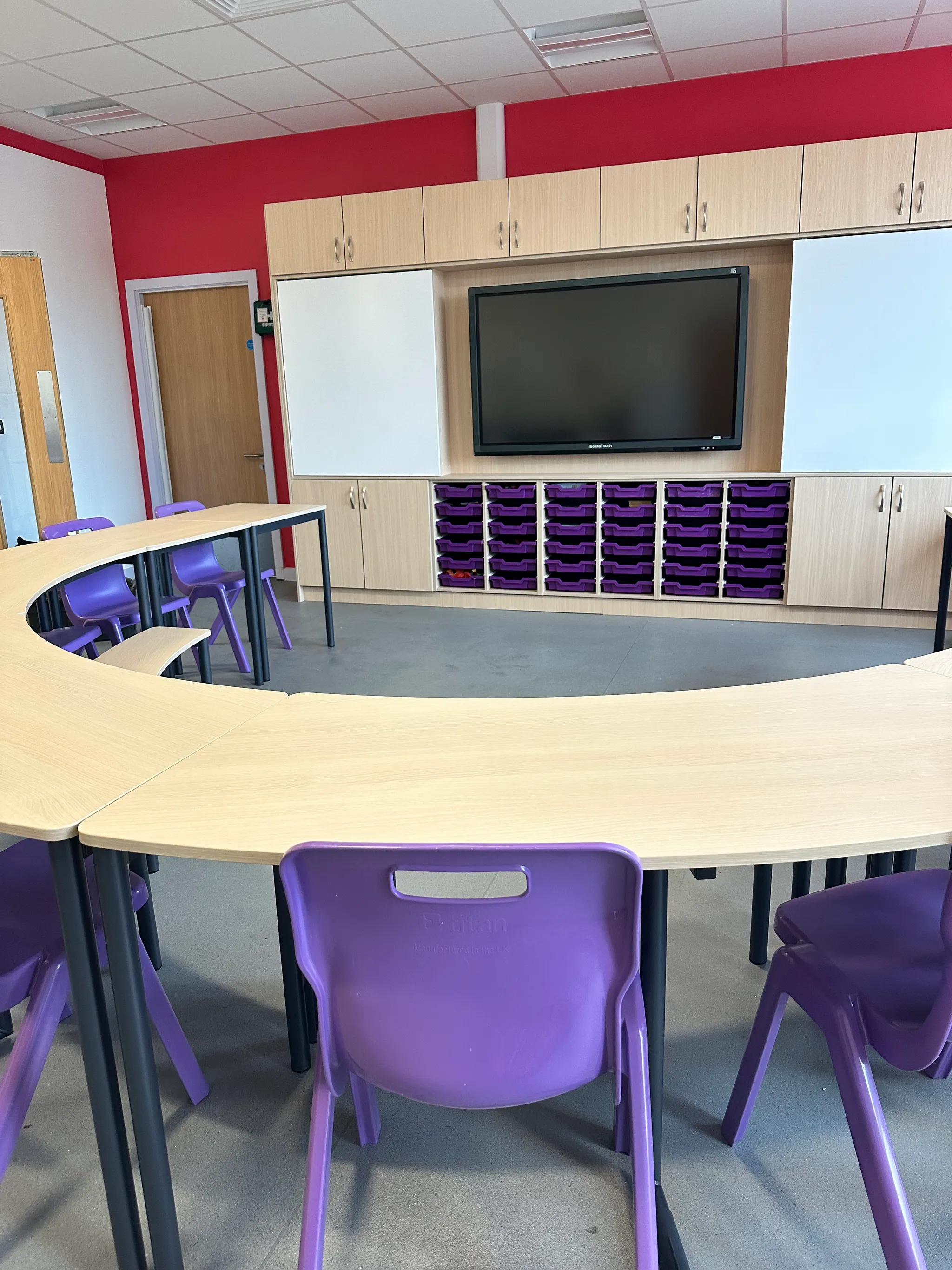
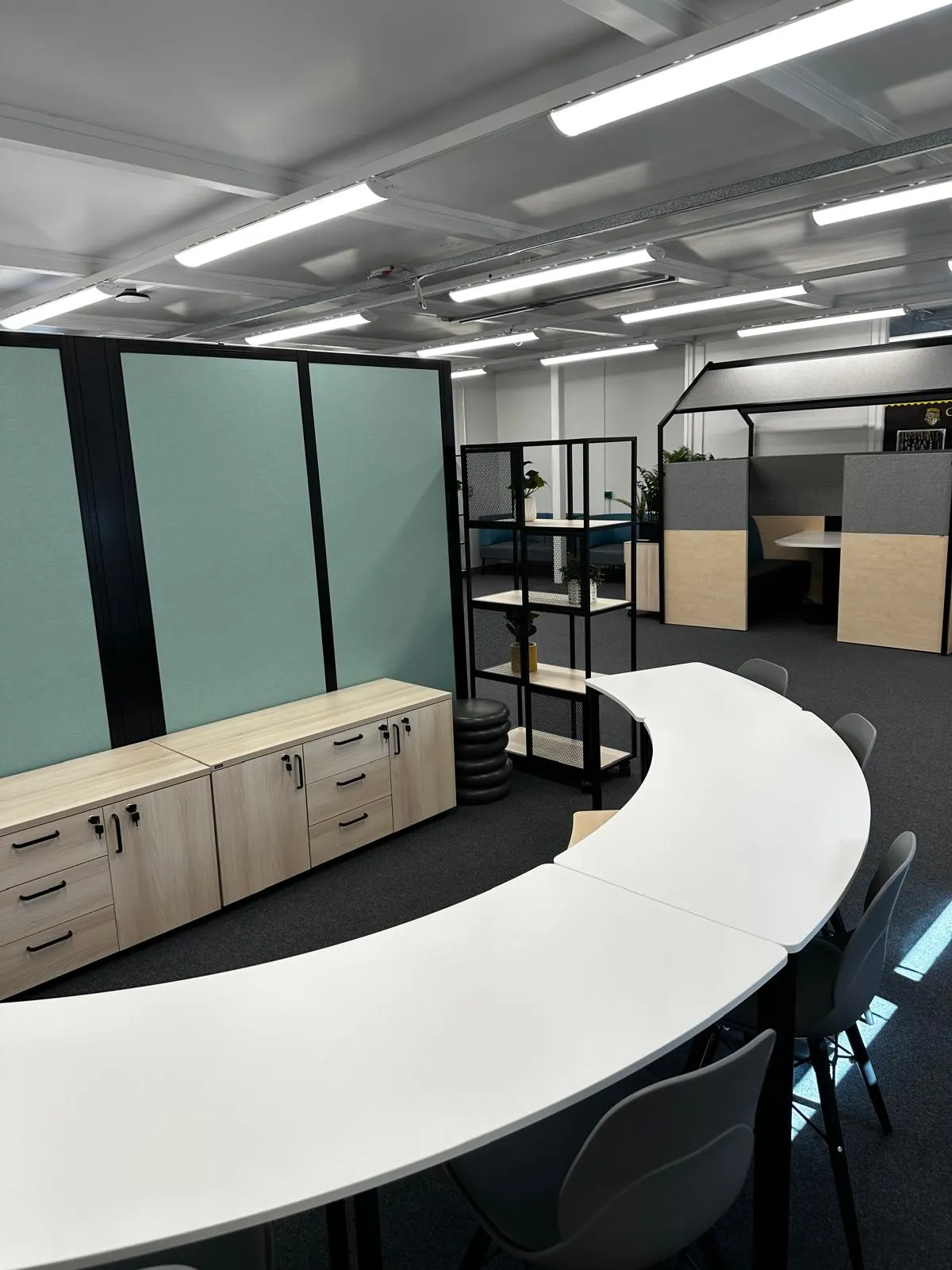
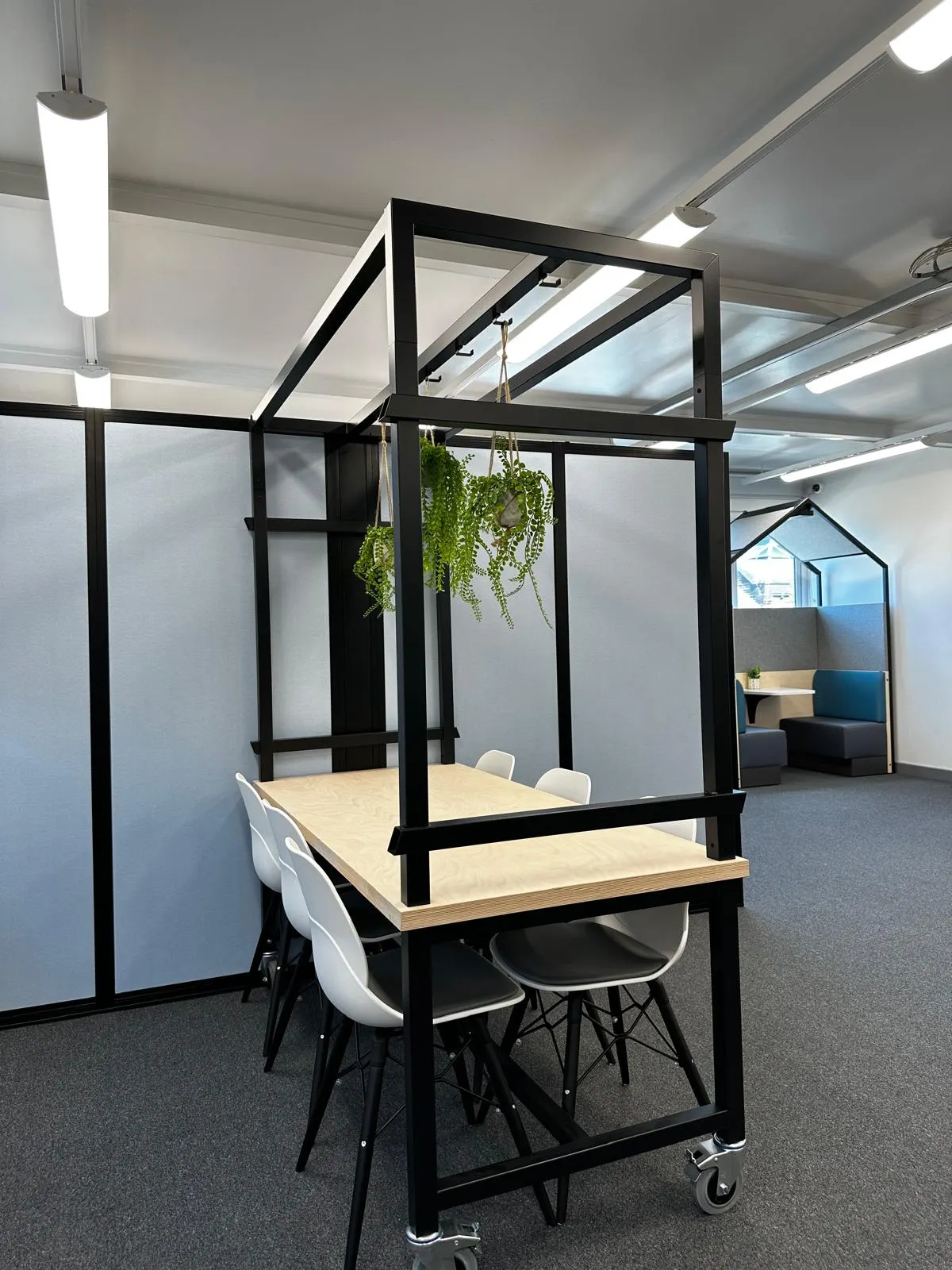
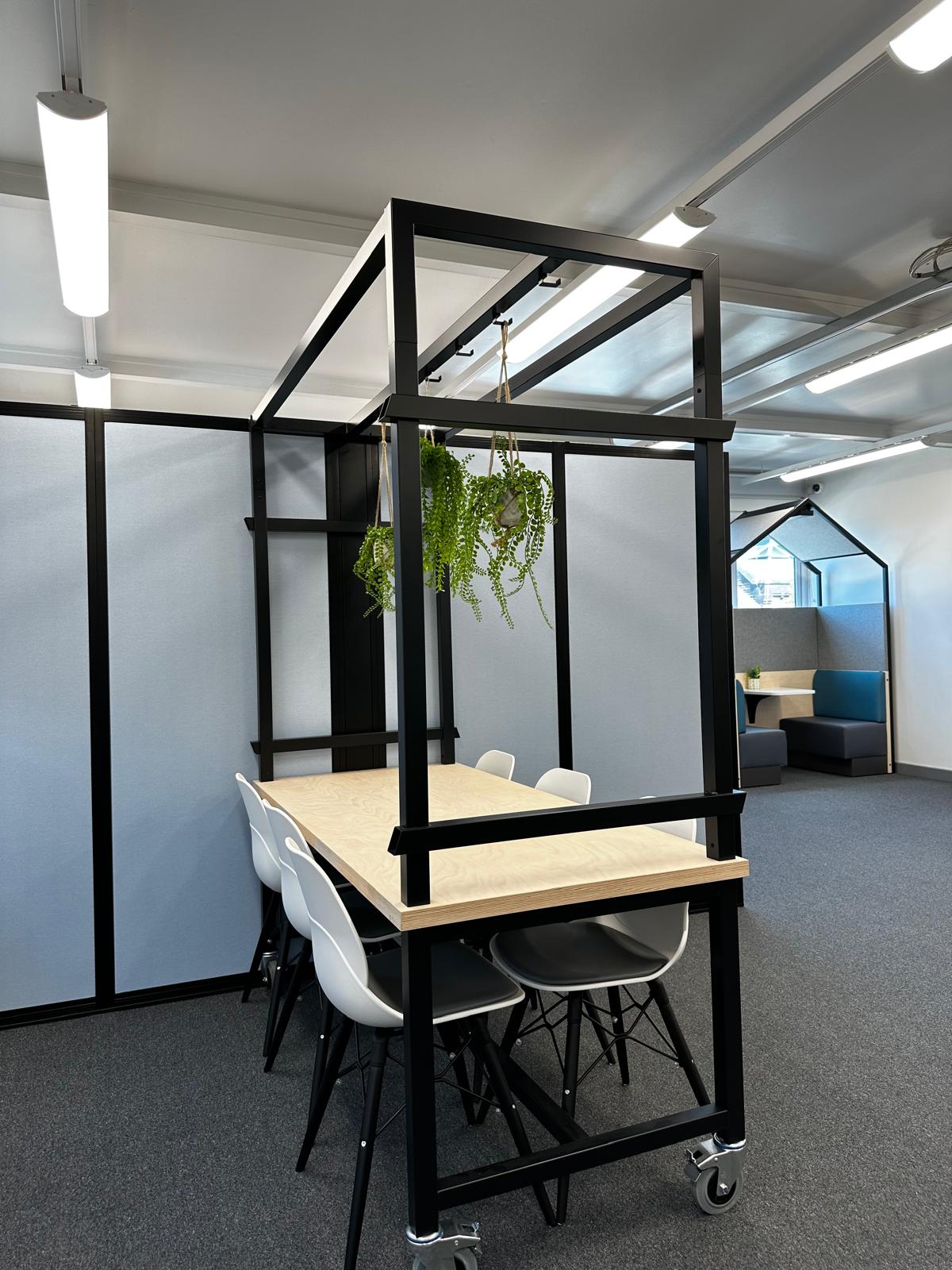
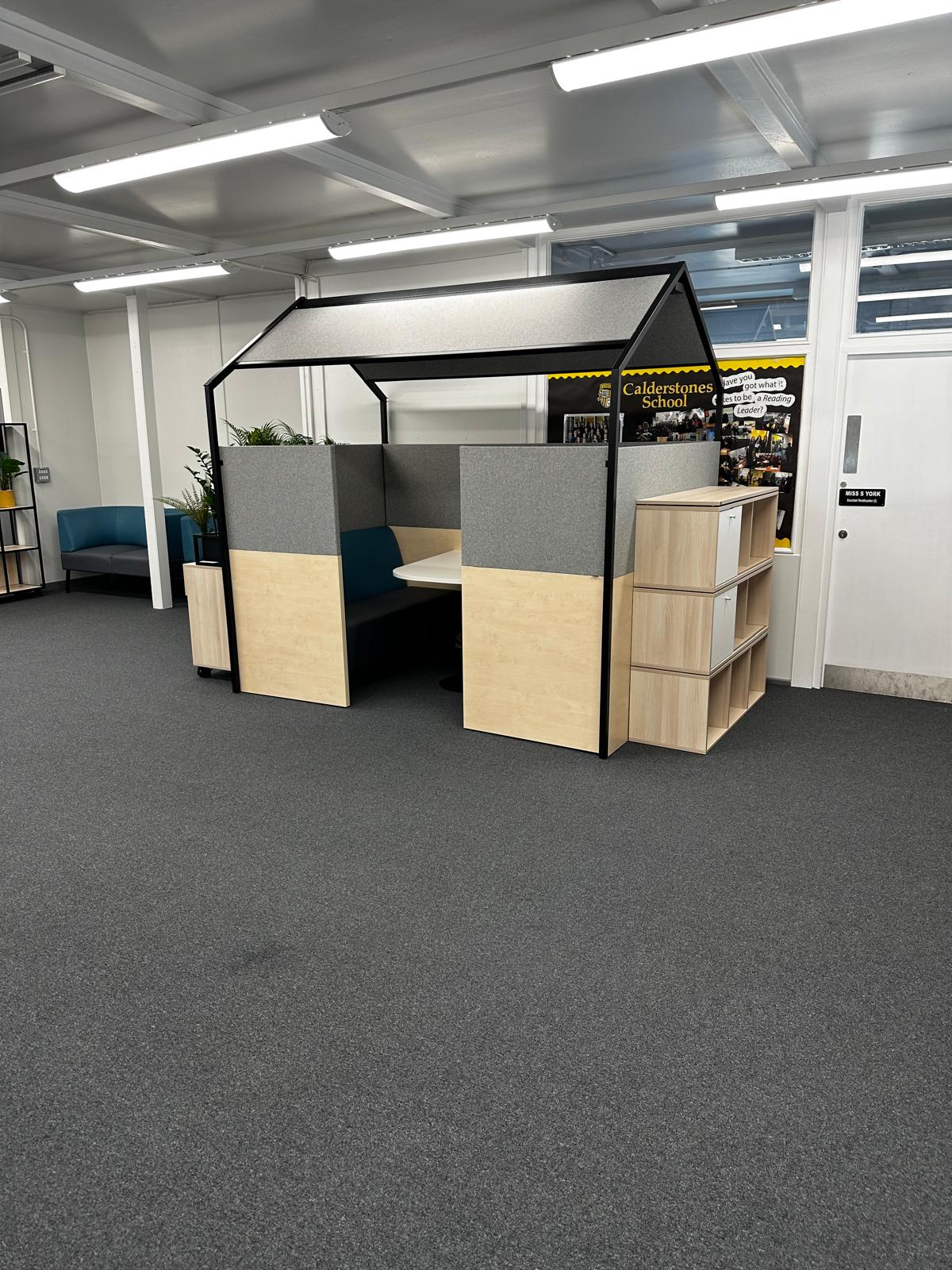
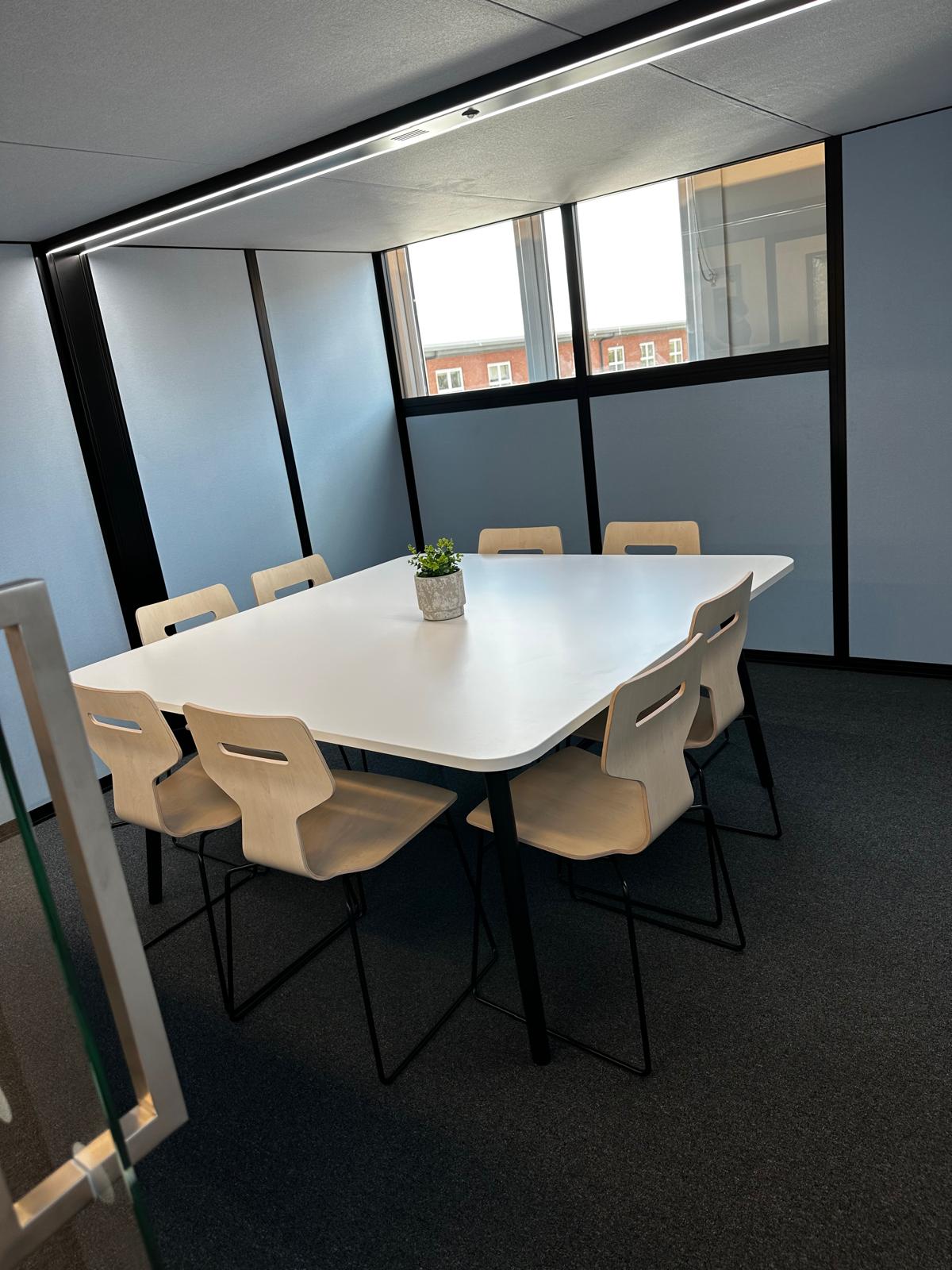
Our showroom brings together education and commercial environments in one immersive space. From classrooms and breakout areas to offices and collaboration zones, every setting demonstrates practical solutions, smart layouts, and sustainable materials.
Common questions about visiting our Wallasey showroom and booking a tour.
What are the showroom opening hours?
Our showroom is open Monday to Friday, 08:30–17:30. We are closed weekends and bank holidays. To arrange a visit outside these hours, please contact us directly to discuss bespoke appointment options for larger groups or special circumstances.
How do I book a showroom visit?
Contact us via phone (0151 245 4291), email (sales@werksolutions.co.uk), or use our online contact form. Please allow 2–3 weeks notice for your preferred visit date. We accommodate group visits of up to 8–10 people comfortably. For larger groups, contact us to discuss bespoke tour arrangements.
Is the Matterport virtual tour a good alternative to visiting in person?
The Matterport 3D virtual tour is an excellent way to explore the showroom remotely — you can navigate freely, zoom into furniture details, and get a genuine sense of space and scale. It is particularly useful for school teams who cannot travel to Wallasey, or as a pre-visit tool to familiarise yourself before an in-person appointment. However, an in-person visit allows you to physically test furniture, discuss project-specific solutions with our team, and photograph areas relevant to your school.
Can we bring our whole school leadership team (SLT) to the showroom?
Absolutely — in fact, we encourage it. School leadership teams, governors, business managers, and teaching staff all benefit from seeing furniture at scale and understanding design possibilities together. Our typical group size is 8–10 people. Larger groups (10–15+) can be arranged with advance notice; we will tailor the tour to suit your team's interests and time constraints. Multi-academy trust visits across several schools can also be coordinated.
How do I get to the showroom? Is there parking?
Our showroom is located at 162 Birkenhead Road, Wallasey, Merseyside, CH44 7JN — easily accessible from across the North West. Free on-site car parking is available. We are close to Wallasey town centre and the Mersey Tunnel for visitors from Liverpool and Chester. Public transport connections are available via local buses and the Merseyrail network. When you book your visit, we can provide detailed travel directions and parking information if needed.
Virtual Tour
Explore Our Showroom in 3D
Cannot visit in person? Take a virtual walk through our showroom from anywhere. Navigate the full space, zoom into furniture details, and get a real sense of scale and layout.
Finance
Finance Guidance
Flexible furniture finance options for schools and academies.
Flexible Furniture Finance for Schools and Academies
We help schools upgrade classrooms and learning spaces without the pressure of large upfront costs. Our flexible finance options make it easier to plan, budget and deliver high quality environments when you need them.
Plan with Confidence
Align furniture investment with academic and financial planning cycles. Spread the cost over an agreed term.
Upgrade Sooner
Deliver improvements now rather than waiting for full capital funding. Protect cash flow and manage budgets more effectively.
Clear & Transparent
Simple, straightforward arrangements suitable for schools and trusts. Access higher quality, ergonomic and sustainable solutions.
Want the Full Details?
If you would like a clearer understanding of how furniture finance works for schools, academies and trusts, we have created a simple, practical guide covering how leasing and lease purchase typically works, what IFRS 16 means in plain English, key points for School Business Managers and Trust Finance teams, and how to plan projects with confidence.
We are not a lender, credit broker, or provider of financial services. We do not offer, arrange, or advise on regulated finance agreements. Any finance options discussed are provided for general information purposes only. Where appropriate, schools will be introduced directly to authorised and regulated finance providers who can offer further guidance and support.
Authorised UK Dealer
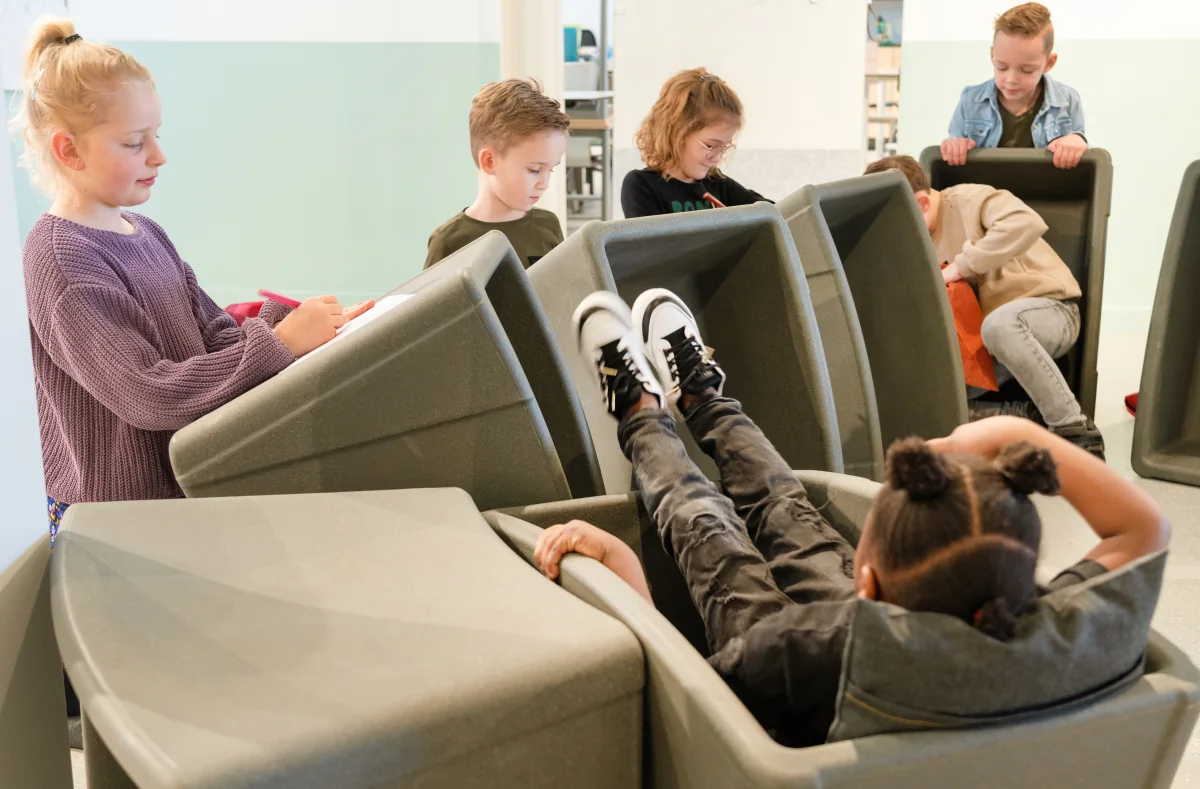
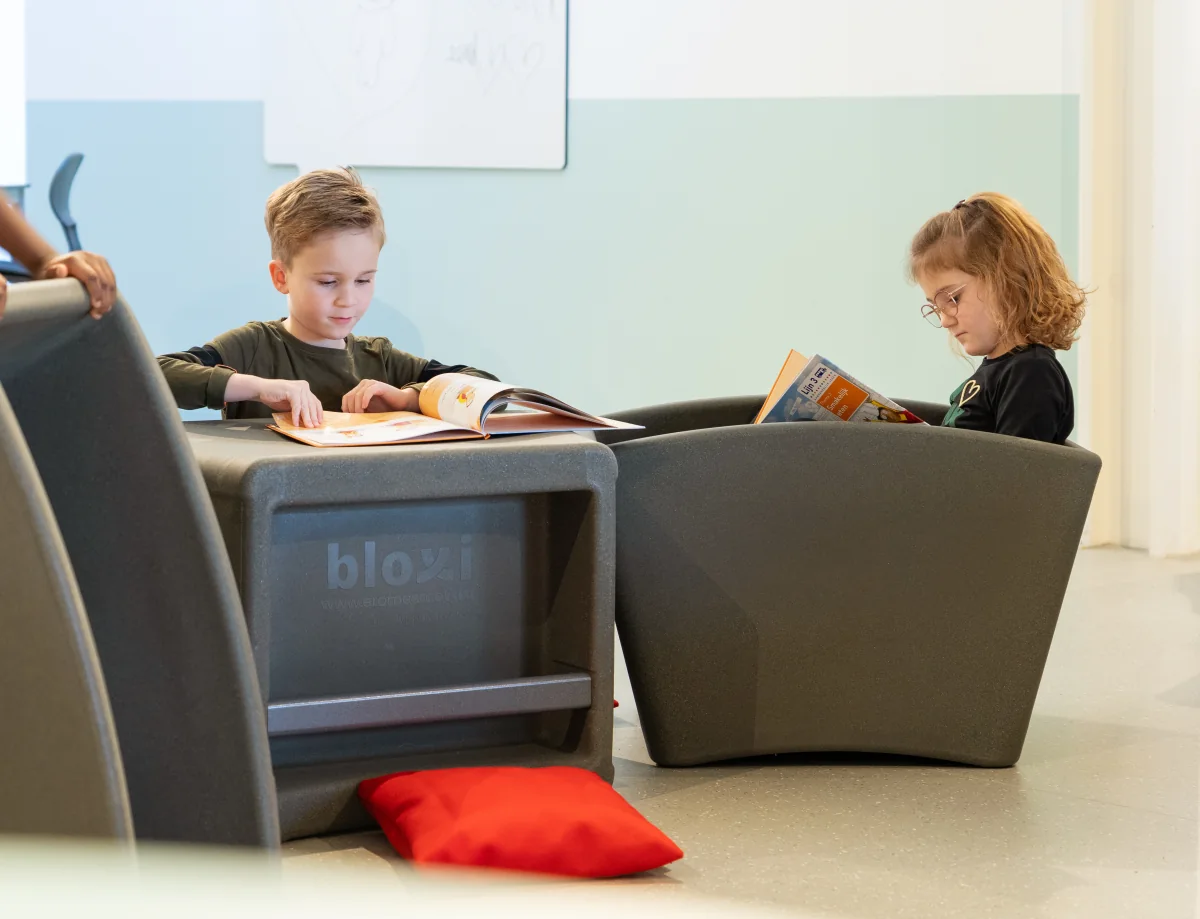
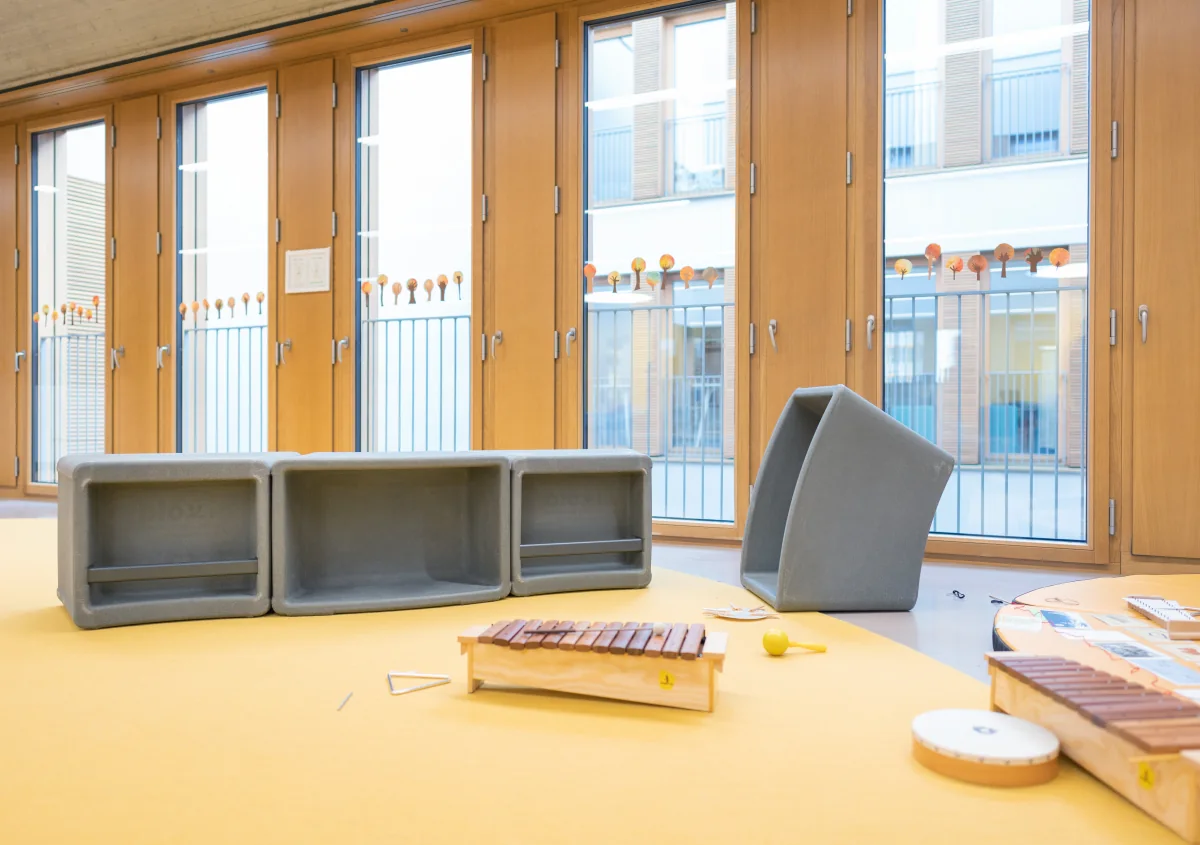
EromesMarko Educational Furniture UK — Carousel Tables, Gripz Flex, Bloxi
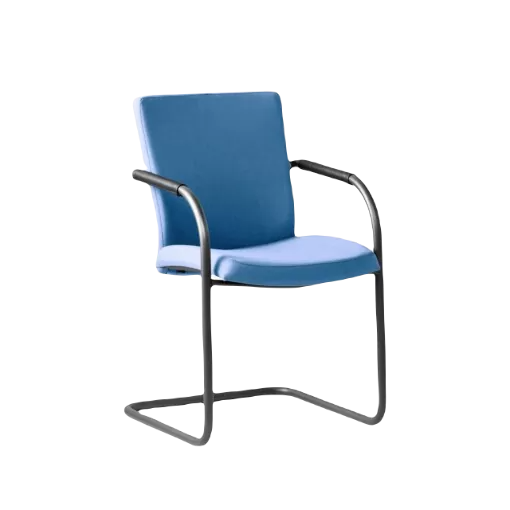
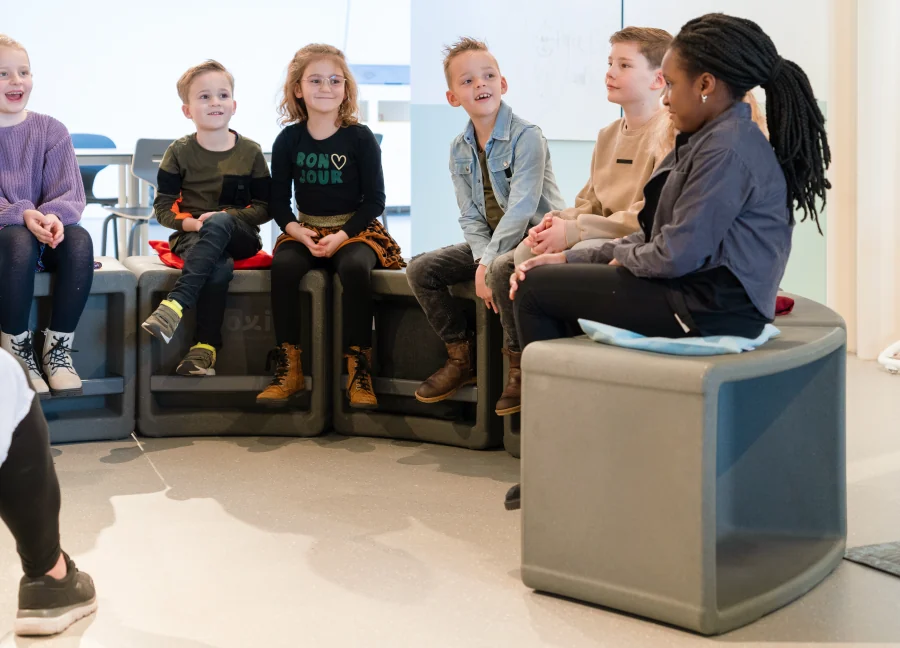
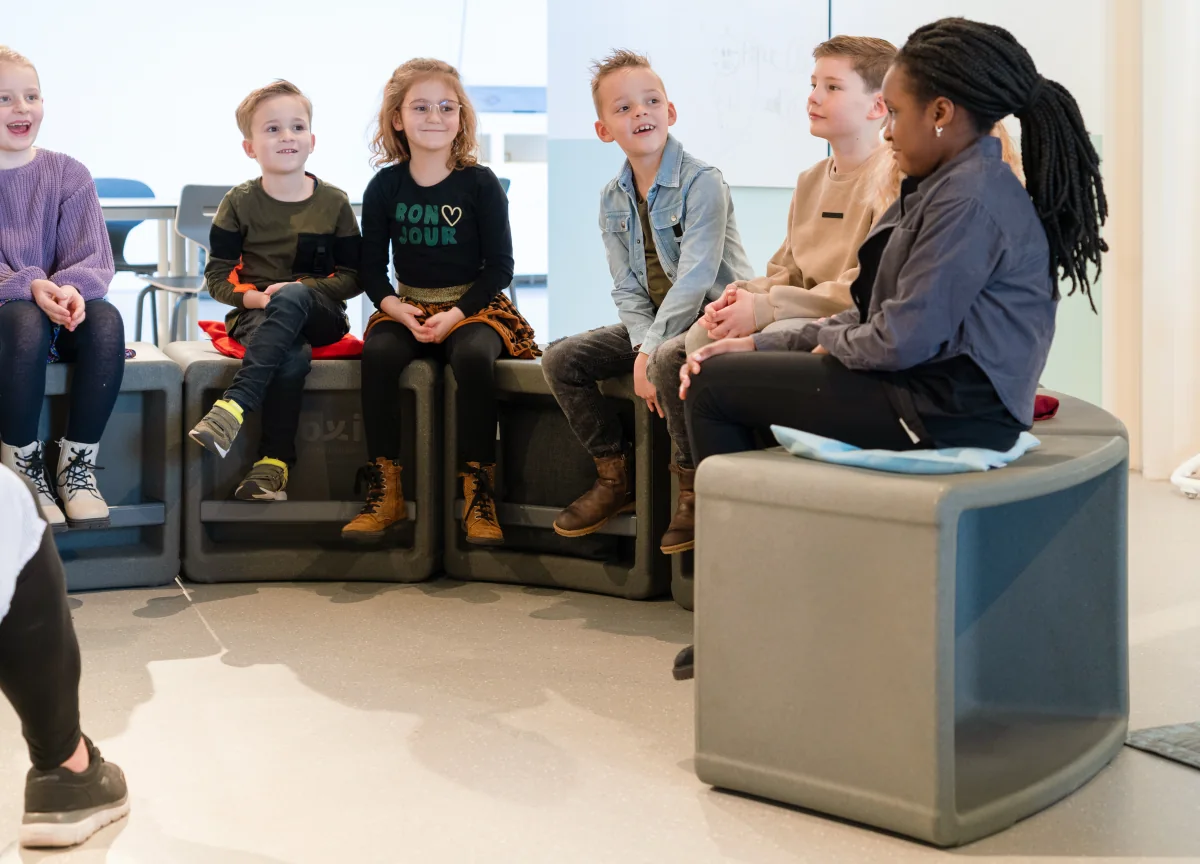
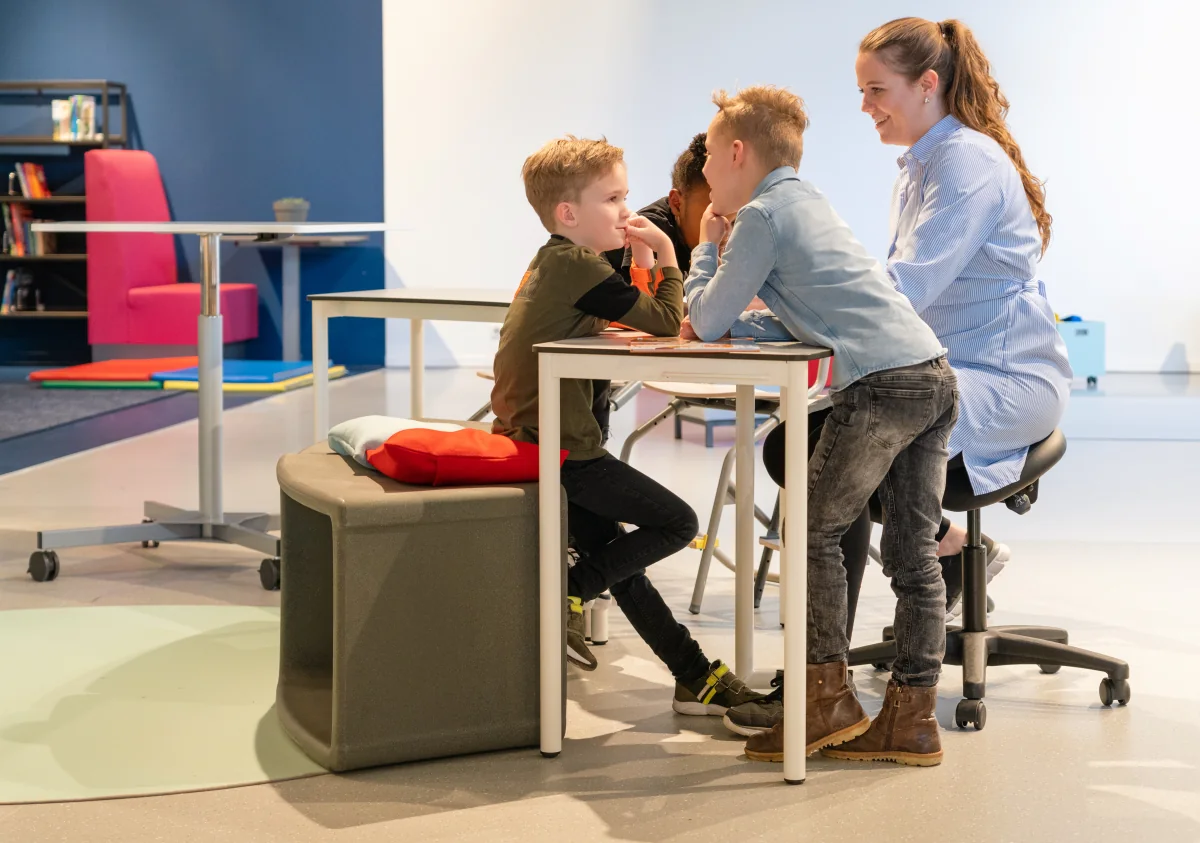
Werk Solutions is the exclusive authorised EromesMarko dealer for the North West of England. Carousel Table 8-segment modular systems, Gripz Flex EN1729 cantilever school chairs (sizes 4 & 6, stack 6 high), and Bloxi EN71-3 recycled modular seating with Siza cushions — supplied, delivered and installed UK-wide from our Wallasey showroom.
About EromesMarko
100+ Years of Educational Furniture Excellence
EromesMarko is one of Europe's most respected educational furniture manufacturers, with roots stretching back to 1908 in Wijchen, the Netherlands. Born from the merger of Eromes and Marko in 2014, they combine over a century of craftsmanship with forward-thinking design to create learning environments where every student can thrive.
Every product in their range is designed, engineered, and manufactured entirely in-house across three Dutch factories. From metalworking and powder coating to upholstery and final assembly, nothing is outsourced. The result is furniture built to last, designed for learning, and rooted in sustainability.
As the exclusive authorised dealer for the North West of England, Werk Solutions gives you direct access to the complete EromesMarko range, backed by our local consultation, space planning, and professional installation service.
Why EromesMarko
Built Different. Built to Last.
Six reasons schools across Europe trust EromesMarko to furnish their learning environments.
100+ Years Heritage
Founded in 1908, EromesMarko brings over a century of educational furniture expertise to every product they make.
Made in Holland
All products manufactured in-house across three Dutch factories. No outsourcing, no compromises on quality or delivery.
Circular by Design
Modular, recyclable furniture built from bio-based and recycled materials. Sustainability is not a trend for them, it is a foundation.
Full Education Spectrum
Purpose-built solutions for primary, secondary, vocational, and higher education plus libraries. Every learning stage, covered.
Design Partnership
More than a furniture supplier. EromesMarko works as a collaborative design partner, creating bespoke solutions for each space.
Certified Quality
Fully tested and compliant, with complete technical documentation, colour charts, and certificates available for every product.
Certifications & Specifications
UK School Compliance at a Glance
Every EromesMarko range supplied by Werk Solutions ships with the documentation UK schools, academies and local authorities ask for at procurement.
Carousel Table
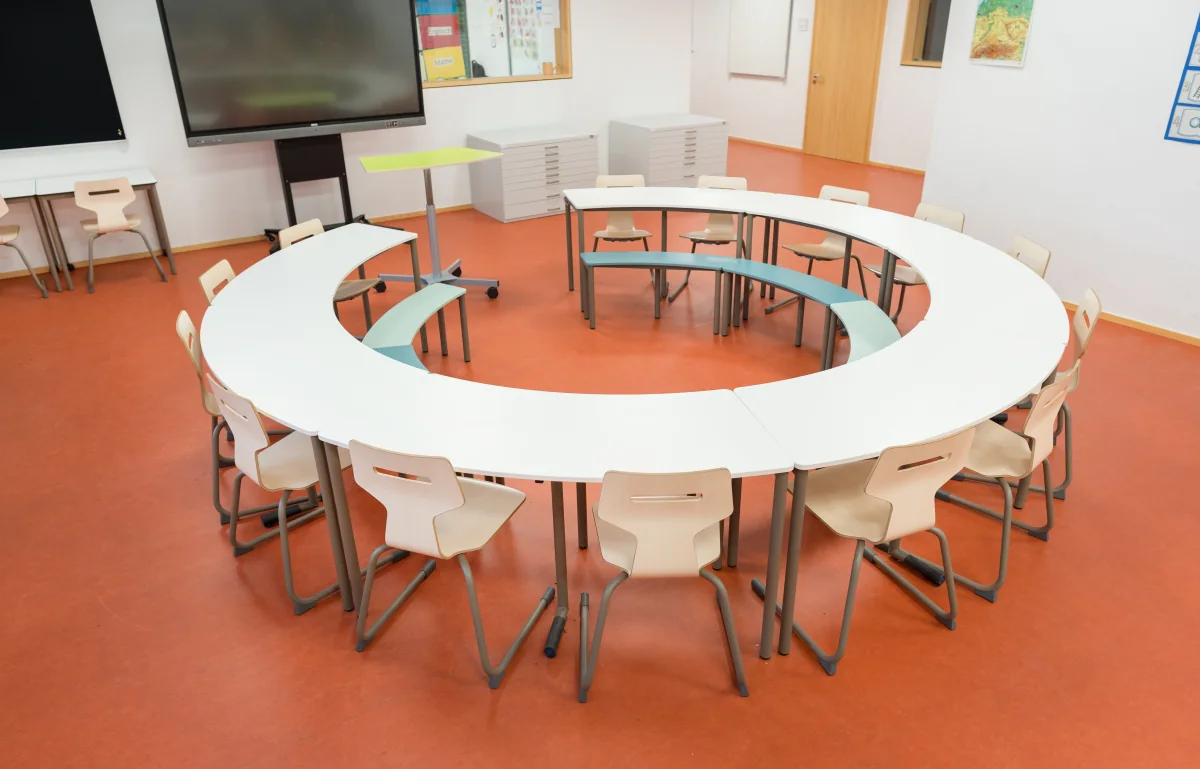
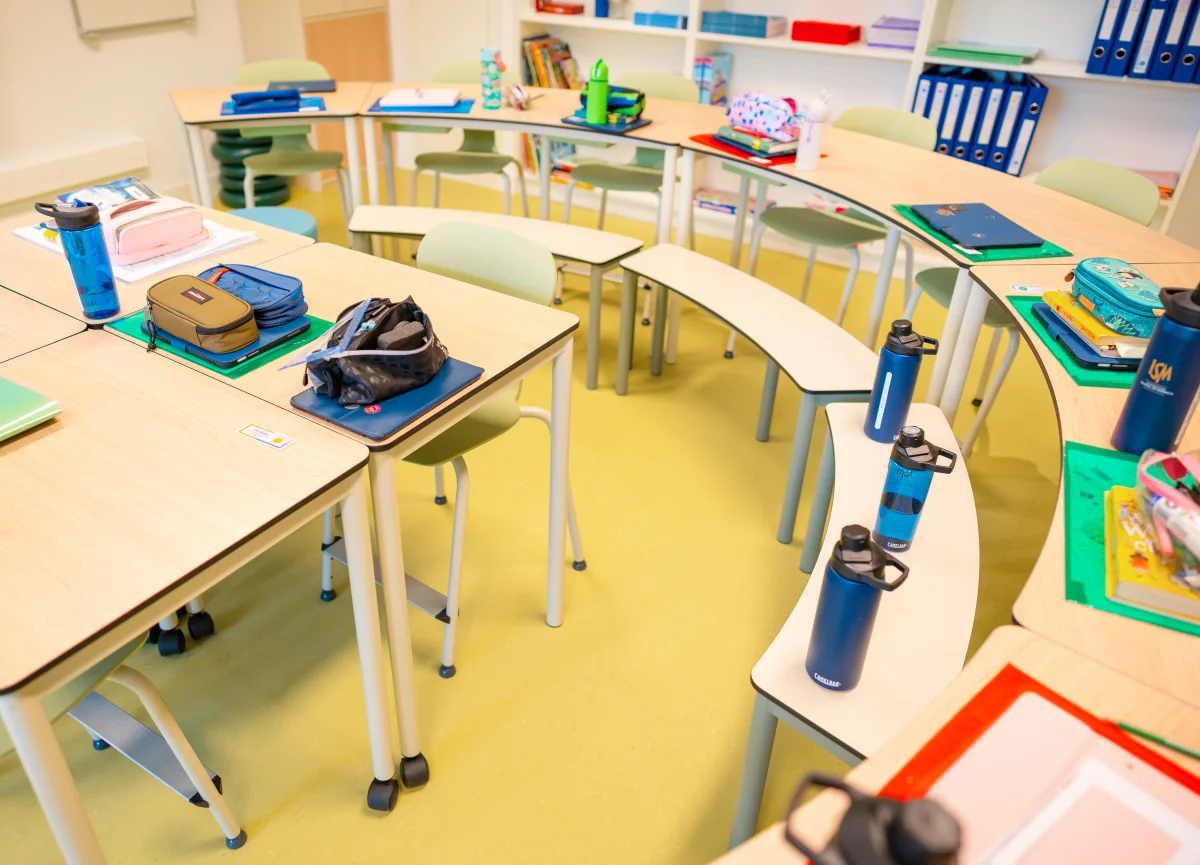
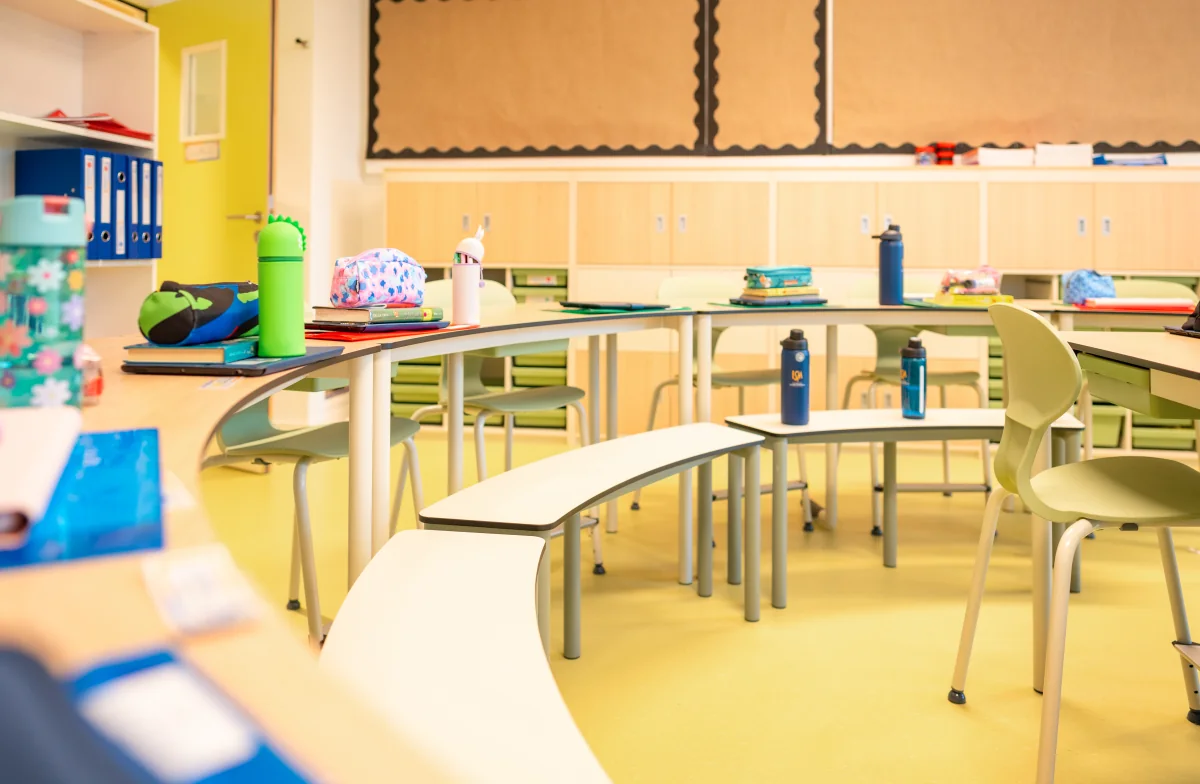
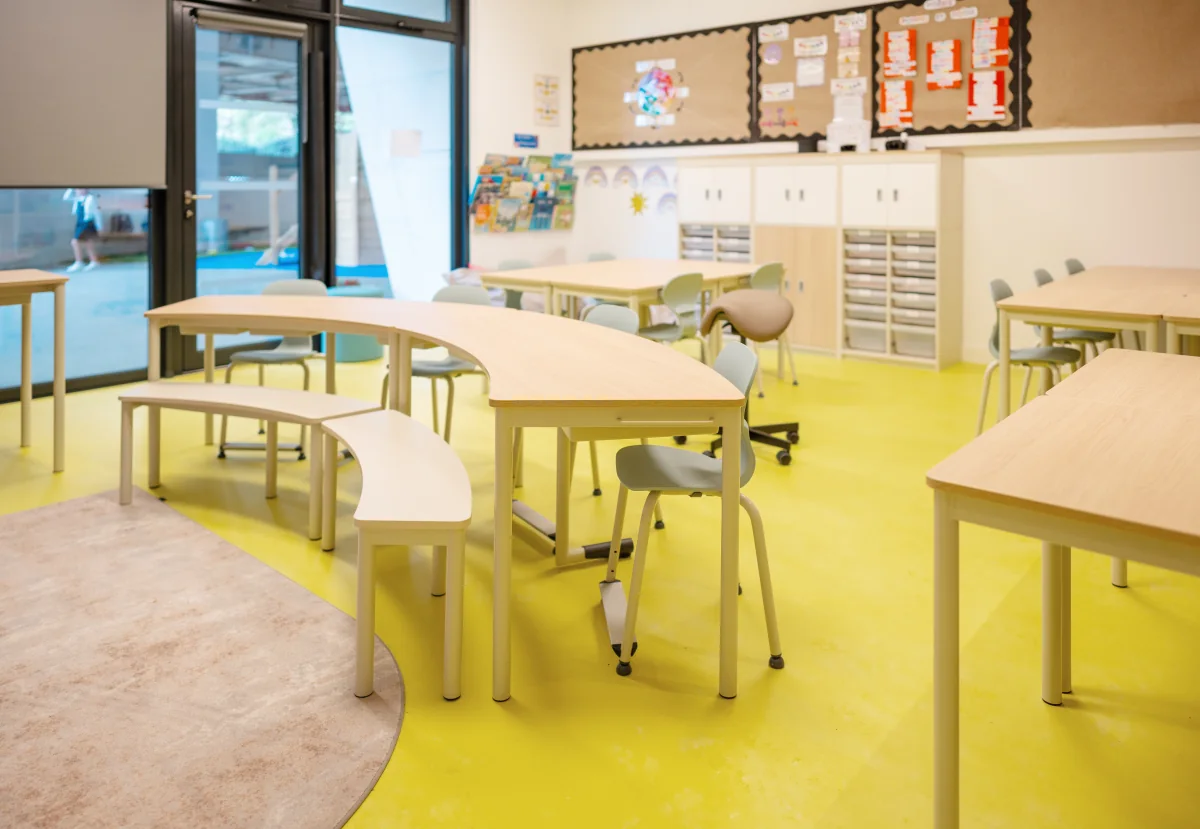
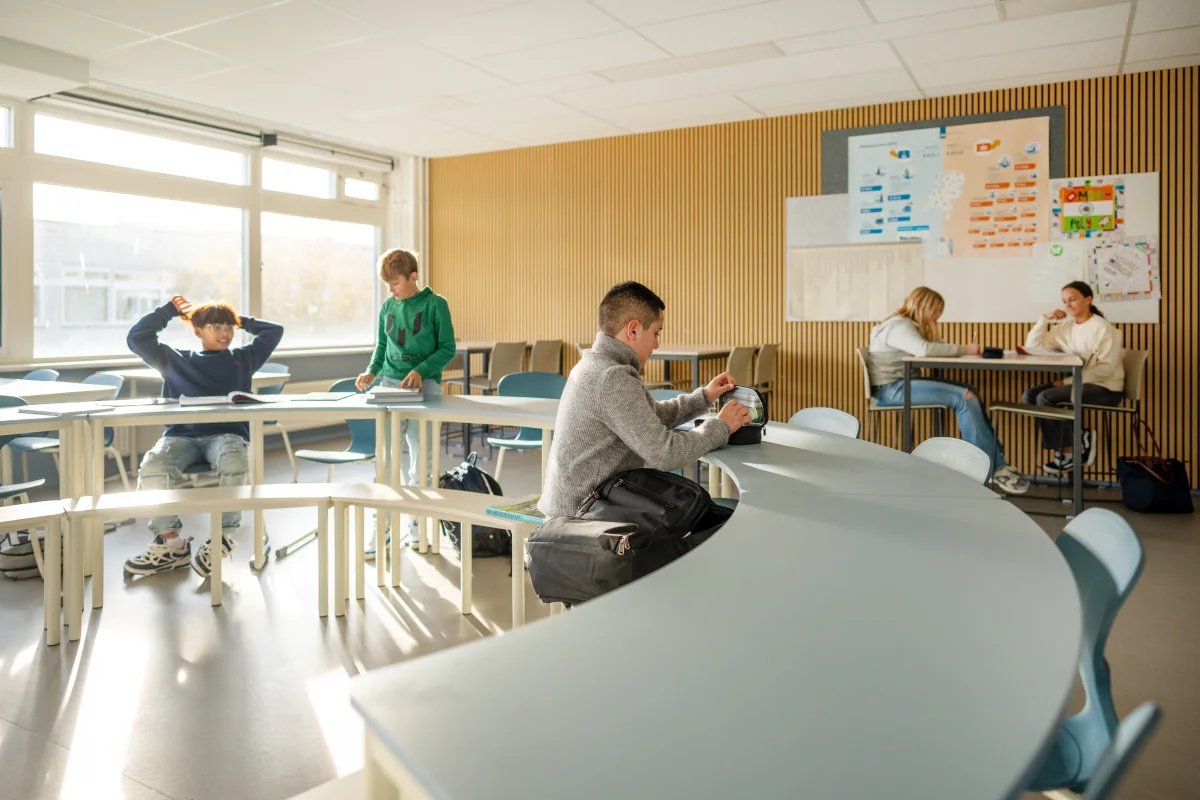
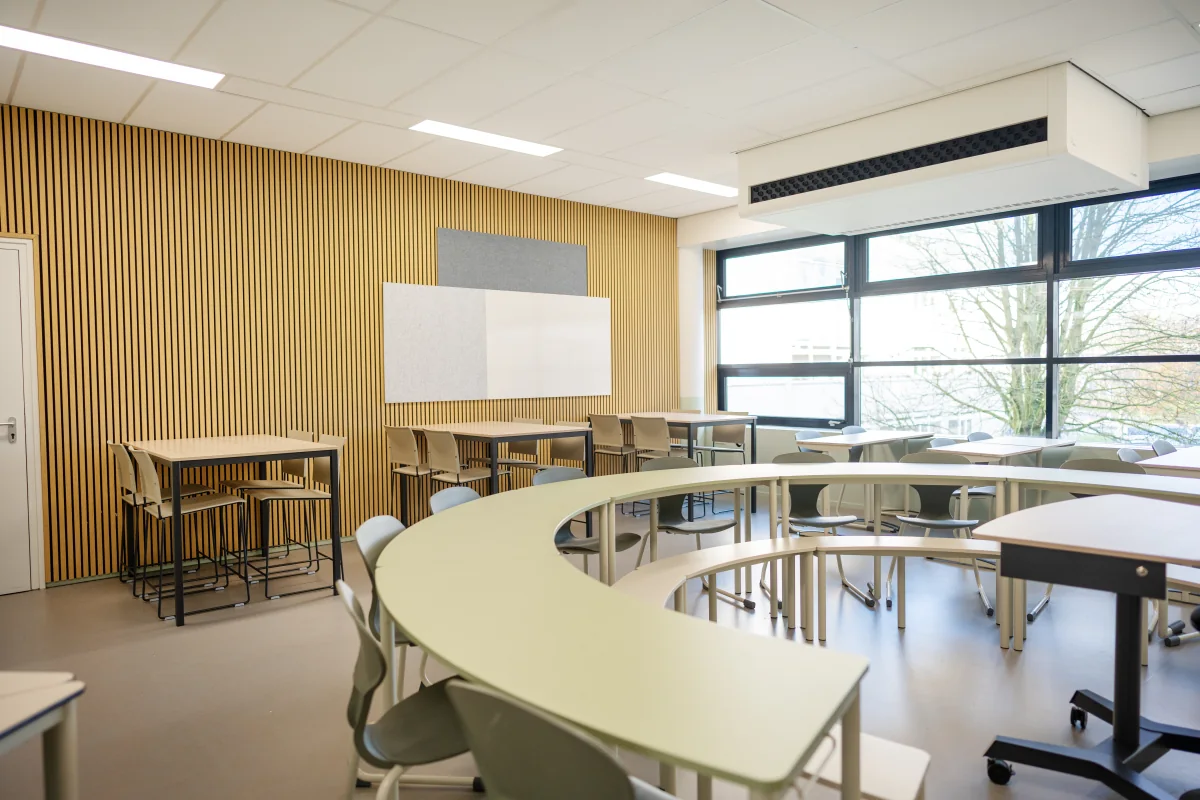
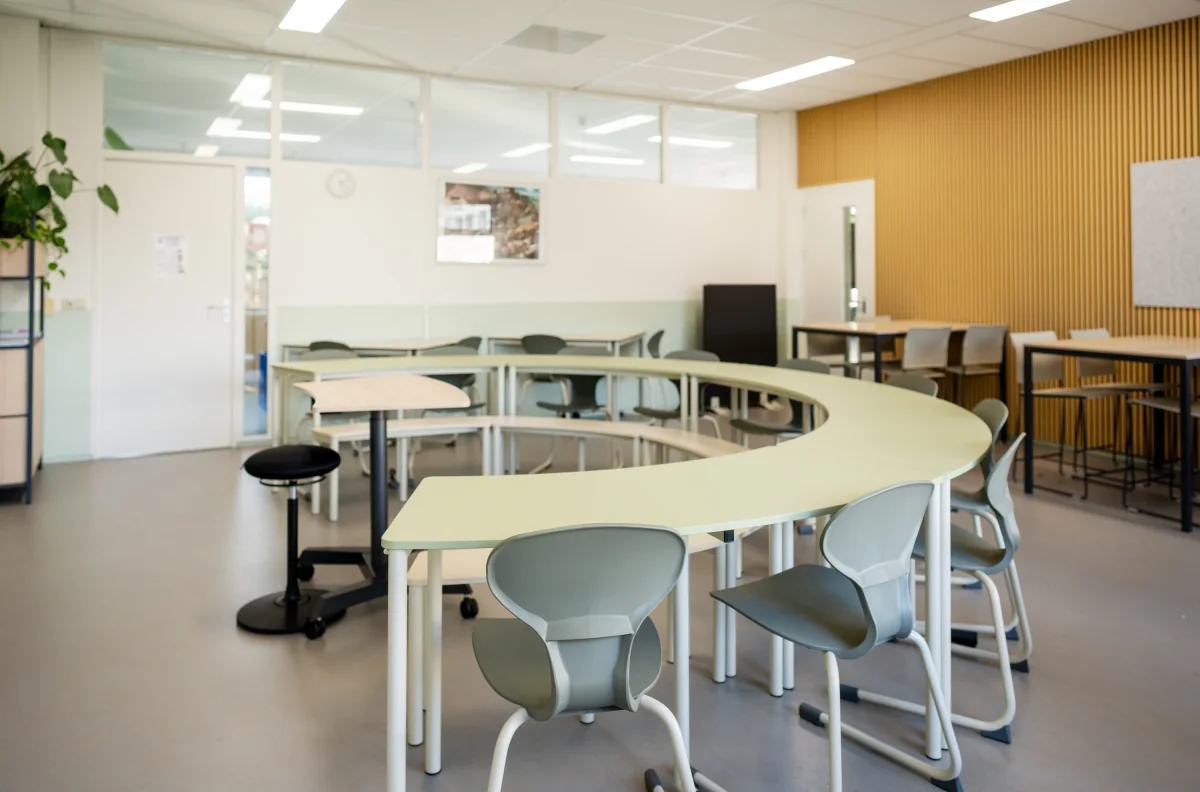
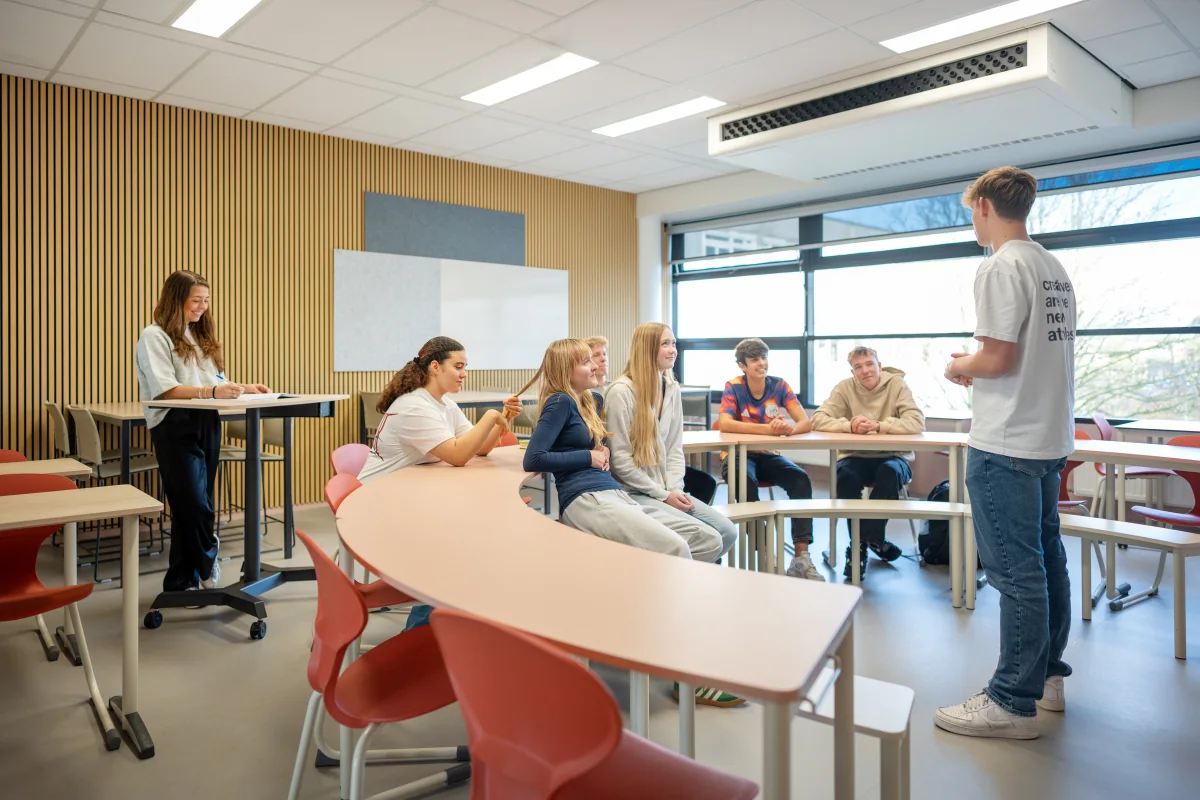
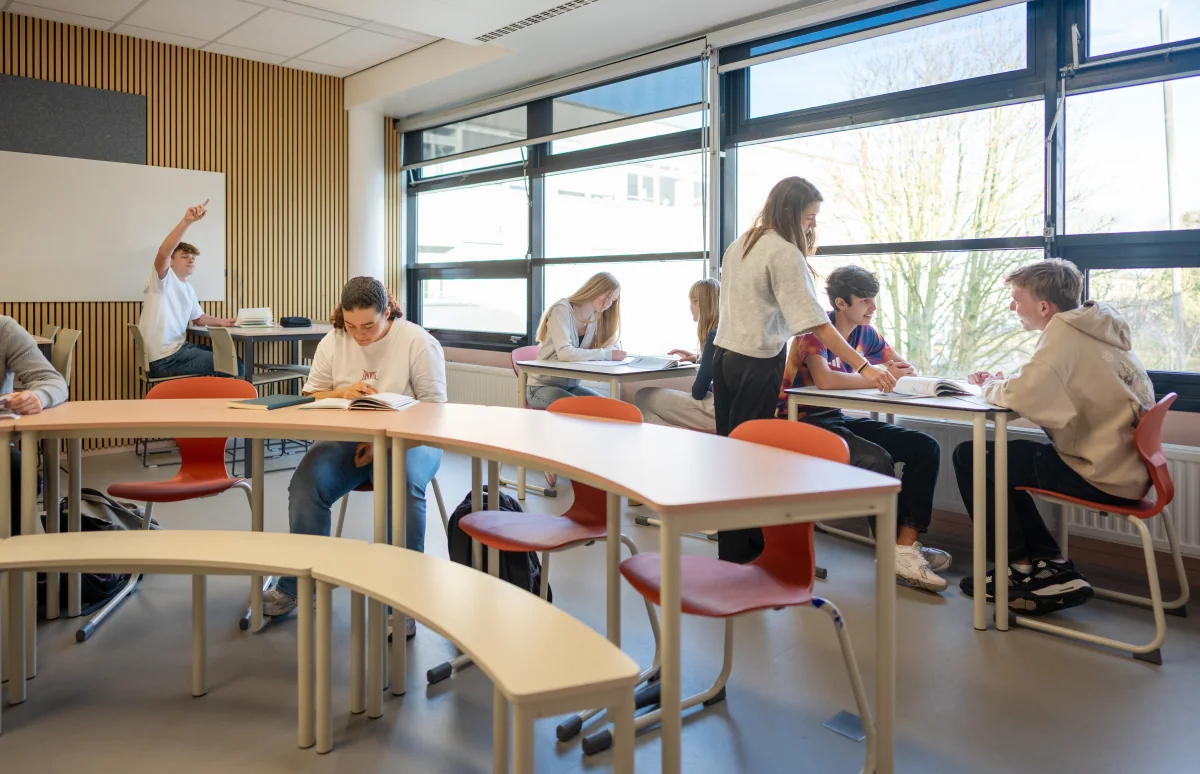
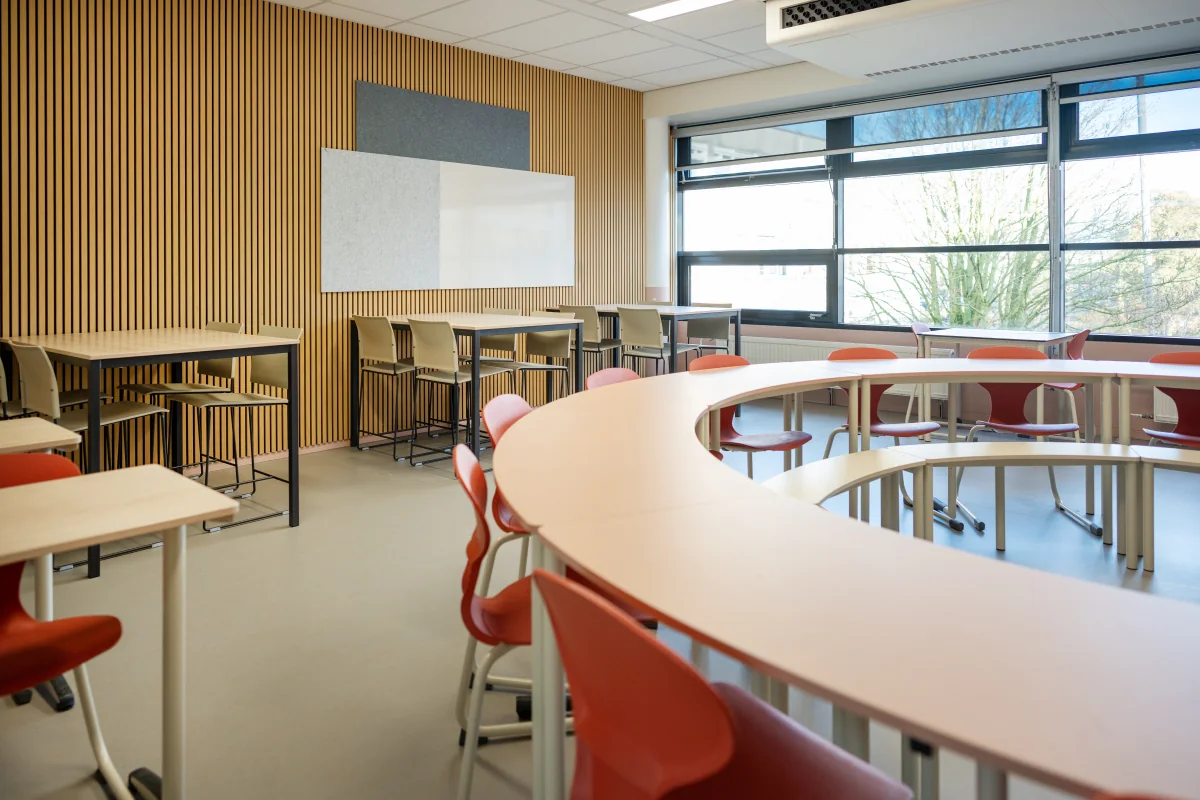
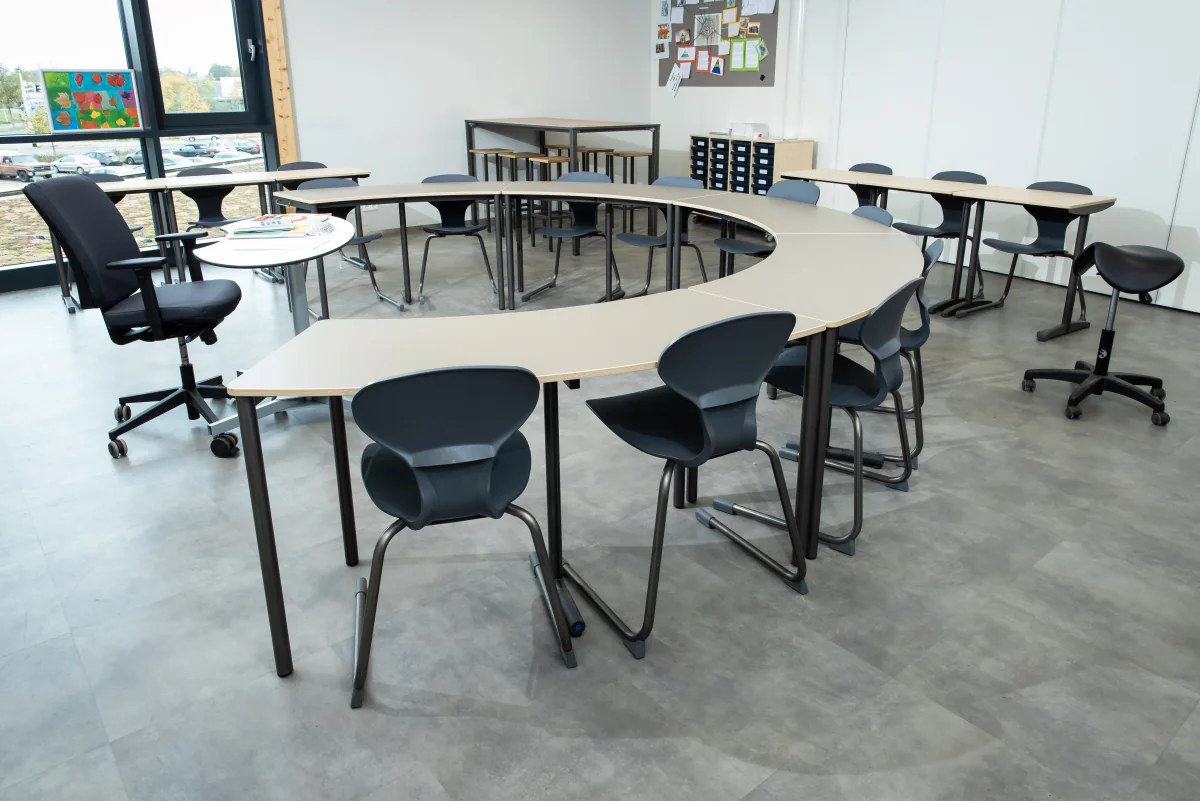
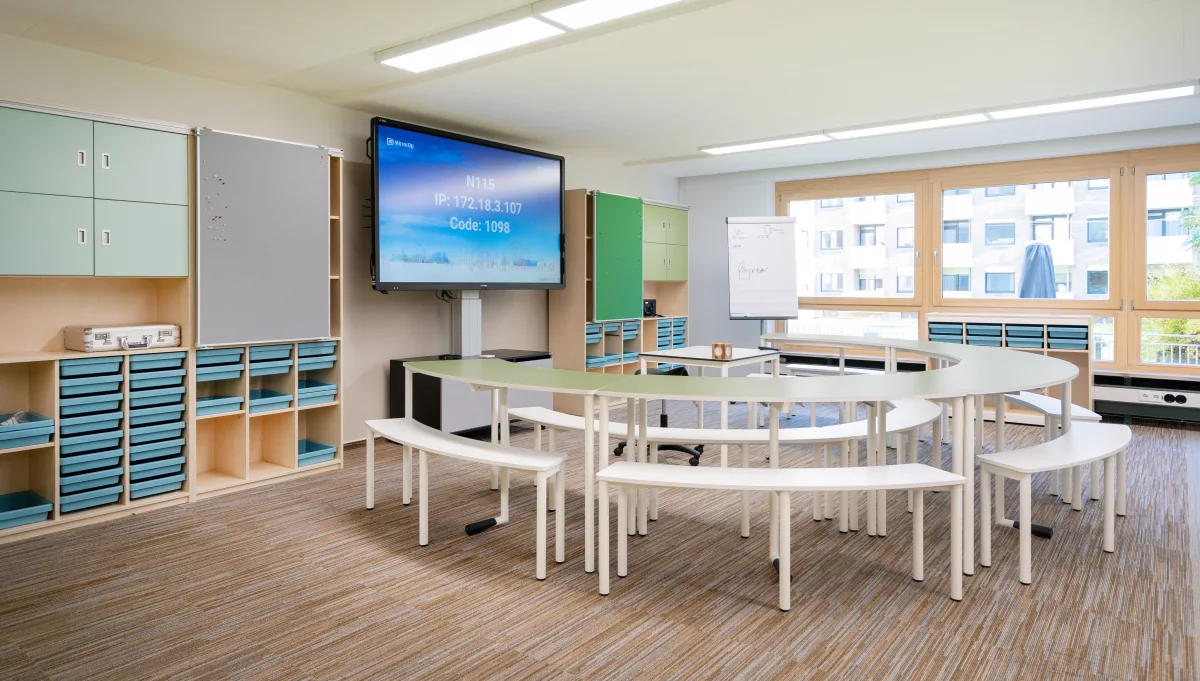
Modular 8-segment carousel system. Segments combine into circles, half-moons, amphitheatres or waves. Bio-based and recycled materials throughout.
Gripz Flex (EN1729)
Cantilever school chair certified to EN1729 (parts 1 & 2) for school furniture safety and ergonomics. Available in sizes 4 & 6, stacks 6 high for storage.
Bloxi (EN71-3)
Modular soft seating with Siza cushions in 100% recycled polypropylene. EN71-3 certified for safety of toys — migration of certain elements — making it suitable for nurseries, primary and SEN settings.
Full technical datasheets, fire compliance documentation and colour charts are available on request from our Wallasey showroom. For BB93 reverberation compliance in classrooms specifying these ranges, see our acoustic solutions service.
Featured Products
Flagship Products Available Through Werk Solutions
These are some of EromesMarko's most popular products across UK schools. Every item is available to order, with full consultation and installation from our team.
From flexible classroom tables to specialist lecture hall seating, the EromesMarko range covers every environment in modern education.
Tables
Student tables, flexible configurations, height-adjustable desks, and collaborative island tables designed for active learning.
Chairs and Seating
Ergonomic student chairs, stackable seating, lounge chairs, and flexible options for every age group and learning style.
Storage
Modular cupboards, thematic storage, locker solutions, and flexible shelving systems that keep spaces organised and clutter-free.
Lounge and Soft Seating
Comfortable breakout furniture, ottomans, benches, and informal seating for libraries, common rooms, and collaborative zones.
Lecture and College
Purpose-built lecture hall seating, tiered classroom solutions, and flexible auditorium furniture for higher education settings.
Circular and Second Life
Refurbished and revitalised furniture through the Fair Furnished programme. Extend product life, reduce waste, and lower costs.
Sustainability
Circular Furniture for a Sustainable Future
EromesMarko's four-pillar circular approach aligns with the sustainability goals of schools across the UK. Every product is designed with its full lifecycle in mind.
01
Circular Furnishing
Start with what you have. EromesMarko assesses existing furniture and creates smart solutions that minimise new purchasing through relocation and reconfiguration.
02
Life Extension
Extend the technical lifespan of furniture through refurbishment, maintenance programmes, and component replacement. Postpone new purchases and reduce waste.
03
Second Life
Furniture that has served its purpose in one setting is revitalised and redeployed elsewhere through the Fair Furnished programme. Nothing goes to landfill unnecessarily.
04
New but Circular
When new furniture is needed, it is modular, durable, built from recycled and bio-based materials, and designed to be 100% recyclable at end of life.
In Situ
EromesMarko Furniture in Real Learning Spaces
From primary schools to university lecture halls, see how EromesMarko furniture transforms educational environments across Europe.
Primary Classroom
Secondary Education
Higher Education
Collaborative Space
Sustainable Design
Library Setting
Bring EromesMarko to Your School
As the exclusive authorised dealer for the North West, we handle everything from product selection and space planning to delivery and professional installation. Get in touch to explore the full range.
A modular circular table system that turns the centre of a classroom into a hub for collaboration, group work, and presentation. Eight interlocking segments form a continuous ring — or break apart into individual stations as the lesson demands.
Real-world classroom installations across UK and European schools — scroll to browse.
Specifications & compliance
8-segment modular circular classroom table — UK schools, FE and HE
The EromesMarko Carousel Table is an 8-segment modular circular table system designed for collaborative learning. Each segment is independently positionable: form a continuous ring for full-class plenary, split into a half-ring for two teaching groups, break into individual stations for independent work, or arc into a wave layout for project-based lessons. Suited to UK primary, secondary, FE and HE collaborative classrooms.
Surface is HPL (high-pressure laminate) — chemical-resistant and BB103/BB104 specification-compatible. Frame is powder-coated steel with central support leg for full ring stability. Manufactured in the Netherlands. Supplied and installed UK-wide by Werk Solutions, the authorised EromesMarko UK dealer, with showroom access in Wallasey for tactile review before order.
Designed for the way classrooms actually work
One table. Many lessons.
The Carousel Table is engineered around a simple insight: the geometry of teaching changes minute to minute. A direct-instruction lesson needs eyes forward. A discussion needs eyes on each other. Group work needs clusters. A presentation needs a stage.
By breaking a circular table into eight identical wedge-shaped segments, the Carousel Table lets a teacher reshape the room without rearranging it. Each segment carries a fifth leg for added stability under classroom use, and a connector fitted as standard locks adjacent wedges into a continuous ring. Push the segments together for a 360-degree seminar. Pull two out for paired tutoring. Use one as a teacher's station. The system was developed for upper-primary and secondary classrooms in the Netherlands and is now specified across European schools where teaching pedagogy is shifting away from rows.
Eight-segment modularityEight identical wedges interlock to form a complete ring or break apart into independent stations.
Fifth leg for stabilityEach wedge carries a fifth leg under the inner edge — added stability where students lean and load the surface.
Connector as standardInter-segment connector fitted as standard — locks adjacent wedges into a continuous, rigid ring.
360° collaborationEvery student faces inward — there is no back row, no head of the table.
HPL surface, steel frameHard-wearing high-pressure-laminate top resists pen marks, water, and daily abrasion.
Wide colour and finish rangeHPL tops in solid colours, woodgrains, and patterns. Steel frames in standard or custom RAL.
Made in HollandDesigned and manufactured in the Netherlands using sustainable, recyclable materials — built for the realities of a working classroom.
Specification
Specification at a glance
Configuration
Segments
8 wedges to a full ring
Heights
EN 1729 sizes 4 and 6
Stability
Fifth leg per wedge
Linking
Connector as standard
Materials
Top
HPL surface
Frame
Powder-coated steel
Glides
Adjustable felt
Origin
Made in Holland
Sustainability
Recyclable
Steel frame and HPL components
End-of-life
EromesMarko take-back scheme
Lifespan
Built for daily classroom use
Made
Sustainable Dutch manufacture
From the field
"It changed the way our Year 5s work together. The shape of the table genuinely shapes the conversation."
— Headteacher, primary school refurbishment, Cheshire
As the exclusive North-West dealer for EromesMarko, we handle product selection, classroom space planning, delivery and installation. Get in touch for a tailored quote and lead times.
A C-leg cantilever school chair built around the way students actually sit. The flex in the frame allows controlled rocking and weight-shifting — supporting concentration, posture, and the small movements that help young bodies focus.
Real-world classroom installations across UK and European schools — scroll to browse.
Specifications & compliance
EN1729 size 4 & size 6 stackable cantilever school chair — UK supply
The EromesMarko Gripz Flex is an EN1729-certified cantilever C-leg school chair available in size 4 (seat height 380 mm) and size 6 (seat height 460 mm) — covering KS2 through to FE/HE. The chair stacks 6 high for end-of-day clearance and reconfiguration, with felted glides to protect floor finishes.
The flex-frame back allows controlled rocking and weight-shifting — supporting concentration and posture for active learners. Compliant with EN1729 parts 1 (dimensions) and 2 (safety, strength, durability). Supplied and installed across UK schools by Werk Solutions, official EromesMarko UK dealer.
Movement is part of how students learn
A school chair that lets the body breathe.
Sitting still for hours is not what young bodies are built for. The Gripz Flex is engineered to allow small, controlled rocking through its C-leg cantilever frame — releasing pressure on the lower spine and enabling the kind of micro-movement that supports rather than disrupts focus.
The seat shell is contoured for the developing back, with a pronounced lumbar curve and a waterfall front edge that takes pressure off the underside of the thighs. The shell is offered in polypropylene or in beech plywood with a CPL top layer, with a range of frame finishes — so a school can specify a coordinated look across an entire year group or a whole building. An integrated handle in the back makes lifting and stacking easy, and an adjustable footrest gives shorter pupils stable contact with the ground.
Cantilever C-leg flexSprung steel tube allows controlled movement without instability — students can rock without tipping.
EN 1729 sizes 4 and 6Compatible with table heights 4 and 6 — covering upper-primary through secondary classrooms.
Stacks up to six highOptimal stacking up to six pieces — for exam rooms, hall reconfigurations, and easy daily storage.
Integrated lifting handleHandle moulded into the backrest — easy to lift, carry, and stack one-handed.
PP or beech-ply shellChoose recyclable polypropylene, or beech plywood with a CPL top layer for a warmer aesthetic.
Felt or hard-floor glidesSpecify by floor type — quiet on hard floors, easy slide on carpet, no scuffing.
Specification
Specification at a glance
Sizing
Standard
EN 1729
Sizes
4 and 6
Stack
Up to 6 high
Handle
Integrated in back
Materials
Shell
Polypropylene or beech ply with CPL
Frame
Powder-coated cantilever C-leg
Glides
Felt / hard-floor
Footrest
Adjustable
Sustainability
Recyclable
PP shell + steel frame
Take-back
End-of-life scheme
Origin
Made in Holland
Made
Sustainable Dutch manufacture
From the field
"The fidget complaints stopped. Pupils who used to rock back on the legs of their old chairs are now doing it safely — and concentrating better for it."
As the exclusive North-West dealer for EromesMarko, we handle sizing surveys, sample chairs for trial, delivery and installation. Get in touch for a tailored quote.
A modular seating block moulded from 100% recycled polypropylene. Stacks, rearranges, and rotates into rows, clusters, or amphitheatres. Designed for circulation spaces, libraries, breakout zones, and the corners of the building where the actual conversations happen.
Real-world classroom installations across UK and European schools — scroll to browse.
Specifications & compliance
EN71-3 sensory and breakout seating for UK schools, libraries and SEND settings
The EromesMarko Bloxi is a modular seating block compliant with EN71-3 — the European standard governing migration of certain elements (heavy metals, soluble compounds) in materials children come into contact with. Moulded as a single-material monobloc from 100% recycled polypropylene, it can be specified for indoor and outdoor use without sealants or coatings.
Pairs with Siza upholstered cushions for soft-seat configurations in libraries, sensory rooms, breakout zones, nurture hubs and reception spaces. End-of-life closed-loop take-back returns the unit to the EromesMarko recycling stream — a single material in, a single material out. Supplied UK-wide and SEND-friendly by Werk Solutions.
Circular by design
Furniture from yesterday's plastic.
The Bloxi is moulded from 100% post-industrial recycled polypropylene — a single material, no glues, no fasteners, no foam. At end-of-life it returns to the EromesMarko take-back scheme and is reground into the next batch. Nothing leaves the loop.
The form is deliberately reductive: a soft-edged rectangular block sized to read as either a seat, a side table, a step, or a building block. Twelve pieces form a complete circle for teaching, library, or assembly arrangements. A recess in the seat — fitted with a bracket — stores two matching Siza cushions, made by the Siza sheltered workshop from fabric scraps and foam from EromesMarko's own factory. The Bloxi is light enough for a Year 6 to move and tough enough for a corridor on a Friday afternoon.
Closed-loop take-backEnd-of-life Bloxi units return to EromesMarko, are reground, and become the next production run.
Light, stackable, movableLight enough for a Year 6 to carry, stackable for storage — moves with the lesson, returns to the corner when done.
EN 71-3 compliantFree from heavy metals, VOCs, and solvents — safe for primary, SEN, and early-years environments.
Recess for two Siza cushionsBuilt-in seat recess with bracket holds two matching Siza cushions — handmade by the Siza sheltered workshop from fabric scraps and own-factory foam.
Integrated handle and footrestPowder-coated steel handle and footrest — solvent-free coating, 100% recyclable steel.
Specification
Specification at a glance
Configuration
Format
Single moulded block
Full circle
12 pieces
Use
Seat / step / side-table
Storage
Stackable
Materials
Body
100% recycled / recyclable PP
Construction
Single-material, no glues or fasteners
Steel parts
Recyclable, solvent-free powder coat
Cushions
Optional Siza, scrap-fabric and own-foam
Sustainability
Safety
EN 71-3 compliant
Free from
Heavy metals, VOCs, solvents
End-of-life
Closed-loop take-back, reground into next batch
Origin
Made in Holland
From the field
"We bought twelve for the library and they have not stayed in the library. They follow the lessons around the building."
As the exclusive North-West dealer for EromesMarko, we provide sample blocks for trial, full project quotes, delivery and installation. Get in touch to start the conversation.
How Werk Solutions Limited collects, uses, and protects your personal information.
Who We Are
Werk Solutions Limited is an educational and commercial interior design company based in North West England. Our website address is https://werksolutions.co.uk. For any privacy-related enquiries, contact us at sales@werksolutions.co.uk or call 0151 245 4291.
What Data We Collect
When you submit our contact form, we collect:
Your first and last name
Your email address
Your company or organisation name (if provided)
Your message content
How We Use Your Data
We use the information you provide solely to respond to your enquiry, provide quotations, and deliver the services you request. We do not use your data for marketing unless you have given explicit consent. Our legal basis for processing is legitimate interest (responding to your enquiry) and, where applicable, the performance of a contract.
Data Sharing
We do not sell, trade, or share your personal data with third parties for marketing purposes. Form submissions are processed through Netlify, our hosting provider, which acts as a data processor on our behalf. We may share data with suppliers where necessary to fulfil a project you have commissioned.
Data Retention
We retain your personal data for as long as necessary to fulfil the purpose for which it was collected, typically no longer than 24 months after your last interaction with us. You may request deletion of your data at any time.
Your Rights
Under UK GDPR, you have the right to:
Access the personal data we hold about you
Request correction of inaccurate data
Request deletion of your data
Object to or restrict processing of your data
Data portability
Lodge a complaint with the Information Commissioner's Office (ICO)
Cookies
This website does not use tracking cookies, analytics cookies, or third-party advertising cookies. We may use essential cookies required for the basic functioning of the website.
Changes to This Policy
We may update this privacy policy from time to time. Any changes will be posted on this page. This policy was last updated on 29 March 2026.
School & Office Furniture Insights
School Furniture & Classroom Design Blog
Practical guides for UK schools, academies and commercial fit-outs: classroom layout, SEN and sensory rooms, library design, acoustic solutions, DfE Building Bulletin standards (BB103, BB104), EromesMarko product reviews, and budget planning. Written by the Werk Solutions team — EromesMarko UK dealer, Wallasey showroom.
Education
How to Budget for School Furniture in 2025/26
Strategic furniture budgeting requires understanding lifecycle costs, not just initial spend. Werk Solutions helps schools maximise their investment through smart procurement planning and phased replacement strategies.
Read article
Education
Understanding DfE Building Bulletin Standards for School Furniture
DfE Building Bulletins set the standard for school design across England. We break down the key requirements for furniture specifications, accessibility, and space planning to ensure compliance.
Read article
Education
Furniture Procurement for Multi-Academy Trusts: A Complete Guide
Multi-academy trusts face unique procurement challenges requiring coordination across multiple sites. Our guide covers framework agreements, bulk purchasing advantages, and standardisation strategies.
Read article
Education
7 Classroom Layouts That Improve Student Engagement
Staffroom Design Ideas That Boost Teacher Wellbeing
A welcoming staffroom is essential for teacher retention and wellbeing. Explore comfort-focused furniture selections, colour psychology, and layout strategies that create genuine respite spaces.
Read article
Education
The Complete Guide to Designing a Modern School Library
Modern school libraries are community hubs, not quiet archives. Learn how Werk Solutions designs flexible library spaces with modular furniture, varied seating, and collaborative zones.
Read article
Education
Colour Psychology in Schools: How Paint and Furniture Choices Affect Learning
Colour impacts concentration, mood, and behaviour. We explore evidence-based colour choices for different spaces—calming blues for focus, energetic oranges for creativity—and how furniture selections complement.
Read article
Education
Designing Sixth Form Common Rooms That Students Actually Use
Sixth formers demand stylish, functional spaces that feel different from classrooms. Discover how thoughtful furniture selection, flexible zoning, and aesthetic design create common rooms students gravitate towards.
Read article
Design
First Impressions: Designing a Welcoming School Reception Area
Your reception sets the tone for visitors and families. Learn how strategic furniture placement, warm materials, and thoughtful layouts communicate professionalism, care, and accessibility from day one.
Read article
Education
How to Set Up a Nurture Room: Furniture, Layout, and Best Practice
Nurture rooms provide essential emotional support for vulnerable students. We detail the furniture essentials—soft seating, safe spaces, sensory materials—and layout strategies that foster wellbeing.
Read article
Education
Why Every School Needs Breakout Spaces (And How to Create Them)
Breakout spaces reduce anxiety and support neurodiversity. Explore low-cost furniture solutions for calm corners, quiet pods, and transition areas that benefit students and staff across your school.
Read article
Sustainability
A Guide to Choosing Sustainable School Furniture
Sustainable furniture reduces environmental impact whilst improving durability and aesthetics. We evaluate certifications, materials, and suppliers helping schools meet net-zero commitments responsibly.
Read article
Education
Furniture Solutions for STEM and Science Classrooms
STEM learning demands flexible, durable furniture supporting hands-on experimentation. Discover adjustable benches, modular storage, and safety-focused designs that elevate science and technology learning.
Read article
Design
Open Plan vs Private: Choosing the Right Office Layout
Open plan and private spaces serve different purposes. Explore the pros and cons of each layout type, and how furniture zoning and strategic design create balanced, productive commercial environments.
Read article
Design
Creating Wellbeing Spaces for Teachers and School Staff
Staff wellbeing directly impacts retention and morale. Learn how Werk Solutions designs dedicated spaces—meditation rooms, quiet zones, break areas—with furniture choices prioritising comfort and recovery.
Read article
Education
Transforming School Dining Halls Into Multi-Use Spaces
Modern dining halls serve multiple functions beyond lunches. Discover stackable, lightweight furniture solutions that enable flexible transition from catering to assemblies, events, and community gatherings.
Read article
Education
Reducing Noise in Classrooms: A Guide to Acoustic Design
Excessive noise impairs concentration and learning. Explore how acoustic panelling, soft furnishings, and sound-absorbing materials create quieter classrooms whilst maintaining vibrant, engaging environments.
Read article
Sustainability
Furniture Lifecycle Planning: When to Repair, Refurbish, or Replace
Strategic lifecycle planning extends furniture value and reduces waste. Learn criteria for repair versus replacement decisions, refurbishment best practices, and second-life donation options.
Read article
Education
From Playground to Classroom: Designing Inclusive Transitions
Smooth transitions reduce anxiety for all students, especially those with additional needs. Discover how thoughtful corridor design, seating options, and sensory-friendly furniture support inclusive school environments.
Read article
Design
Commercial Interior Fit-Out Checklist: Everything You Need to Know
Commercial fit-outs involve complex coordination. Our comprehensive checklist covers space planning, furniture specification, timelines, and budget management—ensuring nothing's overlooked.
Read article
Sustainability
How Furniture Choices Support Your School's Net Zero Journey
Furniture selections directly impact carbon footprint through embodied emissions and lifecycle impact. Explore low-carbon materials, local sourcing, and longevity strategies supporting net-zero commitments.
Read article
Education
Designing Collaborative Learning Spaces for Modern Classrooms
Collaborative learning drives engagement and develops vital teamwork skills. Explore modular furniture configurations, mobile benches, and flexible seating that encourage student interaction and group work.
Read article
Design
Office Furniture Trends for 2025: What's Shaping Workspaces
Modern workplaces prioritise flexibility, wellbeing, and hybrid working. Discover trending furniture styles—biophilic materials, height-adjustable desks, wellness zones—reshaping commercial design this year.
Read article
Education
Planning Your School's Summer Furniture Refresh
Summer breaks offer ideal windows for major furniture upgrades. Learn project planning strategies, supplier timelines, installation coordination, and testing protocols to ensure smooth transitions.
Read article
Education
How to Choose the Right Interior Design Partner for Your School
The right design partner understands education, budgets, and timelines. Discover key criteria when selecting a provider—experience, expertise, references—and why Werk Solutions is trusted across UK schools.
Read article
Education
Choosing the Right Furniture for Special Educational Needs
A practical guide for schools on selecting inclusive furniture that supports the physical and emotional wellbeing of SEN students.
Read article
Design
The Benefits of Multi-Use Furniture for Evolving Spaces
Why adaptable, modular furniture is the cornerstone of flexible modern environments — from classrooms to hybrid offices.
Read article
Sustainability
Biophilic vs Biomimicry Design: What Is the Difference?
Two nature-inspired design philosophies that are reshaping interiors — one brings nature in, the other learns from it.
Read article
Events
Reflecting on the BRILLIANT Festival
How our team showcased the Classroom of Now stage and connected with education innovators at this year's festival.
Read article
Product
Our New Conference Table for Dynamic Workspaces
A flexible, foldable conference table with built-in power modules — designed for the demands of modern offices.
Read article
Product
The Hybrid Office Solution: Patchwork by Vepa
A modular furnishing system that transforms open-plan offices into flexible zones for focus, collaboration, and everything between.
Read article
Sustainability
Our Commitment to Sustainable Furniture
From ocean plastic chairs to hemp-based biomaterials — how we prioritise planet-friendly products without compromising on design.
Read article
Education
Backed by Research: The Carousel Concept
How Dr Michael Kirch's research into classroom furniture led to a versatile, space-saving circle setup that transforms learning.
Read article
Sustainability
Circular Design at the Berchmanianum
How the renovation of a historic Dutch heritage building became a showcase for circular furniture principles — prioritising reuse, reversible assembly, and material longevity over disposal.
Read article
Sustainability
Sustainable Circular Design in Interior Spaces
A practical look at how interiors can be designed from the outset for disassembly, component reuse, and minimal material waste — closing the loop without compromising aesthetics or function.
Read article
Education
The Classroom of the Future
Technology, flexible furniture, and evolving pedagogy are converging to redefine what a learning environment looks like — and why the spaces we teach in matter as much as the methods we use.
Read article
Event
Werk Solutions: 2024 Highlights So Far
From landmark project completions to new partnerships and industry milestones, we look back at the standout moments that have defined the first half of 2024 for Werk Solutions.
Read article
Product
BeHybrid: Sustainable Seating for Modern Workspaces
The BeHybrid chair applies circular economy principles at the product level — built from recycled ocean plastic, designed for full disassembly, and made to outlast the throwaway culture of office furnishing.
Read article
Product
Berlin Acoustics Meet: Innovation in Sound Design
At this year's Berlin Acoustics Meet, the conversation centred on next-generation acoustic panel systems and intelligent sound management strategies for the open-plan environments defining modern work.
Read article
Design
Acoustic Solutions for Open-Plan Environments
Discover how strategic acoustic design — from sound-absorbing panels to zoned layouts — can dramatically reduce noise distraction and create focused, productive workspaces in open-plan offices.
Read article
Design
Ergonomics Explained: Designing for Comfort and Productivity
Well-designed ergonomic furniture does more than improve posture — it reduces musculoskeletal strain, lowers absenteeism, and measurably boosts workplace performance over the long term.
Read article
Sustainability
ESG Initiatives in Furniture and Interior Design
Environmental, social, and governance criteria are reshaping how organisations approach procurement — pushing suppliers and specifiers alike to rethink materials, supply chains, and end-of-life responsibility.
Read article
Design
Biophilic Design and Workplace Wellbeing
Integrating natural materials, indoor planting, and optimised daylight into the workplace is proven to reduce stress and cognitive fatigue — and to deliver measurable gains in focus and productivity.
Read article
Sustainability
Sustainable Furniture Solutions for a Greener Future
From recycled-content materials and circular lifecycle thinking to third-party certifications such as FSC and Cradle to Cradle, explore how procurement teams are making sustainability a non-negotiable standard.
Read article
Design
Remote Work and the Rise of the Home Office
As hybrid working becomes the norm, designing a productive home workspace matters more than ever — from ergonomic seating and height-adjustable desks to smart zoning that separates focus work from rest.
Read article
Product
FIKA Mycelium Tiles: Furniture from Fungi
Grown from mushroom root networks, FIKA's mycelium acoustic tiles offer a fully compostable, carbon-negative alternative to foam and plastic — proving sustainable design doesn't mean compromising on performance.
Read article
Design
Zoning Strategies for Modern Offices
Effective open-plan offices aren't open-plan at all — they're carefully zoned. Discover how furniture placement and material choices carve distinct focus, collaboration, and social areas that actually work.
Read article
Design
Maximising Productivity Through Smart Storage
Clutter is a productivity killer. Intelligent storage design — integrated into desks, walls, and circulation routes — keeps offices and schools clean, calm, and operationally efficient throughout the day.
Read article
Education
Technology in Modern Learning Environments
From integrated charging points to ceiling-mounted AV and reconfigurable layouts, today's classrooms must support technology without being dominated by it — here's how furniture and design make that possible.
Read article
Design
Designing Interiors for Wellbeing
The spaces we occupy shape how we feel and perform. By carefully considering colour, natural light, tactile materials, and layout, interior design becomes a direct lever for occupant health and happiness.
Read article
Design
Optimising Limited Spaces in Schools and Offices
Small footprints don't have to mean cramped conditions. Space-saving furniture, multi-functional rooms, and vertical storage strategies unlock surprising capacity in even the most compact school and office environments.
Read article
Education
Modernising UK School Interiors
Aging school buildings across the UK are getting a long-overdue refresh — discover how contemporary furniture and adaptable layouts are helping teachers deliver modern, collaborative learning experiences.
Read article
Sustainability
Embracing Sustainability in Commercial Interiors
From responsibly sourced materials to end-of-life furniture recycling programmes, we explore the practical steps businesses can take to significantly reduce their environmental footprint without compromising on quality or aesthetics.
Read article
Education
Creating Sensory-Friendly Classrooms
For students with sensory processing differences, the physical environment can make or break the school day. We look at how calm colour palettes, soft textures, acoustic panels, and designated quiet zones create inclusive spaces where every child can thrive.
Read article
Design
The Rise of Flexible Workspaces
Fixed desks and enclosed private offices are giving way to agile, reconfigurable environments built for a post-pandemic workforce. We explore how modular furniture and activity-based working principles are reshaping the modern office.
Read article
Education
Light and Colour in Learning Environments
The science is clear: natural light boosts alertness, and colour psychology shapes mood. We examine how thoughtful lighting design, evidence-backed colour choices, and considered material selections combine to improve student concentration and wellbeing.
Read article
Event
Werk Solutions Launch Event
Every great company starts with a story. Join us as we revisit the founding of Werk Solutions — the vision behind the brand, the faces of the team, and an unforgettable launch celebration that introduced our mission to the North West.
Choosing the Right Furniture for Special Educational Needs
Creating inclusive learning environments for students with special educational needs has become a major focus for schools across the UK. One of the most impactful — yet often overlooked — factors is furniture. The right pieces can transform focus, comfort, and behaviour. The wrong ones create barriers to learning.
Key takeaway:
Creating inclusive learning environments for students with special educational needs has become a major focus for schools across the UK.
Last updated: April 2026 · Reading time: 1 min
How Should You Prioritise Comfort and Ergonomics for SEN Pupils?
For SEN students, poorly designed furniture does not just cause discomfort — it directly affects concentration and behaviour. Chairs and desks that promote good posture and can be adjusted to individual needs help students stay engaged for longer periods.
Adjustable height — desks and chairs that adapt to different body sizes
Supportive seating — back support, armrests, or rocking mechanisms for sensory sensitivities
Footrests — additional foot support for students who need grounding
Why Does Flexible Furniture Promote Movement for SEN Learners?
Students with ADHD, anxiety, or sensory processing needs often benefit from furniture that allows movement rather than restricting it. Through sensory room design for schools, we help schools transform their spaces.
Rocking and balance chairs — encourage subtle movement that aids focus
Standing desks — let students alternate between sitting and standing to reduce restlessness
Modular furniture — easily rearranged to suit different activities and group sizes
How Do You Ensure Classroom Furniture Is Accessible for All?
Some students use wheelchairs, walkers, or other mobility aids. Furniture must accommodate these needs without singling anyone out.
Wide clearance under desks and tables for mobility aids
Adjustable heights so every student can work at a comfortable, functional level
Non-slip surfaces to prevent accidents for students with limited coordination
How Do You Create Sensory-Friendly Spaces with Furniture?
Many SEN students have heightened sensitivity to their surroundings. The texture, colour, and acoustic properties of furniture all play a role in creating calm, focused environments.
Soft textures and upholstery for tactile comfort
Acoustic furniture and sound-absorbing panels to reduce distracting noise
Calming colour palettes — muted tones for soothing spaces, strategic pops of colour for engagement
What Furniture Encourages Collaboration for SEN Students?
Inclusive learning also means promoting social interaction. Round tables, modular desks, and soft seating areas all encourage SEN students to engage with peers and develop important social skills in a comfortable setting.
We offer a range of adaptable furniture solutions for SEN environments — visit our showroom to see them in person.
The Benefits of Multi-Use Furniture for Evolving Spaces
The lines between work, leisure, learning, and social interaction are increasingly blurred. Spaces that served a single purpose five years ago now need to flex across multiple functions daily. Multi-use furniture is the key to making that work.
Key takeaway:
The lines between work, leisure, learning, and social interaction are increasingly blurred.
Last updated: April 2026 · Reading time: 1 min
How Does Multi-Use Furniture Optimise Space Efficiency?
Modular desks, stackable chairs, and fold-away tables free up valuable floor space when not in use. For smaller environments — whether a startup office or a primary school classroom — this flexibility is transformative.
Why Is Multi-Use Furniture a Cost-Effective Investment?
Rather than buying separate pieces for every function, versatile furniture reduces overall spend. These items are typically built from high-quality materials designed to last, delivering better long-term value. Through comprehensive classroom design service, we help schools transform their spaces.
How Does Multi-Use Furniture Support Collaboration?
Reconfigurable layouts make it easy to shift between individual work and group activities. Movable partitions and modular desks transform a quiet study space into a brainstorming hub in minutes.
What Makes Multi-Use Furniture Adaptable for Any Occasion?
A conference room becomes a workshop space. A classroom shifts from group learning to individual assessment. Multi-use furniture means the room adapts to the activity, not the other way around.
How Does Multi-Use Furniture Future-Proof Your Learning Environment?
Hybrid working, evolving teaching methods, and changing team structures all demand flexibility. Furniture that adapts ensures your space remains relevant for years, accommodating both on-site and remote team members seamlessly.
Why Is Multi-Use Furniture a More Sustainable Choice?
Buying fewer, more versatile pieces means fewer materials consumed, less waste generated, and a smaller carbon footprint. Multi-use furniture is not just practical — it is a more responsible choice for the environment.
Explore our range of adaptable furniture solutions for schools and workplaces.
Biophilic vs Biomimicry Design: What Is the Difference?
Two terms come up constantly in modern interior design: biophilic design and biomimicry. Both draw from nature, but they do so in fundamentally different ways — and understanding the distinction matters when planning a space.
Key takeaway:
Two terms come up constantly in modern interior design: biophilic design and biomimicry.
Last updated: April 2026 · Reading time: 1 min
What Is Biophilic Design?
Biophilic design connects people with nature within built environments. It is rooted in the concept of biophilia — our innate need to be close to the natural world. When done well, it reduces stress, boosts productivity, and improves physical health.
Natural light — maximising daylight and reducing reliance on artificial sources
Greenery — living walls, indoor plants, and natural elements throughout
Natural materials — wood, stone, and organic textures over synthetic finishes
Views of nature — sightlines to outdoor spaces wherever possible
What Is Biomimicry?
Biomimicry takes a different approach: rather than bringing nature indoors, it studies natural processes and structures to solve human design problems. The goal is efficiency and innovation, not aesthetics. Through furniture for modern classrooms, we help schools transform their spaces.
Nature-inspired innovation — ventilation systems modelled on termite mounds
Efficient structures — load-bearing forms inspired by bone density patterns
Sustainable solutions — self-cleaning surfaces that mimic lotus leaves
Systems thinking — closed-loop designs based on natural ecosystems
How Do Biophilic and Biomimicry Design Work Together?
The two approaches are not mutually exclusive. A building could use biomimicry for its cooling system — inspired by how termite mounds regulate temperature — while incorporating biophilic elements like indoor gardens and natural materials. Together, they create spaces that are both beautifully connected to nature and intelligently designed for performance.
Why Does Nature-Inspired Design Matter for School Interiors?
In educational and commercial settings, both approaches offer tangible benefits. Biophilic elements create calmer, more engaging environments for students and staff. Biomimetic thinking leads to furniture and systems that are more durable, resource-efficient, and adaptable. The best modern interiors draw from both traditions.
Interested in bringing nature-inspired design into your space? We would love to discuss your project.
This October, we had the incredible opportunity to attend the BRILLIANT Festival — and it was one of the highlights of our year. Our team showcased our stand, but we were even more proud to design and furnish the Classroom of Now stage, creating an inspiring and dynamic environment for speakers and attendees.
Key takeaway:
This October, we had the incredible opportunity to attend the BRILLIANT Festival — and it was one of the highlights of our year.
Last updated: April 2026 · Reading time: 1 min
How Did the Festival Connect the Education Design Community?
The BRILLIANT Festival brought together exhibitors and professionals passionate about education and innovation. It was genuinely inspiring to see so many people dedicated to improving learning spaces and enhancing the educational experience for students across the country.
What Does the Modern Classroom Look Like in 2024?
We designed the Classroom of Now stage to demonstrate what a modern, flexible learning environment actually looks like in practice. Rather than talking about the future of education in the abstract, we built it — complete with adaptable furniture, collaborative zones, and sensory-considered design choices. Through classroom design expertise, we help schools transform their spaces.
Who Made the BRILLIANT Festival Possible?
A special thank you to Martyn Collins, the Festival Director, whose vision made the event such a success. And to Brendon Kenny and Karl Robinson from Clevertouch for their invaluable support at our stand — their enthusiasm and insights made for brilliant conversations throughout the event.
We are already looking forward to the next one and continuing the meaningful conversations that started there.
Find out more about how we are shaping the future of educational environments.
Modern offices need furniture that keeps up with them. That is why we are excited to introduce the newest addition to our showroom: a flexible conference table that redefines versatility for any workspace.
Key takeaway:
Modern offices need furniture that keeps up with them.
Last updated: April 2026 · Reading time: 1 min
What Makes a Great Conference Table for Modern Offices?
This sleek conference table measures 3200mm x 1200mm and sits on a robust black metal frame with lockable castors. It is designed to move, reconfigure, and adapt as your needs change — from a collaborative workshop to a cleared room for a town hall, all within minutes.
What Features Should You Look for in a Conference Table?
Egger Cashmere MFC top — a modern, minimalist finish that blends into a range of office aesthetics
Built-in power modules — UK sockets plus USB-C and USB-A connections, right where you need them
Foldable and mobile — folds up and rolls on lockable castors for quick reconfiguration
Fully customisable — available in any worktop size and colour to match your space
Why Should Conference Tables Be Paired with Stacking Chairs?
We have paired this table with our high-density stacking chairs — comfortable, easy to store, and perfect for spaces that need to switch between meetings, events, and everyday work. Stack them up and tuck them away to maximise space when the room needs to serve another purpose. Through our commercial design services, we help schools transform their spaces.
How Does Versatile Conference Furniture Support Different Meeting Types?
Whether you are outfitting a collaborative workspace, a flexible meeting room, or a multi-purpose conference space, this table delivers style, function, and adaptability in one package.
Visit our showroom to see this conference table first-hand and explore customisation options.
The future of the office is not open-plan or closed-off — it is both. Patchwork, a versatile furnishing concept by Vepa and new to our showroom, gives organisations the freedom to create exactly the zones they need within any open space.
Key takeaway:
The future of the office is not open-plan or closed-off — it is both.
Last updated: April 2026 · Reading time: 1 min
Why Does Choice Matter in Hybrid Office Furniture Design?
Patchwork lets you control how enclosed or open each zone feels. Add acoustic panels for quiet focus. Remove them for collaborative energy. The system adapts to your team, not the other way around.
What Are the Five Patchwork Office Configurations?
The Train Seat — quick catch-ups, email checking, or coffee breaks. Units stand alone or connect together.
The Concentration Workplace — a private retreat for focused work or phone calls within a larger space.
The Meeting Place — seats four with comfortable benches and acoustic walls to reduce external noise.
The Duo Workplace — height-adjustable for sitting or standing, ideal for call centres or paired workstations.
The Pantry — a deeper unit designed for coffee machines, printers, or essentials, with concealed cabling.
What Additional Features Support Hybrid Office Working?
The optional Steel House adds acoustic roof panels, integrated LED lighting, and cable management for a clean, streamlined look. Every configuration starts with 90cm wooden walls, with acoustic panels and roofs available to dial up privacy and create a more residential character. Through professional commercial fit-outs, we help schools transform their spaces.
How Can Modular Office Furniture Be Combined for Different Needs?
Whether you are designing a new reception area, building workspaces for collaboration, or creating quiet zones for focused work, Patchwork delivers limitless flexibility. Every module is customisable and can be combined in any arrangement to match your environment.
See Patchwork in action at our showroom, or get in touch to discuss your office project.
Sustainability is not an afterthought for us — it is woven into every product decision we make. From responsibly sourced materials to eco-friendly manufacturing processes, every piece we prioritise reflects our dedication to minimising environmental impact while creating functional, inspiring spaces.
Key takeaway:
Sustainability is not an afterthought for us — it is woven into every product decision we make.
Last updated: April 2026 · Reading time: 1 min
What Is the Blue Finn Chair and Why Is It Sustainable?
Every year, hospitals discard thousands of kilograms of Bluewrap — the material used to maintain sterility of surgical instruments. This waste is unfortunate because Bluewrap is perfectly suited for reuse. The Blue Finn chair is proof: at least 85% of the recycled plastic in its back and seat comes directly from Bluewrap. After its useful life, these components are 100% recyclable, creating a genuinely circular product.
How Is the Hemp Chair Made from Natural Fibres?
We are proud to offer chairs featuring a shell crafted from a distinctive biomaterial — the first collection of its kind in the world. Both the hemp and resin used are entirely organic, plant-based, and recyclable. This is not a compromise on quality; it is an advancement in what furniture materials can be. Through professional classroom design, we help schools transform their spaces.
What Is Ocean Plastic Furniture and How Is It Manufactured?
With 80% of ocean waste composed of plastic, taking action is not optional. We actively source furniture crafted from recycled ocean plastics, turning pollution into purposeful, high-quality seating. Every chair is a tangible step toward cleaner oceans and a more responsible supply chain.
Why Does Sustainable Furniture Sourcing Matter for Schools?
Sustainability in furniture is not about grand gestures — it is about consistent, considered choices. Every product in our showroom has been evaluated not just for its design and function, but for its environmental impact. We believe schools and businesses deserve furniture that looks great, works hard, and does not cost the earth.
Explore our sustainable furniture range in person at our showroom.
At Werk Solutions, we work with Dr Michael Kirch to bring the most innovative educational furniture concepts to our showroom. His research and hands-on teaching experience across Mexico, Germany, and the United States have made him one of the leading consultants in school design and school furniture.
Key takeaway:
At Werk Solutions, we work with Dr Michael Kirch to bring the most innovative educational furniture concepts to our showroom.
Last updated: April 2026 · Reading time: 1 min
Why Do Traditional Classroom Layouts Limit Learning?
Circle activities — morning starts, group instructions, sharing circles — are a cornerstone of modern teaching. They encourage interaction, build community, and strengthen collaborative skills. But traditional table arrangements like horseshoe setups compromise these benefits. Students are too far apart, sight lines are broken, and the sense of connection is lost.
What Is the Carousel Classroom Layout Concept?
Dr Kirch's Carousel concept solves this with versatile furniture that enables effective, space-saving circle setups with tables. When the lesson shifts to individual or group work, the same furniture reconfigures seamlessly into group tables or individual workstations. No swapping, no storage problems — just one system that does it all. Through furniture for modern classrooms, we help schools transform their spaces.
What Carousel Configurations Work Best for Different Subjects?
The Basic Carousel — the foundation setup for circle-based learning
Five Sections Carousel — expanded capacity for larger groups
Four Sections Carousel — balanced configuration for medium-sized classes
Three Sections Carousel — compact version for smaller spaces
The result is a diverse range of products tailored to the education sector — a concept that is already resonating across the industry and is available to explore in our showroom.
Want to see the Carousel in action? Book a visit to our showroom.
The Berchmanianum in Nijmegen is not your typical project brief. A monumental Jesuit seminary built in 1904, the building has served as a spiritual retreat, an academic conference centre, and now as a thoughtfully repurposed workspace destination. When Werk Solutions was brought in to rethink the interior furnishing strategy, the challenge was clear: honour the heritage of the space while ensuring every material decision aligned with circular design principles. The result is one of our most technically demanding and rewarding projects to date.
Key takeaway:
The Berchmanianum in Nijmegen is not your typical project brief.
Last updated: April 2026 · Reading time: 2 min
Why Should Circular Furniture Design Start with Reuse?
Before a single new piece of furniture was specified, our team conducted a full inventory audit of what already existed within the building. This reuse-first approach is central to circular methodology. Rather than treating the existing stock as an obstacle to clear, we identified which pieces could be refurbished, reupholstered, or redeployed in new zones. Solid timber pieces that had been stored in the building's lower levels were stripped, re-treated with water-based finishes, and returned to active use in the reading rooms and quiet collaboration areas.
For the pieces that could not be recovered, we worked exclusively with manufacturers who operate closed-loop take-back programmes. This means that at the end of their service life, components are returned to the manufacturer for disassembly and reintegration into new production — not landfill. Material passports were issued for every new item brought into the building, documenting origin, composition, and the process for eventual recovery. Through furniture for modern classrooms, we help schools transform their spaces.
How Do You Install Modern Furniture in Heritage Buildings?
Working within a listed historic building places strict limitations on what can be fixed, drilled, or altered. Rather than treating this as a constraint, we used it as a design driver. All furniture systems were specified to be entirely freestanding, using weight, balance, and modular connectivity instead of wall fixings. This approach has an added circular benefit: nothing is permanently bonded or attached, meaning the entire interior can be reconfigured or removed without leaving a trace on the original fabric of the building.
Key decisions made during the Berchmanianum project:
100% of legacy furniture audited before any new procurement was approved
Refurbished items accounted for 34% of the final furniture inventory by unit count
All new textiles specified from certified recycled or natural fibre sources
Zero permanent fixings used throughout the entire installation
Material passports issued for every product introduced to the space
How Do You Measure the Environmental Impact of Circular Design?
Sustainability claims without data are just marketing. For the Berchmanianum, we tracked embodied carbon across the full procurement and installation process, comparing our circular approach against a conventional equivalent specification. The results demonstrated a 41% reduction in embodied carbon compared to a standard new-furniture approach. Waste generated during installation was under 2% by weight, with all packaging returned to suppliers under pre-agreed take-back arrangements.
The Berchmanianum stands as proof that circular principles and heritage sensitivity are not in tension — they are, in fact, deeply compatible. Both ask the same fundamental question: how do we preserve value across time? If you are working on a heritage building or a project with ambitious sustainability targets, we would welcome the conversation.
Working on a heritage or sustainability-led interior project? Our team specialises in circular specification and reuse strategies that meet both environmental and design briefs.
The furniture and interiors industry has operated on a linear model for most of its modern history. Raw materials are extracted, products are manufactured and sold, and eventually they are discarded. This take-make-dispose cycle has been so embedded in procurement culture that it is rarely questioned — until now. Circular design is the framework that challenges every stage of that process, and its adoption across commercial interiors is accelerating rapidly.
Key takeaway:
The furniture and interiors industry has operated on a linear model for most of its modern history.
Last updated: April 2026 · Reading time: 2 min
The Principles Behind Circular Design
At its core, circular design is about keeping materials in use for as long as possible at their highest possible value. For furniture, this means making decisions at the design and specification stage that determine what happens to a product not just during its useful life, but at the end of it. The principles include:
Designing for disassembly — products are engineered so that components can be separated cleanly at end-of-life, without destructive processes, enabling parts to be reused or materials to be recovered
Material passports — documentation that travels with a product recording its material composition, origin, and recovery pathway, making future disassembly and reuse genuinely practical
Take-back schemes — manufacturer programmes that accept products back at end-of-life, taking responsibility for recovery rather than leaving it to the customer or waste contractor
Cradle-to-cradle certification — a rigorous third-party standard that assesses products across material health, material reutilisation, renewable energy, water stewardship, and social fairness
These principles are not aspirational extras — they are increasingly becoming procurement requirements, particularly for organisations with net-zero commitments or those operating under B Corp certification. Through our classroom interior design, we help schools transform their spaces.
Why the Linear Model Is Ending
The pressure on the linear model is coming from multiple directions simultaneously. Regulation is tightening across Europe, with extended producer responsibility legislation requiring manufacturers to account for end-of-life costs. Corporate sustainability reporting frameworks — including the CSRD now applicable across the EU — require organisations to disclose Scope 3 emissions, which include the embodied carbon in procured goods. Furniture, often overlooked in emissions inventories, is coming into sharper focus.
At the same time, raw material costs are volatile and supply chains remain fragile. Circular approaches offer a hedge against both: recovering materials from existing products reduces dependence on virgin extraction, and modular systems that can be reconfigured rather than replaced reduce total lifetime procurement spend. The business case is not purely ethical — it is increasingly financial.
What This Means for Businesses Specifying Furniture
For an organisation procuring office or commercial furniture today, engaging with circular design means asking different questions of suppliers. Rather than focusing solely on unit price, the most forward-thinking procurement teams are now asking:
What happens to this product at end-of-life, and who is responsible for it?
Can components be replaced individually rather than replacing the whole unit?
Is there a documented material passport or product environmental declaration?
Does the manufacturer operate a certified take-back or remanufacturing programme?
What percentage of the product is made from recycled or bio-based materials?
Circular design is not a trend that will pass. It is a structural shift in how the built environment industry understands its responsibility. Organisations that embed circular thinking into their procurement now will be better positioned — commercially, reputationally, and operationally — than those that defer the conversation.
Ready to move your procurement strategy towards circular principles? We can help you specify furniture that meets your sustainability commitments without compromising on quality or design.
Walk into most UK classrooms built before 2010 and the arrangement is familiar: rows of fixed desks facing a board, a teacher at the front, and a physical environment that implicitly tells students to sit still and receive information. Decades of education research now tell us this model is not only outdated — it is actively counterproductive for many learning styles and many types of learning. Schools across the UK are beginning to respond, and the furniture and spatial decisions being made today will shape how a generation learns.
Key takeaway:
Walk into most UK classrooms built before 2010 and the arrangement is familiar: rows of fixed desks facing a board, a teacher at the front, and a physical environment that implicitly tells studen...
Last updated: April 2026 · Reading time: 2 min
What Does Research Say About the Classroom of the Future?
The relationship between physical environment and educational outcomes is well documented. A landmark study from the University of Salford — the HEAD Project, tracking over 3,700 pupils — found that classroom design accounted for a 16% variation in learning progress over a single academic year. The factors that mattered most were not technology or aesthetics, but fundamentals: natural light, air quality, flexibility, and the degree to which the space allowed movement and varied postures.
Separate research from Finland and Denmark, both countries consistently at the top of international education rankings, consistently points to environments that offer genuine choice — where students can select the setting that suits the task and their current cognitive state. The implication for furniture specification is significant: a single classroom configuration cannot serve all pupils or all lesson types equally well. Through furniture for modern classrooms, we help schools transform their spaces.
What Is a Zones-Based Approach to Classroom Design?
The most effective modern classroom designs we work with share a common structure: the space is divided into distinct zones, each suited to a different mode of learning, and furniture is selected to support — and enable transitions between — those modes. A well-designed flexible classroom might include:
Direct instruction zone — a defined area with clear sightlines to a display, using lightweight stackable chairs or perch seating that can be rapidly reconfigured
Collaborative tables — height-adjustable surfaces that allow groups of four to six to work together, with writable tops or nearby vertical writing surfaces
Individual focus area — semi-enclosed or screened desking that provides acoustic and visual separation for independent work or assessment conditions
Informal breakout — soft seating or tiered steps for reading, discussion, or presentation practice in a less formal register
The key enabler is furniture that moves. Castors, lightweight frames, and modular connectivity mean that a teacher can transition a room from whole-class instruction to small-group work in under three minutes. This is not a luxury — it is a prerequisite for genuinely flexible pedagogy.
How Can Technology Be Integrated Without Compromising Learning Spaces?
Technology integration in modern classrooms is often handled poorly: screens are fixed, cables trail across floors, and charging becomes a permanent logistical problem. Good classroom furniture design treats technology as a service layer rather than a fixed installation. Power modules integrated into table surfaces, cable management channels that keep walkways clear, and display units on mobile stands rather than permanent wall mounts all contribute to a space that serves the teacher's needs rather than constraining them.
Acoustic performance is frequently underestimated in education environments. Open-plan or highly reverberant classrooms significantly increase cognitive load, particularly for pupils with hearing difficulties or processing challenges. Upholstered soft seating, acoustic ceiling tiles, and strategically placed soft-surface panels can reduce reverberation times without requiring structural intervention — and this is an area where furniture and interior specification choices have a direct, measurable impact on inclusion and attainment.
Planning a classroom refurbishment or new school build? We work with education estates teams and architects to specify flexible learning environments backed by evidence, not trend.
As the year draws to a close, it feels right to pause and take stock. 2024 has been one of the most varied and rewarding years in Werk Solutions' history — a year in which we deepened existing relationships, delivered some genuinely complex projects, and pushed our own thinking further than we expected. Here is an honest account of where we have been and where we are heading.
Key takeaway:
As the year draws to a close, it feels right to pause and take stock.
Last updated: April 2026 · Reading time: 2 min
What Projects and Partnerships Defined Our 2024?
The Berchmanianum project in Nijmegen stands as the centrepiece of this year's work — a heritage-sensitive circular design installation that tested our procurement methodology in the best possible way. Beyond that, we completed major installations across higher education, professional services, and the cultural sector, with a combined footprint of over 14,000 square metres of furnished space delivered in 2024.
On the product side, we formalised new partnerships that meaningfully expand what we can offer clients. Key additions to our portfolio this year include: Through classroom design expertise, we help schools transform their spaces.
The BeHybrid seating range — a modular, recyclable chair system engineered for hybrid working environments and now one of our most specified products
An expanded acoustic solutions range, following our visit to Berlin Design Week in September, which introduced several new manufacturers to our network
A new height-adjustable desking system with integrated cable management designed specifically for education settings
We also deepened our relationship with several manufacturers already in our portfolio, achieving preferred partner status that gives our clients access to extended lead times, enhanced warranty terms, and priority access to limited production runs.
What Sustainability Milestones Did We Reach in 2024?
Sustainability is not a department at Werk Solutions — it is a thread running through every specification decision we make. This year, we formalised that commitment with some measurable milestones we are proud to share:
Over 60% of products specified across all projects in 2024 carried third-party environmental certification
We introduced material passports as standard practice on all projects with a contract value above a defined threshold
The reuse and refurbishment rate across our project portfolio reached 28% by unit count — up from 11% in 2023
All project waste documentation now includes disposal method breakdowns, provided to clients as part of project close-out reporting
These are not final destinations — they are waypoints. Our internal target for 2025 is to reach 40% reuse and refurbishment across the portfolio and to complete our first fully certified cradle-to-cradle project specification.
How Has the Werk Solutions Team Grown?
The team grew this year, with new expertise added in project management and sustainable procurement consultancy. We have also invested in our internal processes — specification tooling, supply chain carbon tracking, and client reporting systems — so that the work we do is not only better for clients but better documented and easier to learn from.
Looking into 2025, we are carrying a strong pipeline, a clearer sense of the clients and projects we are best placed to serve, and a genuine conviction that the intersection of good design, responsible procurement, and practical delivery is exactly where we want to be operating. Thank you to every client, partner, and collaborator who has been part of this year. We look forward to what comes next.
If you are planning a workspace, education, or commercial interior project for 2025, we would love to be part of the conversation from the earliest stage.
BeHybrid — Sustainable Seating for Modern Workspaces
The office chair has a complicated relationship with sustainability. It is one of the most frequently specified items in commercial interiors, one of the most technically complex in terms of material composition, and historically one of the hardest to recover at end-of-life. Foam, fabric, plastic, steel, and aluminium are typically bonded, moulded, and assembled in ways that make separation — and therefore genuine recycling — practically impossible. The BeHybrid range was developed to address this directly, and it is one of the most considered seating systems we have worked with.
Key takeaway:
The office chair has a complicated relationship with sustainability.
Last updated: April 2026 · Reading time: 3 min
Built for Disassembly, Designed for Comfort
The engineering principle at the heart of BeHybrid is that every component should be separable by hand or with standard tools, without destruction. This sounds simple, but it requires significant design discipline. Upholstery panels clip rather than bond to the shell. The shell itself is mono-material polypropylene — one polymer type throughout — which means it enters a single recycling stream at end-of-life without the contamination issues that haunt multi-material assemblies. The base, mechanism, and armrests are each catalogued with material identification markings, supporting straightforward disassembly and material recovery.
The ergonomic specification is not sacrificed for these principles. BeHybrid offers: Through classroom design and furniture supply, we help schools transform their spaces.
Synchronised recline mechanism with adjustable tension, supporting natural movement throughout the working day
Seat depth adjustment accommodating a wide range of user heights without requiring multiple chair variants
Lumbar support that adjusts in both height and depth, providing genuine spinal support rather than cosmetic contouring
4D armrests with height, depth, width, and pivot adjustment — relevant for users alternating between desk and laptop working
Available in mesh or upholstered back variants, with all textiles sourced from certified recycled or bluesign-approved materials
Environmental Certifications and the Procurement Case
BeHybrid carries several third-party certifications that are increasingly appearing on sustainable procurement checklists. The product holds a Cradle to Cradle Certified Silver rating, independently verified across all five quality categories. It also carries an Environmental Product Declaration (EPD) providing transparent, third-party verified data on embodied carbon across the full product lifecycle — from raw material extraction through to end-of-life scenarios.
For organisations operating under BREEAM, LEED, or WELL building standards, BeHybrid contributes credits across multiple categories. For procurement teams working to meet net-zero supply chain commitments or Scope 3 emissions targets, the documented carbon data and certified take-back programme provide the paper trail that internal audit and external reporting frameworks require.
The manufacturer's take-back scheme is an operational reality rather than a marketing claim. At end-of-life, chairs are collected, disassembled at a dedicated facility, and components routed to appropriate recovery or recycling processes. Clients receive a certificate of recovery, which can be included in sustainability reporting. This closed-loop model means the total cost of ownership calculation changes: the chair does not simply become waste, and the environmental liability does not transfer silently to a skip contractor.
Where Does BeHybrid Seating Fit in Schools and Offices?
The modular nature of BeHybrid makes it particularly well suited to organisations managing hybrid working patterns. Rather than procuring a uniform bank of identical chairs for a fixed headcount, facilities managers can specify a core range and add or substitute components — upholstery colour, armrest type, base finish — as team composition or space layouts change. This modularity extends product life and reduces whole-life procurement spend, which is increasingly a meaningful factor in capital budget justification.
Interested in specifying BeHybrid for your office or workspace project? We can provide samples, EPD documentation, and procurement support tailored to your sustainability reporting requirements.
Berlin Design Week is not a single exhibition — it is a distributed event spread across dozens of venues, studios, and showrooms across the city, and that format rewards those willing to move between them. Our team spent three days navigating it in September, with a deliberate focus on acoustic solutions. Workplace acoustics has moved from a peripheral concern to a central one for many of our clients, and we wanted to understand where European manufacturers are taking the category. What we found was more considered — and in some cases more radical — than we expected.
Key takeaway:
Berlin Design Week is not a single exhibition — it is a distributed event spread across dozens of venues, studios, and showrooms across the city, and that format rewards those willing to move bet...
Last updated: April 2026 · Reading time: 2 min
What Is the State of Workplace Acoustics in 2024?
The open-plan office has been in crisis for years. The original promise — collaboration, spontaneity, transparency — was always in tension with the practical reality of noise, distraction, and the cognitive cost of continuous partial attention. The pandemic years, which sent most knowledge workers home to spaces they could control, made the contrast viscerally clear. Returning employees brought heightened sensitivity to noise, and facilities managers found that the acoustic shortcomings they had tolerated for years were now active barriers to occupancy.
The market response has been significant. At Berlin Design Week, acoustic products occupied a larger share of commercial interior presentations than at any previous event in our experience. The trend directions we identified across multiple exhibitors were: Through our classroom furniture solutions, we help schools transform their spaces.
Integration of acoustic function into furniture — screens, dividers, and soft seating increasingly specified with acoustic performance data rather than simply aesthetic purpose
Suspended acoustic systems that address ceiling-reflected sound without requiring structural intervention, making them viable in listed or rented buildings
Biophilic acoustic panels combining moss, felt, and natural fibres — products that perform acoustically while contributing to air quality and visual calm
Pod and booth systems that have matured significantly in design quality, moving away from the utilitarian aesthetic of early iterations towards pieces that hold their own in considered interior schemes
What German Engineering Brings to the Category
German manufacturing culture has a particular relationship with acoustic performance. Where some markets approach acoustics as a styling layer applied after the fact, the German approach we encountered at Berlin Design Week tends to start from performance specification and build aesthetics around it. This produces products that are sometimes less immediately arresting visually, but that deliver consistent, testable, documented results — and that hold up under independent acoustic measurement rather than relying on manufacturer claims alone.
Several manufacturers we met publish full acoustic absorption coefficients across frequency bands, tested under EN ISO 354 and expressed as weighted sound absorption coefficients (aw). This level of transparency is not yet universal in the UK market, and it is something we are increasingly asking of suppliers as we build out our acoustic offering. Specifying by tested performance rather than visual category is a meaningful upgrade in professional practice, and one that clients with noise-sensitive environments are beginning to request.
What Acoustic Design Insights Did We Bring Back from Berlin?
Three practical shifts we are making to our acoustic specification approach following Berlin:
All acoustic products we specify will now carry EN ISO 354 test data as a baseline requirement — aesthetic performance alone is no longer sufficient for inclusion in our portfolio
We are expanding our suspended ceiling system range following strong performance showings from two manufacturers we had not previously worked with
We are developing a simple acoustic audit process for existing spaces, giving clients a starting point for understanding where acoustic investment will deliver the greatest return before any product is specified
Workplace acoustics is no longer a finishing touch. For organisations serious about productivity, wellbeing, and the genuine appeal of their office environment, it sits alongside lighting and air quality as a fundamental of good design. The products and knowledge to address it properly exist — and after Berlin, our ability to deploy them is stronger than it has ever been.
Struggling with noise and distraction in your office or workspace? We offer acoustic audits and specification advice to help you understand the problem before committing to a solution — see our acoustic solutions service for the full product range.
Noise is one of the most consistently cited sources of workplace dissatisfaction. Whether it is the low hum of an open-plan office, the echo of a school corridor, or the ambient clatter of a healthcare waiting room, poor acoustics erode concentration, compromise privacy, and increase stress. The good news is that acoustic problems are measurable, and with the right combination of products and strategy, entirely solvable.
Key takeaway:
Noise is one of the most consistently cited sources of workplace dissatisfaction.
Last updated: April 2026 · Reading time: 2 min
Understanding the Problem: How Acoustics Are Measured
Before selecting any product, it is worth understanding what you are actually trying to fix. Two metrics matter most in commercial acoustics:
Reverberation time (RT60) — the time it takes for sound to decay by 60 decibels after a source stops. Open, hard-surfaced rooms have long reverberation times, making speech difficult to understand and fatigue rapid. An office should typically aim for an RT60 of 0.4–0.6 seconds.
Speech Transmission Index (STI) — a measure of how intelligible speech is between two points. High STI in an open office means private conversations carry further than they should. Reducing STI through absorption and masking improves both focus and confidentiality.
A simple clap test reveals a great deal about a room's character. Professional acoustic consultants use calibrated equipment for precision, but for most commercial fitouts, an experienced supplier working from room dimensions, surface materials, and occupancy patterns can develop a highly effective specification without formal measurement. Through our classroom design service, we help schools transform their spaces.
What Products Make Up the Acoustic Solutions Toolkit?
Acoustic treatment is never a single product fix. The most effective schemes layer complementary solutions across the room:
Acoustic wall panels — fabric-wrapped mineral wool or foam cores mounted to walls. High NRC (Noise Reduction Coefficient) ratings of 0.85 and above make these the workhorse of any scheme. Available in virtually unlimited fabric and colour options, they function as design features as much as acoustic treatments.
Ceiling baffles and rafts — suspended horizontally or vertically from a ceiling grid, baffles treat the largest reflective surface in most rooms. They are particularly effective in rooms where wall space is limited by glazing or storage.
Desk-mounted and freestanding screens — fabric acoustic screens between workstations reduce the direct transfer of speech between adjacent colleagues. They do not eliminate noise but meaningfully reduce distraction at source.
Acoustic phone booths and pods — fully enclosed or semi-enclosed pods provide genuinely private spaces for calls and focused work within open-plan environments. A well-specified pod with an STC (Sound Transmission Class) rating of 30 or above reduces sound by approximately 30 decibels — enough to make private conversation genuinely private.
Soft furnishings — upholstered seating, carpet, curtains, and planting all contribute acoustic absorption. In reception and breakout areas, thoughtful specification of these elements can achieve significant improvement without any dedicated acoustic products.
How Do You Match Acoustic Solutions to Different School Environments?
Different environments have different acoustic priorities. In a commercial office, the primary goals are reducing reverberation and masking speech between workstations. In a school, the challenge is typically high background noise from hard surfaces combined with the need for clear teacher intelligibility — a combination that demands ceiling treatment and wall absorption in roughly equal measure. Healthcare environments prioritise speech privacy for clinical consultations, making high-STI-reduction solutions such as acoustic pods and partition screens particularly valuable.
The most common mistake organisations make is treating acoustics as an afterthought — a remedial measure once complaints arise rather than an integral part of the fitout specification. Acoustic planning at design stage costs a fraction of retrospective treatment and produces far better outcomes. At Werk Solutions, we work with clients at briefing stage to develop specifications that are proportionate, evidence-based, and designed to last.
If you are planning a new fitout or struggling with noise in an existing space, our team can assess your environment and specify an acoustic scheme that genuinely works. Explore our full acoustic solutions service for pods, panels, ceiling rafts and BB93 testing.
Ergonomics has become one of the most overused words in the furniture industry. Every chair is described as ergonomic. Every desk claims to support healthy working. In reality, ergonomics is a precise discipline — the science of designing work environments to fit the human body rather than requiring the body to adapt to the environment. When applied rigorously, it has a measurable impact on health outcomes, absence rates, and productivity. When applied superficially, it is just a marketing term.
Key takeaway:
Ergonomics has become one of the most overused words in the furniture industry.
Last updated: April 2026 · Reading time: 2 min
What Correct Workstation Setup Actually Looks Like
The Health and Safety Executive's Display Screen Equipment (DSE) regulations require employers to assess workstations and ensure they meet defined standards. In practice, correct setup involves the following:
Chair height — adjusted so the feet are flat on the floor (or supported by a footrest) and the thighs are approximately horizontal. The lower back should be supported by the lumbar adjustment, not the seat edge.
Desk height — for a fixed-height desk, the standard sitting desk height of 720–740mm suits users between approximately 165cm and 185cm. Outside that range, a height-adjustable desk removes the need for compromise.
Monitor positioning — the top of the screen should be at or fractionally below eye level, and at arm's length from the user (typically 50–70cm). Screens positioned too low cause the head to drop forward, loading the cervical spine with up to five times its resting weight.
Keyboard and mouse placement — both should sit close to the body so the elbows remain at approximately 90 degrees and the wrists stay neutral. Reaching forward or to the side for extended periods is a primary driver of upper limb disorders.
These are not aspirational guidelines — under the Health and Safety (Display Screen Equipment) Regulations 1992 (as amended), employers have a legal duty to assess DSE workstations and address identified risks. Failure to do so leaves organisations exposed both to enforcement action and to civil claims from employees who develop musculoskeletal conditions. Through our classroom interior design, we help schools transform their spaces.
Sit-Stand Working: Evidence and Reality
Height-adjustable desks have moved from premium product to near-standard specification in modern offices, and the evidence supporting their use is strong. Prolonged static sitting is associated with increased risk of cardiovascular disease, type 2 diabetes, and lower back pain independent of other physical activity. Introducing periods of standing and movement during the working day reduces these risks and, critically, maintains alertness during afternoon hours when cognitive performance typically dips.
However, standing all day is no better than sitting all day. The goal is variation — broadly, sitting for 60–70% of the day, standing for 20–30%, and moving for the remainder. Most users find that two to four height transitions per day is practical. Programmable memory settings on quality sit-stand frames, which allow users to save their preferred sitting and standing heights, significantly increase uptake.
What Is the Business Case for Investing in Ergonomic Furniture?
Musculoskeletal disorders are the leading cause of work-related illness in the UK, accounting for 6.6 million working days lost in 2022/23 according to the HSE's own statistics. The cost per case, including absence, reduced productivity, and management time, typically exceeds £3,000. A quality ergonomic chair costs £400–£800. The arithmetic is straightforward.
Beyond absence, there is a growing body of evidence linking ergonomic working conditions to cognitive performance. Discomfort is a constant, low-level distraction. Removing it — through correctly adjusted furniture, appropriate monitor arms, and quality seating — frees attention for the work itself. Organisations that invest in ergonomics consistently report improvements in both employee satisfaction scores and productivity metrics.
Our team can carry out a workstation audit for your organisation and recommend evidence-based solutions tailored to your team's specific needs and budget.
Environmental, Social, and Governance reporting has moved from the periphery of corporate strategy to its centre. Investors, public sector procurement teams, and increasingly consumers expect organisations to account for their impact across all three dimensions — and to back those accounts with verifiable data rather than aspirational language. Furniture and workspace procurement, which rarely features prominently in sustainability strategies, is in fact one of the areas where organisations can generate meaningful, reportable improvement with relatively modest effort.
Key takeaway:
Environmental, Social, and Governance reporting has moved from the periphery of corporate strategy to its centre.
Last updated: April 2026 · Reading time: 2 min
The Environmental Dimension: What the Numbers Look Like
The carbon footprint of office furniture is not trivial. A standard office chair manufactured from virgin materials and transported from Southeast Asia carries an estimated embodied carbon of 50–80kg CO2e. Multiply that across a 200-person office refurbishment and the environmental cost of seating alone runs to 10–16 tonnes of CO2e — equivalent to several transatlantic flights. Choosing manufacturers who use recycled steel, certified timber, and regional production can reduce that figure by 30–50%.
Key metrics your procurement team should be requesting from suppliers: Through our classroom furniture solutions, we help schools transform their spaces.
Recycled content percentage — reputable manufacturers publish this by product line. Targets above 30% recycled content for metal components and above 50% for plastic elements are achievable with current supply chains.
End-of-life recyclability — products designed for disassembly allow components to be separated and recycled at end of life rather than entering landfill. Look for products with published take-back schemes.
Scope 3 supply chain emissions — increasingly expected in corporate carbon accounts, these require supplier disclosure of their own manufacturing emissions. Suppliers who cannot provide this data represent a transparency risk to your reporting.
Product longevity and warranty terms — a 12-year warranty versus a 5-year warranty is an environmental statement as much as a commercial one. Longer-lived products reduce replacement frequency and the associated resource consumption.
The Social and Governance Dimensions
ESG is not purely environmental. Social factors — how a product's supply chain treats workers — are increasingly subject to scrutiny, particularly following the UK Modern Slavery Act 2015, which requires organisations with a turnover above £36 million to publish an annual Modern Slavery Statement. Procurement decisions made without supplier due diligence create exposure under this legislation.
Questions to put to any furniture supplier as part of a responsible procurement process:
Do you publish a Modern Slavery Statement, and what does your Tier 2 and Tier 3 supplier audit process look like?
Are your manufacturing facilities ISO 14001 certified for environmental management?
What is your policy on living wage compliance across your supply chain?
Can you provide a product-level Environmental Product Declaration (EPD)?
At Werk Solutions, we maintain documented supply chain profiles for all principal manufacturers we specify. This means that when a client needs to complete a sustainability questionnaire as part of a tender submission or investor review, we can provide the underlying data quickly and accurately. We treat supply chain transparency not as a compliance exercise but as a core part of the service we offer to clients for whom ESG accountability is business-critical.
How Do You Translate Furniture Procurement into Reportable ESG Metrics?
The final step is translation — turning procurement decisions into the quantified metrics that appear in ESG reports. We work with clients to calculate avoided carbon from product selection, document certifications and compliance evidence, and provide the material for narrative disclosure. Done well, a workplace refurbishment can become a genuinely positive contribution to an organisation's annual sustainability report rather than a liability to be explained away.
If your organisation has ESG reporting obligations and wants to ensure your next workplace project contributes positively to them, we would welcome the conversation.
The term biophilic design describes something intuitive — the idea that human beings function better when they are connected to the natural world. As a formal design discipline it emerged from the work of biologist E.O. Wilson, whose biophilia hypothesis proposed that humans have an innate, evolutionary affinity for other living systems. Decades of subsequent research in environmental psychology and neuroscience have substantially confirmed what Wilson theorised: exposure to natural elements, materials, light, and forms measurably improves wellbeing, cognitive performance, and emotional regulation.
Key takeaway:
The term biophilic design describes something intuitive — the idea that human beings function better when they are connected to the natural world.
Last updated: April 2026 · Reading time: 1 min
What Does Research Show About Biophilic Design and Wellbeing?
The evidence base for biophilic design in workplace contexts is now substantial. Key findings from peer-reviewed research include:
A study published in the Journal of Environmental Psychology found that workers in offices with natural elements reported a 15% higher sense of wellbeing and were 6% more productive than those in lean, undecorated spaces.
Research from the University of Exeter demonstrated that enriched office environments featuring plants reduced physiological stress markers — including cortisol levels and blood pressure — significantly compared to control groups in bare offices.
Studies of hospital environments consistently show that patients with views of natural settings recover faster, require less pain medication, and report better care experiences than those without. The same principles apply to workspaces, where natural views and daylight access reduce afternoon fatigue and improve mood.
Air quality improvements from live planting, while modest in isolation, are measurable. NASA research identified a range of common indoor plants — including peace lilies, spider plants, and Boston ferns — capable of reducing concentrations of volatile organic compounds (VOCs) such as formaldehyde and benzene, both of which are present in many office environments from paint, adhesives, and synthetic materials.
How Are Biophilic Design Elements Used in Practice?
Biophilic design does not require a glazed atrium full of mature trees. It operates across a spectrum, from ambitious architectural interventions to considered product specification. At the furniture and fitout level, the most impactful applications include: Through professional nurture room design, we help schools transform their spaces.
Natural materials — solid timber, stone surfaces, wool upholstery, and natural cork all carry sensory qualities — texture, warmth, variation — that synthetic materials cannot replicate. The tactile experience of a solid oak desktop is biophilically meaningful in a way that a melamine-faced board is not.
Living walls and planting — moss walls and vertical gardens bring genuine greenery into spaces where floor space is limited. Stabilised moss requires no irrigation or maintenance while retaining its visual and tactile qualities for years.
Organic forms in furniture — curved edges, irregular shapes, and forms that echo natural geometry reduce the visual stress of rigidly rectilinear environments. Seating pods and screen systems with curved profiles are both aesthetically distinctive and psychologically calming.
Daylight optimisation — furniture layout that prioritises access to natural light, combined with light-coloured or reflective surfaces, extends the penetration of daylight into deep-plan floors. This reduces reliance on artificial lighting and meaningfully supports circadian rhythm regulation, which in turn affects sleep quality and daytime alertness.
How Do You Integrate Biophilic Design into a Project Brief?
The most effective biophilic workplaces are those where natural elements are integrated from the start of the design process rather than added as afterthoughts. When we are briefed on a project, we consider biophilic principles alongside acoustic performance, ergonomic standards, and spatial efficiency. They are not in tension — a well-designed workspace can satisfy all of these criteria simultaneously, and the result is an environment that people actively want to spend time in.
If you are planning a workspace that genuinely supports your people's wellbeing, we can help you develop a biophilic strategy that works within your building's constraints and your project budget.
Sustainable Furniture — From Greenwashing to Genuine Impact
Every furniture manufacturer now publishes a sustainability page. Every catalogue features language about responsibility, circularity, and environmental commitment. The problem is that very little of it is independently verified, and a significant proportion of it is actively misleading. Greenwashing — the practice of presenting products as more environmentally beneficial than they are — is pervasive in the furniture industry, partly because the sector has historically lacked the regulatory scrutiny applied to food, finance, or pharmaceuticals. Knowing how to distinguish substantive sustainability claims from marketing copy is an increasingly important procurement skill.
Key takeaway:
Every furniture manufacturer now publishes a sustainability page.
Last updated: April 2026 · Reading time: 2 min
Which Furniture Sustainability Certifications Actually Mean Something?
Third-party certification is the single most reliable indicator of genuine sustainability credentials. The following schemes have robust, independently audited standards:
FSC (Forest Stewardship Council) — the global benchmark for responsibly sourced timber. FSC certification requires chain-of-custody documentation from forest to finished product, ensuring timber is not sourced from illegally logged or ecologically sensitive areas. Look for FSC 100% or FSC Mix designations; FSC Recycled is also valid for products containing recovered wood fibre.
PEFC (Programme for the Endorsement of Forest Certification) — broadly equivalent to FSC and widely used by European manufacturers. Either certification is credible; the presence of neither should prompt questions.
Cradle to Cradle (C2C) — a multi-attribute certification assessing material health, material reutilisation, renewable energy use, water stewardship, and social fairness. Products certified at Silver level or above represent genuinely rigorous environmental and social performance.
EU Ecolabel — a European Commission scheme covering a range of product categories including furniture. Products carrying the EU Ecolabel have met criteria covering restricted substances, durability, and end-of-life recyclability.
GREENGUARD / GREENGUARD Gold — specifically relevant to indoor air quality, certifying that products have low chemical emissions. Particularly important in schools and healthcare environments.
What Red Flags Should You Watch for in Sustainable Furniture Claims?
Even certified products can be misrepresented. The following red flags should prompt further scrutiny: Through classroom design expertise, we help schools transform their spaces.
Sustainability claims that apply only to one component — a product described as "sustainably made" because the packaging is recycled, while the main materials are not addressed.
Vague language without quantification — "reduced environmental impact," "eco-friendly materials," and "responsible manufacturing" are meaningless without data to support them.
Certifications applied to a company rather than a product — an ISO 14001 environmental management certification tells you about a manufacturer's processes, not about the specific product you are purchasing.
Absence of an Environmental Product Declaration (EPD) — an EPD is a standardised, independently verified document quantifying a product's environmental impact across its full life cycle. Its absence does not disqualify a product, but its presence is strong evidence that a manufacturer takes transparency seriously.
When evaluating suppliers, ask directly: what percentage of this product by weight is from recycled or sustainably certified sources? What is the product's end-of-life pathway, and do you operate a take-back scheme? Can you provide Scope 1 and Scope 2 emissions data for your primary manufacturing facility? A supplier who cannot answer these questions clearly is either uninformed or has something to conceal.
How Werk Solutions Approaches Supply Chain Vetting
We apply a structured evaluation process to every manufacturer we consider for inclusion in our supply base. This covers certification status, supply chain transparency, product longevity, and end-of-life provision. We do not specify products solely on the basis of marketing claims, and we maintain documentation that clients can use directly in their own sustainability reporting. Our position is straightforward: if a product cannot be substantiated, we do not recommend it, regardless of its commercial attractiveness.
If you want to verify the sustainability credentials of products being proposed for your next project, or build a specification that stands up to ESG scrutiny, we are ready to help.
Working from home has shifted from an occasional arrangement to a permanent feature of the employment landscape for millions of people in the UK. Yet the majority of home office setups remain deeply inadequate — a laptop on a kitchen table, a dining chair pressed into service as a work seat, or a monitor propped on a stack of books to approximate the correct height. The consequences accumulate over time: musculoskeletal pain, eye strain, reduced concentration, and a persistent inability to mentally separate work from home. Getting the setup right is not an indulgence; for anyone spending four or more hours per day at a home workstation, it is a health necessity.
Key takeaway:
Working from home has shifted from an occasional arrangement to a permanent feature of the employment landscape for millions of people in the UK.
Last updated: April 2026 · Reading time: 2 min
What Is Your Legal Right to Home Office Furniture as a Remote Worker?
Under the Health and Safety (Display Screen Equipment) Regulations 1992, the duty to assess DSE workstations applies to home workers as well as office-based employees. If you are an employee working regularly from home, your employer is legally required to carry out or facilitate a workstation assessment and address any identified risks. This may include providing or contributing to the cost of appropriate furniture. If you are self-employed, you bear that responsibility yourself — but the standard is the same.
In practice, many employers discharge this duty through a self-assessment questionnaire. If yours does, complete it honestly and flag any concerns in writing. If your employer has not conducted any assessment, raise it with your line manager or HR department. The regulation is not burdensome in application, but it does require that the basic ergonomic criteria — described below — are met. Through commercial interior design, we help schools transform their spaces.
What Are the Core Elements of a Productive Home Office?
Approached systematically, a functional and ergonomic home office can be achieved at almost any budget. Priority order matters:
Chair — this is the single most important investment. A chair with adjustable seat height, lumbar support, and armrests is the minimum requirement. At the budget end, chairs in the £150–£250 range from reputable manufacturers meet DSE requirements. From £400 upwards, task chairs with synchronised mechanisms and properly adjustable lumbar support offer significantly better long-term comfort. Avoid gaming chairs, which typically have aggressive fixed lumbar bolsters incompatible with good seated posture for knowledge work.
Desk — a stable surface at the correct height (see ergonomics guidance) is essential. A fixed desk at 720mm suits most users of average height. If height falls outside the 165–185cm range, or if standing work is a priority, a height-adjustable desk removes the need for workarounds. Cable management grommets and under-desk cable trays are worth specifying from the outset — retrofitting them is disproportionately irritating.
Monitor setup — a dedicated external monitor is strongly preferable to working from a laptop screen alone. Laptop screens are positioned too low when placed on a desk surface and too close for sustained use. If budget permits only one additional item beyond chair and desk, make it an external monitor on an adjustable arm, paired with a separate keyboard and mouse to allow correct positioning of both screen and input devices.
Lighting — natural light is ideal; position the desk perpendicular to windows rather than facing them (to avoid glare on screen) or with windows directly behind (to avoid reflections). Supplement natural light with a good-quality desk lamp providing diffuse, warm-toned light of at least 500 lux at the work surface for detailed tasks.
Acoustics — home offices are rarely well-treated acoustically, which matters both for personal concentration and for call quality. Soft furnishings help considerably. A bookshelf full of books on the wall behind you does more acoustic work than most people realise. For those on frequent video calls, a small acoustic panel or even a pinboard covered in fabric behind or to the side of the working position meaningfully reduces the echo that makes calls tiring.
What Are the Best Budget and Premium Home Office Furniture Options?
A fully functional, DSE-compliant home office can be established for £500–£800 covering chair, desk, and monitor arm. At the premium end — height-adjustable desk, high-specification task chair, dual monitor arms, proper task lighting, and acoustic treatment — a figure of £2,500–£4,000 represents a serious professional workspace that will support a decade of productive home working. Either investment is modest against the cost of the musculoskeletal treatment and lost productivity that a poor setup generates over the same period.
Whether you are equipping a single home worker or rolling out a home office allowance programme across your organisation, we can help you specify the right products at the right price point.
There is a quiet revolution happening in sustainable building materials, and it starts not in a factory but in a growing room. Fika's mycelium acoustic tiles are produced using the root structure of fungi — mycelium — bound together with agricultural waste to create panels that are genuinely carbon negative across their lifecycle. These are not tiles with a sustainability story bolted on as an afterthought. The material itself is the story.
Key takeaway:
There is a quiet revolution happening in sustainable building materials, and it starts not in a factory but in a growing room.
Last updated: April 2026 · Reading time: 2 min
How Are Mycelium Acoustic Tiles Manufactured?
Mycelium is the dense, thread-like network that forms the root system of fungi. In controlled growing conditions, it can be guided to colonise and bind agricultural by-products — hemp hurd, corn stalks, oat husks — into almost any shape within a mould. The process takes between five and seven days. Once the desired density and form is achieved, the growth is halted by low-heat drying, which also sterilises the material and sets its final structure. No synthetic binders are used. No petrochemical resins. The result is a rigid, lightweight panel with a naturally textured surface.
The carbon picture is compelling. Mycelium actively sequesters carbon during growth, and because the feedstock is agricultural waste that would otherwise decompose and release CO2, the net lifecycle impact is negative. At end of life, the tiles are fully compostable — they return to the soil rather than ending up in landfill. Through our classroom design service, we help schools transform their spaces.
What Acoustic Performance Do Mycelium Tiles Deliver?
Beyond their environmental credentials, Fika's tiles perform rigorously as acoustic products. Independent testing places them at an NRC (Noise Reduction Coefficient) rating of between 0.75 and 0.90 depending on thickness, putting them in the same bracket as mid-to-high performance mineral fibre panels. They are particularly effective at absorbing mid-range frequencies — the range most associated with speech intelligibility and cognitive fatigue in open-plan environments.
Aesthetically, the tiles carry the organic texture of their growing process: a fine, fibrous surface with subtle natural variation across each panel. They are available in a curated palette of earth tones — undyed natural, charcoal, warm ochre, and deep moss — and can be produced in bespoke shapes and profiles for larger architectural installations. No two batches are identical, which gives installations a depth that manufactured products rarely achieve.
Installation follows standard acoustic tile methods:
Direct adhesive fix to plasterboard or masonry
Suspended within standard aluminium grid ceiling systems
Mounted on timber battens for feature wall applications
Freestanding panel configurations for flexible zoning
The tiles are moisture-resistant to normal interior humidity levels and have passed Class B fire performance testing to EN 13501-1, making them suitable for commercial, education, and hospitality environments. For projects pursuing BREEAM Excellent ratings or WELL Building Standard certification, the carbon-negative material credentials and VOC-free composition contribute meaningfully to scoring across multiple categories.
In a market where the word "sustainable" is applied to almost everything regardless of evidence, Fika's mycelium tiles represent something genuinely different — a product where the manufacturing method is itself the environmental intervention, not a compromise made alongside it.
If you are specifying acoustic materials for a project with sustainability targets, we would be glad to show you Fika mycelium tile samples and discuss performance data in more detail.
The open-plan office promised frictionless collaboration and a sense of democratic space. What many organisations got instead was a floor of people wearing headphones, struggling to concentrate while a sales call plays out three desks away. The problem was never open-plan itself — it was the assumption that one undifferentiated floor plate could serve every type of work simultaneously. Effective zoning corrects that assumption without requiring walls, building consent, or significant structural investment.
Key takeaway:
The open-plan office promised frictionless collaboration and a sense of democratic space.
Last updated: April 2026 · Reading time: 2 min
What Are Activity-Based Zones and What Furniture Do They Need?
Activity-based working (ABW) organises a floorplate around the types of tasks people perform rather than assigned individual desks. A well-zoned office typically includes four distinct territories:
Focus zones — low stimulation, acoustic separation, suitable for deep work lasting more than thirty minutes. Characterised by higher-backed seating, acoustic screens, and minimal through-traffic.
Collaboration zones — configured for groups of two to eight, with writable surfaces, accessible power and data, and flexible furniture arrangements that can be reconfigured quickly.
Social zones — higher energy, near refreshment points, with informal seating that signals a different behavioural register. These areas absorb noise rather than demand quiet.
Quiet zones — distinct from focus zones in that they are enforced-quiet by culture or signage, often housing phone booths, solo pods, or small private rooms for confidential calls.
The key is making zone boundaries legible — people should be able to read the intended use of a space immediately upon entering it, without a printed policy guide. Through classroom design and furniture supply, we help schools transform their spaces.
How Can Furniture Define Zone Boundaries Without Building Walls?
The most effective zoning interventions layer multiple boundary cues simultaneously. A single partition creates a visual divide; a partition combined with a flooring change and a shift in lighting creates a genuine psychological threshold.
Furniture placement is the most immediate lever. Sofa backs, shelving units positioned as dividers, and high-topped collaboration benches all establish edges without enclosure. Acoustic screens — particularly fabric-wrapped or mycelium-based panels — add sound management alongside the visual boundary. Planting has proven consistently effective: a row of planters creates a permeable edge that feels natural rather than imposed, and there is growing evidence that biophilic elements within a space reduce cortisol levels and improve sustained attention.
Flooring transitions are underused in most offices. Moving from carpet tile to LVT, or shifting a carpet tile colour within the same plane, communicates zone changes clearly without any vertical intervention. Lighting reinforces these boundaries: task lighting and lower ambient levels signal focus-appropriate areas; warmer, more diffuse lighting anchors social zones.
In a recent project for a professional services firm in the north west, we redesigned a single 1,200 sq ft floor plate to accommodate all four zone types without removing or adding a single wall. The primary tools were a series of curved acoustic screens, two planter dividers, a flooring change across one third of the floor, and a lighting redesign that introduced three distinct colour temperature zones. Post-occupancy surveys twelve weeks after completion showed a 34% reduction in self-reported distraction and a significant increase in planned collaboration activity.
Zoning works because it gives people permission to behave in ways that suit the task at hand. That permission is communicated by the environment — not by a policy document.
If your open-plan office is not working as hard as it should, we can produce a zoning strategy and furniture layout proposal based on how your team actually works.
Storage is rarely the first thing organisations invest in when refurbishing a workplace. It lacks the visual drama of new desking or a statement reception. Yet inadequate or poorly designed storage is consistently among the top three complaints in workplace satisfaction surveys — and its effects on productivity are measurable. When people cannot find what they need, cannot secure their belongings, or work surrounded by accumulated clutter, cognitive load increases and focus degrades. Storage is an infrastructure problem with a design solution.
Key takeaway:
Storage is rarely the first thing organisations invest in when refurbishing a workplace.
Last updated: April 2026 · Reading time: 2 min
How Does a Tidy Workspace Affect Productivity and Focus?
Research in environmental psychology has demonstrated a consistent relationship between visual clutter and cognitive performance. A cluttered visual field makes sustained attention harder to maintain, increases reported stress, and introduces low-level decision fatigue — the continuous background process of deciding whether items are relevant or can be ignored. The effect is strongest in knowledge workers performing complex, multi-step tasks: exactly the population most modern offices house.
This does not mean sterile, empty desks. Personalisation and the presence of meaningful objects has its own wellbeing value. The design goal is controlled storage — a place for everything, with retrieval made fast and intuitive — rather than zero storage. The distinction matters when specifying: the aim is not to eliminate belongings but to give them a logical home. Through library fit-out service, we help schools transform their spaces.
What Storage Solutions Work Best for Different Workspace Types?
The right storage strategy depends heavily on how the office is used. Assigned-desk environments and agile, hot-desk offices have entirely different requirements.
For assigned workstations, under-desk pedestals remain the most space-efficient personal storage option. Modern pedestals combine a box drawer for A4 files with a personal drawer for smaller items and, increasingly, an integrated combination lock for device security. Mobile pedestals double as occasional seating when topped with a cushion — a useful secondary function in tight floorplates.
For agile and hybrid offices, personal storage moves away from the desk entirely:
Personal lockers — ideally allocated by day or week in a hot-desk environment, with electronic locks tied to a building access card. Full-height lockers accommodate bags and coats; half-height banks allow more units per wall.
Team storage walls — shared lateral filing and open shelving configured as a vertical plane, often used to define zone boundaries while serving a functional purpose. These are most effective when positioned at the edge of a team's territory rather than interrupting the working floor.
Day-use totes and trolleys — for truly unassigned environments, a personal tote system allows individuals to carry their essentials to any desk and return the tote to a charging and storage point at day end.
At a shared and organisational level, centralised paper and equipment stores reduce the need for distributed storage that accumulates into clutter. If every team keeps its own printer paper, spare cables, and rarely-used equipment at the desk, that material gradually colonises working surfaces. Moving consumables to a central, clearly organised store removes the temptation and the accumulation.
Well-specified storage also supports sustainability targets. Agile offices with good locker provision consistently achieve higher desk utilisation rates — often moving from a typical 60–65% occupancy rate toward 80% or above — which means the same headcount can be accommodated in a smaller, more resource-efficient footprint.
If clutter and poor storage are affecting how your team works, we can audit your current setup and specify a storage strategy tailored to your office type and working patterns.
Technology has been arriving in classrooms and lecture halls for decades, but the pace of that arrival has rarely been matched by considered integration into the physical environment. The result, in many UK schools and universities, is rooms where interactive displays share wall space with outdated fixed projector screens, where charging infrastructure is improvised through multiway adaptors, and where furniture layouts designed for passive instruction cannot adapt to the collaborative, device-supported pedagogy that contemporary curricula demand. Getting the physical environment right is a prerequisite for technology to serve learning rather than compete with it.
Key takeaway:
Technology has been arriving in classrooms and lecture halls for decades, but the pace of that arrival has rarely been matched by considered integration into the physical environment.
Last updated: April 2026 · Reading time: 2 min
What Power, Data, and Cable Infrastructure Does a Modern Classroom Need?
The single most common failure point in technology-equipped learning spaces is inadequate power and data infrastructure. A classroom of thirty students each using a device generates thirty simultaneous charging demands, and the failure to anticipate this at the fit-out stage leads to cable runs across floors, extension leads, and the informal hierarchies of who sits nearest a socket.
Modern learning furniture addresses this directly. Collaborative tables with integrated power modules — typically offering two or three UK sockets plus USB-A and USB-C ports per module — eliminate surface cables while providing accessible power at every position. Cable management channels within table legs and worktops route feeds neatly to floor boxes, which should themselves be specified at a higher density than standard commercial fit-outs: one floor box per two students is a reasonable baseline for device-intensive learning. Through classroom design expertise, we help schools transform their spaces.
For AV integration, the key principle is reducing system complexity at the point of use. Teachers and lecturers should be able to connect, share, and switch sources in under thirty seconds without specialist knowledge. Wireless presentation systems, combined with a single well-positioned interactive display or digital whiteboard, achieve this more reliably than elaborate multi-screen setups that require AV training to operate correctly.
How Should Classroom Layouts Adapt for Device-Based Learning?
Fixed, forward-facing rows of desks are poorly suited to learning that alternates between individual device work, group collaboration, and whole-room instruction. The furniture strategy for a technology-integrated classroom should therefore prioritise reconfigurability:
Lightweight, stackable individual desks that can shift between rows, clusters, and horseshoe configurations within a single lesson
Collaborative tables with central power modules for small-group project work
Mobile whiteboard or writeable-surface units that can be repositioned alongside group clusters
Clear floor space planning that accommodates multiple layout modes without requiring furniture to be moved out of the room
Digital whiteboards deserve specific mention. The latest generation — particularly those running Android-based operating systems — function as standalone collaborative devices rather than simple display screens. They support multi-user annotation, cloud document access, and video conferencing, and can save session content directly for later retrieval. Positioning matters: a single central unit works for whole-class instruction, but larger spaces benefit from a secondary display or a mobile unit that can anchor a group corner.
Future-proofing is a genuine design challenge given the pace of hardware change. The most durable approach is to invest in infrastructure — power capacity, data connectivity, cable management — rather than in device-specific fixtures, and to specify furniture with accessible rather than integrated technology wherever possible. A table with a surface-mounted power module can have that module upgraded in five years; a table with technology baked into its structure cannot.
If you are planning a classroom or lecture hall refurbishment and need furniture and infrastructure that works with your technology strategy, we are experienced in specifying and fitting out education spaces across the UK.
Workplace wellbeing has moved from the HR agenda onto the design brief in a way that would have seemed unusual ten years ago. The shift has been driven partly by post-pandemic reassessment of how and why people come to an office, and partly by a growing body of evidence linking physical environment to measurable mental health outcomes. Organisations that invest in wellbeing-oriented design are not simply being generous — they are responding to data showing that staff turnover, absenteeism, and engagement are all materially affected by the quality of the spaces people occupy for forty or more hours each week.
Key takeaway:
Workplace wellbeing has moved from the HR agenda onto the design brief in a way that would have seemed unusual ten years ago.
Last updated: April 2026 · Reading time: 2 min
Which Physical Design Elements Affect Student Mental Health?
Access to natural light is the single most documented environmental factor affecting mood, energy, and circadian rhythm regulation in office environments. Workstations positioned more than six metres from a window receive meaningfully less daylight than those nearer the facade, and this gradient maps directly onto self-reported energy levels throughout the day. Furniture layout should prioritise placing the highest-density working areas nearest to natural light sources, with circulation and storage accepting the interior positions.
Indoor air quality is frequently overlooked. CO2 levels in poorly ventilated offices rise through the afternoon, and concentrations above 1,000 parts per million are consistently associated with reduced cognitive performance and increased fatigue. Specifying acoustic and spatial solutions that do not impede ventilation airflow — avoiding fully enclosed pods in spaces without mechanical ventilation, for example — is a practical design consideration with direct health implications. Through our nurture hub specialists, we help schools transform their spaces.
Colour psychology operates more subtly but meaningfully. Cool blues and greens in focus areas are associated with sustained attention; warmer tones in social and breakout zones encourage relaxation and informal interaction. Neutral, low-saturation palettes in private or quiet spaces reduce visual stimulation. These are not absolute rules, but they provide a useful starting framework when selecting finishes.
How Should Wellbeing Spaces Be Designed for Student Restoration?
Wellbeing-oriented design does not only optimise work — it actively provides space for recovery. This is a relatively new idea in UK workplace design and one that some organisations still find culturally uncomfortable. The evidence, however, is clear: short periods of genuine mental rest during the working day improve afternoon performance, reduce the likelihood of burnout, and support emotional regulation.
Practically, this means specifying:
Quiet rooms — small, low-stimulation spaces away from the main floor, suitable for focused individual work or brief mental decompression. These should not be bookable meeting rooms; they need to be genuinely low-threshold and accessible without scheduling.
Informal breakout spaces — distinct from the desk environment, with different furniture typologies (sofas, lounge chairs, perch stools) that physically signal a change of mode.
Temperature and acoustic control — personal control over immediate environment, even if limited, is consistently associated with higher wellbeing scores. Zoned heating, accessible window openings, and acoustic privacy in individual work areas all contribute.
The business case for this investment is increasingly well-evidenced. CIPD research places the cost of replacing a mid-level employee at between six and nine months' salary when recruitment, onboarding, and lost productivity are accounted for. If wellbeing-oriented design measurably improves retention — and the evidence suggests it does — the return on that design investment can be substantial within the first year of occupancy.
If you are reviewing your office environment with staff retention and wellbeing in mind, we can help you identify the changes that will have the greatest impact for your team and budget.
Small spaces demand more of their designers, not less. When every square metre has to work, the margin for a poorly positioned piece of furniture or an inflexible storage solution is essentially zero. Yet many small offices, classrooms, and commercial spaces in the UK carry unnecessary inefficiencies — oversized furniture, dead circulation space, storage positioned for visual symmetry rather than utility. The discipline of small-space design is, fundamentally, about precision: understanding exactly what a space needs to do and removing everything that does not serve that purpose.
Key takeaway:
Small spaces demand more of their designers, not less.
Last updated: April 2026 · Reading time: 2 min
How Can Multi-Functional Furniture and Vertical Storage Maximise Small Spaces?
The first shift in small-space design is from single-purpose to multi-purpose furniture. A bench with integrated storage beneath its seat serves two functions in the footprint of one. A meeting table that folds flat against a wall returns a room to full open-floor use in under two minutes. A storage unit that also acts as a room divider performs a spatial function as well as a practical one. These are not novelty products — the best multi-functional commercial furniture is engineered for daily repeated use in demanding environments.
Vertical space is the most consistently underused resource in small commercial interiors. Standard commercial shelving runs to around 1,800mm — well below the typical 2,400–2,700mm ceiling height in commercial premises. Extending storage to ceiling height, using the upper sections for archival or infrequently accessed material, can increase usable storage volume by 30–50% without consuming any additional floor area. Wall-mounted systems, pegboards, and tracked shelving all exploit this resource effectively. Through our classroom interior design, we help schools transform their spaces.
Fold-away and nesting solutions are particularly valuable in education settings where a single room may serve as a classroom in the morning and a meeting space or after-school venue in the afternoon. Nesting chairs on trolleys, folding seminar tables, and mobile whiteboard units with lockable castors allow a full classroom configuration to be struck and reset within ten minutes by non-specialist staff.
What Optical Strategies Help Small Spaces Feel Larger?
Spatial perception can be meaningfully altered through colour and lighting. Lighter walls and ceilings reflect more light and increase the perceived volume of a space. Continuous flooring — avoiding changes in floor covering that segment a small room into smaller apparent zones — reads as a single, larger plane. Mirrors used strategically in narrow corridors or compact reception areas create apparent depth. These are not substitutes for good space planning, but they compound the effect of well-considered layouts.
Lighting design in small spaces should prioritise even, diffuse ambient light supplemented by task lighting at workstations, rather than a single central luminaire that casts shadows toward the room's edges. Recessed downlighters on a warm colour temperature (2,700–3,000K) in social or hospitality spaces, cooler temperatures (4,000K) in working areas.
For UK businesses operating in older buildings, there are additional constraints worth acknowledging:
Listed buildings may restrict fixing methods, meaning wall-mounted systems need to use reversible fixings or freestanding alternatives
Planning constraints in conservation areas can affect external signage and window treatments, which in turn affect how much natural light reaches the interior
Older floor constructions may have load limits relevant to high-density shelving or heavy storage walls — a structural check is advisable before specifying anything above 200kg per square metre
Fire exit and means-of-escape regulations are especially consequential in small floorplates where furniture can inadvertently compromise a compliant egress route
Small spaces reward thorough planning. A scaled floor plan, a clear brief covering every function the space must accommodate, and furniture specified to the centimetre rather than the nearest standard size — these are the conditions under which small spaces perform well. Without them, compromises accumulate quickly.
If you are working with a constrained footprint and need a space plan that genuinely makes it work, we offer measured survey, space planning, and full furniture specification as a single service.
UK schools are under sustained financial pressure. With per-pupil funding in real terms still recovering from a decade of austerity, and the DfE's own data showing that capital maintenance backlogs across the estate now exceed £15 billion, headteachers and business managers face an uncomfortable reality: the learning environment matters, but money is scarce. The good news is that modernising your school's furniture and interior spaces does not require a complete capital overhaul. With the right strategy, meaningful improvements are achievable on almost any budget.
Key takeaway:
UK schools are under sustained financial pressure.
Last updated: April 2026 · Reading time: 3 min
How Can Schools Modernise Through Phased Furniture Replacement?
One of the most effective approaches is to move away from whole-school replacement projects and towards a phased programme built around condition surveys. A thorough audit of existing furniture — cataloguing what can be refurbished, what should be repurposed elsewhere in the building, and what genuinely needs replacing — typically reveals that 30 to 40 per cent of a school's furniture stock can be extended through professional refurbishment at a fraction of the cost of new purchase.
Refurbishment options worth exploring include: Through our classroom design service, we help schools transform their spaces.
Reupholstering or replacing seat pads on existing chair frames
Refinishing or replacing table tops while retaining structural bases
Converting fixed-row seating into flexible groupings with castors and linking brackets
Repainting or powder-coating metal frames to extend service life by five to ten years
A secondary school in Merseyside used precisely this approach in 2023, retaining 60 per cent of its existing furniture through refurbishment and directing the resulting savings into new collaborative units for its sixth-form centre. The total spend was 44 per cent lower than an equivalent full-replacement project would have cost.
How Do Multi-Use Spaces and Smart Procurement Save Schools Money?
The most cost-effective furniture investment a school can make is in pieces that serve multiple functions. A room that operates as a science lab in the morning, a breakout space at lunch, and an after-school club venue in the evening requires furniture that moves, folds, nests, and reconfigures quickly. Lightweight folding tables, stackable chairs on trolleys, and mobile storage units with writeable surfaces allow a single space to earn its keep several times over each day, reducing the total number of specialist rooms — and the specialist furniture within them — that a school needs to procure.
On the procurement side, schools have access to several frameworks that drive unit costs down significantly:
Crown Commercial Service (CCS) RM6160 furniture framework
Procurement for Schools (PfS) buying groups
Local authority aggregated purchasing consortia
ESPO and YPO catalogues with pre-negotiated education pricing
Buying outside these routes — particularly through general retail or direct cold approaches — almost always results in overpaying. Schools that consolidate their annual furniture spend through a single framework supplier commonly report savings of 15 to 25 per cent against market rates.
What Capital Funding Can Schools Access for Furniture and Interiors?
Beyond operational budgets, several funding streams exist specifically to support school environment improvements. The Condition Improvement Fund (CIF), administered by the ESFA, is available to eligible academy trusts and sixth-form colleges and has historically funded projects addressing poor condition or compliance failings. While CIF is primarily directed at building fabric, a strong business case linking furniture replacement to safeguarding, SEND compliance, or statutory health and safety obligations can support a successful application. Local authority-maintained schools should also engage early with their authority's capital programme team, as block allocations for condition works are often underspent and can be redirected to interior improvements late in the financial year.
The key principle throughout is to treat every pound spent on the learning environment as an investment in outcomes — and to document the expected return in exactly those terms when making the case to governors or trustees.
If you're planning a school refurbishment or phased furniture programme and want to understand your options before committing budget, we're happy to carry out a no-obligation condition survey and procurement review.
Sustainability in commercial interiors has moved well beyond a compliance checkbox. For facilities managers navigating ESG reporting obligations, and for interior designers working with clients who carry B Corp certification or net-zero commitments, the decisions made during a fit-out now carry direct financial and reputational consequences. Getting those decisions right requires moving beyond surface-level material swaps and building a coherent strategy that spans procurement, use, and end of life.
Key takeaway:
Sustainability in commercial interiors has moved well beyond a compliance checkbox.
Last updated: April 2026 · Reading time: 2 min
Which Sustainable Materials Actually Hold Up to Scrutiny?
The most visible sustainability decisions in any fit-out are material choices, and they are also the most frequently greenwashed. Genuine progress requires interrogating the full supply chain rather than accepting manufacturer claims at face value. Key questions to ask of any furniture or surface specification include:
What percentage of the material content is recycled or reclaimed, and is this pre- or post-consumer?
What third-party certifications apply — FSC, GREENGUARD, Cradle to Cradle, or equivalent?
What is the country of manufacture, and what are the embodied carbon implications of transport?
What happens to the product at end of life — is take-back available, and is the material actually recyclable in UK waste streams?
Timber and timber-based boards certified to FSC or PEFC standards remain among the most straightforward sustainable material choices for furniture carcasses and surfaces, provided finishes do not compromise recyclability. Upholstery is a more complex area: recycled polyester fabrics are widely available and perform well, but the durability of the fabric over a ten-year commercial lifespan matters more for total environmental impact than the recycled content figure at point of purchase. Through comprehensive classroom design service, we help schools transform their spaces.
How Should Lighting Strategy Integrate with Furniture Specification?
Furniture specification and lighting design are too often treated as separate workstreams, but the two are deeply interdependent from a sustainability perspective. Surface finishes, colours, and heights all affect how much artificial light a space requires to meet lux targets. Specifying high-reflectance table surfaces and pale, matte-finish storage units in task areas can reduce artificial lighting demand meaningfully — in some cases sufficient to step down luminaire output across a floor plate, reducing installed wattage and associated energy consumption.
Circadian or human-centric lighting systems, which adjust colour temperature and intensity across the working day, deliver measurable wellbeing and productivity benefits, but they perform best when the furniture and interior palette is designed in coordination with the lighting sequence. A fit-out team that considers these systems together from the outset will consistently outperform one that bolts lighting onto a completed furniture scheme.
How Do Carbon Accounting and End-of-Life Planning Support B Corp Goals?
For organisations working towards science-based targets or B Corp certification, the fit-out process presents both a risk and an opportunity. Scope 3 emissions — which include purchased goods and services — are where most organisations' carbon footprint actually resides, and a large fit-out can represent a significant one-time addition to the balance sheet. Commissioning an embodied carbon assessment at specification stage, using a recognised methodology such as RICS Whole Life Carbon Assessment, allows the design team to make informed trade-offs and document the outcome for reporting purposes.
End-of-life planning should be written into procurement contracts, not left to chance. Provisions worth including are:
Manufacturer take-back schemes for furniture at lease or fit-out end
Asset tagging to support future reuse audits
Resale or donation pathways agreed in advance with a named charity or reseller
Demountable construction methods that preserve component value
Organisations holding or pursuing B Corp status will find that robust documentation of these decisions directly supports the Environment pillar of the BIA, and that a well-evidenced fit-out programme can meaningfully improve an overall score.
If you're specifying a commercial fit-out and need a supplier who can provide material declarations, embodied carbon data, and end-of-life commitments in writing, we'd welcome the conversation.
What is a sensory-friendly classroom? A classroom deliberately designed to reduce or manage sensory stimuli (sound, light, colour, texture) so that neurodivergent pupils—those with autism, ADHD, sensory processing differences—can regulate and focus on learning. Sensory-friendly classrooms include controlled lighting, acoustic management, muted colour schemes, zoned furniture arrangements, and moveable elements that allow teachers to adjust the environment throughout the day to meet different needs.
Approximately one in five pupils in UK schools has some form of special educational need or disability. For many of those young people — those with autism, ADHD, sensory processing differences, or anxiety disorders — the physical environment of a classroom is not a neutral backdrop. It is an active factor in whether they can regulate, concentrate, and learn. The UK SEND Code of Practice places a clear duty on schools to make reasonable adjustments, and the design of the physical environment is increasingly recognised as one of the most impactful adjustments available. The challenge for schools is that sensory-friendly design is not simply a matter of removing stimulation — it requires creating a layered environment that can be adjusted to meet different needs throughout the day.
Replace fluorescent lighting — Switch to LED tubes with warm colour temperature (2700–3000K) to eliminate flicker and reduce eye strain.
Add acoustic treatment — Install carpet tiles, soft seating, and acoustic panels to reduce reverberation, making it easier for pupils with auditory processing differences to hear speech.
Use muted colour schemes — Keep primary walls neutral (soft greys, warm creams), introduce colour through moveable furniture and soft furnishings that can be removed if overstimulating.
Zone the classroom — Create distinct areas: a quiet reading nook with high-backed seating, a sensory corner with weighted cushions, and flexible group-work tables with a consistent default layout.
Introduce movement-permitting seating — Add wobble stools or chairs with foot fidget bars normalised alongside standard seating, allowing pupils with ADHD to move subtly without disruption.
Provide visual screening — Use partial dividers or low-height screens around individual workstations to reduce peripheral distraction for pupils who need defined focus spaces.
How Do Colour, Light, and Acoustics Affect Sensory-Sensitive Pupils?
Research consistently shows that high-contrast, highly saturated colour schemes increase anxiety and arousal levels in pupils with sensory processing differences. This does not mean classrooms must be colourless — it means the approach to colour should be deliberate. Muted, warm neutrals on primary wall surfaces, with colour introduced through furniture and soft furnishings that can be changed or removed, give teachers practical control over the visual intensity of their space.
Lighting is one of the most commonly cited sensory triggers for autistic pupils and those with visual processing differences. Fluorescent strip lighting — still prevalent in older school buildings — produces flicker and a spectral quality that many pupils find difficult to tolerate for sustained periods. Where full lighting replacement is not possible, immediate improvements can be achieved through: Through our sensory room design specialists, we help schools transform their spaces.
Replacing fluorescent tubes with LED equivalents at a warmer colour temperature (2700–3000K)
Adding window film to reduce glare from direct sunlight on working surfaces
Providing individual task lamps at specific workstations for pupils who need lower ambient levels
Creating a defined low-stimulation zone with independently switched, dimmable lighting
Acoustic management is equally important. Hard floors, exposed ceilings, and glass surfaces create reverberation that makes it difficult for pupils with auditory processing differences to distinguish speech from background noise. Acoustic panels, soft seating, carpet tiles in reading and quiet zones, and felt or cork pinboards all contribute meaningfully to reducing echo without major construction work.
What Furniture Helps Pupils With ADHD and Autism Self-Regulate?
For pupils with ADHD or sensory-seeking behaviours, the ability to move — subtly, without disruption — is not a distraction from learning, it is a prerequisite for it. A growing body of evidence supports the use of movement-permitting seating in classrooms, including wobble stools, balance balls used as chair alternatives, and chairs with foot fidget bars. These interventions are most effective when they are normalised as part of the classroom furniture mix rather than singled out as special equipment for specific pupils.
Furniture arrangement also matters significantly. Clearly defined zones with a consistent layout reduce the cognitive load of navigating the room, which is particularly beneficial for autistic pupils who rely on environmental predictability. Recommended zoning elements include:
A quiet zone or reading nook with low lighting and enclosed, high-backed seating
A sensory corner or calm area with soft furnishings, weighted cushions, and minimal visual clutter
Flexible group-work tables that can be rearranged but have a default, consistent configuration
Individual workstations with partial visual screening for pupils who need reduced peripheral distraction
What Should a School Sensory Room Include for SEND Compliance?
For schools with higher proportions of pupils with complex needs, a dedicated sensory room represents a significant but highly impactful investment. A well-designed sensory room serves both as a regulation space for pupils in crisis and as a targeted therapeutic environment used proactively as part of an EHCP provision. Under the SEND Code of Practice, schools have a duty to ensure the environment is appropriate for the needs identified in their cohort, and a sensory room directly supports compliance with that duty.
Key equipment for a functional sensory room includes fibre-optic lighting, bubble tubes, weighted blankets, varied tactile surfaces, and controllable audio. Furniture should be soft, low to the ground, and easy to clean. The room should be designed so that a single adult can supervise safely while a pupil self-regulates — which has direct implications for sightlines, door positioning, and furniture layout.
If you're developing a sensory room or redesigning a classroom to better support neurodivergent pupils, we can help you specify furniture and layout that meets both your pupils' needs and your SEND obligations.
The shift to hybrid working has not merely changed when people come to the office — it has fundamentally changed why they come, and what they need when they get there. CBRE's 2023 UK Office Occupancy Survey found that average utilisation rates across UK offices sit at 42 per cent of pre-pandemic levels on any given day, with peak occupancy typically on Tuesday through Thursday. For property and facilities directors, that data presents both a challenge and an opportunity: the office footprint is being scrutinised for consolidation, while simultaneously being asked to deliver a better experience than working from home. The answer, for most organisations, lies in flexible workspace design.
Key takeaway:
The shift to hybrid working has not merely changed when people come to the office — it has fundamentally changed why they come, and what they need when they get there.
Last updated: April 2026 · Reading time: 3 min
What Infrastructure Does a Hybrid Workforce Need?
Hot-desking — the broad term for non-assigned seating — is the most visible expression of flexible working, but it is only effective when supported by the right infrastructure. A poorly implemented hot-desking environment, characterised by a lack of storage, inadequate power and connectivity at workstations, and no clear protocol for booking, quickly generates staff resentment and undermines productivity. Successful flexible workspace design treats hot-desking as a system, not simply a seating arrangement.
The core infrastructure requirements are: Through commercial interior solutions, we help schools transform their spaces.
Adequate personal storage — personal lockers or under-desk pedestals on a booking system, so employees are not carrying kit in and out daily
Standardised, high-quality workstations with consistent monitor arms, docking stations, and power access at every position
Reliable desk booking software integrated with access control and facilities management systems
Neighbourhood-based layouts that allow teams to book clusters of adjacent seats, preserving the social cohesion of team working
The neighbourhood model — grouping desks into zones loosely aligned to departments or working communities — has emerged as the most effective compromise between the flexibility employers need and the belonging employees want. Rather than a free-for-all, it gives staff a home base in the building while freeing the organisation from the inefficiency of one-to-one desk allocation.
How Should Meeting Spaces and Collaboration Zones Be Designed?
As individual desk use falls, demand for bookable collaboration spaces rises sharply. The post-pandemic office is used primarily for the activities that are genuinely better in person: workshops, team planning sessions, client meetings, onboarding, and informal collaboration. The furniture and spatial design of these areas carries more weight than in the traditional assigned-desk office, because it directly determines whether the in-person experience is meaningfully better than a video call.
Effective collaboration infrastructure typically includes a layered range of space types:
Small focus pods or phone booths for individual video calls and concentration work
Two-to-four person huddle spaces with informal seating and a shared screen
Bookable meeting rooms in two configurations — presentation-style and workshop-style — with furniture that reconfigures quickly
Open collaboration areas with high tables, writable surfaces, and moveable seating for spontaneous group work
Technology integration is no longer optional in any of these spaces. Every meeting surface should be designed with cable management, screen-mounting points, and power access as standard. Furniture that forces a post-installation cable retrofit almost always ends up looking compromised and being used less than it should.
What Furniture Works Across Multiple Office Modes?
The most valuable furniture investment in a flexible workspace is in pieces that perform well across multiple configurations and use cases. Height-adjustable tables, lightweight stacking chairs, modular soft seating with clip-together components, and mobile storage units with lockable castors all enable a space to shift from individual work to group collaboration to social use within minutes. This multi-mode capability reduces the total number of square metres an organisation needs to lease, because the same space earns its rent several times over each day — a direct, measurable return on the furniture investment.
Organisations that are currently undergoing lease renewals or office consolidations are particularly well positioned to capture these gains, as the reduced footprint enabled by flexible design can offset fit-out costs significantly within the first lease term.
If you're redesigning an office to support hybrid working and want to specify furniture that genuinely enables flexible use rather than just looking the part, we'd welcome the opportunity to discuss your project.
The relationship between the physical environment and cognitive performance is one of the better-evidenced areas of workplace research. Light and colour sit at the centre of that relationship — influencing alertness, mood, error rates, and sustained attention in ways that are measurable and, critically, designable. Yet in practice, lighting and colour decisions in commercial interiors are still too often driven by convention, cost, or aesthetic preference alone, disconnected from the work that actually takes place in the space. Understanding the mechanisms at play allows both furniture specifiers and interior designers to make choices that actively support the people using the space.
Key takeaway:
The relationship between the physical environment and cognitive performance is one of the better-evidenced areas of workplace research.
Last updated: April 2026 · Reading time: 3 min
How Do Colour Temperature and Circadian Lighting Affect Productivity?
Light profoundly affects human biology through two distinct pathways: the visual system, which processes what we see, and the non-visual, circadian system, which regulates our daily hormonal and physiological rhythms. The circadian system is primarily sensitive to the blue-enriched portion of the visible spectrum — wavelengths associated with high colour temperatures (above 5000K) — which suppress melatonin production and promote alertness. Warm light (below 3000K) has the opposite effect, supporting relaxation and wind-down.
In a static workplace lit at a single colour temperature throughout the day, this creates an inherent tension: the cool, blue-enriched light that supports morning alertness is poorly suited to the focused, low-distraction work many people do in the afternoon, and entirely counterproductive in breakout and social areas. Human-centric or circadian lighting systems address this by shifting colour temperature and intensity across the working day — typically starting cool and bright, moderating during the mid-morning focus period, and warming in the afternoon. Studies in both Scandinavian and UK office environments have demonstrated statistically significant improvements in alertness, sleep quality, and self-reported wellbeing among workers in buildings with circadian lighting compared to static systems. Through our library design expertise, we help schools transform their spaces.
For facilities teams specifying lighting in conjunction with a furniture fit-out, the practical implications are:
Focus and task zones benefit from cooler, higher-intensity light (4000–5000K, 500+ lux at desk level)
Collaboration and meeting spaces perform well at moderate colour temperatures (3500–4000K)
Breakout, social, and informal areas should be lit warmly and at lower intensity (2700–3000K, 150–300 lux)
Dimmability and zonal control should be specified as standard, not premium additions
How Does Colour Psychology Apply to Different Work Zones?
Colour psychology in workplace design is a field where popular oversimplification abounds — the idea that blue universally improves productivity, or that green is inherently calming, ignores the significant role of saturation, value, and spatial context. The more useful framework is to consider the arousal level a given zone requires, and to select colour accordingly.
High-saturation, warm hues (reds, oranges, warm yellows) elevate arousal and are energising in small doses — appropriate for social spaces, cafes, and informal collaboration areas where brief, high-energy interaction is the norm. They are poorly suited to spaces requiring sustained concentration, where they increase distraction and agitation over time. For focus zones, low-to-medium saturation cool hues — soft blues, blue-greens, and desaturated greens — maintain a physiologically calm state conducive to detailed work. Neutral palettes, particularly warm whites and light greys, are the most versatile performers across task types and have the practical advantage of making spaces feel larger and better lit.
How Do Furniture Finishes and Colour Complement Lighting Design?
Furniture finishes interact directly with light — both natural and artificial — and a specification that ignores this relationship will routinely underperform against its design intent. Highly reflective surfaces create glare that competes with screen-based tasks, even when luminaire placement is carefully considered. Matte or satin finishes on work surfaces dramatically reduce direct and reflected glare, lowering visual fatigue over a working day.
Surface lightness also affects the perceived quality of artificial light in a space. Pale table surfaces act as secondary reflectors, bouncing light upward and reducing the perception of harshness from overhead sources. In offices with limited ceiling height and a preponderance of downlighting, this effect can meaningfully soften the character of the space without any change to the lighting installation itself.
The most effective approach is to treat furniture specification and lighting design as a single, coordinated workstream — reviewing material samples under the actual light sources specified for the project, rather than under showroom or daylight conditions, and adjusting either the furniture palette or the lighting specification iteratively until the two perform as intended together.
If you're specifying a workspace fit-out and want to ensure your furniture selection and lighting strategy are working together rather than against each other, we can bring both disciplines to the same table from day one.
On the evening of 4 January 2024, Werk Solutions officially opened its doors — not just as a business, but as a statement of intent about how furniture and workspace solutions should be delivered in the UK. The launch event, held at our showroom and design studio, brought together architects, interior designers, facilities managers, education procurement leads, and a number of the manufacturing and supply partners who will form the backbone of our offering. It was, by every measure, the kind of beginning we had hoped for: focused, purposeful, and energised by genuine curiosity about what we are here to do.
Key takeaway:
On the evening of 4 January 2024, Werk Solutions officially opened its doors — not just as a business, but as a statement of intent about how furniture and workspace solutions should be delivered...
Last updated: April 2026 · Reading time: 3 min
What Did the Werk Solutions Showroom Feature at Launch?
The showroom installation for launch night was designed to do one thing above all others: demonstrate the breadth of context in which great furniture thinking applies. Rather than presenting a conventional product catalogue laid out in rows, we configured the space into a series of live vignettes — each one representing a distinct environment and user need.
A hybrid office neighbourhood, demonstrating how hot-desking infrastructure can feel considered and personal rather than anonymous
A flexible classroom configuration showing the difference that adjustable, multi-mode furniture makes to how a teaching space can function across a day
A sensory-aware breakout zone, which generated significant discussion among the SEND and education professionals present
A sustainability-focused display area, presenting material declarations, embodied carbon data, and end-of-life commitments for every piece on show
The response was encouraging. Several visitors noted that the transparency around material provenance and environmental data was something they had not encountered before at this level in the furniture sector — and that it was precisely what their procurement and ESG processes now required.
What Partnerships and Vision Drive Werk Solutions Forward?
Launch night also gave us the opportunity to introduce several of the supply and design partnerships that will underpin the Werk Solutions offer. We are working with a carefully selected group of manufacturers — all operating to recognised environmental standards — alongside acoustic consultants, lighting designers, and installation specialists who share our conviction that a furniture project is only as good as the thinking behind it.
We announced at the event that we will be operating across three core market sectors from day one: commercial workspace, education, and healthcare environments. Each sector carries distinct regulatory, operational, and human requirements, and we have structured our team and supply base accordingly. We will not be a generalist supplier attempting to be everything to everyone — our aim is to be the most knowledgeable, most reliable partner available to clients who take their environments seriously.
Perhaps the most resonant moment of the evening came during a short address from our founding director, who framed the Werk Solutions proposition simply: the spaces people work and learn in shape the quality of what they produce and how they feel while producing it. That is not a peripheral concern. It is central to organisational performance, to wellbeing, and increasingly to sustainability accountability. We exist to help organisations get those spaces right — methodically, honestly, and to a standard that lasts.
What Can Clients Expect from Werk Solutions in the Year Ahead?
In the months ahead, clients can expect a programme of thought leadership events, sector-specific workshops, and open showroom days — all focused on substance rather than sales. We will be publishing guidance on topics ranging from SEND-compliant classroom design to embodied carbon accounting for fit-outs, drawing on the genuine expertise within our team and our partner network.
We are grateful to everyone who attended, to the partners who supported the event, and to the clients who came with real projects already in mind. The conversations that began in the showroom on 4 January are already developing into briefs, and that is exactly as it should be. We are ready to work.
If you missed the launch event and would like to visit the showroom, meet the team, or discuss a current project, we would be glad to arrange a time that suits you.
Planning furniture investment for schools in 2025/26 requires strategic alignment with the Department for Education's capital funding streams and your academy trust's financial cycle. We've guided dozens of school leaders through this process, and the difference between rushed procurement and planned investment is often tens of thousands of pounds saved.
Key takeaway:
Planning furniture investment for schools in 2025/26 requires strategic alignment with the Department for Education's capital funding streams and your academy trust's financial cycle.
Last updated: April 2026 · Reading time: 3 min
How much does school furniture cost? Costs vary significantly by space type. Standard classrooms average £800–£1,200 per learner for desks, chairs, and storage. Science labs cost £2,000–£3,500 per workstation. Libraries range £1,500–£2,500 per 100 pupils. Staffrooms cost £3,000–£5,000 total. A 600-pupil secondary school refurbishing three classrooms should budget £144,000–£216,000; adding a library refresh adds £80,000–£120,000. Costs include VAT and are based on framework pricing through YPO or ESPO; direct supplier quotes are typically 12–18% higher.
What funding streams are actually available to you?
The DfE's Condition Improvement Fund (CIF) remains the primary route for schools. Bids typically close in October for the following financial year, and allocations are based on condition surveys and priority need. Multi-Academy Trusts can now bid centrally, which often secures better rates than individual schools negotiating separately. Schools rated Good or Outstanding by Ofsted receive higher priority weightings in competitive rounds.
Beyond CIF, check your eligibility for the School Rebuilding Programme if your buildings are over 30 years old. The Equipment and Premises Improvement Grant (EPIG) is smaller but quicker to access—typically £10,000–£50,000 for targeted improvements like library refurbishment or specialist classroom setup. Through comprehensive classroom design service, we help schools transform their spaces.
Check your funding eligibility — Identify which funding streams apply: Condition Improvement Fund (CIF), School Rebuilding Programme (for buildings 30+ years old), or Equipment and Premises Improvement Grant (EPIG for £10,000–£50,000 targeted improvements).
Classify spend correctly — Capital spend covers furniture lasting 20+ years; revenue covers consumables and replacements under £2,000. A library refresh is entirely capital; annual chair replacement is revenue. This distinction unlocks budget flexibility.
Calculate per-pupil costs — Use realistic ranges: classrooms £800–£1,200 per learner, science labs £2,000–£3,500 per workstation, libraries £1,500–£2,500 per 100 pupils. Multiply by your learner numbers and add 15% for contingency.
Phase projects by academic year — Year 1 might be Year 7 classrooms, Year 2 science block, Year 3 library. This improves outcomes and allows staff adaptation rather than spreading thin across the whole school.
Use centralised procurement frameworks — Multi-Academy Trusts should bid centrally through ESPO or YPO, reducing per-unit costs by 12–18%. Individual schools should similarly avoid direct supplier quotes in favour of framework rates.
Assess true value over lifetime — Don't choose the cheapest quote. Calculate annual cost of ownership: a £120 chair lasting 8 years costs more per annum than a £180 chair lasting 12 years. Include warranty, repair availability, and supplier stability in the decision.
How do you split capital and revenue spend?
This distinction matters for your budget planning. Capital spend (funding assets lasting over 20 years) covers major furniture purchases, built-in cabinetry, and specialist lab benches. Revenue spend covers consumables, replacements under £2,000 per item, and minor refurbishment. Most schools misclassify furniture as revenue when it qualifies for capital, which wastes budget flexibility.
A typical secondary school library refresh—new shelving, reading seating, study pods—costs £40,000–£80,000 and qualifies entirely as capital. The same school's annual replacement of classroom chairs might be £15,000 revenue. Understanding this split means you can fund larger projects that genuinely transform learning environments rather than perpetually replacing worn stock.
What should you expect to spend on different space types?
Our data from 40+ school projects across the North West shows these realistic ranges per pupil:
Standard classrooms: £800–£1,200 per learner (desks, chairs, storage, display)
Science labs: £2,000–£3,500 per workstation (benches, stools, chemical storage)
Library: £1,500–£2,500 per 100 pupils (shelving, reading zones, furniture)
Sixth form spaces: £1,200–£1,800 per learner (cafe-style, study pods)
Nurture/breakout rooms: £5,000–£8,000 per space (soft furnishings, durability)
A 600-pupil secondary school refurbishing three classrooms (180 learners) should budget £144,000–£216,000. Add a library refresh and you're looking at £80,000–£120,000 additional. These aren't guesses—they're based on actual specification costs from furniture suppliers, installation, and VAT.
How do you phase projects across financial years?
Phasing is crucial. Rather than spreading a £200,000 budget thinly across the whole school, focus on one phase annually. Year 1: Year 7 classrooms and transition spaces. Year 2: Science block and technology labs. Year 3: Library and sixth form. This approach means better design outcomes, easier contractor management, and staff adaptation to new teaching environments before moving to the next area.
If your CIF award comes mid-cycle (March/April), you have options: spend before the financial year ends (June) or roll remaining funds into the next year's allocation. Most schools underestimate how long procurement takes—allow 12 weeks from specification to delivery, especially if going through framework procurement like CPC or YPO.
How does Multi-Academy Trust procurement actually work?
Trusts with 5+ schools have buying power individual schools can't match. Centralised procurement through frameworks like ESPO or YPO can reduce furniture costs by 12–18% compared to direct supplier quotes. The trade-off: individual schools lose autonomy on colour schemes and local preferences. The strongest approach we've seen is centralised specification of core products (standard classroom chairs, desks, storage) with school-level choice on finishes and localised spaces (libraries, staffrooms).
Value for money assessments should include: price per unit, lead times, warranty terms, repair/replacement availability over 10 years, and supplier financial stability. The cheapest quote is almost never the best—a chair at £120 that lasts 8 years costs more per annum than a £180 chair lasting 12 years.
Planning your 2025/26 furniture budget? Our team has helped North West schools secure CIF funding and execute procurement strategies that maximise value. Let's discuss your space audit and phasing plan.
Understanding DfE Building Bulletin Standards for School Furniture
DfE Building Bulletins aren't optional guidelines—they're compliance requirements that shape every furniture specification decision. BB103 and BB104 directly influence classroom dimensions, furniture clearances, and accessibility standards that Ofsted inspectors actively assess. Ignoring them results in poor learning environments and potential safeguarding concerns.
Key takeaway:
DfE Building Bulletins aren't optional guidelines—they're compliance requirements that shape every furniture specification decision.
Last updated: April 2026 · Reading time: 3 min
What is BB103 and how does it affect classroom design?
BB103 (Area Guidelines for Schools) sets minimum space standards for learning areas. A standard classroom must be minimum 55m² to accommodate 30 learners—that's 1.83m² per pupil. This isn't arbitrary; it's based on furniture layouts, circulation space, and emergency egress requirements. Many Victorian school buildings fall below this, which is why open-plan refurbishment often fails without proper space planning first.
For furniture specification, BB103 dictates minimum clearances around desks (1m between rows for teacher access), desk dimensions (standard 600mm × 1200mm), and storage zones that don't obstruct sightlines. A typical Year 7 classroom fitted with BB103-compliant furniture can accommodate 28–30 learners comfortably. Squeeze more in and you breach Fire Regulations AND create poor learning conditions—something Ofsted notes immediately. Through professional classroom design, we help schools transform their spaces.
What does BB104 require for environmental design?
BB104 (Environmental Design) covers ventilation, lighting, acoustic performance, and thermal comfort. For furniture selection, this means: specifying materials that support acoustic treatment (soft furnishings, carpet, fabric-covered screens reduce noise by 3–5dB), choosing desk and shelf finishes that reflect light appropriately (matt surfaces around 60% reflectance), and considering thermal mass—heavyweight furniture can affect how quickly spaces heat and cool.
Sound levels above 55dB impair concentration. A classroom with hard floors, reflective walls, and lightweight aluminium furniture creates reverberation that compounds to 60dB+. Adding upholstered seating, carpet, and soft furnishings brings it back to 48–52dB—the difference between learners retaining 60% of instructions versus 85%.
Which minimum clearances matter most for safety and learning?
BB103 specifies these critical dimensions:
Circulation space between clusters: minimum 1.2m (allows trolleys, evacuation, teacher movement)
Between individual desks in rows: 1.0m minimum behind chairs
Around science benches: 1.5m on working side for safe access and arm movement
Under desk height: minimum 0.65m clearance for knees (standard desk 740mm high)
Aisle widths to exits: 1.1m minimum (Fire Regulations compliance)
Under-dimension these and you'll have Ofsted noting "pupils struggle to access learning materials independently" and fire safety concerns. Over-dimension and you're wasting expensive floor space. The standards exist because they've been tested—apply them precisely.
What accessibility requirements apply to school furniture?
Equality Act 2010 requirements mean furniture specifications must accommodate pupils with physical disabilities from day one. This isn't just wheelchair access; it's adjustable-height furniture for learners with mobility challenges, firm armrests on seating for those with upper limb weakness, and clear floor space for crutches or frames.
A compliant specification includes: 30% of desks height-adjustable (720–860mm range covers Year 1 through adult), tables with knee clearance for wheelchair access, seating with arms and firm back support, and storage within 1.0–1.5m reach height (not high shelves only). These features benefit all learners—height-adjustable desks improve posture for everyone.
What do Ofsted inspectors specifically look for in learning environments?
We've reviewed inspection reports from 200+ local schools. Ofsted consistently praises spaces where: furniture enables flexible learning (clusters that convert to rows, not fixed-only layouts), displays are at pupil eye level (not too high to engage), storage is logically organised and accessible to learners, and the environment feels purposeful rather than cramped. They critique: poor sightlines (teacher can't see all learners), cluttered circulation spaces, worn or damaged furniture suggesting low environment standards, and inaccessible resources.
The strongest schools use furniture to support teaching pedagogy—PE departments with mobile benches and secure storage, maths classrooms with modular tables enabling quick layout changes, SEN spaces with calm colour schemes and sensory-appropriate seating. Furniture isn't decoration; inspectors assess it as a teaching and learning tool.
Ensuring your school meets Building Bulletin standards protects learners, satisfies Ofsted, and creates environments where teaching is actually effective. Our team has specified furniture for 30+ North West schools working within BB103/BB104 requirements.
Furniture Procurement for Multi-Academy Trusts: A Complete Guide
Multi-Academy Trusts operate at scale where procurement strategy directly affects school improvement spend. A poorly managed furniture budget across five secondary schools can absorb £300,000+ annually on stock replacement. Centralised, intelligent procurement can reduce that by 20% while improving quality and environmental outcomes. We've worked with trusts managing 8–15 schools across the North West, and the difference between reactive and strategic procurement is transformational.
Key takeaway:
Multi-Academy Trusts operate at scale where procurement strategy directly affects school improvement spend.
Last updated: April 2026 · Reading time: 3 min
Should procurement be centralised or school-by-school?
The answer is: both, strategically. Centralised frameworks work best for core products where standardisation adds value—classroom chairs, desks, standard lockers, filing cabinets. Individual schools shouldn't need 12 different chair suppliers. A trust-wide specification (height, material durability rating, warranty terms) creates economies of scale and simplifies maintenance and replacement.
School-level autonomy works best for specialist and local spaces—libraries, sixth form areas, staffrooms, specialist classrooms. These spaces reflect school identity and serve different pedagogical needs. A secondary school with a thriving creative arts programme needs different breakout furniture than a STEM-focused academy. The strongest trusts we've worked with use a hub-and-spoke model: centralised standards for the core, school choice within approved colour/finish palettes for local areas. Through our classroom design service, we help schools transform their spaces.
What procurement frameworks are actually available to you?
UK schools and trusts have access to four primary frameworks:
CPC (Crown Commercial Service / YPO partner) – lowest cost for volume orders, 2–4 month lead times
YPO (Yorkshire Purchasing Organisation) – specialist education supplier panel, premium on some items
Direct procurement – only if frameworks don't meet needs, requires formal tendering (time-intensive)
A trust with 8 schools buying 200 classroom chairs: CPC saves 12–15% vs ESPO but has stricter specifications. ESPO offers three chair types vs CPC's one, allowing schools to choose 80% chairs in heritage oak, 20% in contemporary finishes. YPO specialises in school-specific furniture (activity tables, display boards) that general frameworks omit.
Most trusts use two frameworks—CPC for standardised core, ESPO for specialist categories. This balances cost efficiency with flexibility.
How do you assess value for money across multiple suppliers?
Price per unit is not value for money. A complete assessment includes:
Unit cost, but also cost per annum over expected lifespan (a £180 chair lasting 12 years = £15/year vs £120 chair lasting 8 years = £15/year—same cost, different risk)
Warranty and repair availability—can suppliers replace damaged seats or provide spare parts? 5-year warranties mean lower replacement cycles.
Lead times—CPC at 10 weeks vs ESPO at 6 weeks affects project phasing
Delivery and installation costs (often hidden in quotes)
Create a weighted scorecard: cost 40%, durability/warranty 25%, lead time 15%, sustainability 10%, support 10%. This prevents chase-the-cheapest-quote behaviour that costs more long-term.
How does the consultation process work across multiple schools?
Effective trust procurement involves stakeholders early. Our recommended process: Trust level (Finance, Estates, Teaching leads) defines scope and frameworks. Individual schools (Headteacher, SENCO, facility managers) provide feedback on what's working/failing in current stock. Specialisms (PE, STEM, SEN, Sixth Form leads) define requirements for specialist spaces. Then central procurement team creates RFQs, evaluates, and negotiates.
We've seen trusts where procurement happens in finance silos—orders placed without consulting schools—resulting in furniture that doesn't fit spaces or meet pedagogical needs. Thirty minutes of consultation per school per year prevents that. Surveys take time but deliver specifications that actually work.
When does standardisation actually help versus limiting schools?
Standardisation of core classroom furniture (desks, chairs, storage) helps. A Year 7 learner moves between classes—having consistent desk/chair combos aids focus and independence. Standardising the core saves 15–20% and simplifies maintenance. No school loses pedagogical freedom here.
Standardisation of specialist spaces (libraries, sixth form, staffrooms, art rooms) limits schools unnecessarily. A small primary school library needs different layouts from a secondary. Forcing identical specifications wastes money and creates poor spaces. The guidance we give trusts: standardise what's generic, specify what's specialist, allow choice within standards on finishes/colours.
What does contract management look like across 5+ schools?
Trusts managing furniture across multiple sites need: designated contact point per supplier, quarterly performance reviews (delivery times, defect rates, warranty claims processed), escalation routes for site-specific issues, and planned replacement cycles. If a sofa supplier takes 6 months to process a warranty claim at one school, you need to know and escalate before it happens at the second school.
Build contract management into your Estates team structure. One person managing furniture contracts across 8 schools is feasible if processes are clear. Spreadsheets tracking warranty expiry dates, supplier contacts, and performance issues prevent chaos. This feels administrative but saves tens of thousands in reactive replacement and downtime.
Trust-wide furniture procurement is complex but essential for value and consistency. Our team has supported multi-academy trusts across the North West with frameworks, consultation, and strategic planning.
7 Classroom Layouts That Improve Student Engagement
Classroom layout isn't cosmetic—it directly affects learning outcomes, behaviour, and teacher wellbeing. Research from educational design shows that thoughtful furniture arrangement can increase on-task behaviour by 8–12% and reduce behaviour incidents by 15%. The layout supports the teaching, not the other way around. Here are seven configurations we've implemented across North West schools, with honest guidance on when each works best.
What is the best classroom layout? There is no single best layout; the strongest approach combines a primary layout (70% of the time) with a secondary option. A science classroom might run 70% cluster pods for practicals and 30% rows for instruction. A form tutor space might run 60% flexible layouts for varied lessons and 40% horseshoe for registration. Match your primary layout to your teaching approach 70% of the time, then build flexibility for the other 30%. Rows maximise sightlines; clusters enable group work; horseshoe balances instruction with discussion; herringbone and flexible layouts support diverse lessons; stadium works for large presentations.
1. Traditional Rows – When focus matters most
Rows facing the board maximise sightlines to the teacher and displays. Best for: knowledge-heavy subjects (sciences delivering practicals, languages, maths). Teacher has clear view of all learners, whole-class instruction flows naturally, exam halls require rows anyway so learners get familiar with the setup.
Furniture needed: Individual chairs and desks, one-piece units preferred (no sliding chairs). Dimensions: 600mm × 1200mm desks, 1.0m spacing between rows. Through our classroom design service, we help schools transform their spaces.
Trade-off: Peer collaboration is harder, whole setup feels formal, not effective for group work or project-based learning. A maths classroom uses rows for instruction and moves to clusters for problem-solving. Don't lock into rows all day.
2. Horseshoe – Balancing instruction with discussion
Three rows arranged in a U-shape facing inward. Teacher stands at the open end, all learners visible, eye contact enabled. Best for: English literature discussions, languages conversation work, PSHE, group debriefs. Combines whole-class focus with peer visibility—learners see each other's expressions during discussion.
Furniture needed: 25–28 individual desks per horseshoe (larger groups lose sight of the far side). Modular furniture that moves quickly (not heavy fixed pieces).
Trade-off: Takes 2–3 minutes to reconfigure from rows, so works best in subjects where the layout matches the lesson plan. A class that changes layout mid-lesson wastes learning time. More useful for timetabled subjects, less for single-period lessons.
3. Pods/Clusters – Enabling group work
Four to six learners per hexagonal or rectangular table, clusters spaced for circulation. Best for: design technology, science practicals (lab work requires benches at 1.5m), primary schools, project-based learning. Learners collaborate naturally, materials shared across the pod, teacher moves between groups with targeted support.
Furniture needed: Hexagonal or rectangular tables (900mm or 1200mm width), mobile stacking chairs, height-adjustable preferred. Allow 1.2m+ between clusters for sightlines and teacher movement.
Trade-off: Whole-class instruction requires asking learners to turn around or rise—attention fragmenting. Off-task chatting increases if teacher presence is weak. Best paired with a "focus carpet" or registration area where whole-class teaching happens differently. Most effective in years 7–9; year 11s resent being moved into clusters if they're exam-focused.
4. Herringbone – Compromise between instruction and collaboration
Clusters rotated at 45 degrees, creating a V-pattern. Learners can see the board, see peers, and work together. Best for: mixed subjects, classrooms that need to adapt multiple times per week. Feels more flexible than rigid rows, friendlier than pure pod layouts.
Furniture needed: Modular rectangular tables, mobile chairs. Requires slightly more space than straight rows (clusters can't be as close).
Trade-off: Requires robust behaviour management—angle creates informal atmosphere. Some teachers find the layout messy visually. Less ideal if your classroom is under-sized (below 55m² per class).
5. Paired Tables – Balancing partnership with movement
Learners sit in pairs facing forward, pairs arranged in rows or staggered. Best for: younger secondary (years 7–8), mixed-ability pairing, supporting learners who need partnership structures. Peer support is immediate, manageable pod size for collaborative work.
Furniture needed: Double-width tables (1800mm × 600mm) or two single tables pushed together. Lightweight enough to reposition for group configurations.
Trade-off: Pairing can lock learners into fixed partnerships (good for friendship skills, limiting if dynamics sour). Requires clear behaviour expectations—side-by-side seating can amplify chatting.
6. Stadium – Maximising sight and engagement
Tiered rows (back rows slightly elevated via riser platforms). Used in performance spaces, presentations, large-group teaching. Best for: lecture theatres, assembly halls, presentation skills, guest speakers, video/film study.
Furniture needed: Fixed seating (risers built in) or mobile tier systems with light chairs. Not practical for standard classrooms unless you've purpose-built a lecture theatre.
Trade-off: Expensive to install, only one layout option, not suitable for general classrooms. Reserve for specialist spaces.
No fixed arrangement. Lightweight mobile furniture enables teacher to reconfigure multiple times in one lesson—rows for input, clusters for activity, cleared space for movement. Best for: PE integrated into classrooms, creative subjects, STEM design challenges, primary schools, nurture groups.
Furniture needed: Ultra-light modular tables (under 8kg each), stackable chairs, clear storage for chairs at the edge (so they don't clutter the space). Requires 60m² minimum to work properly.
Trade-off: Noisiest layout option (moving furniture is disruptive), demands high behaviour standards, works only if storage is immediate (not a cupboard five minutes away). Most effective with year 7–8. By year 10–11, learners resent constant repositioning and prefer stable setups. Also requires teacher energy—flexible layouts don't run themselves.
How Do You Choose a Classroom Layout That Actually Sticks?
The strongest classrooms we've worked with don't choose one layout—they choose one primary layout plus secondary. A science classroom might run 70% pod-based (practicals) and 30% rows (instruction). A year 7 form tutor space might run 60% flexible (varied lessons across the week) and 40% horseshoe (registration/discussion). Choose your primary layout to match your teaching approach 70% of the time, then build in flexibility for the other 30%.
Want to assess which layout would work best for your school's teaching philosophy? Our team designs classroom spaces that match pedagogy and budget across the North West.
Staffroom Design Ideas That Boost Teacher Wellbeing
What makes a good teacher staffroom? A well-designed staffroom has distinct zones rather than one multipurpose room: a quiet rest zone (8–10m² with upholstered seating and acoustic treatment), a social seating area for informal connection, a work/admin zone with task chairs, and a functional kitchen. A 100m² staffroom allocates approximately 10m² to rest, 15m² to social seating, 20m² to work, 15m² to kitchen, 20m² to storage, and 20m² to circulation. Key furniture includes three to four quality armchairs (for rest), comfortable dining chairs (for social eating), and task chairs (for admin). The room should use carpet, upholstered seating, and acoustic panels to reduce noise by 4–6dB, creating a restorative environment rather than compounding staff stress.
Teacher retention is the defining crisis in education. A well-designed staffroom doesn't solve workload pressure, but it materially improves how staff experience their working day. Over three years observing staffrooms across secondary schools in Merseyside, we've seen the correlation between space quality and staff morale. Schools investing in proper staffroom furniture—not a cramped cupboard with mismatched tables—report measurably better retention and reduced stress-related absences.
Why do most school staffrooms fail?
Staffrooms are treated as leftover space—whatever furniture's too worn for classrooms ends up here. The result: one grim table, uncomfortable seating, no quiet zones, one microwave for 80 staff. Teachers eat lunch at their desks to escape, or leave site entirely. The space compounds isolation rather than relieving it.
The strongest staffrooms we've designed share one principle: zoning. Not one multipurpose room, but distinct areas supporting different needs—rest, brief social connection, work focus, kitchen function. A 100m² staffroom can accommodate: quiet rest zone (10m²), social seating (15m²), work/admin zone (20m²), kitchen (15m²), storage (20m²), circulation (20m²). Through professional staffroom refurbishment, we help schools transform their spaces.
Establish distinct zones — Plan space allocation: quiet rest (10m²), social seating (15m²), work/admin (20m²), kitchen (15m²), storage (20m²), circulation (20m²). Use low-height soft furnishings to create separation without walls.
Specify acoustic treatment — Install carpet (not hard flooring), upholstered seating, fabric wall panels, and acoustic ceiling tiles to reduce noise 4–6dB. A quiet reading nook lined with acoustic panels makes a measurable difference to staff stress levels.
Invest in quality seating — Choose three to four high-back armchairs (1.0m height) for rest zones, eight comfortable dining chairs (not plastic stacking) for social eating, and two to three task chairs for admin work. Avoid the leftover classroom furniture trap.
Create a functional kitchen — Allocate 15m² minimum. Include multiple storage cupboards, good ventilation, a dishwasher, and two microwaves for 80+ staff. Kitchen clutter drives staff away; proper storage solves this.
Plan storage strategically — Allocate 20m² for lockers, supplies, and equipment. Teachers need space for bags, coats, and personal items during the day. Lack of storage forces staff to eat at their desks, defeating the purpose of a rest space.
How do you create acoustic separation without walls?
Physical dividers: low-height soft furnishings (accent chairs, ottomans arranged at 1.2m height), high bookshelves, soft screens. Acoustic treatment: carpet (not hard flooring), upholstered seating, fabric wall panels, acoustic ceiling tiles. A quiet reading nook lined with upholstered acoustic panels can reduce noise by 4–6dB, making the difference between a restorative break and continued stress.
Furniture specification: soft-upholstered chairs (1–2 high-back armchairs per quiet zone), low tables encouraging one-on-one conversation (not theatre-style facing), natural materials. The quiet zone doesn't need to be large—8–10m² with proper furnishings serves 40+ staff if there's cultural agreement that it's a rest space (not a meeting area).
What seating actually supports teacher comfort?
Teachers sit in poorly designed chairs for six hours daily. Standard office task chairs don't work—staff need: higher backrest (to 1.1m), armrests (for support, not mobility arms), firm seat base (not saggy after two months), and varied heights. A properly specified staffroom has:
Three to four quality upholstered armchairs (high-back, 1.0m height) for rest zones
Six to eight comfortable dining chairs for social eating (not plastic stacking)
Two to three task chairs for admin zone work
Benches or bar seating for casual eating
Cost: £4,000–£7,000 for an 80-staff staffroom with mixed quality furniture. Cheap (£1,500 budget) results in everyone standing rather than sitting, which defeats the purpose of rest space.
How should the kitchen/refreshment area work?
Most school kitchens are bottlenecks—one microwave, one kettle, one toaster, creating queues at lunch and break. A functioning staff kitchen has: counter space (minimum 1.5m), double sink, proper drainage, storage for personal items (small lockers preferred to communal), dishwasher (not hand washing), separate bins for recycling. Furniture-wise: one long dining table for eating (not eating standing up) and counter-height stools for informal gathering.
Ventilation matters hugely. Microwave steam creates humidity—poor ventilation makes the whole staffroom stuffy and unpleasant. Specify under-unit extraction or wall-mounted extraction if you're refurbishing. It's not aesthetic but it's essential.
What storage solutions prevent visual chaos?
Staff have personal items, departmental resources, papers. Without storage, everything visible on tables creates visual fatigue. Solution: 60% of staffroom wall space as closed cabinetry (lockers for personal items, department storage), 40% open shelving (serving serving platters, frequently used coffee items). Furniture specification: lockable personal lockers (H × W × D 350mm × 300mm), sliding-door filing cabinets for papers, floating shelves for shared items.
Visual clarity reduces stress perception significantly. A tidy staffroom feels bigger and calmer than one crowded with visible clutter.
Why biophilic elements matter in staff spaces
Natural materials, plants, and views reduce cortisol (stress hormone) and improve mood. Furniture specification: wood veneer tables rather than plastic, natural-fibre upholstery where possible, live plants in corners or shelving. If your staffroom has windows, ensure furniture arrangement includes sightlines to outside. If it's windowless, mirrors increase perceived brightness.
A living plant wall or large potted plants (bamboo, pothos) costs £200–£400 but demonstrably improves staff perception of the space. Teachers report "feeling calmer" in spaces with greenery—it's not placebo, it's neurological.
How does lighting affect staffroom wellbeing?
Poor lighting amplifies fatigue. Staffrooms need: task lighting at work zones (focused desk lamps), ambient warm lighting (not harsh fluorescents), and dimmable switches. If refurbishing, specify colour temperature around 3000–3500K (warm white), not 6500K (clinical). Furniture note: position seating away from direct overhead lights when possible, and include side/table lamps in rest zones.
Cost to retrofit proper staffroom lighting: £1,500–£2,500 for a secondary school (bulbs, fixtures, wiring). It's worth it—teachers literally see the space differently.
Your staffroom is a retention tool, not a cupboard. Let's design a space that shows teachers they matter, with zoning, comfortable furniture, and genuine rest areas.
The Complete Guide to Designing a Modern School Library
School libraries have transformed from quiet book repositories into dynamic learning hubs—or they should have. Many are still treated as leftover classroom space with shelves shoved in. A properly designed library serves as a learning commons: research space, maker hub, quiet study area, social gathering point, and technology lab all in one. The furniture defines these zones and determines whether learners actually use the space.
Key takeaway:
School libraries have transformed from quiet book repositories into dynamic learning hubs—or they should have.
Last updated: April 2026 · Reading time: 4 min
What is a modern school library? A modern school library is a multi-zone learning commons combining book collections, digital resources, collaborative workspaces, quiet study areas, and maker spaces within a single adaptable environment. Effective library design balances accessible shelving (1.5m maximum height), varied seating types, integrated technology, and clear zoning — serving research, group work, independent study, and reading in one cohesive space.
Audit current usage and space — Measure the room, count existing shelving metres, and observe how students actually use the space over a typical week. Most libraries have 30–40% dead space that can be reclaimed.
Define your zones — Allocate floor area to five functions: collaborative seating (15%), individual study (12%), quiet reading (8%), maker/tech space (10%), and open shelving (20%). Remaining space covers circulation and staff areas.
Choose accessible shelving — Replace tall 1.8m stacks with 1.2–1.5m units. Lower shelving improves sightlines for supervision, makes books reachable for all ages, and creates a more open, welcoming atmosphere.
Select varied seating — Mix formal desks for research, soft seating for reading, high tables for quick collaboration, and floor cushions for younger learners. One seating type serves one activity — variety drives usage.
Integrate technology invisibly — Build charging points into furniture, route cables through table legs, and position screens where they don't dominate. Technology should support library use, not define it.
What's the shift from reading warehouse to learning hub?
Traditional school libraries prioritised storage (maximum shelving, minimum space) over function. Modern libraries prioritise learning experiences. A 200m² secondary library still holds 8,000–10,000 books but dedicates: 30m² to collaborative seating (group work), 25m² to individual study, 20m² to maker/tech space, 15m² to quiet reading, 40m² to open shelving (not enclosed stacks), 35m² to desk/checkout/storage. The remaining 35m² is circulation space.
This ratio requires completely different furniture. Traditional libraries used 80% tall shelving (1.8m+) in straight rows. Modern libraries use 50% accessible shelving (max 1.5m), low display shelves for featured books, and substantial seating throughout. Through school library design and fit-out, we help schools transform their spaces.
How do you design flexible shelving?
Flexible shelving means modular heights, adjustable shelves, and repositionable units. Furniture specification: single-sided open shelving (1.2m height max for accessibility, allows sightlines over shelves), adjustable shelf brackets (25mm pitch holes standard), moveable bay units (not fixed to floor). This enables librarians to reconfigure without renovation.
Size matters: 1.0m–1.2m wide bays, 0.3m deep shelves (books stand upright, not stacked deep where they're inaccessible). Heights: base shelf at 0.3m (eye-level for year 7), top shelf at 1.5m. This range accommodates ages 11–18. Higher shelving (above 1.5m) should hold reference only or be ladder-accessible.
Cost: Modern shelving systems run £80–£120 per linear metre. A library with 40m of total shelving depth costs £3,200–£4,800. It's more expensive than cheap bays but infinitely more functional.
How should reading zones be separated by age group?
KS3 and KS4 share a library but have different needs. Year 7–8 engage through attractive displays and graphic novels. Year 9–11 need focused study and reliable subject resources. Zoning isn't physical separation—it's strategic shelving placement and seating. Position KS3 fiction and graphic novels at the entrance (high visibility), KS4 reference and non-fiction toward the back (quiet study zone). Seating reflects use: casual reading areas near fiction (soft chairs, accessible), serious study areas near reference (desk chairs, task lighting).
What does digital integration actually mean for furniture?
Digital integration isn't a desk with computers shoved in—it's design that supports blended learning. Most modern libraries have: one or two fixed desktop stations (for specialist software, large screens), a hybrid zone with lightweight laptop tables (height-adjustable, mobile), and open seating with charging infrastructure integrated into furniture. Table design: power points built into desk edges or a discrete charging bar along one side, not visible cables creating hazard/clutter.
Furniture specification: lightweight hybrid tables (8kg max, mobile feet with brakes), integrated cable management, USB charging built into table legs. Cost premium: roughly 20% above standard tables. One bank of eight hybrid tables with integrated charging: £2,400–£3,200.
What makes a maker space functional within a library?
Maker spaces in libraries aren't carpenter's workshops—they're spaces for design, prototyping, and creation using digital tools and craft supplies. Furniture needs: one long work surface (minimum 1.5m wide, 0.75m deep for working across), stools without backs (mobility), open shelving for supplies, storage for half-finished projects, and—crucially—clean-up space (sink ideally).
A 20m² maker zone needs: two 1.8m work tables, eight stools, one shelving unit for supplies (1.2m high), one rolling storage trolley, and open floor for movement. Total cost: £2,500–£3,500. The work surfaces should be durable (splinter-resistant timbers, not laminate that chips easily), and slightly higher than standard desks (0.85m, not 0.75m) because making work is more physical.
How do you balance quiet study and collaborative areas?
Both are essential and often in tension. Physical separation helps: quiet study in a distinct corner or alcove (low-height shelving screening it from entry), collaborative areas in a central hub. Furniture signals function: quiet zones have individual study carrels or paired desks facing the same direction (not opposite), firm upright chairs. Collaborative zones have square/hexagonal tables, mobile seating, open sightlines.
Acoustic treatment supports the separation. Quiet zone: carpet (not hard flooring), upholstered study chairs, soft furnishings, acoustic panels. Collaborative zone: hard flooring acceptable (easier to clean), resilient seating. Sound transmission between zones still happens but is reduced by 3–5dB with proper materials.
What accessibility requirements apply to library design?
Equality Act requires: all shelving reachable without ladders (max 1.5m), wheelchair access to all seating zones (minimum 1.2m circulation aisles), table heights accommodating wheelchair users (minimum 0.65m knee clearance), individual study desks with height-adjustable options. At least 10–15% of seating should be wheelchair-accessible (proper depth for proximity, no arms where they obstruct).
Practical spec: one study table per 50 learners as wheelchair-accessible (minimum width 1.2m, depth 0.75m, leg room 0.7m × 0.5m). All stools with backs (stability for learners with mobility issues). Open floor space at end-of-shelving for orientation and rest.
How does lighting affect library learning?
Poor lighting fatigues learners and makes books hard to read. Libraries need: general ambient lighting (warm, 3000–3500K), task lighting at study desks, and accent lighting on displays. Furniture consideration: position shelving to avoid blocking light paths, include task lamp options at desks, and ensure reading areas aren't shadowed by structural pillars or tall furniture.
If refurbishing, specify warm LED panels replacing old fluorescents (instant improvement in perceived space quality), and dimmable controls for flexibility. Table lamps in quiet zones provide task light and visual warmth (often more valuable psychologically than brightness).
A modern library transforms learning outcomes and student behaviour. Our team has designed library refurbishments for 15+ schools across Merseyside and the North West, blending function, accessibility, and genuine engagement.
Colour Psychology in Schools: How Paint and Furniture Choices Affect Learning
Colour directly affects learning outcomes and behaviour. Research from the University of Rochester and numerous educational psychology studies shows that colour choice can increase focus by 8–10% in some learners and reduce anxiety by measurable amounts. Yet most schools treat colour as decoration. Your furniture colour palette works alongside wall colour to create either a space supporting learning or one that overstimulates and distracts.
Key takeaway:
Colour directly affects learning outcomes and behaviour.
Last updated: April 2026 · Reading time: 4 min
How do blue and green affect concentration and focus?
Cool colours (blues, greens, cool greys) create calm and improve sustained attention. Research shows learners in blue-dominant classrooms score 8% higher on focus tasks. Blue is the primary colour of sky and water—our brains associate it with safety and openness. However, very dark blues can feel gloomy; optimal range is medium to light blue (RGB 100-150 for dark, 180-210 for light).
Green carries additional benefits—it's the colour of nature and growth, associated with renewal. A classroom with green-toned walls and green upholstered seating (soft chairs, not harsh plastic) measurably reduces stress hormone levels. Green works particularly well in high-pressure spaces: exam halls, SEN classrooms, nurture rooms. Many schools pair light mint or sage green walls with natural wood furniture, creating a grounding, focused environment. Through professional classroom design, we help schools transform their spaces.
Practical application: a year 11 maths classroom benefits from cool blue walls with blue-grey fabric office chairs or natural wood desks. A year 7 transition space works better with soft green and soft seating (the calm helps settle anxious learners).
When should you use warm tones for creativity?
Warm colours (reds, oranges, yellows, warm browns) increase energy and encourage creative thinking. Art and design studios benefit from warm environments—they're energising and stimulate idea generation. However, sustained exposure to highly saturated warm colours (bright red, vivid orange) increases cortisol and can trigger aggression or overstimulation. The key is saturation: warm but muted (terracotta rather than fire-engine red, mustard rather than neon yellow).
A design technology workspace with warm terracotta walls, natural wood tables, and orange-upholstered mobile seating creates an environment supporting creative problem-solving without overstimulation. Add accent lighting (warm 3000K temperature) and the space feels genuinely different from a cool blue classroom—learners shift from contemplative to productive mode.
Caution: warm colours in SEN spaces or high-need classrooms often backfire. Overstimulated learners need cool environments, not warm ones, no matter the pedagogical intent.
What colour combinations cause overstimulation?
High contrast, saturated colour combinations overstimulate learners—particularly those with autism, ADHD, or sensory processing differences. Avoid: bright red walls with bright yellow furniture, neon orange with lime green accents, high-contrast striped patterns. These create visual chaos that makes focus impossible for vulnerable learners.
Safe combinations for SEN spaces: monochromatic schemes (one colour family in different tones), soft pastels, or natural materials (wood, fabric, neutral backdrops). A nurture room in pale sage green with natural wood furniture and soft beige upholstery creates a protective, calm environment. A busy primary classroom can use warm but muted tones paired with natural materials and limited pattern.
The rule: if you can't look at the colour combination for 10 minutes without feeling agitated, a learner with sensory sensitivities definitely feels it acutely.
How should colour palettes differ by age group?
Year 7–8 learners respond well to slightly brighter, more energetic spaces—they're transitioning and benefit from supportive visual environments. Colours: cool blues, soft greens, warm creams. Avoid: very dark or very saturated tones.
Year 9–11 learners benefit from calmer, more mature environments—they're exam-focused and studying extended material. Colours: deeper cool greys, soft blues, natural wood tones. A year 10 humanities classroom in cool slate grey with natural wood tables and grey upholstered chairs signals "serious focus"—the environment reinforces exam readiness.
Sixth form spaces should feel adult and professional. Colours: cool greys, navy accents, natural materials (wood, leather). Avoid: bright primary colours or playful pastels (year 12 students feel infantilised). They're making university and career decisions; the environment should reflect that maturity.
What do colour choices communicate about learning culture?
Colour sends subtle messages about your school's values. Bright, varied colour signals creativity and play (appropriate for early primary). Natural wood and calm pastels signal focus and tradition (popular in independent schools). Bold accent colours on neutral backgrounds signal confidence and innovation (tech-forward schools).
Our observation across 30+ North West schools: the most academically successful schools tend toward calm, slightly cool colour palettes with natural materials. The most inclusive, student-centred schools balance visual interest (accent colours, displays) with calm base colours. The least effective spaces are either bland (all magnolia) or chaotic (every wall a different colour).
How do you implement colour psychology in furniture selection?
Specify furniture colours strategically: upholstered seating (25% of visual mass in a room) has the biggest colour impact. Choose upholstery colours that support your pedagogy. A science lab benefits from grey or blue upholstered stools (cool, calm). An art studio benefits from natural wood or warm-toned seats. A library reading zone benefits from soft green or natural upholstery (restful). An exam hall benefits from pale grey or blue (calming).
Hard furniture (desks, tables) should be natural materials (wood, light laminate) rather than bright primary colours. A desk in vibrant red competes for attention with learning content. A desk in natural oak or light grey recedes visually, letting displays and learning content dominate.
Colour choices in schools aren't cosmetic—they're pedagogical. We design furniture colour palettes aligned with your school's learning environment goals and research on learning psychology.
Designing Sixth Form Common Rooms That Students Actually Use
Most sixth form common rooms fail because they're designed as punishment-free zones rather than spaces sixth formers actually want to inhabit. A library-quiet coffin or a chaos den with broken furniture. The successful ones treat students as young adults working toward A-levels and university—they need focus time, social space, and autonomy. The difference is furniture choice and trust in space design.
Key takeaway:
Most sixth form common rooms fail because they're designed as punishment-free zones rather than spaces sixth formers actually want to inhabit.
Last updated: April 2026 · Reading time: 4 min
Why do sixth form spaces often fail?
Schools typically assign sixth formers leftover classroom space or a cupboard with dated sofas. Result: students don't use it, they study elsewhere, they socialise off-site. The space becomes a dumping ground rather than a resource. Failure points: uncomfortable seating (school discount chairs), inadequate outlets (dead phone batteries by 11am), limited space (standing room only at breaks), rules enforced rigidly (no food, no talking, no life). These spaces whisper "we don't trust you."
The strongest sixth form spaces we've designed communicate the opposite message. They're designed for autonomy, equipped for actual work, and acknowledge that sixth formers are transitioning to independent study patterns they'll need at university. Through comprehensive classroom design service, we help schools transform their spaces.
How do you treat students as young adults through furniture?
Practically: use adult-grade furniture, not school-proof moulded plastic. Sixth formers immediately perceive the difference. Upholstered office-style chairs (not task chairs, actual comfort), café seating with mixed heights, individual work pods, proper desks—these say "you're serious students, not children." Cost difference is minimal; a café-style wooden chair is only 15–20% more expensive than a school stacking chair but conveys completely different treatment.
Specification: mix of seating types reflecting adult spaces (offices, cafés). Include high-back upholstered chairs for individual focus areas, café-height bar seating for informal grouping, mobile task chairs for collaborative zones. Wood finishes (oak, walnut, light ash) over plastic. The visual maturity of the space affects student behaviour and engagement measurably.
What does café-style seating actually enable?
Café layouts support the three things sixth formers need: social connection (larger communal tables, looser grouping), pair work (two-seat configurations, not isolating), and individual focus (smaller tables, quiet corners). Furniture specification: café-height tables (1.1m high, not standard 0.75m classroom), light cafe chairs (easily movable), bar-height seating facing windows, individual study tables in designated quiet areas.
A 40m² sixth form space can accommodate: two café tables (for 8–10 each, social hub), four individual study desks, three bar stools against a window counter, and ten mobile chairs. Total: space for 30–35 sixth formers to work simultaneously in mixed configurations. Total cost: roughly £4,500 for properly specified furniture (not £1,500 in cheap stock pieces).
How should individual study pods be configured?
Study pods are privacy-giving without being isolating. Spec: small desk (0.8m × 0.6m), comfortable task chair, low-height screening (1.2m tall soft furniture or screens) on two sides, but not fully enclosed (feels like detention). The pod creates focus boundaries without claustrophobia. A sixth form space with four pods distributed around the perimeter provides focus options without dominating the room.
Cost per pod: desk £250, chair £150, mobile screening units £200–£300. Total per pod £600–£700. Four pods: £2,400–£2,800. For a school with 150 sixth formers, this gives 8% focused study capacity, which is sufficient (most work occurs in classrooms and at home; common room is supplementary).
What group work areas actually support collaboration?
Not all shared space is collaborative. A long communal table (2.0m) seating 6–8 works for project work where students spread materials, laptop, books. Square or hexagonal tables (1.2m width) work for 4-person group discussions. Round tables feel social but are harder for laptop work. Furniture spec: rectangular tables as the primary layout, easily moveable, mixed-height seating reflecting adult offices (variety signals maturity).
Essential: surfaces that support work. A café table with sticky laminate where students spill coffee discourages use. Specify hardwearing, wipeable surfaces (polished wood, high-quality melamine). Students will treat it better if it's visibly quality.
Why charging infrastructure makes or breaks a sixth form space
Sixth formers live on laptops and phones. Without charging, the space is fundamentally broken. Furniture spec: tables with built-in power (not extension cables creating hazards), wall outlets behind seating areas, dedicated charging station for phones (small cabinet or shelf with multiple USB chargers). Cost seems trivial (£200–£400 for proper charging integration) but dramatically affects usage. An uncharged laptop user leaves; a school without visible charging infrastructure signals neglect.
How should durability requirements be balanced with aesthetic appeal?
Sixth formers are respectful of spaces they perceive as "for them"—less vandalism than lower school. However, durability still matters: upholstered seating that's wipeable (solution-dyed fabrics, not dyed absorptive), wood finishes that hide marks (matte, not high-gloss), and removable seat covers for washability. A grey solution-dyed upholstered chair looks professional and survives damage. A light fabric chair looks better aesthetically but stains obviously.
Specification: 80% hard-wearing materials (wood, tough upholstery), 20% statement pieces (if you want character). The majority should survive five years of heavy student use without replacement.
How do you involve students in common room design?
This matters more than any design choice. When sixth formers have agency in space design—choosing furniture colours, layout, rules for use—they own the space. Involve student council in planning: site visit to similar schools, input on seating preferences, decisions on use policies. Their input transforms the space from "school giving us space" to "our space."
Schools that involved students in design consistently report higher usage and better care of the space. Students protect what they've influenced.
Sixth form spaces communicate how much your school trusts and values older students. Let's design a common room that's genuinely useful, professionally furnished, and student-owned.
First Impressions: Designing a Welcoming School Reception Area
Reception areas communicate your school's values before anyone speaks. Ofsted walks in and immediately assesses safeguarding systems, visual welcome, and orderliness. Parents visiting for tours judge the school by how they're welcomed. A bright, efficiently designed reception signals competence and care. A cramped, chaotic reception signals chaos permeating the whole school. Furniture sets this tone entirely—counter design, visitor seating, display areas, and security infrastructure all influence first impression.
Key takeaway:
Reception areas communicate your school's values before anyone speaks.
Last updated: April 2026 · Reading time: 4 min
What safeguarding requirements must reception design accommodate?
Safeguarding sits at the foundation of reception design. No one enters without being logged. This requires: a secure check-in point where visitors are stopped before interior access, clear sightlines from reception desk to entry (staff can see all visitors arriving), separation of visitor and parent areas from staff/learner circulation, and secure storage for personal items (coats, bags don't create loose items posing safeguarding risks).
Furniture spec: a robust counter (minimum 1.1m height for staff protection, 0.8m depth for workspace), positioned at entry diagonal (staff sees arriving persons immediately), with secure visitor log (paper or digital). One comfortable waiting chair (not multiple—visitors shouldn't linger unmonitored), one chair for parents collecting ill children (separate from general seating). All furniture must not create hiding spots or barriers preventing staff sightlines. Through commercial interior solutions, we help schools transform their spaces.
How should visitor management and wayfinding function?
Visitors arrive uncertain. Effective wayfinding reduces anxiety and creates confidence. Furniture-level wayfinding: clear signage at entry (visitor toilet, office, waiting area), a reception desk that's visibly "reception" (not hidden in a corner), and designated visitor paths (not leading through learner circulation). Physically, this means the counter is visible and approachable, not screened behind high partitions.
Specification: Open-front counter rather than fully enclosed, clear directional signage above or beside counter, designated visitor waiting area (one set of seats, clearly marked) separate from staff movement zones. This clarity serves both safeguarding (staff knows who's on site and where) and hospitality (visitors feel directed rather than confused).
What seating accommodates both parents and visitors appropriately?
Parents collecting sick children or arriving for scheduled meetings need brief-stay seating. Visitors (contractors, inspectors, governors) arriving for longer periods need adequate waiting space. Specification: two to three comfortable office-style chairs for parents (short visits, not necessarily comfortable, but dignified), four to six waiting chairs for visitors and parents attending events. Avoid: hard plastic stacking chairs (communicates "don't stay long"), or too-comfortable seating (creates lingering).
Height variation matters: one chair with armrests (for elderly visitors, school governors), others without (more practical for parents with children). Materials: hard-wearing fabric (solution-dyed so stains don't show), metal or wood frames (not plastic). A reception seating area costs £800–£1,200 for quality pieces; budget cuts here are false economy.
How should display areas reflect school values and student work?
Reception displays are the school's visual communication. High-achieving work on display says "we're proud of learners." Inclusive representation (diverse faces, languages, abilities) says "we welcome everyone." Dated, dog-eared displays say "nobody maintains standards." Furniture: display boards at appropriate heights (1.0–1.5m for eye level), well-lit (task lighting points out displays), with secure mounting (nothing falling). Shelving for sculpture or 3D work adds dimension.
Specification: One feature wall opposite entry (primary reception statement), 1.5m height, professional backing (not random paper), artwork rotated termly. Additional display shelving (0.6–1.2m height, accessible, secured safely) for student 3D work. This signals that the school celebrates learning, not just displays notices.
Why does counter design affect reception function?
The counter serves three functions: staff workspace (admin work, phone calls), security checkpoint (controlling entry), and welcoming point (greeting visitors). Poor counter design fails at all three. A standard classroom teacher desk isn't a reception counter—it's too small and doesn't allow proper staffing during visitor surges.
Proper counter spec: L-shaped or linear unit (minimum 1.5m width × 0.9m depth), height 1.1m (standing staff at eye level with visitors), with task storage beneath (files, stationery, not visible), cable management for phone/computer, and space for dual staffing during arrival/departure peaks. Total cost: £2,000–£3,500 for a quality reception counter (not £600 for a cheap desk). The difference is durability, functionality, and professional appearance. Ofsted notes reception desk quality—it's part of standards assessment.
How should accessibility be designed into reception areas?
Reception must be wheelchair-accessible (level entry if possible, counter with knee-space on at least one service point, seating with armrests for those with mobility issues). Hearing loops for those with hearing aids. Clear signage (not just visual). Specification: minimum 1.5m circulation space around counter, at least one service point with 0.65m knee clearance, accessible seating with arms and firm back support, accessible visitor toilets nearby (and clearly signposted).
UK Equality Act compliance requires all of this. Additionally, good design—accessible design is better design for everyone (elderly visitors, parents with pushchairs).
What lighting and materials set the right tone?
Reception lighting should be warm (3000–3500K, not harsh fluorescents), adequate but not over-bright (suggest calm competence, not interrogation). Materials: natural finishes (wood, not plastic laminate), clean colour palette (one accent colour maximum), and high cleanliness standards (even small amounts of dirt are magnified in reception). A reception in pale oak with warm cream walls and good lighting reads as professional. The same space in dark laminate with flickering fluorescents reads as neglected.
Cost difference: minimal (good materials are not more expensive than poor materials; standards in maintenance are). The appearance affects external perception massively.
Reception areas are educational spaces—they teach visitors about your school's values, standards, and care for individuals. Let's design a welcoming, secure, professional reception that serves your school well.
How to Set Up a Nurture Room: Furniture, Layout, and Best Practice
Nurture groups address emotional and social difficulties that prevent learning. They operate on principles of consistency, belonging, and therapeutic relationships. The physical space is as important as the staff—a room designed for calm, safety, and routine supports students in regulation and reintegration. Furniture choices are not cosmetic here; they directly affect whether struggling learners feel secure enough to engage with learning again.
Key takeaway:
Nurture groups address emotional and social difficulties that prevent learning.
Last updated: April 2026 · Reading time: 4 min
What are nurture group principles and how does space reflect them?
Nurture groups (based on Boxall Profile assessment) target learners with developmental trauma, attachment difficulties, or significant anxiety. Core principles: consistent routines, predictable adults, a sense of belonging, and therapeutic relationships. The space must communicate safety and predictability from the moment a learner enters.
Practically: low-stimulation visual environment (not chaotic displays), soft furnishings (not hard classroom furniture), consistent layouts (furniture doesn't move day-to-day, creating uncertainty), and clear functional zones supporting routine (eating area, learning area, regulation area, transition area). This structure allows learners with poor internal regulation to regulate externally through familiar, predictable space. Through nurture hub design for schools, we help schools transform their spaces.
How should nurture rooms create a homelike environment?
Learners in nurture groups often come from home environments lacking safety or routine. The nurture room provides corrective experience—a place where an adult is genuinely present, food is shared, and relationships are secure. This requires furniture that softens institutional coldness: carpet instead of hard flooring, soft furnishings instead of plastic chairs, warm lighting instead of fluorescents, natural materials instead of bright laminate.
Specification: soft seating (low-height chairs with cushioning, ottomans, possibly a sofa for group safety), carpet (warm underfoot, psychologically comforting), wooden tables (not laminate), warm colour palette (soft greens, warm creams, soft blues), table lamps (not overhead lights), plants (living greenery is soothing). Total furniture cost for a 25m² nurture room: £3,500–£5,500 (higher than average classroom because of soft furnishings and durability requirements).
What soft furnishings support emotional regulation?
Soft furnishings are regulation tools. Weighted lap blankets (for grounding), cushions to hug (pressure input), soft seating to nestle into (security). Specification: one or two armchairs with firm backs and cushions (adult-sized for staff, large enough for a learner to sit alongside), low-height poufs or cushions (for sitting close to adults or other learners), carpet on at least 60% of the floor (not exposed hard surfaces).
Materials: durable, solution-dyed fabrics that hide marks and wash easily (learners with poor impulse control may have accidents), dark or mid-tone colours (practical, calming). Avoid: light colours (impractical), very low furniture (difficult for learners with physical needs), anything with hard edges (safety for dysregulated learners).
How should the dining area support shared eating routines?
Shared meals (often breakfast or snack time) are core to nurture groups—they're relationship-building moments and mirror family routines. Furniture spec: one dining table (1.2m–1.5m, not oversized—learners need closeness to adults), four to six chairs matching learner height (not adult-sized), place settings reflecting care (not canteen-style mess).
The table should be wipeable (accidents happen), positioned where an adult can sit with the group easily (not at a desk, but genuinely present), and sized for intimacy (not a huge cold cafeteria table). A nurture room dining area costs roughly £800–£1,200 for table and chairs but is essential functionality.
What sensory regulation tools should be in the furniture environment?
Learners with poor self-regulation benefit from proprioceptive and vestibular input. Furniture-level solutions: a rocking chair (vestibular input), weighted cushions (proprioceptive), a cushioned low bench for jumping/bouncing (before transitions), textured seating (varied tactile input). These shouldn't be scattered chaotically—they're positioned in a distinct "regulation zone" (10–15m² of the room).
Specification: one rocking chair (1.0m wide, sturdy), weighted lap blankets (2–3kg), floor cushions with varied textures, and possibly a small trampoline or bouncer platform (behind a screen, not visibly chaotic). Cost: £1,500–£2,000 for a complete regulation toolkit. This is specialist furniture but demonstrably reduces dysregulation incidents.
How should calm colour palette be implemented across furniture?
Colour saturation matters enormously. Nurture rooms need: base colours in soft, unsaturated tones (sage green, soft blue, warm cream, pale grey), minimal pattern (solid colours preferred), and no bright primary colours. This isn't depressing—it's soothing. A soft sage green wall with natural wood furniture and cream cushions is calming without feeling institutional.
Specification: 80% of visible furniture in neutral/soft colours, 20% natural wood tones (brings warmth without overstimulation). Avoid: bright colours, high-contrast patterns, anything visually "loud." Overstimulated learners struggle in chaotic visual environments; calm colour is therapeutically active.
What storage keeps the environment calm and organised?
Visible clutter creates stress. Learners with poor self-regulation are calmed by organised, predictable environments. Furniture spec: low-level closed storage (not open shelving creating visual noise), clearly labelled containers for resources, and consistent placement (resources in the same place daily, supporting learner predictability).
Specification: one low shelving unit (0.9m high, not tall), with doors or opaque boxes (storage hidden), holding learning materials, regulation tools, and spare clothes. One additional unit for food/refreshment storage (if meals are part of routine). Clear labels with words and pictures (supporting those with literacy difficulties). Cost: £600–£1,000 for appropriate storage units.
How should transition zones support learners moving back into mainstream?
Nurture is temporary; the goal is reintegration into mainstream learning. The room benefits from a "transition zone" (10% of space) that bridges the nurture and classroom environments—slightly less soft, slightly more classroom-like furniture, preparing learners for the sensory shift of regular lessons. Furniture: one or two school-standard chairs and tables, positioned at the room edge, signalling the threshold.
This isn't a complete classroom setup (that defeats the therapeutic purpose), but a gentle bridge. As learners progress, they spend more time in the transition zone, building tolerance for typical classroom environments.
Nurture spaces are therapeutic environments requiring thoughtful furniture design. Our team has set up nurture rooms for 12+ North West schools, creating calming, healing spaces supporting vulnerable learners.
Why Every School Needs Breakout Spaces (And How to Create Them)
Breakout spaces—small informal learning zones in corridors, under staircases, or underused landings—cost almost nothing to create but transform school culture. They signal that learning isn't confined to classrooms, give anxious learners a place to regulate, and support collaboration. Most schools have dead space they could activate with two chairs, a small table, and acoustic treatment. We've installed breakout zones in 18 schools across the North West, and the impact on learner wellbeing and informal learning is measurable.
Key takeaway:
Breakout spaces—small informal learning zones in corridors, under staircases, or underused landings—cost almost nothing to create but transform school culture.
Last updated: April 2026 · Reading time: 4 min
What are the benefits of breakout spaces beyond furniture?
Learners with anxiety have nowhere to decompress between lessons. Others want informal collaboration space outside classrooms. Some need movement breaks. Breakout spaces serve all three. Additional benefits: they reduce pressure on libraries and main common areas, they encourage informal peer teaching, and they provide visible evidence that your school cares about student wellbeing (psychological impact on learners). Schools with good breakout networks report 8–12% reduction in behaviour incidents and improved student satisfaction with pastoral care.
Which spaces can be converted into breakout areas without major renovation?
Underused corridors (often near older buildings), recessed landing areas under staircases, windowsill nooks, and small unused rooms all work. The criteria: minimum 6m² (enough for two chairs and a small table), reasonable natural light (or ability to add task lighting), low traffic (not a main thoroughfare creating distraction). A secondary school with 600 pupils can accommodate eight to ten small breakout zones without formal renovation—just furniture and acoustic treatment. Through our staffroom design services, we help schools transform their spaces.
Examples we've seen work well: a landing space outside the year 7 block (small table, four chairs, reading posters), a library alcove (two armchairs, one small table), a window nook near sixth form (two high bar stools, one counter-height table), a corridor recessed area (three low ottomans, one small table, soft screen). Total investment per zone: £400–£800. Eight zones: £3,200–£6,400 (often less than cost of a full classroom refurbishment).
How does furniture define breakout space without walls?
You can't build walls everywhere, but furniture arrangement can create distinct zones. Specification: low-height screens or tall bookcases creating visual separation (not physical barriers, which feel enclosed), furniture arrangement forming a clear boundary, and change in surface (carpet tile or rug marking the zone). A corridor space becomes "breakout" when a soft screen and seating define it, not when it's just furniture sitting in an open space.
Practical example: a corridor landing (1.5m × 3m) becomes a breakout zone with: one bookshelf unit positioned to signal entry (creating a visual frame), two low armchairs inside the frame, one small side table, and a contrasting floor finish (rug). The arrangement "feels" like a distinct place even though there are no walls.
What acoustic treatment makes breakout spaces actually usable?
Breakout spaces in corridors fail without acoustic treatment—noise from circulation outside kills the rest function. Specification: acoustic panels on wall behind seating (reduces reverberation), carpet or rug on floor (absorbs sound), and soft furnishings (upholstered chairs, not hard plastic). Together these reduce noise transmission by 4–7dB, making a zone genuinely calmer than surrounding corridors.
Cost: acoustic panels £200–£400, carpet/rug £150–£300, upholstered seating £300–£600 per zone. This investment makes the space functional rather than decorative.
How can furniture-based breakout spaces be cost-effective?
Lower costs than you'd expect. Reuse: end-of-life classroom furniture moved to breakout zones (a worn office chair still works fine for informal use, costs nothing). Donation: local businesses sometimes donate furniture. Budget options: refurbished office seating (eBay, commercial second-hand suppliers), flat-pack bookshelves, simple floor cushions. A 6m² breakout zone with quality does cost £600–£800, but with smart sourcing drops to £300–£500.
The strongest approach: one or two quality breakout zones (showing you're serious) plus several simple zones using reused furniture. A school with eight breakout areas might spend £4,000 total rather than £6,400—still transformational, much more affordable.
What furniture works best in confined breakout spaces?
Lightweight, mobile, and proportionate to space. A sofa doesn't fit a 6m² zone; two armchairs do. A large dining table is unwieldy; a small accent table works. Specification: chairs that stack or fold (adaptability), one small table (0.6m–0.8m width, not dominating space), one low bookshelf or screen, and possibly soft floor seating (ottomans, floor cushions). Nothing fixed or built-in (you need flexibility as needs change).
How do you manage behavioural expectations in informal breakout spaces?
Breakout spaces need light-touch expectations, not rules. A laminated sign stating "Breakout zone: quiet focus space for one to three learners" signals purpose without feeling punitive. Expectations: no phones playing aloud, respectful use of furniture, and voluntary use (learners choose to be there, aren't sent). This works because the space communicates its own purpose through design—quiet furniture, calm colours, limited capacity signalled by seating count.
Schools with heavy-handed rules ("breakout zones are for staff authorisation only") see low use. Schools signalling trust ("quiet space for learners needing a break") see high use and excellent behaviour. The furniture and environment set the tone; rules are minimal.
Which learners benefit most from breakout spaces?
Year 7 learners settling into secondary, anxious learners needing decompression, learners with ADHD benefiting from movement/quiet changes, and introverts needing restoration. Breakout spaces reduce isolation and create alternative pathways for engagement. A learner who's struggled with traditional classroom learning might genuinely thrive in a quiet collaboration zone with one peer. The space enables different engagement patterns.
Breakout spaces are cost-effective, high-impact additions supporting wellbeing. Our team designs breakout zones that fit your available spaces and activate them with purposeful furniture.
Sustainable furniture specification seems straightforward until you're evaluating certifications you've never heard of and comparing embodied carbon metrics with lifespan data. Schools increasingly face pressure to reduce environmental footprint, but greenwashing makes it hard to know which choices genuinely matter. We've guided 15+ schools through sustainable procurement, and the actual decision framework is simpler than it appears once you ignore the marketing.
Key takeaway:
Sustainable furniture specification seems straightforward until you're evaluating certifications you've never heard of and comparing embodied carbon metrics with lifespan data.
Last updated: April 2026 · Reading time: 4 min
What is sustainable school furniture? Sustainable school furniture is seating, desks, and storage manufactured from responsibly sourced materials — typically FSC-certified timber and recycled content — designed for a 12–20 year lifespan with replaceable components. Truly sustainable furniture reduces lifecycle cost, minimises landfill waste, and carries third-party environmental certifications proving supply chain accountability.
Check timber certifications — Verify FSC or PEFC chain of custody documentation, not just marketing claims. FSC is the gold standard for school furniture timber sourcing.
Compare lifecycle cost, not unit price — A £180 chair lasting 12 years (£15/year) costs less per annum than a £120 chair lasting 8 years. Always calculate annual cost of ownership.
Assess durability markers — Look for solid timber joinery, solution-dyed fabrics, and manufacturer warranties of 5+ years. Avoid moulded plastic and thin metal frames.
Demand spare parts availability — Sustainable manufacturers offer replacement seat covers, cushions, and components. If parts aren't available, the product isn't repairable.
Request embodied carbon data — Ask suppliers for lifecycle assessment reports. Manufacturers with genuine environmental commitments measure and publish this data.
Phase procurement strategically — Refurbish one year group per year with quality sustainable furniture rather than spreading budget thinly across cheap replacements.
What do environmental certifications actually guarantee?
Three certifications matter for school furniture: FSC (Forest Stewardship Council) for timber—guarantees sustainable forestry practices, chain of custody verified. PEFC (Programme for the Endorsement of Forest Certification) similar to FSC but with lower standards (acceptable but not ideal). ISO 14001 for manufacturer environmental management (not specific to products, just that manufacturers have environmental systems).
Others you'll see: Blue Angel (rigorous German standard, excellent), Cradle to Cradle (circular economy principles), GREENGUARD (indoor air quality, less relevant for schools than for healthcare). Most school furniture won't be Cradle to Cradle certified, so FSC/PEFC timber is the practical baseline. Check that suppliers can prove chain of custody (not just claiming FSC—if it's not certified, it's greenwashing). Through classroom design and furniture supply, we help schools transform their spaces.
How do you evaluate embodied carbon in furniture?
Embodied carbon is the carbon emitted manufacturing and transporting a product. A timber chair has lower embodied carbon than a metal chair (forest-grown timber is carbon-neutral; metal requires energy-intensive smelting). A local UK-manufactured chair has lower transport carbon than one shipped from Asia. However, a cheap chair lasting 5 years might have higher lifecycle carbon per annum than an expensive chair lasting 15 years (amortise the embodied carbon across lifespan).
Practical approach: ask suppliers for embodied carbon data or lifecycle assessment reports. If they don't have it, that's a red flag (environmental leaders measure this). Compare not just materials but lifespan: an £180 chair lasting 12 years = 15kg CO₂ per year. A £120 chair lasting 8 years = 18kg CO₂ per year. The expensive one is more sustainable long-term, despite higher upfront carbon.
What makes furniture actually durable versus "cheap replacement"?
The most sustainable furniture is furniture that lasts. Cheap school furniture (typically £60–£100 per chair, poor-quality moulded plastic, thin metal) lasts 5–8 years before it's landfill. Quality furniture (£150–£250 per chair, real timber or solution-dyed upholstery, solid joinery) lasts 12–20 years. Spread across lifespan, the quality option costs LESS, uses less environmental resources, and generates less waste.
Durability markers: solid timber (not veneer), mortise-and-tenon joinery (not pocket screws failing after 2 years), solution-dyed fabrics (colour throughout, not surface coating that wears off), and manufacturer warranty of 5+ years (companies only warranty products they're confident will last). Avoid: moulded plastic showing degradation after 1 year, thin metal that bends, fabric staining suggesting poor dye quality.
How do repair and spare parts programmes reduce waste?
A durable chair is only sustainable if parts are replaceable. Quality manufacturers offer spare seat covers, replacement cushions, and repair services. A chair costing £200 with £15 replacement seat covers is more sustainable than a £80 chair that must be discarded when the fabric wears. Specification: always ask suppliers about spare parts availability and cost for maintenance over 15-year lifespan.
Practical example: a school with 300 classroom chairs budgets £45,000 for quality seating (£150/chair). Over 15 years, with replacement covers at £15 per chair (three replacements per chair), maintenance cost is £13,500. Total lifecycle cost £58,500, spread across 15 years. A cheaper approach (300 chairs at £80, replacement in 8 years) costs £48,000 every 8 years. The sustainable option is actually cheaper over 15 years AND generates 50% less waste.
What does circular economy furniture actually mean?
Circular economy means: designing for disassembly (furniture can be taken apart and materials recycled), using recycled content in manufacturing, and planning for end-of-life. Some manufacturers now accept old furniture for recycling/remanufacturing (less common in UK education). Others use recycled plastic or reclaimed timber in new products.
Reality check: most UK school furniture isn't truly circular yet. What matters now: choosing durable products that last (preventing waste), from manufacturers using FSC timber and recycled content where possible, and avoiding rapid-replacement cycles. True circular products are rare and often premium-priced; incremental improvements (durability, recycled content, responsible timber) are the practical sustainability approach schools can implement immediately.
What questions should you ask suppliers about sustainability?
These matter:
Can you provide environmental product declarations or lifecycle assessments for your products?
Is all timber FSC or PEFC certified? Can you prove chain of custody?
What percentage of your products contain recycled content?
Where are products manufactured? What are manufacturer environmental certifications?
What spare parts are available for your products? Cost and lead time?
What is the warranty period and expected lifespan of this product?
Do you have a take-back or recycling programme for end-of-life products?
Suppliers with genuine environmental commitments answer these readily. Those with none are performing sustainability theatrically.
How should budget constraints affect sustainable choices?
School budgets are tight. Sustainability sometimes means "do fewer things, do them well" rather than "spread budget thinly across cheap options." A school with £20,000 for classroom furniture might refurbish one classroom excellently (40 quality chairs, 20 desks, proper storage) rather than slightly upgrading 200 poor-quality chairs. The refurbished classroom becomes a showcase; once the investment improves learning outcomes, funding follows for phase 2.
Alternatively: phase procurement. Year 1 refurbish year 7 spaces with quality sustainable furniture. Year 2 year 8 spaces. Year 3 year 9. Over three years you've gradually shifted the entire school toward sustainability without overwhelming budget. This approach works better politically too—school community sees incremental improvement rather than "we spent lots on new furniture."
What vendor certifications actually indicate environmental responsibility?
B Corp certification (benefit corporation, balancing profit with social/environmental responsibility), ISO 14001 (environmental management systems), Carbon Trust Standard (verified carbon footprint reporting), and FSC chain of custody certifications. Manufacturers carrying multiple certifications are more likely genuinely committed. Single certifications might be marketing.
Most important: suppliers who can cite specific environmental improvements (we've reduced carbon footprint by 30% since 2020) and have third-party verification. Avoid suppliers claiming "eco-friendly" with no substantiating data.
Sustainable furniture is an investment in cost-effectiveness and environmental responsibility. Our team specifies durable, genuinely sustainable products for schools across the North West, aligned with your budget and procurement frameworks.
Furniture Solutions for STEM and Science Classrooms
STEM classrooms demand furniture that handles practical work, quick reconfiguration, and durability under use conditions most classrooms never experience. A science lab isn't a chemistry storeroom—it's a workspace where learners work hands-on with materials, equipment, and sometimes messy failures. Technology labs need desk space for laptops and prototyping materials. Computing suites have specialist chair and screen needs. We've equipped STEM spaces for 8 secondary schools in Merseyside, and the furniture choices directly affect how effectively teaching translates to learning.
Key takeaway:
STEM classrooms demand furniture that handles practical work, quick reconfiguration, and durability under use conditions most classrooms never experience.
Last updated: April 2026 · Reading time: 5 min
What's the difference between lab, tech, and computing furniture requirements?
Science labs need: benches tall enough for standing work, surfaces that resist chemicals/water, secure storage for hazardous materials, and stool height accommodating both adult and adolescent proportions. Tech labs (design, engineering) need: flexible table heights (some work done standing, some seated), durable surfaces for cutting/gluing, accessible component storage, and power access throughout the workspace. Computing suites need: monitor height appropriate for posture, task chairs supporting long sitting, keyboard trays, and cable management for safety.
Mixing these requirements in one space fails—a computing-optimised desk isn't durable enough for tech lab work, and a lab bench isn't appropriate for mouse and keyboard work. Specification requires asking: what is the primary function of this space? Lab = benches and stools. Tech = flexible work tables and standing access. Computing = desk chairs and monitor stands. Secondary functions can coexist but shouldn't compromise the primary. Through our classroom furniture solutions, we help schools transform their spaces.
How should lab benches be specified for safety and function?
Science lab benches differ from standard desks in critical ways. Height: standard 750mm doesn't work—benches should be 850–900mm (accommodating standing adult posture and adolescent height). Surface: must resist chemical spills, heat (Bunsen burners), and repeated washing. Specification: laminated or coated timber surfaces (not bare wood), sealed edges (preventing liquid absorption), and finish proven to resist common school chemicals (hydrochloric acid, alcohol, salt solutions).
Width: minimum 750mm deep (workspace for equipment plus safety clearance), 1.2–1.5m long (accommodating pairs or small groups). Understructure: closed storage (hazardous materials secured), open shelving on one side (frequently used equipment accessible). Stool height: adjustable 530–780mm range (from year 7 through adult). Cost: quality lab benches with proper specification run £250–£400 per linear metre fully fitted; a four-station lab (16m² total) costs £6,000–£9,000 in furniture alone.
What surfaces actually survive constant chemical exposure?
Cheap melamine (standard classroom desk surface) fails immediately—chemicals etch the surface, water causes swelling. Viable surfaces: phenolic resin (lab-standard, lasts indefinitely, expensive), polyester resin (good durability, moderate cost), and epoxy-coated timber (excellent durability, requires maintenance). Specification guidance: phenolic is gold standard (often specified in university labs, cost £50–£80/m²). Polyester resin is practical and cost-effective for schools (£25–£40/m²). Epoxy-coated (£15–£25/m²) works but requires annual resealing.
Test requirement: ask the supplier to demonstrate the surface with common school chemicals (dilute HCl, ethanol, salt solution). If they can't or won't, assume the surface isn't tested for school conditions.
How should height-adjustable benches function in design/tech classrooms?
Design and technology work involves both seated and standing phases. Seated (computer design, detailed work), standing (assembly, testing). Height-adjustable benches (700–950mm range, electric or manual crank) enable smooth transitions. Specification: electric adjustment preferred (students can adjust without effort, encourages use), 1.2m–1.5m length (accommodating pair work), and durable surface (as above). Cost: electric height-adjustable desks £300–£500 each; a tech lab with 8 stations costs £2,400–£4,000 in benches alone.
Alternative (lower cost): fixed-height benches at 850mm (compromise height working for standing and perching on high stools) paired with mobile task chairs. Cost roughly 40% less, with slightly reduced functionality.
How Should You Handle Cable Management and Power Access in STEM Classrooms?
Loose cables create tripping hazards and students step on equipment. Specification: power integrated into table edge (not extension cables running along floor), cable trays under benches (if cables must run underneath), and clearly marked power zones (students know where to access charging). Furniture-level integration: tables with built-in cable ducts, power delivered from table legs or trunking mounted to the table surface.
Cost: integrated power approximately 15–20% premium on bench cost, but eliminates ongoing safety risks and cable chaos. A tech lab with integrated power is visibly more organised than one with loose cables everywhere.
How should STEM storage be organised for safety and accessibility?
STEM classrooms accumulate materials (components, tools, chemicals, safety equipment). Poor storage = hazard (chemicals accessed unsupervised, tools left on benches creating trip risks). Specification: closed storage for hazardous materials (locked cabinet, clearly labelled), open shelving for frequently used components (bin storage with labels, within reach), and dedicated first aid/safety station (visible, immediate access). Furniture: one lockable cabinet (1.2m high × 0.8m wide) per lab space, three to four open shelving units for components, and one dedicated safety station (sink + first aid cabinet).
Cost: appropriate STEM storage roughly £1,500–£2,500 per lab. Cheap storage (plastic shelving stacked haphazardly) creates chaos and hazard. Specified storage prevents accidents and teaches students respect for environment and materials.
What ergonomic considerations apply to computing chairs?
Computing seating directly affects student posture and comfort over long periods (90-minute double lessons common). Specification: task chairs with lumbar support (curves supporting natural spine), height-adjustable seat (accommodating different learner heights, 380–520mm range), and armrests (reducing shoulder strain). Material: breathable fabric (not leather, which causes perspiration). Cost: quality computing chairs £120–£180 each; a 20-station suite costs £2,400–£3,600.
Monitor stands: screens should be at eye level when seated (approximately 500–600mm from desk surface). Avoid: screens on fixed arms at wrong height for learners (most lab computers have this problem—teacher height ≠ student height). Adjustable monitor arms enable personalisation.
How should flexible project work furniture function in STEM spaces?
STEM projects often require quick layout changes (individual work to group problem-solving). Specification: mobile tables (light enough to reposition, braked wheels for stability), seating that stacks or moves easily, and clear floor space (minimum 1.5m circulation width for group work). A flexible STEM lab might run 70% focused lab work (fixed benches) and 30% project work (mobile tables reconfigured for each project).
Furniture choice: core fixed benches around perimeter, three to four mobile work tables in the centre (moveable for layout changes). This balances dedicated lab function with project flexibility.
What safety considerations affect STEM furniture specification?
STEM furniture must support safe practice. Specification requirements: stool height enabling proper posture at benches (preventing back strain and accidents from poor positioning), non-slip feet (preventing bench sliding during work), cable management (no trip hazards), and secured storage (hazardous materials not accessible to unauthorised users).
Ofsted assesses lab safety as part of school standards evaluation. Well-specified furniture demonstrates competence; improvised or misspecified furniture (stools too low, cables scattered, unsafe storage) is flagged. Safety-appropriate furniture is mandatory, not optional.
STEM spaces require specialist furniture serving practical learning. Our team specifies durable, safe, and educationally effective spaces for science labs, design technology, and computing across North West schools.
Open Plan vs Private: Choosing the Right Office Layout
Open plan offices dominated the past decade. They promised collaboration, cost savings, and a modern cultural statement. But we've learned the hard way that the open floor plate isn't a one-size-fits-all solution. The question isn't whether to go open or closed—it's how to blend the best of both to create spaces where your team actually gets work done.
Key takeaway:
Open plan offices dominated the past decade.
Last updated: April 2026 · Reading time: 2 min
What is activity-based working? Activity-based working (ABW) is an office design strategy that replaces fixed desks with purpose-built zones for different work types — focus booths for concentration, open tables for collaboration, quiet pods for calls, and social areas for informal meetings. Staff choose the environment matching their task each day, increasing both productivity and space efficiency by 20–30% compared to traditional assigned seating.
Factor
Open Plan
Private Offices
Activity-Based (Hybrid)
Collaboration
Excellent — spontaneous interaction
Poor — siloed by walls
Strong — dedicated collaboration zones
Focus work
Poor — interruptions every 3–4 min
Excellent — complete privacy
Strong — quiet zones and focus booths
Cost per desk
£2,000–£3,500
£5,000–£8,000
£3,000–£5,000
Space efficiency
High — 6–8m² per person
Low — 12–15m² per person
High — 8–10m² per person
Noise control
Difficult without acoustic treatment
Inherent sound isolation
Managed via zoning and materials
Staff satisfaction
Mixed — extroverts thrive, introverts suffer
High — autonomy and privacy
Highest — choice and variety
Best for
Creative teams, startups, sales floors
Legal, finance, executive suites
Most modern businesses with mixed work types
What Open Plan Actually Gets You (And What It Costs)
Open plan delivers genuine benefits. Collaboration happens more naturally. Spontaneous conversations breed innovation. Supervision and knowledge-sharing improve. Fit-out costs drop significantly. But the downsides are equally real. Concentration work suffers dramatically. Noise levels exceed healthy thresholds. Phone calls and virtual meetings become disruptive. Studies show open plan workers are interrupted every 3-4 minutes, destroying deep work capacity.
The research is consistent: open plan works brilliantly for brainstorming and collaborative tasks. It fails miserably for focus work. Your team likely needs both. Through commercial interior design, we help schools transform their spaces.
What Is Activity-Based Working and Why Is It the Middle Ground?
Activity-based working (ABW) abandons fixed desks entirely. Instead, you create spaces optimised for different work types. Your team chooses the environment matching their task that day. This means:
Quiet focus zones with phone booths and solo desks
Collaborative hubs with round tables and writable surfaces
Meeting spaces ranging from 2-person touch-down pods to 12-person boardrooms
Informal spaces for casual conversation and mentoring
Telephone booths for private calls
ABW works well for professional service firms, tech companies, and corporate offices. For manufacturing businesses or customer-facing operations, it requires careful planning around site constraints.
How Do Acoustic Zoning and Privacy Pods Improve Open Plan Offices?
If you're keeping open areas, acoustic treatment becomes essential. Hard surfaces reflect sound. Adding soft elements dramatically reduces noise:
Privacy pods and meeting booths are game-changers. A single pod eliminates the need for a formal meeting room. Your team gets concentrated focus space. Acoustic performance matters here—cheap booths are just empty boxes. Quality pods have integrated ventilation, lighting, and acoustic ratings (typically NRC 0.7+).
What Furniture Works Best for Mixed Office Layouts?
Your layout should support different work patterns with smart furniture choices:
Benching systems: Modular, moveable, and space-efficient. Great for scaling teams.
Height-adjustable desks: Health benefit plus flexibility when layouts change.
Moveable partitions: Easily reconfigure for noise control or privacy without permanent walls.
Lounge furniture: Sofas and low tables for informal collaboration zones.
Hoteling stations: Lightweight surfaces for people hot-desking between roles.
Invest in quality office chairs. People spend 8+ hours daily in them. Poor ergonomics costs you in healthcare bills and productivity loss.
Why Should You Choose a Hybrid Office Layout?
Pure open plan fails. Pure private offices waste space and suppress collaboration. The strongest offices we've designed combine three zones in roughly equal measure:
Focused work areas: quiet, well-lit, minimal distraction
Collaboration zones: writable surfaces, flexible seating, good acoustics
Meeting infrastructure: mix of booth sizes from 2 to 12 people
The ratio shifts by industry. Creative teams skew collaborative. Engineering teams need focus space. Most businesses land around 40% focus, 40% collaborative, 20% meeting.
How Do You Design an Office Layout for Your Specific Workflow?
Start with an honest audit. How much time does your team spend in focused work versus collaboration? What are your biggest pain points now? A proper space audit takes 2-3 days and should involve frontline staff. Management assumptions about how people work are usually wrong.
We recommend pilot zones before a full fit-out. Test a new acoustic pod. Trial activity-based working in one department. Measure satisfaction and productivity before scaling. Mistakes in a 50-person floor plan cost far more than learning on a 200 sqm trial zone.
Get the layout right first time. Our team combines acoustic science with workplace psychology to design offices where focus and collaboration coexist.
Creating Wellbeing Spaces for Teachers and School Staff
Teacher burnout across UK schools has reached crisis point. The Education Policy Institute reports 31% of teachers plan to leave the profession within five years. The National Education Union found 73% of teachers work unpaid hours weekly, often 10+ hours. Staff wellbeing isn't a nice-to-have—it's a retention issue with direct impact on your school's performance and costs.
Key takeaway:
Teacher burnout across UK schools has reached crisis point.
Last updated: April 2026 · Reading time: 2 min
Physical space influences mental health. A dedicated staff wellbeing area signals that your school values people, not just results. We've seen schools dramatically shift culture through thoughtful environmental design.
What Does a Staff Wellbeing Space Actually Contain?
The best staff areas combine rest, nourishment, and genuine separation from student-facing spaces. This isn't a corner of the staffroom with a broken kettle. A proper wellbeing area includes: Through staffroom design and refurbishment, we help schools transform their spaces.
Quiet retreat zone with soft seating (not exposed to corridors)
Kitchen with quality appliances and plentiful storage
Dining/social space for team connection
Outdoor access or garden views
Lockers or secure storage for personal belongings
Clean bathroom facilities separated from student toilets
The separation point matters deeply. Staff need mental relief from the constant intensity of classroom or support work. A staffroom adjacent to Year 9 corridors doesn't provide that.
How Do Sensory Regulation and Decompression Zones Help Teachers?
Teaching is sensorily demanding. Noise, visual chaos, constant interaction, emotional labour—it's overwhelming. Your staff need controlled environments where they can regulate.
Some schools are creating dedicated quiet rooms with zero stimulus: soft seating, dim lighting, soundproofing. Staff get 10 minutes to decompress during breaks. It sounds basic, but teachers report it transformative.
What Furniture Should a Teacher Wellbeing Space Include?
Don't use cast-off furniture. Your staff deserve to sit comfortably. We recommend:
Sofas and armchairs: Actual comfort pieces, not cheap training room chairs. People rest better on quality upholstery.
Dining tables: Proper height, sturdy construction. Team lunches strengthen cohesion.
Breakout seating: Mix of heights and configurations—some staff want privacy, others want social connection.
Storage: Enough to reduce visual clutter. Teachers accumulate resources; give them proper homes.
Lockers or cubbies: Personal secure storage reduces stress about belongings.
Invest in a quality coffee machine and decent tea selection. It sounds trivial. It's not. Small rituals of care matter.
Why Are Natural Light and Greenery Essential in Staff Spaces?
If possible, position your staff space on an exterior wall with windows. Natural light regulates circadian rhythms and improves mood. If that's not possible, use colour temperature lighting (3000K or warmer, never 4000K+ fluorescent).
Add plants generously. Research from the University of Exeter found that workplaces with plants show 37% higher productivity and 15% more wellbeing. They also improve air quality and reduce noise (soft foliage absorbs sound).
If outdoor space is available, create a garden area—even a small one. Five minutes outside between lessons measurably improves focus and mood.
Why Must Staff Wellbeing Spaces Be Separated from Student Areas?
This is non-negotiable. Staff need genuine escape. A staffroom within earshot of student areas isn't a break—it's just a shift from one stressful space to another.
Position wellbeing spaces away from main corridors and playgrounds. Use solid doors, not windows. If your layout forces adjacency, use acoustic treatment to buffer sound. A quiet door (rated 35dB+ reduction) makes a genuine difference.
What Is the Business Case for Investing in Teacher Wellbeing Spaces?
Staff turnover costs schools 1.5x-2x annual salary in replacement hiring and training. A quality wellbeing space costs £8,000-£15,000. If it retains one teacher, it pays for itself in a year. Most schools retain 3-5 additional staff annually after investing in proper spaces.
Beyond economics: staff who feel valued stay longer, bring energy to lessons, and improve student outcomes. Your physical environment communicates culture more clearly than any mission statement.
Your team's wellbeing drives school performance. Let us help you design spaces where staff can genuinely recharge.
Transforming School Dining Halls Into Multi-Use Spaces
Your dining hall is used one hour daily for lunch service. It's empty before 11am, unused after 1:30pm, and dark on weekends and holidays. That's a £300,000+ asset sitting idle. Schools increasingly can't afford that inefficiency. Multi-use spaces that adapt between dining, assembly, exams, events, and storage are becoming essential.
Key takeaway:
Your dining hall is used one hour daily for lunch service.
Last updated: April 2026 · Reading time: 2 min
But converting a fixed dining hall layout requires thoughtful planning. Poor conversions end up being bad at everything—uncomfortable to eat in, awkward for assemblies, inflexible for exams. Good conversions make all four functions seamless.
What is a multi-use school dining hall? A multi-use dining hall is a school space designed to serve lunch, host assemblies, accommodate exams, and support events through convertible furniture and flexible zoning. Effective multi-use design uses folding tables, stackable seating, mobile servery units, and zoned flooring to transition between configurations in under 15 minutes with minimal staff effort.
Map every use case — List every function the space must serve (dining, assembly, exams, parents' evenings, performances) and document the furniture layout each requires. Design for all configurations, not just lunch.
Choose convertible furniture — Specify folding tables and stacking chairs rated for 10+ years of daily use. Quality convertible furniture costs 15–20% more than fixed but enables five or more configurations from one investment.
Design storage into the room — Allocate wall-mounted racks or a dedicated store for folded tables and stacked chairs. Without planned storage, furniture ends up blocking corridors or piled unsafely.
Zone the floor plan — Use flooring colour changes or embedded floor markings to define dining rows, assembly seating areas, and exam desk positions. Staff can reset the room without measuring.
Plan the transition process — Document a timed changeover procedure: who moves what, where it goes, how long it takes. Target under 15 minutes with two staff members for any configuration change.
Specify acoustic treatment — Multi-use halls amplify noise. Add acoustic ceiling panels and wall absorbers to control reverberation. A 300m² hall typically needs 40–60m² of acoustic treatment for comfortable speech intelligibility.
What Furniture Makes a Multi-Use Dining Hall Possible?
Standard fixed tables and benches eliminate flexibility entirely. Multi-use requires moveable or convertible pieces: Through our classroom interior design, we help schools transform their spaces.
Folding and stacking tables: Quick to deploy and store. Quality models last 10+ years.
Convertible seating: Bench units that fold away or stack vertically for storage.
Mobile servery units: Food service equipment on wheels, positionable anywhere in the space.
Trolleys and carts: For rapid deployment and clearing.
Wall-mounted storage: Maximises floor space by keeping tables and chairs off the ground.
Investment here is higher than fixed furniture but delivers years of flexibility. A dining space with folding tables costs 15-20% more than fixed benches but enables five different configurations.
How Should You Configure a Dining Hall for Efficient Lunch Service?
For lunch service, you need:
Accessible servery counter (minimum 8 linear metres for efficient flow)
Dining tables at comfortable height (720mm minimum, 760mm standard)
Seating sized for primary or secondary (primary 330mm seat height, secondary 380mm)
Clear sight lines for supervision
Queue management space
Adequate storage for trolleys and service equipment
Capacity calculation: each student needs 60cm of table perimeter for a tray. A 1.2m x 0.6m table seats 4 comfortably. Monitor actual capacity during pilots—many schools overestimate how many can eat simultaneously. Staggered seatings reduce crowding and noise.
How Do You Set Up a Dining Hall for Assemblies and Performances?
Clear all tables to walls or stack them. Students sit or stand facing a stage or focal point. You need:
Stage or raised platform (minimum 300mm height, 2m x 3m minimum footprint)
Portable staging if budget is tight
Sound system infrastructure (permanent or quality portable amplification)
Ceiling height for acoustics (3.5m+ is tight; 4.5m+ is better)
Floor quality that doesn't amplify footsteps and scraping
Acoustics suffer in dining spaces. Hard floors, minimal soft furnishings, and parallel walls create noise. Assembly quality improves with:
What Does a Dining Hall Need for Exam Configuration?
Exams need:
Individual desks or single-seat tables (1.2m x 0.6m minimum per student)
Adequate spacing (minimum 1.5m between desks)
Clear sight lines for invigilators
Minimal distractions—windows covered if necessary
Climate control (halls overheat with 200 people concentrating)
Separate entrance/exit routes if possible
Density is critical. Cramming students too closely increases anxiety and cheating risk. Space students generously—you can usually fit 50-80 in a typical dining hall depending on size.
How Should You Handle Event Layouts and Furniture Storage?
For events (performances, fetes, exhibitions), you likely need varied layouts. Store heavy folding tables and stackable chairs in wall-mounted racks or mobile carts. Reserve 15-20% of storage space for quick access items and 80% for seasonal or infrequent use.
Consider dedicated storage rooms adjacent to the hall. Rolling tables and chairs in and out consumes time and damages hallway finishes. Built-in cabinetry or lockable storage adjacent to the space dramatically improves efficiency.
What Flooring and Acoustic Treatment Works Best in School Dining Halls?
Dining halls endure heavy use. Standard vinyl is slippery and loud. Better options:
Polished concrete: Hard-wearing, easy clean, excellent for moving furniture.
Rubber composite: Quiet, durable, forgiving on equipment wheels.
Quality vinyl with grip: Anti-slip, reasonable price, moderate durability.
Avoid low-grade vinyl that wears through quickly and becomes a slipping hazard with wet areas.
How Do You Phase a Dining Hall Conversion Over Multiple Years?
Converting a fixed hall to multi-use doesn't require emptying it and starting over. Phase the change:
Year 1: Invest in mobile servery, folding tables, and wall storage.
Year 2: Add folding/stacking seating, stage if needed.
Year 3: Upgrade flooring and acoustic treatment based on what you've learned.
Start small. Trial folding tables in one lunch service. Test exam configurations. Build your multi-use mastery before full investment.
A multi-use dining hall generates value five times daily. Let us help you design the furniture and layouts that make it work.
Reducing Noise in Classrooms: A Guide to Acoustic Design
Excessive classroom noise impacts student learning, teacher stress, and whole-school productivity. Research from the University of Salford found that 65dB (typical noisy classroom) reduces learning outcomes by 27% compared to 50dB conditions. Yet many schools don't prioritise acoustic design because the solution seems expensive or complex.
UK Building Bulletin 93 (BB93) sets acoustic standards for educational buildings. Most schools built before 2005 fall significantly short. Fortunately, there are practical and cost-effective solutions that don't require rebuilding.
What Are the UK Acoustic Standards for School Buildings?
BB93 specifies reverberation time limits (RT60—how long sound persists after the source stops) based on room type: Through professional classroom design, we help schools transform their spaces.
Teaching spaces: 0.4-0.6 seconds maximum
Dining halls: 1.0-1.2 seconds maximum
Music rooms: 0.9-1.1 seconds
Corridors: 1.6-2.0 seconds maximum
In older buildings with hard walls and minimal soft furnishings, reverberation times often exceed 1.5 seconds in classrooms. This creates the "swimming pool" effect—every sound bounces endlessly. Children struggle to distinguish teacher speech from background noise.
How Do Acoustic Panels Transform Classroom Learning?
Acoustic ceiling panels are the quickest win. Most of the noise energy in a room reflects off ceilings. Adding soft absorption there dramatically improves conditions:
Acoustic drop ceilings (good quality, NRC 0.8+): reduces RT60 by 30-40%
Partial panel coverage (upper zones only): 20-30% improvement at lower cost
Fabric-wrapped wall panels (upper walls and corners): adds another 15-20%
Full ceiling replacement costs £3,500-£6,000 per classroom. Partial treatment costs £1,500-£3,000. Measure the acoustic impact before and after to justify spend.
How Can Soft Furnishings Improve Classroom Acoustics?
Your furniture becomes part of the acoustic system. Strategic placement of soft materials absorbs sound:
Curtains or heavy drapes: Excellent absorption. Window treatments serve double duty (light control + acoustics).
Upholstered chairs and seating: More effective than hard plastic chairs. Fabric absorbs; hard surfaces reflect.
Rugs and soft flooring: Absorb footsteps and impact noise. Reduces the "hard hall" effect.
Bookshelves and storage: Dense items absorb sound. Libraries have naturally good acoustics.
Fabric wall coverings: Especially effective on parallel walls that create echo.
When specifying furniture, ask about acoustic properties. Some manufacturers publish absorption coefficients. Choose upholstered options over plastic or metal where budget allows.
What Furniture Should You Choose to Reduce Classroom Noise?
Specific furniture choices matter:
Classroom tables: Wooden tops (absorb some sound) better than Formica. Fabric screens between desks help.
Stacking chairs: Rubber feet absorb impact. Metal-on-metal wheels are loud.
Storage cabinets: Filled storage is more acoustic than empty. Back panels and doors reduce sound transmission.
Flexible partitions: Moveable acoustic walls separate collaborative spaces and reduce noise bleed.
Avoid cheap plastic chairs. They ring out with every movement. Invest in quality seating with rubber ferrules and soft wheel options.
How Do You Solve Acoustic Problems in Open Plan Classrooms?
Open plan classrooms (increasingly common in new builds) face acoustic nightmares. Without walls between spaces, sound travels freely. The solutions:
Partition walls with acoustic seals at floor and ceiling
Moveable acoustic booths for focused work
Fabric dividers between work zones
Aggressive ceiling and wall treatment (full coverage needed)
Timetabling that keeps loud and quiet activities separated
Even with treatment, open plan spaces are noisier than cellular rooms. Accept this in planning and manage activities accordingly. Don't place literacy work adjacent to music lessons.
What Are the Most Practical Acoustic Retrofit Strategies for Schools?
Start with assessment. Measure existing reverberation time in key spaces using a sound meter (apps exist, though professional measurement is more accurate). Identify the worst-performing rooms first.
Year 2: Remaining teaching spaces. Full ceiling treatment.
Year 3: Dining hall and corridors. Full treatment.
Combine with simple no-cost strategies: establish "quiet hours," use rugs, hang more displays (even paper absorbs sound), and train staff on voice management.
What Learning Impact Does Acoustic Treatment Have on Students?
After acoustic treatment, monitor what changes:
Teacher voice fatigue decreases (they don't strain to project)
Student concentration improves (less distraction)
Behaviour incidents often reduce (lower stress environment)
Attendance may improve in noisy buildings where students feel overwhelmed
These aren't immediate metrics, but they compound. One primary school in the North West reported a 8% improvement in phonics progress after acoustic treatment, likely because students could hear teacher instruction clearly.
Noise is a learning barrier often overlooked. We can audit your spaces and design cost-effective acoustic solutions that deliver measurable results — see our acoustic solutions service for BB93 testing, pods and panels.
Furniture Lifecycle Planning: When to Repair, Refurbish, or Replace
Schools and businesses often manage furniture reactively. A chair breaks—replace it. A table gets damaged—discard it. Over five years, this creates waste and wastes money. Strategic lifecycle planning lets you predict costs, reduce waste, and extend asset life by years.
Key takeaway:
Schools and businesses often manage furniture reactively.
Last updated: April 2026 · Reading time: 2 min
Total cost of ownership (TCO) includes purchase price, maintenance, repairs, and replacement. Cheap furniture often costs more over time because it fails faster, needs constant repair, and wastes disposal costs.
How Long Should School and Office Furniture Last?
Different furniture has different expected service lives: Through classroom design expertise, we help schools transform their spaces.
Classroom tables and chairs: 10-15 years (high volume, daily abuse)
Office desks and seating: 10-12 years (moderate use)
Reception/breakout furniture: 8-10 years (aesthetic fades before failure)
Storage systems: 15-20 years (heavy materials, less wear)
Specialist items (music stands, lab stools): 5-8 years
These timelines assume standard maintenance. Neglected furniture fails faster. Well-maintained quality furniture often outlasts predictions.
What Is a Rolling Furniture Replacement Cycle?
Create a rolling replacement plan instead of crisis-driven decisions:
5-year cycle: High-traffic areas (dining hall, corridors). Absorb wear quickly.
10-year cycle: Standard classrooms and offices. Moderate use, acceptable wear.
15-year cycle: Light-use spaces (specialist rooms, meeting areas). Can extend to 20 with refurbishment.
Audit your stock now. Date-mark everything. Build a spreadsheet tracking quantity, purchase date, condition, and planned replacement year. This takes 2-3 days. It transforms your ability to budget.
Repair, Refurbishment, or Replacement?
When a piece fails, ask three questions before replacing:
1. Is it repairable?
Minor damage often fixes cheaply. Broken chair wheel (£15-40), torn upholstery (£50-150), wobbly desk (£20 fasteners). Document repairs. If the same piece needs repair twice in a year, it's probably nearing replacement.
2. Should it be refurbished?
Quality pieces that are structurally sound but worn often justify refurbishment:
Reupholstering office chairs: £200-400 each (vs. £600+ for new)
Refinishing tables: £100-300 per piece
Repainting metal cabinets: £50-150
Refurbishment extends life 5-7 years and costs 30-50% of replacement. It makes sense for quality original pieces. Cheap furniture refurbished is money wasted.
3. Is replacement necessary?
Replace when structural integrity is compromised, safety is at risk, or appearance is genuinely unacceptable. A teacher's desk that still functions isn't replaced just because it looks tired—it's repainted or refurbished.
How Should You Budget for Furniture Replacement?
Create a furniture reserve fund. Calculate total replacement value (audit × average unit cost) divided by planned lifecycle. Set aside that amount annually.
Example: 500 student chairs at £250 each = £125,000 total value. 10-year lifecycle = £12,500/year reserve needed. This seems large, but it's the true cost of the service. Paying it spreads the burden.
Without a reserve, you either accept deteriorating stock or request emergency budget allocation when failures occur. Neither is ideal.
What Warranty and Support Should You Expect from Furniture Suppliers?
Quality suppliers offer:
5-year warranties: Standard for good furniture. Covers defects, not damage.
Parts availability: Can you buy replacement wheels, cushions, or brackets in 10 years? Ask the supplier.
Repair services: Some suppliers offer on-site repair for an additional fee. Useful for large fleets.
Ask about parts availability before purchasing. Cheap suppliers disappear. You can't refurbish a chair if foam and covering become unavailable. Premium suppliers maintain parts inventories 15-20 years.
What Are the Most Sustainable Ways to Dispose of Old Furniture?
When furniture reaches end of life, disposal matters:
Reuse: Schools and charities accept used but functional furniture. Save disposal costs and divert from landfill.
Recycling: Metal can be recycled. Some upholsterers accept fabric and padding. Wood can become biomass fuel.
Upcycling: Local makers sometimes transform old furniture into new designs.
Certified disposal: Environmental companies ensure proper handling. Costs 30-50% less than standard waste.
Document disposal for regulatory compliance. Schools increasingly track waste streams for environmental reporting and budget tracking.
How Do You Conduct a Furniture Condition Survey?
Annually, rate pieces on a simple scale:
Grade 1: Excellent condition, no planned replacement in 5 years
Grade 2: Good condition, cosmetic wear, 3-5 years left
Grade 3: Fair condition, minor damage, 1-3 years left
Grade 4: Poor condition, repair needed, 1 year left
Grade 5: End of life, replace immediately
This 20-minute audit per area gives you replacement urgency and justification for budget requests.
Why Does Taking the Long View on Furniture Save Money?
Lifecycle planning shifts mindset from "replace when broken" to "invest strategically." Quality initial purchase, proper maintenance, strategic repair, timely replacement—it saves money and reduces waste.
We can audit your current furniture stock, build a replacement roadmap, and help you plan sustainable long-term ownership.
From Playground to Classroom: Designing Inclusive Transitions
For many students with special educational needs, transitions between environments trigger anxiety, dysregulation, and withdrawal. The shift from the sensory intensity of the playground to the demands of classroom structure creates genuine stress. Yet most schools design entry corridors and cloakrooms with no thought to transition support.
Key takeaway:
For many students with special educational needs, transitions between environments trigger anxiety, dysregulation, and withdrawal.
Last updated: April 2026 · Reading time: 2 min
Physical environment shapes behaviour and emotional regulation. Thoughtful design of transition spaces—corridors, cloakrooms, and decompression zones—measurably reduces anxiety, improves behaviour, and helps children access learning more effectively.
Why Transitions Matter for SEN Pupils
Students with autism, anxiety, attachment difficulties, or sensory sensitivities struggle with unpredictable environment changes. The brain is processing: Through wellbeing space design, we help schools transform their spaces.
Loss of outdoor freedom and spatial choice
Increased sensory input (noise, lighting, crowds)
Shift from play to structured task demands
Social rules and expectations changing rapidly
Uncertainty about what comes next
Without support, children expend emotional energy managing anxiety instead of accessing learning. Some shut down. Others escalate. Both reduce educational access.
How Should You Design Entry Corridors for Calm Transitions?
Entry corridors are usually high-traffic chaos. Better design creates a deceleration zone:
Personal space: Avoid bottlenecks. Wide corridors let children walk without touching others.
Some schools create separate entry routes for SEN pupils during transition times. A quiet door leading directly to a calm zone bypasses sensory chaos. It seems like separation but often feels like sanctuary to anxious children.
How Should You Design Cloakrooms to Reduce Anxiety?
Cloakrooms are overwhelming. Crowded, noisy, where belongings get lost. Students arrive stressed. Better design:
Individual pegs with visual labels: Photo plus symbol showing coat storage. Eliminates searching and uncertainty.
Assigned cloakrooms by class: If possible, small group cloakrooms rather than one massive space.
Coat storage at child height: Don't make them reach or climb. Independence + safety.
Bag storage visible: Some children need to see their belongings all day. Transparent storage helps.
Benches for sitting: Some children need to decompress before entering classrooms. A quiet bench with adult nearby helps.
For pupils with attachment anxiety, some schools use a "security station"—a staff member or peer buddy waits here, confirming the child is safe and ready to move into the classroom.
What Are Sensory Decompression Zones and How Do They Help?
A small quiet room or nook adjacent to entry areas where children can decompress before lessons:
Soft seating: Bean bags or cushions, not hard chairs
Adult presence: A staff member is there, not prescriptive or demanding
Five minutes in this space before the classroom helps dysregulated children reset their nervous system. It's not punishment—it's a tool for successful learning access.
How Can You Build Visual Schedules Into Transition Zone Furniture?
Uncertainty triggers anxiety. Visual schedules show "what's next" and create predictability. Integrate them into environmental design:
Corridor displays: Large visual schedule showing the day's structure
Classroom entry board: Today's timetable with symbols and words
Furniture-integrated schedules: Some schools attach schedule boards to transition zone furniture
Personal schedules: Laminated cards pupils carry showing their individual day structure
Make schedules photo-based. Words alone aren't enough for younger or non-reading pupils. Use consistent symbols across the school so every space "looks familiar" in its communication.
What Storage Solutions Help Anxious Pupils Feel Secure?
Many anxious pupils worry about belongings throughout the day. Transparent or visible storage helps:
Clear plastic storage boxes: Pupils see their coat, bag, shoes are safe
Name labels on everything: Reduces search anxiety; things are identifiable
Separate spaces by class: Easier to find belongings; less sensory overload
Comfortable benches: Sitting while changing shoes is less stressful than standing in crowded areas
Some schools use RFID tags. Pupils scan their coat/bag on entry—it's logged as safe. Anxious children can see their items are tracked. Technology here serves genuine emotional regulation.
What Classroom Entry Procedures Support Calm Transitions?
Once in the classroom, support transition:
Quiet greeting area near the door (not immediate task demand)
Transition rituals: taking coat off, putting belongings away, settling at a calm task
Sensory breaks scheduled in morning structure
Visual timetable displayed prominently
Some children benefit from arriving 5 minutes early to an empty, calm classroom. One-on-one time with an adult to settle before peers arrive changes the whole day trajectory.
How Do You Measure the Impact of Inclusive Transition Design?
After designing inclusive transitions, track:
Behaviour incidents during transition periods (usually drops 20-30%)
Time to settle in first activity (usually reduces significantly)
Staff stress reports (visible improvement in observed wellbeing)
Attendance (anxious pupils often take days off; better transitions can improve attendance)
One primary school in the North West reduced morning dysregulation incidents by 40% through cloakroom redesign and sensory zone creation. The costs were modest (£2,500 refurbishment), but the learning impact was genuine.
Every child deserves a transition to learning that feels safe. We design inclusive entry experiences that support all pupils, particularly those with additional needs.
Commercial Interior Fit-Out Checklist: Everything You Need to Know
A commercial interior fit-out is the most complex interior project most businesses undertake. Coordinating architecture, engineering, furnishings, technology, and installation timelines requires meticulous planning. One missed step—forgotten power points, unordered long-lead items, clashing infrastructure—costs thousands and delays opening.
Key takeaway:
A commercial interior fit-out is the most complex interior project most businesses undertake.
Last updated: April 2026 · Reading time: 2 min
We've managed 200+ fit-outs across the North West. This checklist covers what matters, in order.
Phase 1: What Pre-Project Planning Do You Need? (Weeks -4 to 0)
Detail sections: How corners, transitions, and complex areas are built
Specifications: Written description of every material and system. Used by contractors for pricing.
3D visualisation: Renders showing the completed space. Essential for stakeholder buy-in and identifying design issues early.
Review the visualisation carefully. This is your chance to catch design problems before builders arrive.
Phase 6: When Should You Specify and Order Furniture? (Weeks 12-16)
This overlaps with design. Long-lead items must be ordered early:
Prepare furniture schedule: Every piece, quantity, finish, delivery date
Order long-lead items immediately: Custom furniture, built-in cabinetry, specialist seating. Typical lead time 8-14 weeks.
Confirm delivery dates: Furniture must arrive after finishes are complete but before handover
Arrange storage if needed: If the site can't accommodate delivered items, arrange interim storage
Specify assembly and installation: Who installs? Supplier or your contractor?
Forgotten furniture orders are the number one cause of delays. Build in 2-week buffer for delivery delays—they're common.
Phase 7: How Do You Select the Right Contractor? (Weeks 14-20)
Invite tenders from qualified contractors:
Provide detailed specifications and drawings: Ambiguity results in incomplete quotes and disputes
Request itemised quotes: Not lump sums. You need to see what drives cost.
Require timeline and method statements: How will they sequence work? How long?
Check references: Speak to previous clients about quality, timekeeping, budget control
Assess capability: Can they handle your project size and complexity?
Don't choose based on price alone. A cheap quote that misses specifications or delivers poor quality costs more than a fair quote from a competent contractor.
Phase 8: How Do You Coordinate Infrastructure Before Construction? (Weeks 20-24)
Before construction begins, coordinate infrastructure:
M&E coordination meeting: Mechanical, electrical, plumbing, structural, architectural teams review how systems coordinate in 3D
IT infrastructure planning: Where do data cables run? Where are network switches? What's the bandwidth requirement?
Temporary facilities if needed: If the building remains occupied, plan dust control, access routes, welfare facilities for workers
Building control notification: Structural, fire safety, and accessibility aspects need approval before work starts
Utility disconnection/reconnection schedule: When are water, power, data being isolated and restored?
This coordination prevents clashes that delay work and cost money to rectify.
Phase 9: What Should You Manage During Construction? (Weeks 24-52+)
The contractor builds. Your project manager oversees:
Weekly site meetings: Review progress, identify issues, confirm schedule
Quality checks: Inspect finishes, systems, furniture installation for compliance
Change control: If you want to change anything, document it. Track cost impact.
Safety compliance: Ensure the site maintains health and safety standards
Defect tracking: Document anything that doesn't meet specification. Contractor fixes before handover.
Site meetings prevent surprises. Stay engaged.
Phase 10: How Do You Handle Snagging and Defect Resolution? (Final 2-4 Weeks)
Before you occupy, produce a snagging list:
Walk the entire space: Look for paint runs, uneven finishes, loose fixtures, non-functioning systems
Test all systems: Lighting, power, HVAC, water, fire safety systems. Document anything that doesn't work.
Check furniture installation: All pieces present? Correctly assembled? Damage or defects?
Create a prioritised defects list: Critical (safety, non-functional), Important (affects use), Minor (cosmetic)
Agree timelines for rectification: Critical issues fixed before occupancy; others within 2 weeks
Don't ignore defects. Small issues compound. A paint run in one corner creates a shortcut mentality where corner-cutting spreads.
Phase 11: What Documentation Should You Receive at Handover? (Final Week)
Before occupancy, ensure you receive:
As-built drawings: Marked-up plans showing what was actually built (often differs slightly from design)
Operation manuals: For every system—HVAC, lighting controls, security, access systems
Warranties and guarantees: Builder's warranty (typically 1 year), product warranties (2-10 years depending on item)
Maintenance schedules: When systems need servicing (HVAC annually, boilers annually, etc.)
Building regulation completion certificate: Evidence that all works comply with building regulations
Key and access information: All keys, access card distribution, emergency contact numbers
Keep these documents. You'll need them for future maintenance and eventual refurbishment.
Phase 12: What Post-Handover Aftercare Is Required? (Months 1-12)
Stay in touch with your contractor and suppliers:
Report any defects within warranty period: Contractor is obligated to fix
Schedule system commissioning: HVAC, fire systems, access systems need professional commissioning
Monitor performance: Is the space working as designed? Feeding back issues helps future projects
The fit-out isn't finished until systems are commissioned and staff are trained on operation.
A structured fit-out process delivers on budget and schedule. We manage every phase from brief to handover, ensuring your commercial space works perfectly from day one.
How Furniture Choices Support Your School's Net Zero Journey
The Department for Education's Net Zero Schools Programme commits schools to carbon neutrality by 2050. Most schools must cut emissions 75% by 2035. Heating and electricity are obvious targets. But furniture—often forgotten—carries significant embodied carbon. The choices you make in a £200,000 fit-out ripple through your school's carbon footprint for 15 years.
Key takeaway:
The Department for Education's Net Zero Schools Programme commits schools to carbon neutrality by 2050.
Last updated: April 2026 · Reading time: 3 min
We help schools align procurement with net zero targets without compromising budget or functionality.
What Is Embodied Carbon in School Furniture?
Embodied carbon is the carbon generated making, transporting, and installing a product. For furniture, this includes: Through our classroom furniture solutions, we help schools transform their spaces.
Raw material extraction: Logging wood, mining metal, processing plastic
Manufacturing: Processing into components, assembly
Transport: Factory to warehouse to site
Installation and packaging waste: Disposal of transport packaging
A plastic classroom chair generates 15-20kg CO2e embodied carbon over its manufacture and transport. Multiply by 500 students—that's 7,500-10,000kg CO2e before anyone even sits in them.
The first sustainability strategy is elimination: do you need new furniture, or can existing pieces serve longer?
Which Furniture Materials Have the Lowest Carbon Footprint?
Different materials carry different carbon footprints:
Timber (FSC-certified): 2-3kg CO2e per kg material (lowest; trees absorb carbon)
Steel: 5-8kg CO2e per kg (moderate; recyclable)
Aluminium: 8-12kg CO2e per kg (higher; energy-intensive refining)
Plastic: 3-6kg CO2e per kg (variable; fossil fuel-derived but lighter weight)
Upholstered fabric: 2-4kg CO2e per kg (varies by fibre; synthetic lower than natural)
Timber furniture—particularly FSC-certified—delivers the lowest carbon footprint. Steel is reasonable. Avoid virgin plastic where possible. Recycled plastic content helps but never reaches the footprint of timber.
How Does Local vs Imported Manufacturing Affect Carbon?
Transport contributes 5-15% of embodied carbon depending on origin. Furniture from the UK or EU carries lower transport emissions than shipped from Asia.
Comparison: UK-manufactured timber chairs generate 18kg CO2e embodied carbon. Identical chairs imported from China: 24kg CO2e (33% higher just from transport).
Specify UK and European suppliers where specification and budget allow. You'll also support local manufacturing and reduce supply chain vulnerability (Asian supply chains still struggle with delays).
What Materials Should You Choose to Reduce Furniture Carbon?
Specific choices matter:
Classroom tables: Timber tops with steel frames (lower carbon) vs laminated MDF (higher carbon from glues and finishes)
Chairs: Timber or metal frames (lower) vs plastic shell (higher) and if plastic, specify recycled content
Storage: Timber cabinets (lower) vs metal filing (higher) vs plastic shelving (highest)
Upholstery: Natural fibres like wool (lower carbon if UK-sourced) vs synthetic polyester
Make carbon part of your specification. Ask suppliers for Environmental Product Declarations (EPDs) showing embodied carbon. Many quality manufacturers publish these.
How Does Lifecycle Analysis Reveal the True Carbon Cost?
Embodied carbon is only part of the picture. A cheap plastic chair with high embodied carbon replaced every 5 years generates more lifetime carbon than a timber chair lasting 15 years.
Calculate total lifecycle carbon:
Option A: Cheap plastic chair, 15kg embodied carbon, 5-year life. Over 15 years: 3 replacements = 60kg CO2e total
Option B: Quality timber chair, 20kg embodied carbon, 15-year life. Over 15 years: 1 replacement (after 15 years) = 20kg CO2e total
Quality timber furniture, despite higher embodied carbon, delivers lower lifetime emissions because it lasts 3x longer.
How Does Furniture Procurement Align with DfE Net Zero Targets?
The DfE guidance for school sustainability identifies procurement as key. Schools should:
Procure materials from sustainable sources (FSC timber, recycled metals)
Choose local suppliers where feasible
Extend asset life through maintenance and refurbishment
Track embodied carbon in significant purchases
Report material sourcing in environmental statements
Including carbon reduction in your furniture brief demonstrates serious commitment to net zero. It justifies higher specification costs as carbon investment, not just budget.
How Should You Update Your Procurement Policy for Net Zero?
Update your procurement policy to emphasise sustainability:
Specify FSC timber as default: All wood-based furniture from certified sources
Request recycled content: For metal and plastic, specify minimum recycled %
Require EPDs: Suppliers must provide Environmental Product Declarations for major items
Prioritise UK/EU manufacturing: Build transport emissions reduction into supplier selection
Design for longevity: Specify durability and parts availability; refurbishment support over replacement
One secondary academy in the North West updated their procurement policy in 2023, committing to FSC timber and UK manufacturing. A £180,000 furniture fit-out shifted 40kg embodied carbon to 25kg through these choices—a 37% reduction with minimal budget increase.
What Are the Most Effective Carbon Reduction Strategies for School Furniture?
Concrete steps to reduce furniture carbon:
Reuse and refurbishment first: Can you refurbish existing pieces? Saves 90%+ carbon.
Buy quality, buy once: Invest in furniture lasting 15+ years rather than replacing every 5-7 years.
Choose timber: FSC-certified timber is climate-positive (sequesters more carbon than it costs).
Source locally: UK and European suppliers reduce transport footprint.
Consolidate suppliers: Large orders from one supplier reduce transport splits and inefficiency.
Plan disposal sustainably: At end of life, ensure furniture is recycled or reused, not landfilled.
These aren't gold-plating choices. They're standard practice for schools taking net zero seriously.
How Should You Communicate Your School's Carbon Commitment?
Your furniture choices are visible. Stakeholders—governors, staff, parents—notice when a school invests in quality timber furniture or chooses refurbished pieces. Frame it clearly: "This procurement decision reduces our embodied carbon footprint by X tonnes, supporting our net zero target."
It builds culture. When a school communicates carbon commitment through visible choices, staff and students understand sustainability isn't rhetoric—it's decision-making.
Net zero furniture procurement delivers both carbon reduction and lasting quality. We help schools align purchasing with sustainability targets and audit existing stock for refurbishment opportunities.
Designing Collaborative Learning Spaces for Modern Classrooms
The old classroom model—students in rows facing a teacher presenting at the front—persists because it's simple and familiar. But research consistently shows collaborative learning improves retention, engagement, and social skills. Students remember 70% of material they discuss with peers; just 5% of what they passively hear.
Key takeaway:
The old classroom model—students in rows facing a teacher presenting at the front—persists because it's simple and familiar.
Last updated: April 2026 · Reading time: 2 min
Yet many classrooms have no furniture supporting genuine collaboration. Desks are fixed. Tables are too large or awkwardly positioned. There's nowhere to write shared thinking. The space constrains pedagogy instead of enabling it.
How Has Teaching Shifted from Sage-on-Stage to Guide-on-Side?
The shift is real. Teachers increasingly function as facilitators, supporting group problem-solving rather than transmitting knowledge. This requires physical spaces designed for: Through classroom design and furniture supply, we help schools transform their spaces.
Small group work (3-5 students)
Whole-class collaboration around shared problems
Peer discussion and peer teaching
Movement and reconfiguration
Multiple learning happening simultaneously in one room
Most classrooms built before 2010 aren't designed for this. The space layout predates the pedagogy.
What Furniture Best Enables Group Work in Classrooms?
Start with tables. Standard rectangular or trapezoidal tables are problematic for collaboration:
Hexagonal tables: Six students face each other around one focal point. Eye contact and discussion happen naturally. Reconfigure into larger shapes by linking tables.
Trapezoidal tables: Join together into pentagons or hexagons. Expensive to do well, but highly flexible.
Small round or square tables: Four students max. Easy to cluster. Can reconfigure quickly.
Moveable desks: Individual surfaces on wheels. Maximum flexibility but harder to manage (kids hide behind them).
Avoid fixed seating attached to tables. Stools or lightweight chairs let students move without resistance.
Why Are Writable Surfaces Essential for Collaborative Learning?
Collaboration requires visible thinking. Students need to sketch, write, brainstorm, capture ideas:
Writable tabletops: Tables with whiteboard or wipeable surfaces. Disposable markers, dry-erase cloths. Groups sketch thinking in real-time.
Wall-mounted whiteboards: Full-height boards at work height (not teacher-height). Groups present thinking to peers.
Large format paper: Rolls mounted on wall or table. Lower-cost alternative to whiteboard.
Glass panels: Transparent writable surfaces. Collaborate without blocking sight lines.
Digital capture: Boards with document cameras. Groups' work can be projected for whole-class discussion.
Make writing visible. It shifts collaboration from quiet discussion to public thinking.
How Do Moveable Partitions Create Flexible Learning Spaces?
Collaborative learning happens at different scales. You need spaces for:
Pairs (focused peer work)
Small groups (3-6 students)
Larger groups (8-12 students)
Whole-class (20-30 students)
One space rarely accommodates all simultaneously. Moveable acoustic partitions (3.5-4.5m high, easy to relocate) create temporary subdivisions. A large classroom splits into three smaller learning zones when needed, rejoins for whole-class input.
Partition selection matters. Cheap MDF panels absorb sound poorly and flex in use. Quality acoustic partitions stay straight, dampen noise, and survive 10+ years.
How Should You Integrate Technology Into Collaborative Classrooms?
Tech enhances rather than replaces physical collaboration:
Large displays at work height: Groups control their own display for research, feedback, annotation
Wireless casting: Students easily share screens from devices without cables
Collaborative apps: Shared digital whiteboards, voting tools, shared documents
Power access: USB and power points at table height; students charge devices easily
Cloud storage: Groups can save and access work anywhere, continue collaboration at home
Tech infrastructure (power, data, displays) must be planned in room design. Retrofitting is expensive and disruptive.
What Flexible Configurations Support Different Types of Group Work?
Collaboration isn't one setup. Design for multiple configurations:
Conversation pods: Small round tables, 3-4 students. For discussion-based learning.
Maker stations: Larger tables with access to materials, tools, resources. For hands-on building or creating.
Quiet work clusters: Individual desks arranged in small groups but with focus space between. Collaborative accountability, independent thinking.
Presentation space: Open floor area or small stage. Groups present findings to peers.
Train students in transitions. Quick reconfiguration becomes a classroom routine. One Year 5 class we worked with reconfigures from individual work to group collaboration in 60 seconds—students move their own chairs, position whiteboards, open shared documents. It's built into workflow.
How Do You Manage Noise in Collaborative Classroom Spaces?
Collaborative learning is louder than traditional teaching. This concerns many staff and administrators. Acoustic management is essential:
Ceiling treatment: Acoustic panels above. Sound dissipates instead of bouncing.
Wall treatment: Fabric-wrapped panels in upper zone. Balances sound without deadening completely (some reverberation is good).
Mobile partitions with acoustic rating: Separate groups, absorb sound between zones
Soft furnishings: Rugs, upholstered seating, curtains. Every soft surface helps.
Scheduling quiet and loud together: If possible, place collaborative spaces away from exam rooms or quiet spaces.
Noise levels in well-designed collaborative spaces are often similar to traditional classrooms because sound is controlled, not because children are quieter. They're just not competing with echo and reverberation.
How Should You Organise Storage and Resources for Group Learning?
Collaborative work generates materials—research, sketches, models. Students need easy access to:
Shared resources: Open shelving with clear labels. Art supplies, reference books, manipulatives
Group storage: Baskets or drawers where groups store work-in-progress between sessions
Display boards: Wall space showing current group projects, work samples, class thinking
Clean-up stations: Supplies for quick reset between activities
Organisation is critical. Chaotic spaces don't support effective collaboration. Clear systems let students manage resources independently.
How Do You Implement Collaborative Learning Spaces Gradually?
Don't flip everything overnight. Introduce collaborative furniture and pedagogy gradually:
Year 1: One cluster of collaborative tables. Staff and students learn configurations and norms.
Year 2: Expand cluster. Train more staff. Develop routines for transitions and noise management.
Year 3: Full classroom conversion if working well. By then, you understand what works and what doesn't.
Monitor student outcomes as you transform spaces. We recommend simple tracking:
Student engagement observations (increased participation in discussions)
Work quality improvements (more evidence of peer thinking, revision)
Behaviour changes (often positive; students self-regulate in collaborative spaces)
Staff confidence (gradual increase as routines establish)
Most teachers implementing collaborative learning report that engagement and achievement improve. The transition period is challenging but worthwhile.
Collaborative learning spaces transform pedagogy and student outcomes. Let us design flexible, well-equipped environments where group work thrives.
Office Furniture Trends for 2025: What's Shaping Workspaces
2025 office furniture design reflects a genuine shift. The post-pandemic return-to-office narrative has softened into hybrid reality. Remote work is permanent for many roles. Offices must justify themselves through experience and collaboration, not just density and presence.
Key takeaway:
2025 office furniture design reflects a genuine shift.
Last updated: April 2026 · Reading time: 2 min
These shifts drive observable trends in furniture and layout. Understanding them helps you invest wisely rather than chasing fashionable but impractical choices.
What Is Resimercial Design and Why Is It Dominating Offices?
Resimercial design uses residential comfort and scale in commercial spaces. It's not entirely new, but 2025 sees it mainstream: Through professional commercial fit-outs, we help schools transform their spaces.
Sofa-quality seating in offices: Not institutional task chairs alone. Lounges with genuine comfort furniture.
Warm colour palettes: Moving away from corporate greys and blacks toward warmer neutrals, terracottas, soft greens
Home-like materiality: Warm timber, fabric, soft edges instead of hard metals and laminates
Smaller scale furniture: Less institutional, more intimate. Compact desks (1.2m instead of 1.6m), smaller meeting tables
Natural materials: Timber in visible locations, stone, cork, natural textiles
Views and vistas: Even small visual access to plants, windows, exterior space measurably improves wellbeing
Water features: Fountains, living water walls. The sound and sight of water reduces stress measurably.
One commercial fit-out we completed in 2024 allocated 30% of wall space to living plants and green screens. Client reported that staff mentions "the green office" when describing the space. Engagement shifted.
Why Is Height-Adjustable Furniture Now the Baseline Expectation?
Electric height-adjustable desks moved from premium to expected. Now it extends across furniture categories:
Height-adjustable desks: Still central. Smooth electric motors, dual motors for stability, memory presets.
Adjustable meeting tables: Some positions sitting-height, others standing. Reduces fatigue in long meetings.
Adjustable shelving and storage: Reachability without bending or stretching.
Monitor arms with adjustment: Screens position at eye height, eliminating neck strain.
The shift reflects ergonomic data and staff expectations. Younger workers especially expect adjustability. It's no longer a premium feature; it's baseline.
What Acoustic Privacy Solutions Are Essential for Open Offices?
Open office fatigue is real. Sound-managing furniture is essential:
Acoustic screen panels: Mounted between desks, absorbing sound with fabric facing
The office that serves your team's workflow today might serve a different workflow next year. Furniture designed for change survives organisational evolution.
How Should Technology Be Integrated Into Office Furniture?
Tech in furniture is maturing:
Integrated charging and connectivity: USB, power, data built discreetly into table edges and shelving
Smart furniture with oversight: Occupancy sensors, lighting controls, climate response—transparent, not intrusive
Acoustic tech: Active noise cancellation in phone booths and quiet spaces
Digital collaboration surfaces: Whiteboards with integrated cameras and recording (not replacing physical collaboration)
The best tech integration is invisible. It serves workflow without drawing attention.
What Should You Prioritise When Specifying Office Furniture in 2025?
If you're specifying furniture in 2025, prioritise:
Quality over trends (trends fade; good design lasts)
Warmth and human-scaled spaces over institutional austerity
These aren't trendy—they're fundamentals for offices that work.
Design a workspace that reflects 2025 thinking—wellbeing-focused, flexible, and genuinely sustainable. We help you invest in furniture that serves your team and stands the test of time.
Summer is the only time most schools can refresh furniture without disrupting education. But summer projects fail at shocking rates: deliveries that arrive too late, items that don't fit, installation that runs into September opening day, and disposal of old furniture that's messy and expensive.
The difference between smooth and chaotic summer fit-outs is planning. We manage 40+ school projects annually. The ones that work brilliantly start planning in January.
What Is the Ideal Timeline for a Summer School Furniture Project?
Work backwards from your September opening date. A typical timeline: Through our classroom furniture solutions, we help schools transform their spaces.
January-February: Define brief, get quotes, select suppliers
March 1: FINAL ORDER DEADLINE. Any orders after this struggle to deliver in July.
March-May: Detailed planning, site prep, disposal coordination
June: Final confirmations, delivery schedules locked, staff briefings
July 1-31: Delivery and installation window (6 weeks)
August 1-31: Final checks, deep clean, staff setup week (overlap with holidays)
September 1: School opens with new furniture ready
This timeline is tight. Start anything after February and you're chasing supply delays for the rest of the project.
How Should You Phase Furniture Refreshes Across Buildings and Year Groups?
Most schools can't refresh everything simultaneously. Phase the work:
Year 1: Reception, Key Stage 1 areas, and staffroom. High impact, contained scope.
Year 2: Key Stage 2 teaching areas, dining hall conversion to multi-use.
Year 3: Secondary teaching areas, specialist spaces (science, design technology).
Three-year phasing spreads budget impact and lets you learn from Year 1 before scaling.
Within each phase, prioritise disrupted areas. If Year 3 teaching spaces are scheduled for exam season in May, defer them to summer 2026. Hit areas available for six full weeks of July-August, not exam months.
How Do You Plan Furniture Work Around Exam Schedules?
Secondary schools have tight exam windows (May-June). You can't disturb exam halls. Plan accordingly:
Non-exam teaching spaces: Can begin refresh in late June after exams conclude
Exam halls: Defer to August or next year
Storage disruptions: Time careful removal of old furniture around exam schedules
Noise and dust: Minimise impact on final teaching weeks before exams
Some schools negotiate June delivery and July installation so exam spaces aren't touched during exam season. This works if you have storage for delivered items and can then install in weeks 1-3 of July.
How Should You Plan Disposal of Old School Furniture?
This is often overlooked and causes chaos. Plan disposal early:
Assessment phase (January-February): Audit what's being removed. Categorise by condition.
Reuse planning: Which pieces go to other schools? Charity warehouses? Storage areas?
Logistics: Arrange removal contractor. Budget £2,000-£5,000 for old furniture removal and disposal for a moderate refresh.
Timing: Schedule removals for week before new delivery so you don't have both in building simultaneously
One school we worked with scheduled disposal during half-term week (last week of May). Teams removed old pieces over a long weekend. New furniture arrived July 1st into empty spaces. Timing was perfect.
What Site Access Planning Is Needed for Summer Installations?
Summer works mean limited access to buildings and access restrictions:
Building access during school holidays: Confirm with lettings/operations team who has keys, when security is armed
Loading and unloading zones: Where do lorries park? Is there disabled access parking? Loading bays?
Damage protection: Protect floors and doorways; plan logistics to minimise disruption to structure
Staff availability: Who's on site during installation? Usually one office person for access, not full staff presence
After-hours work: If summer school is running, plan installations during hours when spaces are available
Coordinate this in writing with your facilities team by May. Miscommunication here causes delays and costs.
How Should You Coordinate and Supervise Summer Installations?
Installation is where things go wrong. Cheap quotes often mean rushed work. Invest in proper supervision:
Site supervisor onsite daily: Don't leave contractors unsupervised. Quality control requires eyes on site.
Detailed installation plan: Which spaces install first? What's the sequence? How long per area?
Specification confirmation: Match delivered items to order. Wrong colours, wrong quantities, damaged goods caught immediately
Assembly quality checks: Inspect assembly (tables secure, chairs stable, storage assembled correctly) before signing off
Installation photography: Document before/after for school records
Budget one staff member (often the school business manager) for 4-6 weeks in July for site presence and oversight.
What Storage Contingency Plans Do You Need for Early Deliveries?
Deliveries sometimes arrive early or installation runs late. Plan storage:
Outdoor storage if needed: Can you use a secure area temporarily? Gym, empty classroom?
Stacking and protection: How are items protected from weather and damage in storage?
Access for installation: Storage location allows easy extraction for installation without damage
One primary school had dining tables arrive three weeks early. They stacked and covered them in a gym. When installation started, rolling them out to the dining hall was straightforward. Planning for early delivery prevented panic.
What Should Be on Your September Readiness Checklist?
In late August, confirm readiness before staff return:
All items delivered and installed: Nothing missing or delayed?
Quality checks completed: Any defects identified and noted with contractor for warranty claim
Deep clean scheduled: New furniture and refreshed spaces deserve professional cleaning before staff use
Staff inductions: If new systems (height-adjustable desks, collaborative tables, new storage), train staff on operation
Health and safety signoff: Confirm all new installation meets building regulations and safety standards
Snagging list documented: Any minor issues for post-opening resolution documented and tracked
Warranty documentation collected: Keep all guarantee certificates for future claims
Most issues are fixable in the first two weeks of September when staff are returning and routines are still forming. Don't expect perfection immediately; expect quality that improves with minor adjustments.
How Should You Budget for a Multi-Year Furniture Plan?
If you're phasing over 3 years:
Year 1 costs: Full fit-out of chosen areas (£40,000-£80,000 for a primary school)
Year 2-3 costs: Roughly similar, phased across budget cycles
Total school replacement: Most schools budget £80,000-£150,000 for comprehensive refresh over 3 years
Build phasing into your medium-term financial planning. It's not an emergency cost if planned for.
How Do You Onboard Staff to New Furniture in the Final Week?
In the staff return week before September opening:
Walk staff through refreshed spaces
Explain any new systems or furniture operation
Set expectations for care (new furniture lasts longer with care)
Gather feedback on functionality and comfort
Celebrate the investment (this is positive change!)
Staff who feel consulted and prepared to use new spaces take better care of them. Communication during the final week sets the tone.
Summer furniture projects succeed with rigorous planning. We manage every phase—from brief to September readiness—ensuring your school opens with new spaces that work beautifully from day one.
How to Choose the Right Interior Design Partner for Your School
Choosing an interior design partner is one of the more consequential procurement decisions a school makes. The right partner delivers a functional, durable space that supports teaching and pupil wellbeing for a decade or more. The wrong one leaves you with furniture that fails within two years, layouts that frustrate teachers daily, and a project experience that drains senior leadership time you did not have to spare.
Key takeaway:
The strongest school interior partners offer sector specialism, an in-house design-to-installation chain, credible sustainability practice, cultural fit with your team, and flexible finance — not just a furniture catalogue.
Last updated: April 2026 · Reading time: 7 min
Start With Sector Specialism
General commercial interior firms rarely understand how a school actually runs. They do not know why primary classroom storage needs to sit at child height, why Key Stage 4 desks need a different footprint than Key Stage 2, or why sensory rooms must be controllable rather than merely decorated. Ask any prospective partner how many schools they have completed in the last three years, and request case studies from schools similar in size, phase, and context to your own.
Check the Design-to-Installation Chain
Some suppliers only sell furniture. Others design but subcontract delivery. The strongest partners handle survey, design, specification, delivery, installation, and aftercare in-house. This matters because every handover between separate suppliers is a chance for things to slip — the wrong dimension, the wrong finish, the wrong date. A single accountable partner takes ownership of the whole project, which reduces your administrative load and protects the programme when something inevitably needs adjusting mid-install. Explore our approach to classroom design and furniture supply for an example of what an integrated service looks like.
Interrogate Their Approach to Sustainability
Schools are increasingly asked to account for embodied carbon, waste, and furniture lifecycle. Ask how your partner specifies sustainable materials, whether they work with circular-economy manufacturers, what happens to your old furniture, and what warranty periods they offer. A partner who can answer these questions clearly is a partner who will still be useful when DfE reporting expectations tighten again.
Test the Cultural Fit
Your interior partner will spend weeks inside your building, talking to staff, adjusting around your timetable, and responding to last-minute operational realities. You want a team that communicates clearly, pushes back thoughtfully when a request will not work, and treats pupils, cleaners, and site managers with the same respect as the headteacher. Meet the designer, the project manager, and the lead installer before you commit. If the dynamic feels wrong now, it will feel worse mid-project.
Ask About Finance Flexibility
Few schools can fund a full refurbishment from a single year's capital allocation. A good partner will walk you through finance options that spread cost across multiple years without forcing you to compromise on specification. See our finance guidance for an overview of what is typically available.
Final Checklist
Sector specialism — comparable education case studies from the last three years
Integrated delivery — survey, design, install, and aftercare under one accountable team
Sustainability credentials — transparent material sourcing and furniture lifecycle policy
Tangible evidence — showroom visits, 3D visualisation, and real samples rather than PDFs
Honest references — conversations with other heads, business managers, and site teams
Flexible finance — multi-year options and realistic aftercare commitments
If you are beginning this decision, we would welcome a conversation. Book a no-obligation consultation or visit our Wallasey showroom.
Ergonomic, flexible learning environments for primary and secondary schools across North West England — design, supply, and installation from a single specialist partner.
Werk Solutions designs and fits out classrooms that actively support how students learn and how teachers teach. Every classroom project begins with a site survey and ends with fully installed, ready-to-use furniture — with one point of contact throughout.
What Is Classroom Design?
Classroom design is far more than selecting desks and chairs. It's the deliberate planning of learning environments to support pedagogy, pupil wellbeing, and teacher effectiveness. Good classroom design considers sightlines from the teaching position, flexible furniture arrangements for group work, storage within arm's reach of instructors, acoustic control to manage noise, and ergonomic seating that supports hours of seated learning without discomfort. When combined with appropriate colour, lighting, and visual display systems, a well-designed classroom becomes a tool that actively enhances teaching and learning outcomes.
At Werk Solutions, we approach every classroom project as a bespoke challenge. We don't impose a standard layout. Instead, we listen to how teachers plan to use the space, understand the curriculum delivery model, and design solutions that are sustainable, maintainable, and deeply aligned with the school's vision. This means working with primary schools on phonics and collaborative learning spaces, with secondary schools on flexible exam-ready layouts, and with specialist provisions on trauma-informed, calming design principles.
What's Included in a Classroom Design Project
Initial site survey and measurement by a Werk designer
Consultation with senior leaders, curriculum leads, and class teachers
2D layouts and 3D visualisation so staff can see the space before anything arrives
Ergonomic assessment and furniture specification matched to key stage
Options for flexible learning arrangements — collaborative clusters, exam rows, whole-class teaching, breakout zones
Teaching walls, whiteboards, interactive displays, and writable surfaces
Acoustic treatment recommendations and soft furnishings for sound absorption
Lighting and natural daylight optimisation guidance
Delivery, professional installation, and waste removal
Post-installation aftercare, warranty support, and phased future planning
Our Classroom Design Process
Consultation. We visit the school, meet key staff, understand curriculum needs, pupil numbers, any SEND or trauma-informed requirements, and how the space is currently used.
Design. 2D layouts and 3D renders for review, with options for different budgets, furniture specifications, and flexible reconfiguration.
Specification. Final furniture selection from our full supplier range, including EromesMarko sustainable options and leading educational manufacturers. We prioritise ergonomic quality and longevity.
Installation. Our in-house install team handles delivery, assembly, calibration, and snagging — usually scheduled during school holidays to avoid classroom disruption.
Aftercare. Warranty support, replacement parts, maintenance guidance, and planning for future phases or seasonal adjustments.
Furniture & Materials We Recommend
Classroom furniture endures heavy daily use across a school year. We work exclusively with suppliers who understand educational environments and specify products built for durability. Height-adjustable desks from EromesMarko support pupils across multiple key stages. Comfortable, durable stacking chairs with proper back support reduce discomfort during long learning sessions. Modular storage systems allow reconfiguration as curriculum needs shift. Acoustic panels reduce the noise floor in open-plan or echo-prone classrooms. LED lighting with appropriate colour temperature (warm white in early years, daylight-balanced in secondary) supports concentration and mood. All materials meet UK safety standards and fire regulations, with low-VOC finishes where possible.
Design Considerations for Primary vs Secondary
Primary classrooms prioritise soft furnishings, playful colour, and low-level storage for independence. Pupils need seating scaled appropriately to their height. Activity-based learning requires flexible table arrangements and visible resource areas. Secondary classrooms emphasise durability under heavier use, more sophisticated layouts for subject-specific teaching, and ergonomic seating for longer lesson periods. Exam classes require rows of individual desks with invigilator sight lines. We adapt our approach fundamentally based on the key stage.
Typical Classroom Projects
Recent classroom and teaching-wall projects completed by Werk Solutions:
Most single-classroom installs complete inside a school holiday week once furniture is on site. Lead times for specified furniture are typically 4–8 weeks from order, depending on whether we're using stock items or bespoke built products.
Do you work with multi-academy trusts?
Yes. We work with MATs across the North West and can standardise classroom specifications and procurement across multiple schools whilst allowing for site-specific curriculum needs and pupil demographics.
Can you design for flexible and collaborative learning?
Yes. Flexible learning is central to how we design. Mobile tables, stackable chairs, writable surfaces, and movable storage let a single classroom reconfigure between whole-class teaching, group work, and paired tasks without moving furniture outside the room.
Do you offer finance for classroom projects?
Yes. We work with specialist education finance providers so schools and trusts can spread the cost across multiple budget years. See our finance guidance.
Do you design for SEND and inclusive learning?
Yes. We design classrooms for neurodivergent pupils, those with physical disabilities, and those with sensory processing needs. This might include low-stimulation colour palettes, fidget-friendly seating, wheelchair-accessible layouts, or quiet work zones within larger classrooms.
Modern school libraries that work as reading rooms, research hubs, IT zones, and quiet study spaces — designed, supplied, and installed across North West England.
A school library today has to serve multiple purposes at once. We design library spaces that flex between silent study, group research, story time, and digital learning — with shelving, seating, and IT integration that holds up to daily use. Rather than a quiet room where pupils sit still, modern school libraries are dynamic community spaces that support literacy, research, digital skills, and social development.
Why School Library Design Matters
The physical design of a school library has a direct impact on how pupils use it. A well-designed library increases footfall, supports independent research skills, and creates a space where reluctant readers feel welcome. Libraries in secondary schools play a vital role in research projects, homework completion, and exam revision. In primary schools, they're often the heart of the whole-school reading programme. When shelving is at the right height, IT zones are functional and visible, and seating feels comfortable rather than institutional, library use goes up and pupil engagement with reading improves measurably. The design must also work for your librarian, ensuring efficient stock management, visibility of the whole space, and clear returns workflows that don't demand constant supervision.
What's Included in a Library Fit-Out
Zoning strategy — reading, study, collaboration, and display areas specifically planned for your curriculum
Custom and modular shelving sized and positioned for your specific book collection
Soft seating, reading nooks, and accessible layouts appropriate to pupil age ranges
Study desks with integrated power, charging, and network access
IT and digital integration — desktop zones for research, laptop bars for group work, interactive display screens
Lighting design including task lighting at desks and ambient lighting to create a welcoming atmosphere
Acoustic treatment and sound-absorbing surfaces to manage noise in an active space
Wayfinding and genre signage so pupils can navigate independently
Librarian desk positioned for visibility and workflow efficiency
Returns, processing, and storage areas for behind-the-scenes library operations
Installation during term breaks to minimise classroom disruption
Our Library Design Process
Needs survey. We visit the school, count your current collection, understand pupil numbers by key stage, and observe how the library is being used today — and what uses you'd like to encourage.
Zoning plan. 2D and 3D layouts showing how the space divides between quiet reading zones, active study areas, IT zones, and collaborative spaces, with clear sightlines for your librarian.
Furniture specification. Shelving, seating, study desks, and lighting all chosen to suit both the design intent and the daily workload — impact on noise, durability under heavy use, and accessibility for all pupils.
Installation. Professional fit-out including precise shelf assembly, furniture placement, power and network setup, and full clean-down before reopening.
Ongoing support. Future phases, seasonal adjustments, and furniture additions handled by the same team, with your librarian supported throughout.
Reading Zones vs Study Zones vs IT Zones
The most successful school libraries divide physical space by function. Quiet reading zones use lower lighting, softer seating, and minimal visual distractions — ideal for younger pupils discovering new stories and reluctant readers needing a safe entry point. Study zones have desk seating, task lighting, and some acoustic separation so pupils can work on homework or exam revision without distraction. IT zones are visible and accessible, with desktop setups or laptop bars positioned so pupils can access online research resources, digital databases, and learning platforms. We design these zones to coexist within a single library rather than forcing them into separate rooms, so your librarian has one unified space to manage and pupils can choose the environment that suits their activity in the moment.
Shelving, Collection Management, and Browsing
How your books are shelved profoundly affects whether pupils will actually browse and discover new titles. We work with you to design shelving that displays covers prominently for picture books and YA, creates accessible height zones for different key stages, and supports clear categorisation so pupils can find what they're looking for. Adjustable shelving means you can reconfigure as your collection evolves. Shelving units can also act as movable zoning barriers, creating intimate areas within a larger library. We coordinate collection size, shelving specification, and floor layout so your librarian can manage stock efficiently and pupils see reading as an attractive, accessible activity rather than a formal process.
Technology Integration in School Libraries
Modern school libraries are research hubs. This means IT integration isn't optional — it's central to how pupils use the space. We design dedicated IT zones with appropriate power distribution, network connectivity, and screen positions. These might be desktop workstations for upper secondary pupils using academic databases, laptop bars for collaborative GCSE research projects, or touch-screen displays in primary libraries showing digital story content. Charging stations are essential; many pupils arrive with devices. Cabling is hidden and network provision is future-proof. The layout ensures your IT zone is visible from the librarian's desk for safeguarding and support.
Yes — through deliberate zoning. Lower shelves and softer seating for younger readers; taller shelving, study desks, and charging stations for older pupils. We design the layout so both groups have a space that genuinely works for them, often using mobile furniture to adapt throughout the day.
How much floor space do we need?
Libraries work effectively at many different sizes. A 60m² space can deliver a full reading, study, and IT experience with careful shelving and multi-use furniture. We assess your collection size and pupil numbers on a site visit and show you what's realistic.
Do you supply books and stock?
We focus on the physical fit-out — shelving, seating, desks, IT, lighting, and installation. Book stock and curation is typically your librarian's role or sourced through your library supplier. We coordinate with your supplier on shelving sizes, display depths, and collection layout.
Do you design for different reading levels?
Yes. We work with your librarian and reading lead to design shelving and seating that encourages access for all readers — including reluctant readers, EAL pupils, and those with visual or mobility needs. High-visibility genre signage and diverse seating options support inclusive browsing.
Can the library space accommodate whole-class library lessons?
Yes. Many school libraries serve as teaching spaces. We design flexible open areas where a class can gather for story time or information skills sessions, with furniture that can be moved quickly to return the space to browsing and study mode.
Comfortable, functional staffrooms where teachers can genuinely recharge — design, furniture, and installation for schools across North West England.
A staffroom is one of the highest-use rooms in any school, and often the most overlooked. We design staffrooms that support teacher wellbeing, collaboration, and the ability to genuinely recover during break times. A well-designed staffroom isn't a luxury — it's essential infrastructure for staff retention and mental health.
Why Staffroom Design Matters for Teacher Wellbeing
Teacher burnout is a real challenge across UK schools. One factor that directly impacts staff wellbeing is the quality of their break space. A cramped, noisy, uncomfortable staffroom forces teachers to eat lunch at their desks or avoid the space entirely, eliminating opportunities to truly step away from pupils and colleagues. A properly designed staffroom — with distinct relax and work zones, comfortable seating, adequate refreshment facilities, and sound control — genuinely improves staff experience. Teachers who have a peaceful 20-minute break report lower stress levels, better classroom mood, and improved retention. Schools that invest in staffroom refurbishment often see measurable improvements in staff satisfaction surveys and lower staff turnover.
What's Included in a Staffroom Refurbishment
Relaxation seating — sofas, armchairs, and quiet corners that feel genuinely restful, not just utilitarian
Work zones with tables, desk space, and laptop-friendly surfaces for marking and lesson planning
Kitchen and refreshment areas with proper storage, appliances, and worktop space
Pigeonholes, lockers, and personal storage for individual belongings and class materials
Acoustic treatment and noise management so the space feels calm rather than chaotic
Biophilic touches — planting, natural materials, views of daylight — all linked to reduced stress and improved mood
Flexible furniture that supports different break activities simultaneously
Full installation and fit-out during a holiday or weekend window to minimise disruption
Our Staffroom Design Process
Staff consultation. We talk directly to teachers about what they actually need — not what management thinks they need. This might include quiet space away from colleagues, work surface for marking, comfortable seating, storage for personal belongings, or a kitchen that actually works.
Zone layout. We map the space into relax, work, refreshment, and optional meeting zones on both 2D and 3D plans, so staff can see the finished environment before we build it.
Specification. We select commercial-grade furniture and finishes built to withstand heavy daily use, with materials that are easy to maintain and durable across years of staff turnover.
Installation. Fit-out is completed within a school break — usually the summer holidays or a half-term week — so staff return to a finished, fully functional space.
Staffroom Zones: Creating Space for Different Activities
The most successful staffrooms aren't one-size-fits-all. Some teachers need to decompress in silence; others prefer social interaction. Some need to work quietly on planning; others just want to sit and eat lunch. We design zones that coexist in the same space. A relax zone uses softer seating, lower lighting, and minimal visual clutter. A work zone has proper task lighting, desk surface, and some acoustic separation. A refreshment zone centres on the kitchen, with adequate storage and worktop. This zoning approach means 30 teachers can use the same staffroom simultaneously without competing for space or atmosphere. Furniture choices support the transitions — mobile screens create temporary quiet corners; folding chairs expand capacity during department meetings; mobile pedestal units provide personal storage without cluttering the floor.
Kitchen Design and Food Preparation Facilities
A staffroom kitchen that actually functions is essential. Many UK school staffrooms have inadequate appliances, poor worktop space, and chaotic storage that makes meal prep frustrating. We design kitchen zones with proper base and wall units, appliances sized appropriately (dishwasher, microwave, full-size fridge, often a kettle and toaster), adequate worktop for preparation and cooling, and storage that distinguishes between communal equipment, individual items, and cleaning supplies. If your current kitchen is outdated or undersized, a refurbishment is the time to upgrade to appliances that work at scale. We coordinate with your facilities team for any electrical or plumbing upgrades required.
Storage, Lockers, and Personal Belongings
Teachers arrive with bags, coats, marking books, personal items. The staffroom needs designated storage so people don't dump belongings on sofas or leave clutter on tables. We design solutions including individual pigeonholes or lockers (often colour-coded by department), coat hooks or a coat rail, shelf space for shared resources, and secure storage for personal valuables. Locker size matters — they need to accommodate a teacher's bag and a change of shoes, not just papers. Proper storage transforms the atmosphere from chaotic to calm.
Can you design a staffroom that serves both relaxation and work?
Yes — through deliberate zoning. A relax zone with soft seating and low lighting is separated from a work zone with desks, task lighting, and some acoustic screening. This means teachers can choose how they use their break without affecting those who want to relax.
How small can a staffroom be and still work well?
Compact staffrooms can still deliver a genuine break space with the right furniture choices — wall-mounted storage, stackable chairs, mobile pedestal units, and multi-use tables all help even small rooms feel calm and organised rather than cramped.
Do you handle kitchen and plumbing?
We design the kitchen zone and coordinate with your facilities team or trades for any plumbing, electrical, or gas work required. Where necessary, we can bring in trusted contractors as part of the overall staffroom project.
Can the staffroom support department meetings and whole-staff gatherings?
Yes. We design with flexible furniture so the space can quickly reconfigure for small department meetings, full staff briefings, or social events. Mobile tables and stackable seating mean you get both daily break functionality and meeting-room flexibility.
How do we keep a newly refurbished staffroom clean and maintained?
We choose durable, easy-clean finishes and include proper storage for cleaning supplies. We also recommend simple guidelines — for example, designated washing-up areas, no food left out, and regular deep cleaning during school holidays — all of which become easier when the space is well-organised.
Calming, controllable sensory spaces for pupils with autism, ADHD, and sensory processing needs — specialist design and installation across North West England.
A sensory room gives pupils a regulated environment where lighting, sound, and texture can be adjusted to match what they need in the moment. We design sensory spaces that are calming by default, stimulating when useful, and fundamentally safe throughout — spaces where neurodivergent pupils can regulate, recover, and return to learning.
Understanding Sensory Needs in Schools
Many pupils — especially those with autism, ADHD, or sensory processing disorders — experience the regular classroom as overwhelming. Fluorescent lights flicker, background noise is constant, textures feel uncomfortable, unexpected transitions trigger anxiety. For these pupils, a properly designed sensory room isn't a luxury; it's therapeutic infrastructure. A sensory room is a predictable space where the environment is under the pupil's control (or the staff member's control on their behalf). The lighting can be dimmed, the sound muted, the seating customised. This isn't about punishment or exclusion — it's about giving the pupil's nervous system a chance to reset so they can return to learning. Schools that invest in high-quality sensory provision report fewer behavioural incidents, improved attendance in SEN pupils, and staff confidence in managing regulatory crises.
What's Included in a Sensory Room Fit-Out
Adjustable lighting systems — colour-changing LEDs, dimmable brightness, programmable scenes for different moods and times of day
Tactile walls, panels, and textured surfaces — bubble wrap walls, velcro boards, different fabric textures for exploration
Crash zones with impact-absorbing flooring for pupils who need deep pressure or controlled physical activity
Bubble tubes, colour-changing fibre optics, and projection elements for visual stimulation when needed
Acoustic treatment — sound-absorbing panels and soft furnishings to control background noise
Storage systems for sensory equipment, fidget tools, noise-cancelling headphones, and regulation resources
Safe, easy-clean floor finishes appropriate to the activity planned
Full specification sourced from UK-based sensory equipment suppliers with CE certification and safety audits
Professional installation and commissioning of lighting and audio systems
Detailed staff handover on how to use and adjust equipment safely
Our Sensory Room Design Process
SENCO consultation. We meet the SENCo, assistant headteacher, and SEN staff to understand which pupils will use the room, their specific sensory profiles, and what regulation tools they respond to best — some pupils need calming input, others need stimulation to focus.
Concept design. A detailed 3D visualisation showing lighting states, zoning (calm zone vs. active zone), equipment placement, sightlines for staff supervision, and safe access routes.
Specification. All sensory equipment, furniture, and finishes are selected from reputable, safety-certified suppliers. We specify products that are durable, cleanable, and designed for educational settings.
Installation. Specialist install with proper commissioning of lighting systems, audio playback, and all electrical elements to UK safety standards. We test everything under supervision before handover.
Staff training and handover. Detailed walkthrough with SENCO and staff on how to operate lighting scenes, adjust equipment, use the room as part of regulation plans, and maintain safety throughout sessions.
Designing for Different Sensory Profiles
Not all sensory needs are the same. Some pupils are hypersensitive — they're overwhelmed by bright lights, loud noises, and busy environments. These pupils benefit from a calm, low-stimulation sensory room with adjustable dimming, sound-absorbing surfaces, and gentle textures. Other pupils are hyposensitive — they seek intense sensory input and may struggle with focus in understimulating environments. For these pupils, the sensory room might include bubble tubes, colour-changing projections, weighted equipment, and spaces for movement. The most successful sensory rooms can do both: adjustable lighting lets you dial stimulation up or down; zoning allows calm and active areas in the same space; equipment storage means staff can quickly add or remove elements to match the pupil's need in that moment.
Sensory Equipment: Safety, Quality, and Durability
Sensory equipment must meet high safety standards. Bubble tubes, for example, need to be CE-marked, have appropriate electrical enclosures to prevent wet fingers near electrics, and be secured so they can't topple. Lighting systems should use LED elements (safer, lower heat) rather than traditional lamps. Floor finishes need to be impact-absorbing for safety but also easy to clean — vinyl is standard in sensory rooms because it's wipeable, durable, and safe. We work exclusively with UK sensory suppliers such as Oppi Toys, Flaghouse, and others who specialise in educational sensory equipment and understand durability under heavy use. Equipment comes with warranties and we coordinate maintenance and replacement parts as needed over the years.
Sensory rooms work at a range of scales — from a small dedicated room (30–40m²) to a corner of a larger SEN base. What matters most is lighting control, acoustic separation from the rest of the school, and safe flooring.
Is sensory equipment safe for pupils?
Yes. We only specify equipment from established sensory suppliers with CE certification and relevant safety audits. Electrical elements are installed to UK standards, positioned out of reach, and regularly tested. All equipment comes with supplier warranties.
Can the room serve both calming and stimulating sessions?
Yes. Adjustable lighting with programmable scenes, removable equipment, and zoning mean the same room can be calming in one session and appropriately stimulating in another — staff adjust the environment to match each pupil's regulation plan.
How often do pupils use the sensory room?
This varies by school and pupil need. Some pupils use the room daily during transition times or when they're dysregulated. Others use it once or twice a week as part of planned SEN provision. We design for flexible, frequent use without disrupting the wider school.
Can staff supervise safely in a sensory room?
Yes. We design sightlines so staff can supervise the whole room from a single position. We ensure there are no blind spots, equipment is positioned for safety, and the layout supports 1:1 or small-group sessions with clear staff responsibility and safeguarding.
Safe, inclusive environments for emotional regulation, mentoring, and pastoral support — nurture hub design and fit-out for primary and secondary schools.
A nurture hub is a home-from-home inside school — a consistent, calm, welcoming base for pupils who need a different pace, different relationships, or a safe place to process difficult emotions. We design nurture spaces that feel genuinely domestic and safe, whilst being fully functional for the staff who run them day in, day out.
Understanding Nurture in Schools
Nurture hubs serve pupils who struggle with the demands of mainstream classroom life, but benefit from smaller groups, closer adult-child relationships, and a slower pace. These might be pupils with early attachment difficulties, social and emotional needs, learning disabilities, or those recovering from trauma. A nurture hub isn't a punishment space or a storage space — it's a therapeutic environment where pupils learn to regulate, build trust, and gradually develop the skills to access mainstream learning. Evidence from nurture provision across UK schools shows significant improvements in attendance, behaviour, emotional literacy, and eventually academic progress. The physical environment — how it feels, what materials are used, how space is organised — directly impacts how safe and supported pupils feel. A poorly designed nurture hub feels institutional and temporary. A well-designed one feels like a safe home base where anything is possible.
What's Included in a Nurture Hub Fit-Out
Soft seating that feels comfortable and domestic — sofas, armchairs, floor cushions, and cosy reading nooks rather than school furniture
Domestic-feeling kitchen or snack area where sharing food is central to the pastoral work
Flexible table space for group activities, shared meals, art and craft, cooking, and one-to-one check-ins
Quiet regulation corner or sensory nook where pupils can withdraw if overwhelmed
Storage for resources, games, art supplies, and personal belongings — with visible, accessible systems
Warm, biophilic finishes — natural materials, live planting, soft lighting, and colour that feels calm and welcoming
Acoustic and lighting tuning for a calm, manageable sensory environment
Display systems where pupils' work, photos, and achievements are celebrated visibly
Safe, wipeable floor finishes that can withstand art activities, snack spills, and daily use
Our Nurture Hub Process
Pastoral team consultation. We meet the nurture lead, keyworkers, and relevant staff to understand which pupils will use the hub, their specific needs, their emotional profiles, and the rhythm of a typical day — arrival, activities, meals, transitions, departures.
Design. Detailed 2D and 3D plans showing the balance between group spaces, individual quiet areas, and regulation zones, with sightlines for staff supervision and pathways that feel natural and welcoming.
Specification. Domestic-style commercial-grade furniture chosen to feel warm and homely rather than institutional — proper sofas, real kitchen appliances, art tables rather than formal desks.
Installation. Full fit-out completed with minimal disruption to the rest of the school, often during a holiday week so pupils return to a finished, fully prepared space.
The Role of Food and Sharing in Nurture Hubs
Sharing food is rarely incidental in nurture provision. Sitting together around a table, eating and talking, builds relationships and trust in ways that conventional teaching doesn't. It gives pupils space to process emotions, practise social skills, and experience genuine care. A well-designed nurture hub kitchen needs to be functional but also safe and welcoming. This might be a simple kitchenette with a small worktop, fridge, microwave, and kettle — enough for snack preparation, hot drinks, and supervised cooking activities. We coordinate with your facilities team for any plumbing or electrical upgrades needed. Storage is crucial: proper cupboards and shelving so pupils learn routines of tidying and organisation, and staff aren't scrambling to find supplies. Some nurture hubs include a small dining table as part of the hub itself; others transition pupils to the main school canteen as part of their progression.
Zones Within a Nurture Hub: Flexibility and Multiple Purposes
A nurture hub is usually 60–100m² and needs to serve multiple purposes simultaneously. A relax zone has soft seating, warm lighting, and minimal visual clutter — a space for calm, for reflecting, for just being. An activity zone has flexible tables suitable for group work, art, games, and literacy and numeracy activities. A quiet corner provides withdrawal space for pupils who are dysregulated or need a break from social interaction. A kitchen or snack area is often central. The most successful hubs use zoning (visual or physical) to help pupils understand what happens where, and move between zones with intention rather than chaos. Furniture is chosen for flexibility — some tables are mobile, seating can be rearranged, displays can be updated. This supports the pastoral rhythm: a space that's cosy for morning check-in might be set up for art activities by mid-morning and a group discussion by afternoon.
Designing for Different Nurture Approaches
Nurture frameworks vary — some schools use Boxall profiling and specific nurture curricula; others use restorative approaches or trauma-informed principles. We don't impose a standard nurture design. Instead, we listen to how your team works and design the space to support it. If you're using Thrive, the hub might emphasise emotional scaffolding and relationship-building zones. If you're doing restorative circles, you'll want flexible seating that can form circles easily. If you're supporting trauma recovery, you'll prioritise calm, predictability, and sensory comfort. The design is always bespoke to the framework your school has chosen.
How is a nurture hub different from a sensory room?
A sensory room is equipment-led and focused on acute regulation of nervous system input — often used for short, intense sessions. A nurture hub is relational and social — a small group or 1:1 pastoral space where pupils spend longer periods building trust, processing emotions, and learning through activity and conversation.
Can we include a kitchen area?
Yes. A kitchen or snack zone is often central to nurture work — sharing food, cooking together, and learning self-care skills are all part of it. We design the kitchen zone and coordinate with your trades for any plumbing or electrical upgrades needed.
Do you work with Thrive or other nurture frameworks?
Yes. We design around whichever pastoral framework your school uses — whether that's Thrive, Boxall Nurture Curriculum, restorative approaches, or other models. The layout, storage, and zoning all flex to support how your nurture team actually works.
How do we manage transitions between the nurture hub and mainstream classes?
This varies by pupil and phase. Some pupils move gradually between the hub and specific lessons; others spend 1–2 days in the hub and 3–4 days in class. We can design transition zones, visual timetables, and familiar pathways that support progression back into mainstream learning.
Can the nurture hub accommodate pupils of different ages?
Yes. Many nurture hubs serve mixed age groups — primary and secondary pupils together. We design spaces that feel appropriate and non-institutional to older pupils whilst still being safe and accessible for younger ones. Zoning and furniture choices support this age diversity.
Offices, conference rooms, training facilities, and commercial spaces — design, furniture, and installation from Werk Solutions across North West England.
The same design-to-installation process we bring to schools — listening, measuring, designing bespoke solutions, installing with care — translates directly to commercial spaces. We design offices, training rooms, and conference environments that work for the way people actually need to work, not how spreadsheets suggest they should.
Commercial Fit-Out: From Brief to Handover
A commercial fit-out is a significant investment. It needs to support your team's productivity, reflect your brand, improve collaboration, and last for years under daily use. Yet many generic fit-outs fail because they don't account for how work actually happens. Teams work in clusters, not random desks. Meetings need focused, quiet spaces, not open tables. Training requires proper sightlines and AV infrastructure. We approach every commercial project the same way we approach schools: we listen first, we measure, we observe, we design something bespoke, and we install it properly. The result is a space that genuinely works.
What's Included in a Commercial Fit-Out
Workplace layout strategy — open-plan zones, hybrid patterns, private offices, all based on how your team actually works
Workstations and task seating — ergonomic, comfortable, appropriate to the work being done
Meeting rooms and boardrooms — with proper acoustic treatment, AV infrastructure, and furnishings
Training rooms and seminar spaces — flexible seating, good sightlines, integrated AV and display screens
Reception and client-facing areas — designed to make a strong first impression
Break zones and staff wellbeing areas — proper kitchens, comfortable rest areas, space to recharge
Storage and filing solutions — integrated, accessible, and hiding clutter
Acoustic, lighting, and wayfinding design — so the space feels calm and navigable
Technology integration — power distribution, network points, integrated charging, AV readiness
Delivery, professional installation, and full project handover
Ongoing aftercare, warranty support, and future phases
Our Commercial Design Process
Discovery brief. We visit your space, meet your team, understand how you work today, where the pain points are, and how you want the space to support future growth. This isn't a questionnaire; it's a real conversation with the people who use the space daily.
Design and visualisation. 2D CAD layouts and 3D renderings for each zone, showing furniture placement, finish options, and how the space will feel. We iterate with you until the design is right.
Specification and budgeting. Detailed furniture, finish, and AV specifications with clear costs, allowing you to understand exactly what you're investing in and where you can flex budget if needed.
Installation planning. Detailed programme — often out-of-hours or across a weekend — so your team experiences minimal disruption to their working day.
Installation and handover. Professional fit-out with all furniture assembled, systems tested, and a full walkthrough so your team understands how to use every element.
Open Plan vs Hybrid vs Private: Choosing Your Layout
The debate about open-plan offices is settled: pure open-plan reduces productivity and increases stress. But the answer isn't simply private offices for everyone. Most successful modern workplaces use hybrid layouts that include focus zones (quiet areas for concentrated work), collaboration zones (clusters of desks for teams), meeting rooms (for focused conversations and presentations), and social/break areas (for informal connection). We design the right balance for your team's work. A creative agency might lean more collaborative; a tax firm might need more focus space; a training company needs flexible, scalable training spaces. We listen and design accordingly.
Meeting Rooms, Training Spaces, and AV Integration
Meetings and training happen in good spaces and bad spaces. A bad meeting room is cramped, has poor acoustics (so you can hear the neighbouring office), has no space to write on boards, has terrible lighting, and has no way to display presentations. A good one is calm, acoustically separated, has mobile whiteboards or writable walls, has proper task lighting, has a confident AV setup (large display, solid video conferencing, clear audio), and seating appropriate to the activity. We design meeting and training spaces that actually work. We coordinate with AV specialists if needed, but we understand the spatial requirements: sightlines, cable management, power distribution, acoustic separation, and furniture that adapts to different meeting types (board meetings, training workshops, informal stand-ups).
Wellbeing in Commercial Design
Your staff spend 40+ hours a week in your commercial space. The design directly impacts productivity, morale, and staff retention. This means proper ergonomic seating, good lighting (natural where possible, task lighting at desks), acoustic control to manage noise, biophilic touches like planting, and genuine break spaces where people can step away and recover. We design commercial spaces with the same attention to wellbeing that we bring to school spaces. A well-designed office is a place people want to come to.
Do you work on hybrid and flexible office layouts?
Yes. The balance of focused work, collaboration, and meeting space is central to every modern office design. We design hybrid layouts that support your team's mix of individual work, collaborative projects, and in-person meetings.
Can you design a training or conference facility?
Yes. Training rooms, conference suites, and board rooms are common projects. We design for proper sightlines, acoustic separation, integrated AV, flexible furniture, and the specific way your organisation delivers training or hosts meetings.
Do you take on smaller commercial projects?
Yes. A single room refurbishment (conference room, training space, breakout area) is handled with the same attention and care as a full-floor fit-out. You'll have a dedicated designer and installer regardless of project scale.
How do you manage commercial fit-outs with minimal disruption?
We plan installation to happen out-of-hours or across a weekend when possible. For larger projects, we often phase the work — perhaps one zone at a time — so your team can keep working. Detailed planning and communication mean minimal impact on your day.
What's included in aftercare and warranty support?
Furniture typically comes with 1–5 year warranties depending on the manufacturer. We're available for maintenance, repairs, adjustments, and future phases. If you need to reconfigure space or add elements later, we can help with that too.
Pods, panels, ceiling rafts and desk screens for open-plan offices, classrooms and SEN settings — designed, supplied and installed across the North West by Werk Solutions.
Bad acoustics make smart spaces unusable. Speech wash in open-plan offices destroys focus; reverberation in classrooms shaves comprehension off every lesson; cavernous atriums and dining halls amplify stress. We design and install acoustic schemes that bring sound back under control — specified to BS EN ISO 3382 reverberation targets and the DfE’s Building Bulletin 93 for schools.
Why Acoustic Treatment Matters
The human ear is brilliant at picking out one voice in a quiet room and almost useless when reverberation time creeps above 0.8 seconds. In a typical untreated open-plan office, reverberation runs 1.0–1.4s; in older school halls and converted classrooms it’s often worse. The result is the cocktail-party effect at scale: people raise their voices, the room gets louder, concentration collapses, headaches arrive by 3pm. The fix is rarely a single dramatic intervention — it’s a calibrated mix of absorptive surfaces (panels, rafts, baffles), spatial separation (pods, screens, booths) and sometimes masking. We measure, model, then specify.
What We Supply
Acoustic pods — single, two, four and six-person pods for focus work, private calls, 1:1 meetings, SEN regulation, SaLT and pastoral conversations. Class 0 fire-rated, with antimicrobial fabrics, integrated ventilation and lockable or transparent doors.
Wall panels — printed, plain or 3D-textured PET-felt and mineral-wool panels in any RAL or Pantone colour. Class A absorption (αw 0.95+) for the most reflective rooms.
Ceiling rafts and baffles — suspended absorbers for rooms with hard ceilings or exposed services. The single highest-impact treatment per m² in most open-plan offices.
Desk and floor screens — freestanding and clamp-on screens that block direct speech paths between workstations without enclosing them.
Acoustic furniture — high-back booth seating, sofa pods, phone booths and acoustic meeting tables for breakout zones.
SEN-specific solutions — soft, low-arousal acoustic treatment for sensory rooms and nurture hubs, designed to reduce overall sound pressure without creating dead, unsettling rooms.
Our Acoustic Process
Site survey and measurement. We measure existing reverberation time (T60) and, where speech intelligibility is critical, speech transmission index (STI). Survey is free for projects we’re tendering on.
Acoustic modelling. We model the room with proposed absorption to confirm we’ll hit your target reverberation time before specifying anything.
Specification. Panels, rafts, pods and screens specified to performance and aesthetics — finishes selected to match your brand or school palette.
Installation. Out-of-hours or holiday installation as standard. Pods are typically delivered fully assembled; panels and rafts installed with minimal disruption.
Post-install verification. We re-measure on completion to confirm the scheme has hit its acoustic target.
Open-Plan Offices: Quick Wins for Speech Wash
If your open-plan office is “too loud” the diagnosis is almost always reverberation, not raw decibels. Three quick wins, in order of cost-effectiveness: (1) ceiling rafts — cover 30–40% of ceiling area with Class A absorbers; (2) tall desk screens between facing workstations to break direct speech paths; (3) one or two acoustic pods so the loudest activity (calls, video meetings) leaves the open zone entirely. Most offices we treat see reverberation drop from 1.0–1.2s to under 0.6s, which is the threshold where people stop raising their voices and the room self-quiets.
Classrooms & BB93 Compliance
Building Bulletin 93 (DfE) sets the acoustic standard for new schools and major refurbishments. The headline targets: indoor ambient noise level (LAeq,30min) ≤ 35 dB for general teaching, ≤ 30 dB for SEN/listening-critical spaces; reverberation time (T60) ≤ 0.6s for primary classrooms, ≤ 0.8s for secondary, ≤ 0.4s for SEN. We design every classroom acoustic scheme to meet or exceed these — and on existing schools where BB93 isn’t legally mandatory, we still target it because pupils with English as an additional language, hearing impairment or SEN gain disproportionately from a quieter room.
Acoustic Pods for Schools
Acoustic pods solve a different problem in schools than they do in offices. Schools use them for SEN regulation rooms, 1:1 SaLT or counselling, peer mentoring, small-group withdrawal and quiet revision. Safeguarding sightlines matter, so we usually specify transparent or half-glazed doors. Antimicrobial fabrics, robust upholstery, soft edges and lockable-from-outside-only options are standard for school specs.
My open-plan office is too loud — what fixes it fastest?
The fastest wins are ceiling rafts and tall desk screens. Adding 30–40% ceiling absorption typically drops reverberation time by 0.4–0.6 seconds, which is the difference between fatiguing speech wash and a workable conversational level. Pods follow if private calls are the bigger pain point.
Do you supply acoustic pods for schools?
Yes — single, two and four-person pods sized for SEN regulation rooms, peer mentoring, SaLT therapy and 1:1 tutoring. All meet BS 476 fire ratings, with antimicrobial fabrics and lockable or transparent door options for safeguarding sightlines.
What’s BB93 and do classrooms have to comply?
Building Bulletin 93 is the DfE acoustic standard for new schools and major refurbishments. It sets indoor ambient noise levels (LAeq,30min ≤ 35dB for general teaching) and reverberation times (≤ 0.6s for primary, ≤ 0.8s for secondary). We design every classroom acoustic scheme to meet or exceed BB93.
Can you measure existing acoustic performance?
Yes — we run on-site reverberation time and speech transmission index (STI) tests, then model treatment options. The survey is free for projects we’re tendering on.
What does acoustic treatment cost?
Desk screens from £180. Wall panels from £45/m². Ceiling rafts from £85/m². Single-person acoustic pods from £4,200. Four-person meeting pods from £14,500. All fully installed, with finishes specified to your brand or school colour palette.
Planning an acoustic project?
Book a free on-site survey. We’ll measure your existing reverberation, model treatment options and quote a fixed-price scheme.
Werk Solutions is based in Wallasey, Merseyside. We design, supply, and install school and commercial interiors across the Wirral, Liverpool, and the wider Merseyside region.
As a Merseyside-based interior design specialist, we work with primary schools, secondary schools, academies, and multi-academy trusts throughout the region. Our showroom in Wallasey is open for school visits by appointment, and our install team travels across Merseyside daily. We understand Merseyside schools well — we've designed and fitted out dozens of learning environments across the Wirral, Liverpool, and beyond. We know the schools, the councils, the trusts, and the specific needs of Merseyside education.
Why Choose a Local Interior Design Partner for Merseyside Schools
Choosing a local, established interior designer means you get someone who understands Merseyside education specifically. We've worked with primary schools balancing pastoral care with curriculum demands, secondary schools managing large cohorts and complex timetables, and MATs standardising specifications across dozens of buildings. We're not remote consultants; we're here in Wallasey, we visit your school, we understand your environment, and we deliver personally. We manage projects from design through to installation and aftercare. When you work with Werk Solutions, you work with a team that's local, experienced, and accountable.
Towns and Areas We Serve in Merseyside
Wallasey
Birkenhead
Liverpool
St Helens
Southport
Wirral
Bootle
Crosby
Formby
Prescot
Our Merseyside Showroom
Our showroom in Wallasey is a fully equipped design studio and furniture showcase. Visit to see classroom furniture, library shelving systems, staffroom layouts, sensory room solutions, and office furniture in real space. You can walk through furniture placements, try seating, examine finish options, and visualise how designs work at full scale. This is much more valuable than looking at brochures — you'll see the quality, the ergonomics, and the spatial impact of your choices before committing. Appointments are by arrangement, which means we can give you dedicated time with a designer, walk you through options, and answer your specific questions. Schools visiting often bring their leadership teams or relevant staff members so decisions can be made collaboratively on site.
Services Available in Merseyside
Classroom Design
Ergonomic classroom fit-outs for primary and secondary schools across Merseyside.
Library Fit-Out
School library design, shelving, and study zones.
Staffroom Refurbishment
Teacher wellbeing-focused staffroom redesign.
Sensory Room Design
Calming, controllable SEN environments.
Nurture Hub Design
Pastoral and wellbeing spaces.
Commercial Interiors
Offices, training rooms, and conference spaces.
Installation and Project Management in Merseyside
We manage every aspect of installation across Merseyside. Our install team works from Wallasey and travels to schools throughout the region — Liverpool, Birkenhead, St Helens, Southport, and the wider Wirral. We schedule installations to minimise disruption, often working during school holidays, weekends, or out-of-hours. For larger projects, we phase the work, completing one area while the school continues to use others. We handle all logistics — delivery, assembly, site management, and full handover. You get a detailed project plan before work starts, so you know exactly when we'll be on site and how long work will take. After installation, we're available for snagging, adjustments, warranty support, and future phases.
Merseyside FAQs
Can we visit your Merseyside showroom?
Yes. Our showroom in Wallasey is open for school visits by appointment. You can see classroom furniture, library systems, staffroom layouts, and more in real space. This helps you understand scale, quality, and how designs will work in your school. Book a visit.
Do you work with Merseyside multi-academy trusts?
Yes. We work with MATs across Merseyside and can standardise specifications across multiple schools. This ensures consistency, simplifies procurement, and helps trusts achieve better value for money across the estate.
How long does a typical school project take in Merseyside?
Design and planning typically takes 4–6 weeks. Installation depends on project scope — a single classroom refurbishment might take 1–2 weeks, a full school redesign could take 8–12 weeks or more, often phased across holiday periods.
Can you work with our existing architects or designers?
Yes. We collaborate with architects, project managers, and other design professionals. We can provide specialist interior design and furniture expertise, work from your existing plans, or take the lead on design depending on your needs.
Do you provide finance options for Merseyside schools?
Yes. We offer flexible furniture finance options, allowing schools to spread the cost across multiple years. This helps with budget planning and means you're not forced to choose between a full fit-out and a limited update. Learn more about finance.
School Design & Educational Furniture, Greater Manchester
Werk Solutions designs and installs school interiors across Greater Manchester — from full fit-outs to single-room refurbishments, for schools, academies, and trusts.
Our install team is across Greater Manchester weekly for school projects. We work with primary schools, secondary schools, and multi-academy trusts in the region — handling everything from site survey and design through to installation and aftercare. Greater Manchester's education sector is diverse — urban schools with high-density populations, suburban academies, special schools with specialist needs, and large multi-academy trusts managing dozens of buildings. We understand this variety and design solutions that fit individual schools within standardised trust specifications.
Design Expertise for Greater Manchester Schools
Greater Manchester schools face specific challenges — dense urban environments, varied building stock from Victorian terraces to modern builds, high student numbers, and the logistics of managing MATs across the conurbation. We've tackled all of these. We design classrooms that maximise limited space, libraries that fit into unconventional footprints, staffrooms that work in busy city-centre schools, and sensory rooms that provide genuine calm in noisy urban environments. We work collaboratively with Greater Manchester councils, academy trusts, and individual schools. Our portfolio includes projects across Manchester, Salford, Bolton, Stockport, and beyond — which means we understand local building codes, logistics networks, and the specific culture of Greater Manchester education.
Towns and Areas We Serve in Greater Manchester
Manchester
Salford
Bolton
Stockport
Oldham
Rochdale
Wigan
Bury
Tameside
Trafford
Services Available in Greater Manchester
Classroom Design
Ergonomic, flexible classrooms for Greater Manchester schools.
Library Fit-Out
School libraries, shelving, and study spaces.
Staffroom Refurbishment
Teacher wellbeing staffrooms.
Sensory Room Design
Specialist SEN sensory spaces.
Nurture Hub Design
Pastoral and wellbeing hubs.
Commercial Interiors
Offices and training rooms.
Multi-Academy Trust Standardisation Across Greater Manchester
Many Greater Manchester MATs work with us to standardise interior specifications across their estate. This means designing a core classroom layout that works across multiple schools, standardising furniture selections, creating procurement frameworks that deliver consistency and value, and managing rollout across 10, 20, or 30+ buildings. We handle the complexity — coordinating with individual school leaders, managing logistics across the region, and ensuring every school gets the design that's right for them within the trust's agreed specification. This approach saves money, ensures quality control, and makes it easier to move resources between schools when needed.
Greater Manchester FAQs
Do you travel to Greater Manchester for site visits?
Yes. Site surveys and design consultations across Greater Manchester are part of our standard service. We visit schools in Manchester, Salford, Bolton, Stockport, and throughout the conurbation regularly.
Do you work with MATs across Greater Manchester?
Yes. We have extensive experience standardising interior specifications across multi-academy trusts in the region. We can design core solutions that work across dozens of schools while allowing flexibility for individual school needs.
How do you manage large-scale rollout across multiple Greater Manchester schools?
We develop a phased implementation plan, often spreading projects across academic years or targeting specific holiday periods. We manage procurement, logistics, installation scheduling, and quality control to ensure consistency across the estate.
Can you design for different school types — primary, secondary, special schools?
Yes. We have expertise across primary, secondary, and special schools. Each has different needs — primary schools need different spatial density and pastoral care spaces than secondaries, and special schools may need specialist sensory or therapeutic spaces.
How do you handle logistics across a large metropolitan area like Greater Manchester?
We maintain an install network across Greater Manchester and schedule projects strategically to minimise travel time and manage resource allocation. We work with local suppliers and logistics providers to ensure reliable delivery and installation across the region.
Werk Solutions designs and installs school and commercial interiors across Lancashire — full service from survey to installation, for schools, academies, and trusts.
Our Lancashire projects cover primary and secondary schools, academies, and commercial spaces. Lancashire is a large, varied county — from Preston city centre to rural areas around Lancaster, from the coastal schools of Blackpool to the manufacturing heritage towns of Accrington and Burnley. We understand this diversity and design solutions that respect local context while delivering the same educational quality across the region. Every project is managed from design through to installation by the same team, which means consistency, accountability, and genuine local knowledge.
Regional Expertise Across Lancashire
Lancashire schools have specific characteristics. Some are in bustling town centres with limited space; others sit in more spacious suburban or rural settings. Manufacturing heritage towns have particular aesthetic and community values. Coastal schools in Blackpool and Morecambe face unique logistics. We've worked with Lancashire councils, academy trusts, and individual schools across all these contexts. We understand the local authority procurement frameworks, the specific needs of Lancashire MATs, and how to design learning environments that reflect the character and aspirations of their communities. We're not designing from a London office — we're in the North West, we visit Lancashire regularly, and we understand what works in Lancashire schools.
Towns and Areas We Serve in Lancashire
Preston
Blackburn
Burnley
Lancaster
Blackpool
Chorley
Accrington
Morecambe
Skelmersdale
Leyland
Services Available in Lancashire
Classroom Design
Primary and secondary classroom fit-outs.
Library Fit-Out
School library design and installation.
Staffroom Refurbishment
Teacher wellbeing spaces.
Sensory Room Design
SEN sensory environments.
Nurture Hub Design
Pastoral support spaces.
Commercial Interiors
Offices and training spaces.
Flexible Scheduling for Lancashire Schools
Lancashire schools operate across the region's varied geography, which means scheduling installations requires care and planning. We're experienced at coordinating school projects across Preston, Blackburn, Burnley, and beyond. Most school installations are scheduled into half-term holidays, summer breaks, or weekends to avoid disrupting teaching and learning. For larger projects or full school refurbishments, we often phase the work — completing one area while the school continues to use others. We provide detailed timelines and communicate regularly with school leadership so everyone knows exactly when we'll be on site and how long work will take. After installation, we provide full aftercare, warranty support, and we're available for future phases as the school's needs evolve.
Lancashire FAQs
Do you cover the whole of Lancashire?
Yes. We work with schools across Lancashire — from Preston and Blackburn to Lancaster and Blackpool. We manage the logistics of visiting, surveying, and installing across the county regularly.
Can you handle installations during school holidays?
Yes. Most school installs are scheduled into holiday or weekend windows to avoid disrupting teaching. We coordinate closely with school leadership to find the best timing for your project.
Do you work with Lancashire local authorities and MATs?
Yes. We have experience with Lancashire council procurement frameworks and work regularly with academy trusts in the region. We understand local authority requirements and can support multi-school programmes.
Can you design for both large town schools and smaller rural schools?
Yes. We have expertise across Lancashire's varied geography — bustling town centres, suburban areas, and more spacious rural settings all have different spatial and logistical needs, and we design accordingly.
What happens after installation is complete?
We provide full project handover, staff training on using the new space, warranty support, and we're available for maintenance, adjustments, and future phases. Your school doesn't end the relationship when installation finishes.
Werk Solutions designs and installs school and commercial interiors across Cheshire — authorised EromesMarko dealer for the region.
Cheshire schools benefit from our full design-to-installation service. As the authorised EromesMarko dealer for the North West, we can bring premium sustainable Dutch educational furniture to Cheshire schools directly. Cheshire has a strong education sector with well-funded schools, academies spanning from Chester to Crewe, and particular emphasis on sustainability and quality. We understand this market and design learning environments that meet Cheshire schools' high standards.
EromesMarko Partnership & Sustainable Furniture for Cheshire
EromesMarko is a Dutch premium educational furniture manufacturer focused on circular economy principles. Their Gripz chairs, Lesca tables, and collections are designed for durability, modularity, and eventual recycling. As the authorised dealer for the North West, we bring this expertise directly to Cheshire schools. We don't just supply furniture — we advise on sustainable classroom design, help schools understand the lifecycle cost benefit of quality furniture, and ensure specifications align with EromesMarko's values. This is particularly important in Cheshire where schools often prioritise environmental responsibility and long-term value over lowest-cost procurement. We've worked with Cheshire schools to specify EromesMarko collections that deliver both beauty and sustainability.
Towns and Areas We Serve in Cheshire
Chester
Warrington
Crewe
Macclesfield
Ellesmere Port
Nantwich
Northwich
Congleton
Wilmslow
Knutsford
Services Available in Cheshire
Classroom Design
Ergonomic classroom fit-outs across Cheshire.
Library Fit-Out
School library design and installation.
Staffroom Refurbishment
Teacher wellbeing spaces.
Sensory Room Design
Specialist SEN environments.
Nurture Hub Design
Pastoral and wellbeing spaces.
Commercial Interiors
Offices and training rooms.
Design Excellence & Consultation in Cheshire
Cheshire schools expect high-quality design and consultation. We provide site surveys, CAD layouts, 3D visualisations, specification support, and detailed project management. We visit schools across Chester, Warrington, Crewe, Macclesfield, and throughout Cheshire regularly. We understand Cheshire's building stock — Georgian town centres, modern suburban academies, and rural independent schools all require different approaches. We work collaboratively with school leadership, governors, and staff to ensure the design reflects the school's vision and works practically for daily use. Our expertise extends beyond furniture to the complete learning environment — lighting, acoustics, colour, spatial flow, and how different zones support teaching and learning.
Cheshire FAQs
Do you supply EromesMarko furniture to Cheshire schools?
Yes. As the authorised EromesMarko dealer for the North West, we supply their full range directly to Cheshire schools. Gripz chairs, Lesca tables, and complete sustainable collections are available. Read more about the partnership.
Can you visit our school for a consultation?
Yes. Site surveys and consultations across Cheshire are part of our standard service. We visit regularly and can provide CAD layouts and 3D visualisations during the design phase.
Do EromesMarko furniture and designs meet sustainability standards?
Yes. EromesMarko is built on circular economy principles — furniture is designed for durability, modularity, and recycling. This aligns with school sustainability goals and provides superior lifecycle value.
What makes EromesMarko furniture different from standard school furniture?
EromesMarko combines Dutch design excellence, premium materials, ergonomic engineering, and sustainability commitment. The furniture is beautiful, durable, and designed to support learning and teacher wellbeing over decades of use.
Can we see EromesMarko furniture before making decisions?
Yes. We can arrange for sample pieces to visit your school, or you can visit our showroom to experience the full range in person. This helps you understand quality, comfort, and aesthetics before committing.
Werk Solutions is based in Wallasey, Wirral. We supply office furniture, school furniture and commercial interior fit-out across the Wirral Peninsula — Birkenhead, Wallasey, Heswall, Bromborough, West Kirby and Hoylake. EromesMarko UK dealer with a hands-on Wallasey showroom.
As a Wirral-based interior design specialist, we work with primary schools, secondary schools, academies, and multi-academy trusts throughout the peninsula. Our showroom in Wallasey is open for school visits by appointment, and our install team travels across Wirral daily. We understand Wirral schools well — we've designed and fitted out dozens of learning environments across the peninsula. We know the schools, the councils, the trusts, and the specific needs of Wirral education.
Why Choose a Local Interior Design Partner for Wirral Schools
Choosing a local, established interior designer means you get someone who understands Wirral education specifically. We've worked with primary schools balancing pastoral care with curriculum demands, secondary schools managing large cohorts and complex timetables, and MATs standardising specifications across dozens of buildings. We're not remote consultants; we're here in Wallasey, we visit your school, we understand your environment, and we deliver personally. We manage projects from design through to installation and aftercare. When you work with Werk Solutions, you work with a team that's local, experienced, and accountable.
Towns and Areas We Serve in Wirral
Wallasey
Birkenhead
Heswall
Bromborough
West Kirby
Hoylake
Prenton
Runcorn
Widnes
Bebington
Our Wirral Showroom
Our showroom in Wallasey is a fully equipped design studio and furniture showcase. Visit to see classroom furniture, library shelving systems, staffroom layouts, sensory room solutions, and office furniture in real space. You can walk through furniture placements, try seating, examine finish options, and visualise how designs work at full scale. This is much more valuable than looking at brochures — you'll see the quality, the ergonomics, and the spatial impact of your choices before committing. Appointments are by arrangement, which means we can give you dedicated time with a designer, walk you through options, and answer your specific questions. Schools visiting often bring their leadership teams or relevant staff members so decisions can be made collaboratively on site.
Services Available in Wirral
Classroom Design
Ergonomic classroom fit-outs for primary and secondary schools across Wirral.
Library Fit-Out
School library design, shelving, and study zones.
Staffroom Refurbishment
Teacher wellbeing-focused staffroom redesign.
Sensory Room Design
Calming, controllable SEN environments.
Nurture Hub Design
Pastoral and wellbeing spaces.
Commercial Interiors
Offices, training rooms, and conference spaces.
Installation and Project Management in Wirral
We manage every aspect of installation across Wirral. Our install team works from Wallasey and travels to schools throughout the peninsula — Birkenhead, Heswall, Bromborough, West Kirby, and beyond. We schedule installations to minimise disruption, often working during school holidays, weekends, or out-of-hours. For larger projects, we phase the work, completing one area while the school continues to use others. We handle all logistics — delivery, assembly, site management, and full handover. You get a detailed project plan before work starts, so you know exactly when we'll be on site and how long work will take. After installation, we're available for snagging, adjustments, warranty support, and future phases.
Wirral FAQs
Can we visit your Wirral showroom?
Yes. Our showroom in Wallasey is open for school visits by appointment. You can see classroom furniture, library systems, staffroom layouts, and more in real space. This helps you understand scale, quality, and how designs will work in your school. Book a visit.
Do you work with Wirral multi-academy trusts?
Yes. We work with MATs across Wirral and can standardise specifications across multiple schools. This ensures consistency, simplifies procurement, and helps trusts achieve better value for money across the estate.
How long does a typical school project take in Wirral?
Design and planning typically takes 4–6 weeks. Installation depends on project scope — a single classroom refurbishment might take 1–2 weeks, a full school redesign could take 8–12 weeks or more, often phased across holiday periods.
Can you work with our existing architects or designers?
Yes. We collaborate with architects, project managers, and other design professionals. We can provide specialist interior design and furniture expertise, work from your existing plans, or take the lead on design depending on your needs.
Do you provide finance options for Wirral schools?
Yes. We offer flexible furniture finance options, allowing schools to spread the cost across multiple years. This helps with budget planning and means you're not forced to choose between a full fit-out and a limited update. Learn more about finance.